- 62 Comments
A T20 World Cup semi-final against India in Mumbai. It does not get much bigger.
Despite all of their stutters and wobbles, England head into Thursday’s encounter on a five-match winning run.
They are, unquestionably, second favourites against the might of India in their own backyard but all hope is not lost.
The positives: The totals Jacks built
To play this video you need to enable JavaScript in your browser.
In Will Jacks, England have the player of the tournament so far – statistically at least.
Jacks won the player of the match award in England’s wins against Nepal, Italy, Sri Lanka and New Zealand for his efforts with both bat and ball.
Former Australia all-rounder Shane Watson is the only other player to have been named player of the match four times in one men’s T20 World Cup and the only players at this edition ranking higher on CricViz’s player impact model are Pakistan’s Sahibzada Farhan and South Africa’s Aiden Markram, two of the three top run-scorers.
Jacks has repeatedly dug England from tricky situations, batting in the finisher role at number seven and filling the duties of the extra bowler behind captain Harry Brook’s frontline five.
No player has scored more runs at the death than Jacks’ 162 in this tournament, while his 191 runs overall are the most of anyone batting outside of the top four.
Archer’s new-ball threat
To beat India, early wickets are crucial. It is the only way to slow and apply pressure to their packed batting order.
In India’s only defeat in this tournament against South Africa, they lost three wickets in the powerplay. Four were lost in the powerplay against the United States in their other big wobble, before captain Suryakumar Yadav bailed them out.
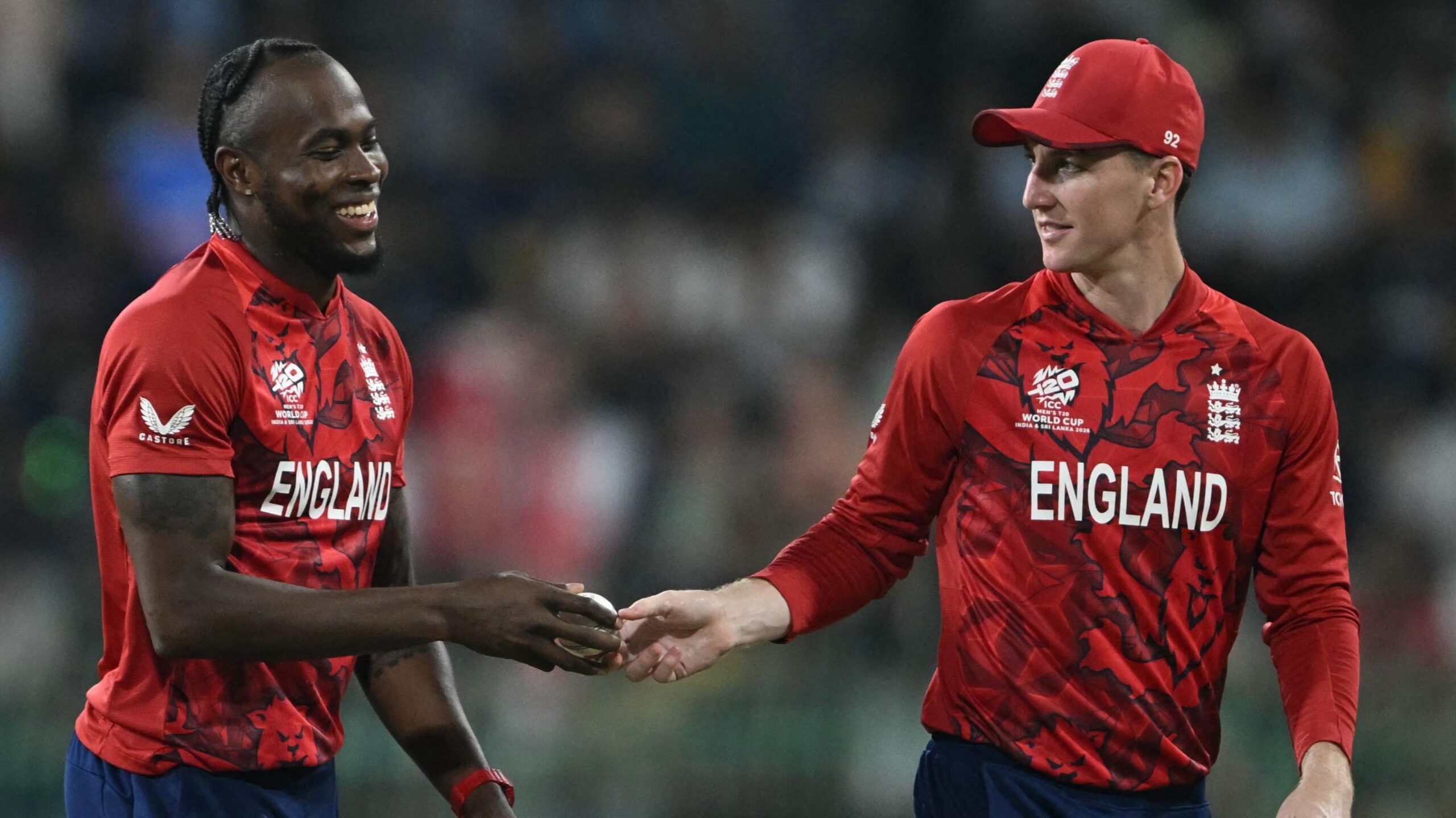
This makes Jofra Archer even more crucial than ever to England. After an expensive start – he conceded 90 runs across the two matches – Archer has been near his best in this tournament.
Eight of his 10 wickets have come in the powerplay, helping England to a total of 18 in that phase – six more than India.
Of the teams still standing, South Africa lead the way in terms of powerplay wickets with 21, but they have been more expensive than England.
England’s batting powerplay has been a struggle but their bowlers’ efforts has been one of their strengths.
The top order is yet to fire
Blind faith or an educated bet?
England’s top order is yet to fire in this tournament, with their opening partnership between Phil Salt and Jos Buttler averaging just 12 together.
Salt and Buttler came into the tournament ranked second and fourth in the batting rankings respectively.
Salt is a notoriously hit or miss player, given his ultra-aggressive style. He often goes through runs of low scores but averages a century every 14 T20s for England, having now gone 13 without one.
Buttler’s struggles are well documented after a run of five single-figure scores in a row.
Mumbai’s Wankhede Stadium is where he has looked most comfortable, having started the tournament with scores of 29 and 21 there.
India fans still fear the man they call Universe Jos, given his exploits in the IPL. He scored 116 for Rajasthan Royals at the Wankhede in 2022.
Are he and Salt too good not to come off at least once?
The negatives: The top order is yet to fire
The struggling top order remains England’s biggest problem before the semi-finals, however.
The batting average of their top six batters, 21.9, is the third-lowest in the tournament and better than only Namibia (18.87) and Oman (13.86).
The main issue has been an inability to stop a steady flow of dismissals, which has resulted in a lot of starts and few substantial scores.
On average one of their top six has got out every 16.1 deliveries, the worst record of any of the teams to make the Super 8s phase.
They also have the worst average number of balls per boundary of any of the teams remaining, not helped by playing the previous phase on the trickier pitches of Sri Lanka.
India’s fearsome depth
To play this video you need to enable JavaScript in your browser.
Despite any talk of top-order frailties, India remain a frightening T20 team.
Yes, they were well beaten by South Africa and given a scare by USA but there is a reason they came into this tournament as overwhelming favourites.
Between the end of the last T20 World Cup in 2024 and the start of this, India won 33 of their 41 matches making them the most consistent team cricket’s most inconsistent format has seen.
With the bat, they started slowly in this tournament but gained momentum by scoring 256-4 against Zimbabwe in the penultimate match of the Super 8s.
They scored 69 runs in the final four overs that day – something that is becoming a clear strength.
India are only the 10th fastest-scoring team in the middle phase of an innings but have hit more boundaries than anyone else at the death. They have hit 57 boundaries in the last four overs compared to England’s 44.
And while India have not lost a T20 at the Wankhede since 2017, it is a ground with bad memories for England.
It is where they lost to West Indies in the group stage, were beaten by a record 150 runs by India last year – Abhishek scored 135 from 54 balls that day – and lost to South Africa in their largest one-day international defeat in terms of runs at the 2023 World Cup.
That day, England wilted in the Mumbai heat and temperatures are forecast to hit 39 degrees during the daylight hours on Thursday.
Men’s T20 World Cup: England v India
A bad match-up for England
India may well pick an XI with five left-handers in their top eight on Thursday – a match-up that should suit them against England.
Harry Brook’s two main spinners, leggie Adil Rashid and left-arm off-spinner Liam Dawson, both predominantly turn the ball into left-handers which is seen as favourable for a batter able to hit with the spin, especially when it comes to clearing the Wankhede’s small boundaries.
The presence of Abhishek, Ishan Kishan, Tilak Varma, Shivam Dube and Axar Patel would appear to only increase the importance of England off-spinner Jacks.
Abhishek, for instance, has a strike-rate of 245.2 runs per 100 balls against leg-spin in international T20s and 213.7 against left-arm orthodox spinners.
That said, Rashid has defied the ‘negative match-up’ across his career, with a better bowling average against left-handers to right-handers.
There is little difference between Dawson’s average against right-handers and left, though his economy rate jumps from 7.2 to eight runs per over.
India bank on Bumrah
To play this video you need to enable JavaScript in your browser.
That it took this long to mention Jasprit Bumrah shows the difficulty of the task England face.
India’s premier fast bowler has the second-best economy rate, 6.30, of any bowler to have taken part in the Super 8s phase and bowled more than seven overs.
Bumrah has only been hit for three sixes across the entire tournament and his miserly economy rate heaps pressure onto the remaining 16 overs of a match.
And rather than sticking to one plan as England do with Archer, India have varied their use of their key bowler – playing him like a joker card at the key moments.
Against South Africa he bowled two overs in the powerplay and two at the death, targeting the Proteas’ big strengths, but against West Indies he only bowled once before the 11th over, thus saving him for the Windies’ powerful lower order.
“Every time we have a big over, we can go back to Bumrah and try and control the game,” coach Gautam Gambhir said.
“Because you don’t want in a T20 game two back-to-back big overs. That can take the game away from you.
Related topics
- England Men’s Cricket Team
- India
- Cricket
- 20 hours ago

- 20 hours ago

- 2 days ago


Leave a Reply