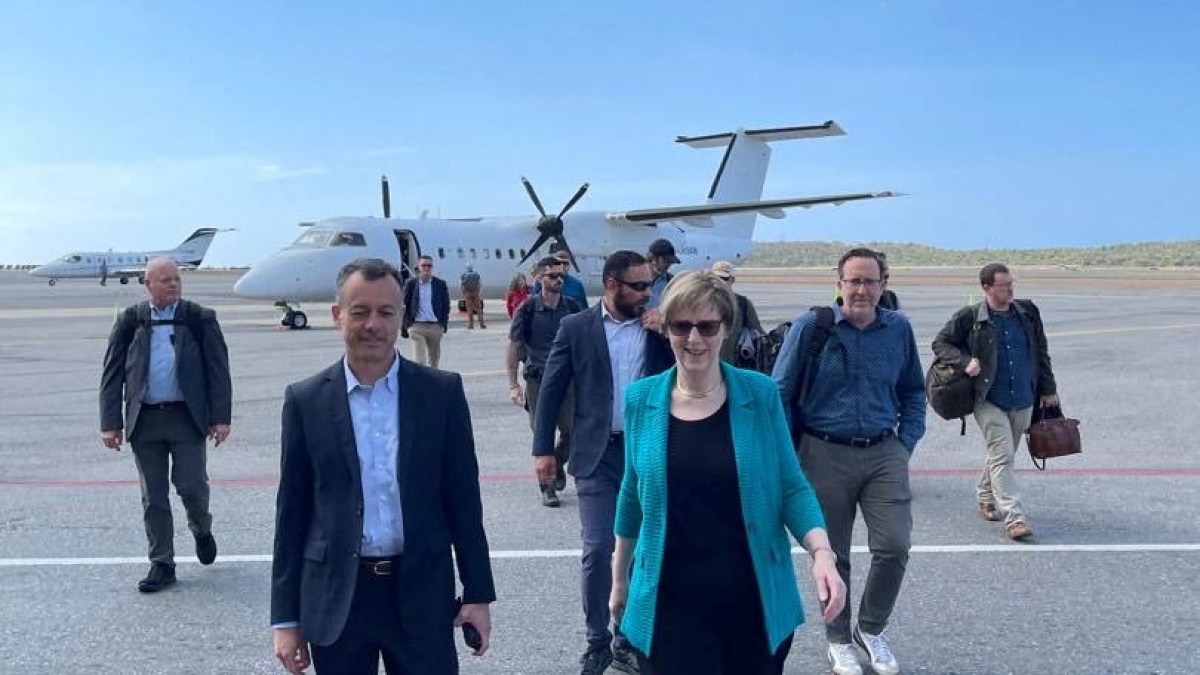
The top United States envoy for Venezuela has arrived in Caracas to reopen a US diplomatic mission seven years after ties were severed.
Laura Dogu announced her arrival in a post on X on Saturday, saying, “My team and I are ready to work.”
Recommended Stories
list of 4 itemsend of list
The move comes almost one month after US forces abducted Venezuela’s then-president, Nicolas Maduro, from the presidential palace in Caracas, on the orders of US President Donald Trump.
Maduro was then taken to a prison in New York, and is facing drug trafficking and narcoterrorism conspiracy charges.
The move has been widely criticised as a violation of international law.
Venezuelan Minister of Foreign Affairs Yvan Gil wrote on Telegram that he had received Dogu, and that talks would centre on creating a “roadmap on matters of bilateral interest” as well as “addressing and resolving existing differences through diplomatic dialogue and on the basis of mutual respect and international law”.
Dogu, who previously served as US ambassador to Honduras and Nicaragua, was appointed to the role of charge d’affaires to the Venezuela Affairs Unit, based out of the US Embassy in Bogota, Colombia.
Venezuela and the US broke off diplomatic relations in February 2019, in a decision by Maduro after Trump gave public support to Venezuelan lawmaker Juan Guaido, who claimed to be the nation’s interim president in January that year.
Minister of the Popular Power for Interior Diosdado Cabello, one of Venezuela’s most powerful politicians and a Maduro loyalist, said earlier in January that reopening the US embassy in Caracas would give the Venezuelan government a way to oversee the treatment of the deposed president.
Although the Trump administration has claimed that Maduro’s abduction was necessary for security reasons, officials have also repeatedly framed their interests in Venezuela around controlling its vast oil reserves, which are the largest in the world.
Since the abduction, Trump has pressured Interim President Delcy Rodriguez to open the country’s nationalised oil sector to US firms.
The two countries have reached a deal to export up to $2bn worth of Venezuelan crude to the US, and on Thursday, Rodriguez signed into law a reform bill that will pave the way for increased privatisation.
The legislation gives private firms control over the sale and production of Venezuelan oil, and requires legal disputes to be resolved outside of Venezuelan courts, a change long sought by foreign companies, which argue that the judicial system in the country is dominated by the governing socialist party.
The bill would also cap royalties collected by the government at 30 percent.
The Trump administration said on the same day that it would loosen some sanctions on Venezuela’s oil sector, and allow limited transactions by the country’s government and the state oil company PDVSA that were necessary for a laundry list of export-related activities involving an “established US entity”.
Trump has announced that he ordered the reopening of Venezuela’s commercial airspace and “informed” Rodriguez that US oil companies would soon arrive to explore potential projects in the country.
On Friday, Rodriguez announced an amnesty bill aimed at releasing hundreds of prisoners in the country, and said she would shut down El Helicoide, an infamous secret service prison in Caracas, to be replaced with a sports and cultural centre.

Leave a Reply