South Korea and Japan are facing uncomfortable questions about their mutual defensive obligations as the United States seeks support from its allies in the war on Iran, now nearly three weeks in and escalating by the day.
Earlier this week, US President Donald Trump urged the United Kingdom, China, France, Japan, and South Korea to send warships to the Strait of Hormuz, which has remained de facto closed since Washington launched its war with ally Israel on Tehran on March 28.
Recommended Stories
list of 4 itemsend of list
The president backpedalled on his position on Tuesday – declaring on social media that “we no longer ‘need,’ or desire, the NATO Countries’ assistance – WE NEVER DID! Likewise, Japan, Australia, or South Korea” – but observers say US allies may not yet be out of the hot seat.
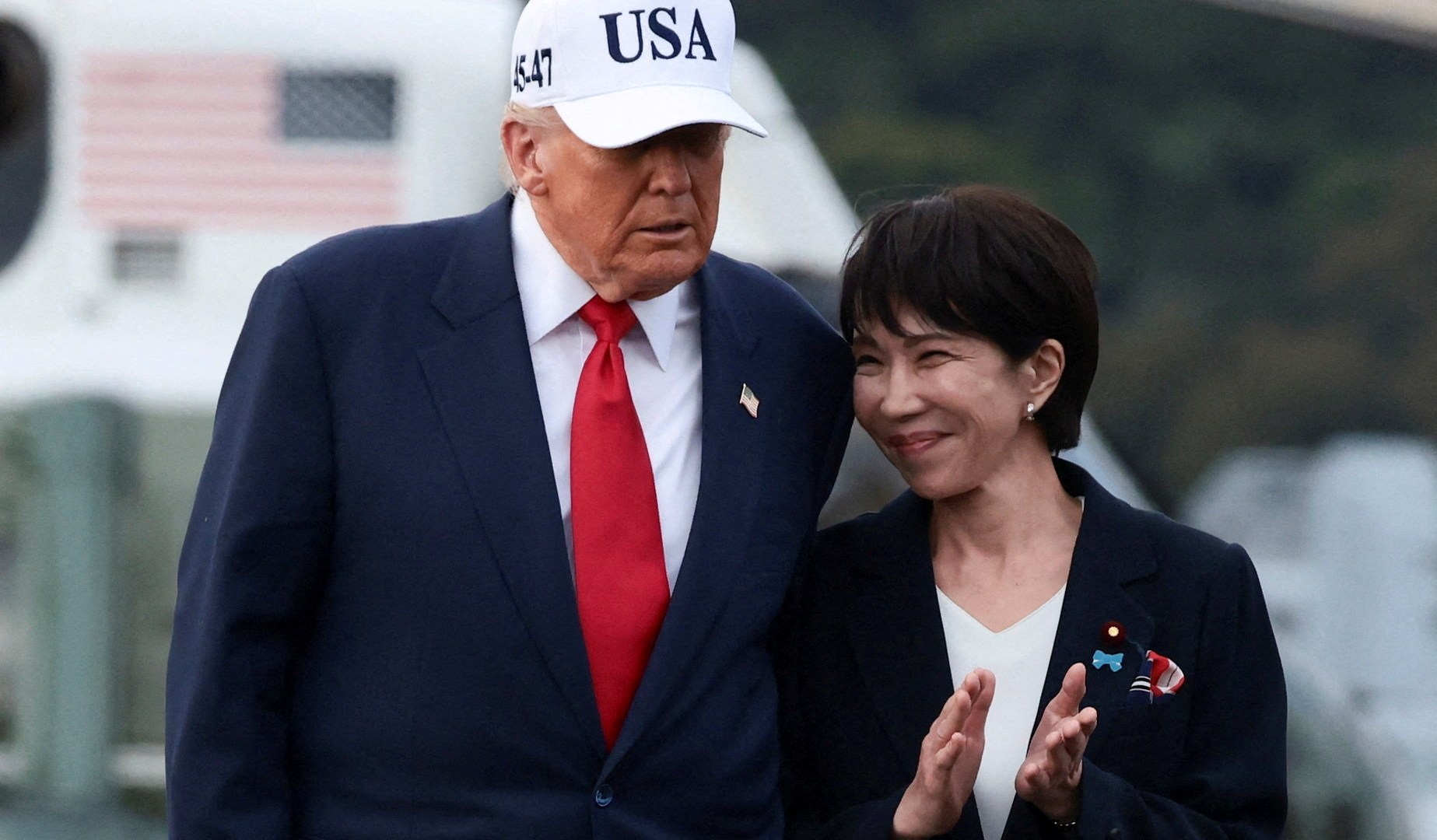
Trump is expected to raise the issue of warships when he meets with Japanese Prime Minister Sanae Takaichi at the White House on Thursday, according to Al Jazeera correspondent Jack Barton.
“People do expect him to put pressure on Takaichi again to send warships to the Strait of Hormuz. It makes sense in a way because Japan is so dependent on energy supplies” from the Middle East, Barton said on Thursday from Seoul.
Japan’s Maritime Self-Defence Force is one of the largest and most advanced navies in the world, he said, which makes it an attractive target for the Trump Administration.
Although Japan and the US share a mutual defence, Tokyo’s pacifist constitution places restrictions on when it can deploy its Self-Defense Force. Legal scenarios include when it is attacked or facing a “survival-threatening” scenario, as well as acting in “collective self-defence” of its allies.
Takaichi told legislators this week that her government is considering what can legally be done to protect Japanese ships and interests, according to Japanese public broadcaster NHK World, although deployment is still a hypothetical scenario.
Japan relies heavily on Middle Eastern oil imports, of which 70 percent pass through the Strait of Hormuz, according to Japanese media. Tokyo began releasing oil from its strategic reserve on Monday to make up for the shortfall.
Stephen Nagy, a professor at the International Christian University, Tokyo, told Al Jazeera it was not unexpected that the US – a treaty ally – would call on it for help, but Japan will need to consider what is expected.
“The question is if they are going to be on the front line of the attack from Iran or if they are going to provide some kind of supporting role, such as anti-mining activities, refuelling missions, maritime domain awareness,” he said.
“It’s not so much of a problem going there and being involved in the challenges associated with the Hormuz Strait; what is more important is what exactly they are going to do in that role. I think the Japanese are going to find a way to legally add value to the Trump administration, but don’t expect warships there fighting Iranian proxies,” he continued.
South Korea finds itself in a similar predicament as it is both a US treaty ally and a country that is heavily dependent on Middle Eastern oil and gas exports.
Seoul last week took the extraordinary measure of imposing a price cap on domestic fuel prices for the first time since the 1997 Asian financial crisis, to keep prices from rising too quickly for consumers. Despite their concerns, legislators continue to urge caution from the government in deploying its navy or military assets to the Middle East, according to Al Jazeera’s Barton.
In-Bum Chun, a retired South Korean lieutenant general, told Al Jazeera that it is not immediately clear whether Seoul’s Mutual Defense Treaty with the US applies to the Strait of Hormuz.
Seoul must also weigh helping the US against maintaining a credible deterrence against North Korea. Recent media reports suggest that the US is considering moving some of its Terminal High Altitude Area Defense (THAAD) missiles from South Korea to the Middle East. The missiles were installed to deter North Korea, and their removal, along with naval assets, could make voters nervous.
“Seoul must also consider the persistent threat from North Korea and the fact that a South Korean warship is already deployed to the Middle East,” Chun told Al Jazeera. “At the same time, because about 70 percent of Korea’s oil imports pass through the Strait of Hormuz, freedom of navigation is not an abstract principle but a core national interest. These competing realities must all be weighed before any final decision is reached.”

Leave a Reply