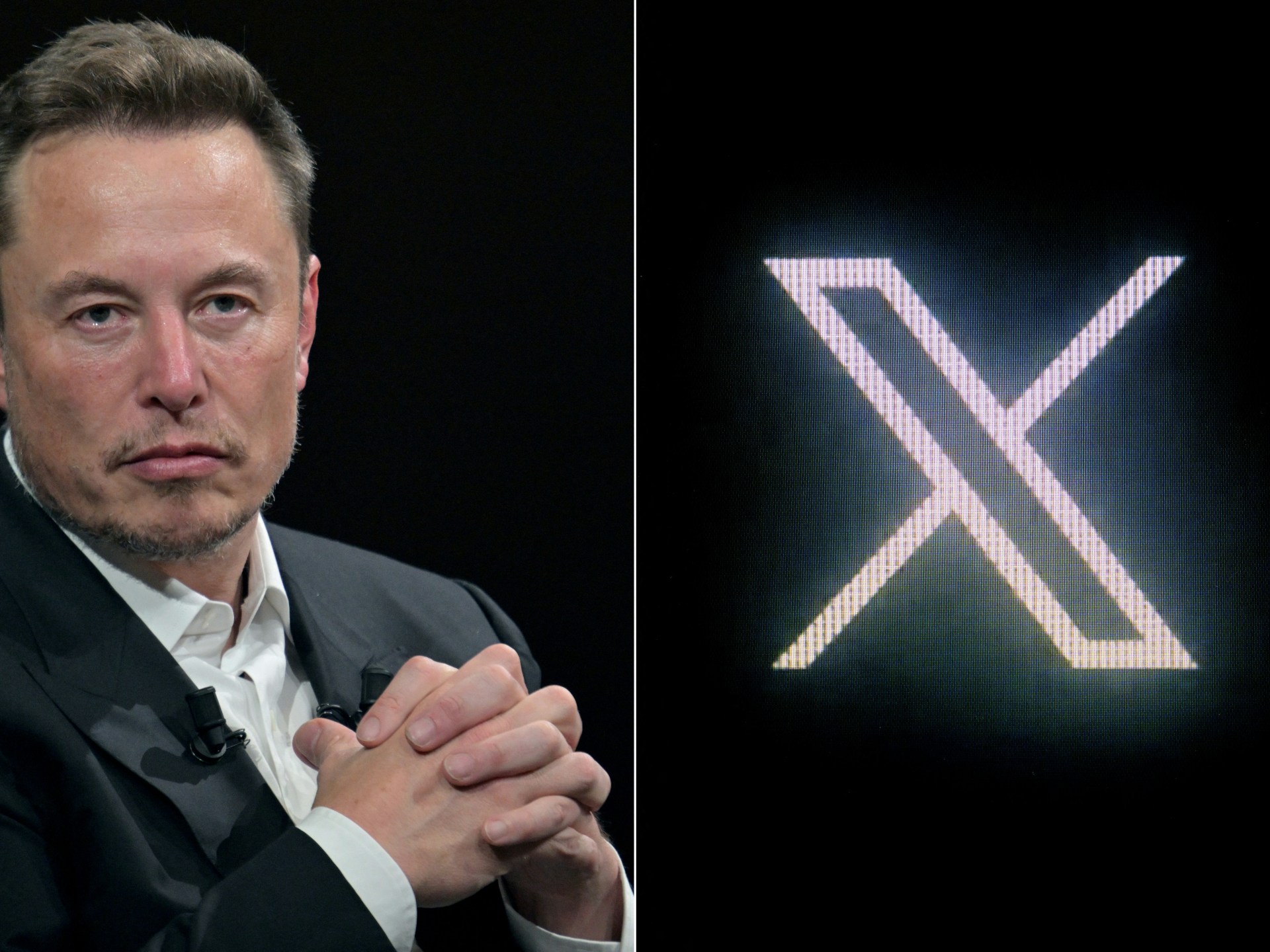
Closing arguments are set to begin in a trial in the United States pitting Elon Musk against shareholders of Twitter, now known as X, who say the world’s richest man engaged in a pattern of deceptive behaviour that misled investors as he attempted to back out of his $44bn deal to buy the social media platform in 2022.
The arguments are set for Tuesday.
Recommended Stories
list of 4 itemsend of list
The civil trial in San Francisco centres on a class-action lawsuit filed just before Musk took control of Twitter, which he later renamed, in October 2022, six months after agreeing to buy the embattled company for $44bn, or $54.20 per share. The price represents a fraction of the Tesla CEO’s fortune, now estimated at $839bn.
Much of the trial focused on Musk’s claims about the number of bots on Twitter. Musk testified, as he has long contended, that Twitter had a much higher number of fake and spam accounts than the 5 percent it disclosed in regulatory filings. He used what he called Twitter’s misrepresentation of the number of fake accounts on its service as a reason to retreat from the purchase.
After Musk tried to back out, Twitter went to court in Delaware to force him to honour his original deal. Just before that case was scheduled to go to trial, Musk reversed course again and agreed to pay what he had originally promised.
Bots and fake accounts
The problem of bots and fake accounts on Twitter was not new at the time Musk negotiated the deal. The company had paid $809.5m in 2021 to settle claims that it was overstating its growth rate and monthly user figures. Twitter also disclosed its bot estimates to the Securities and Exchange Commission (SEC) for years while also cautioning that its estimate might be too low.
But Musk claimed the number was much higher, at least 20 percent according to some analysts. Saying the bot number was at least this high was like “saying the grass is green or the sky is blue”, Musk said.
Twitter’s former CFO Ned Segal disputed this claim and said on the witness stand that the number was actually closer to 1 percent.
Asked if Twitter ever filed false filings to the SEC that misstated its spam numbers, Segal said it did not. But he mentioned that the company once restated its finances after it became aware of a mistake in its calculation of daily users. In 2017, Twitter said it had been overstating its monthly user numbers by mistake because it was including users of a third-party app it should not have.

Leave a Reply