- 1 Comments
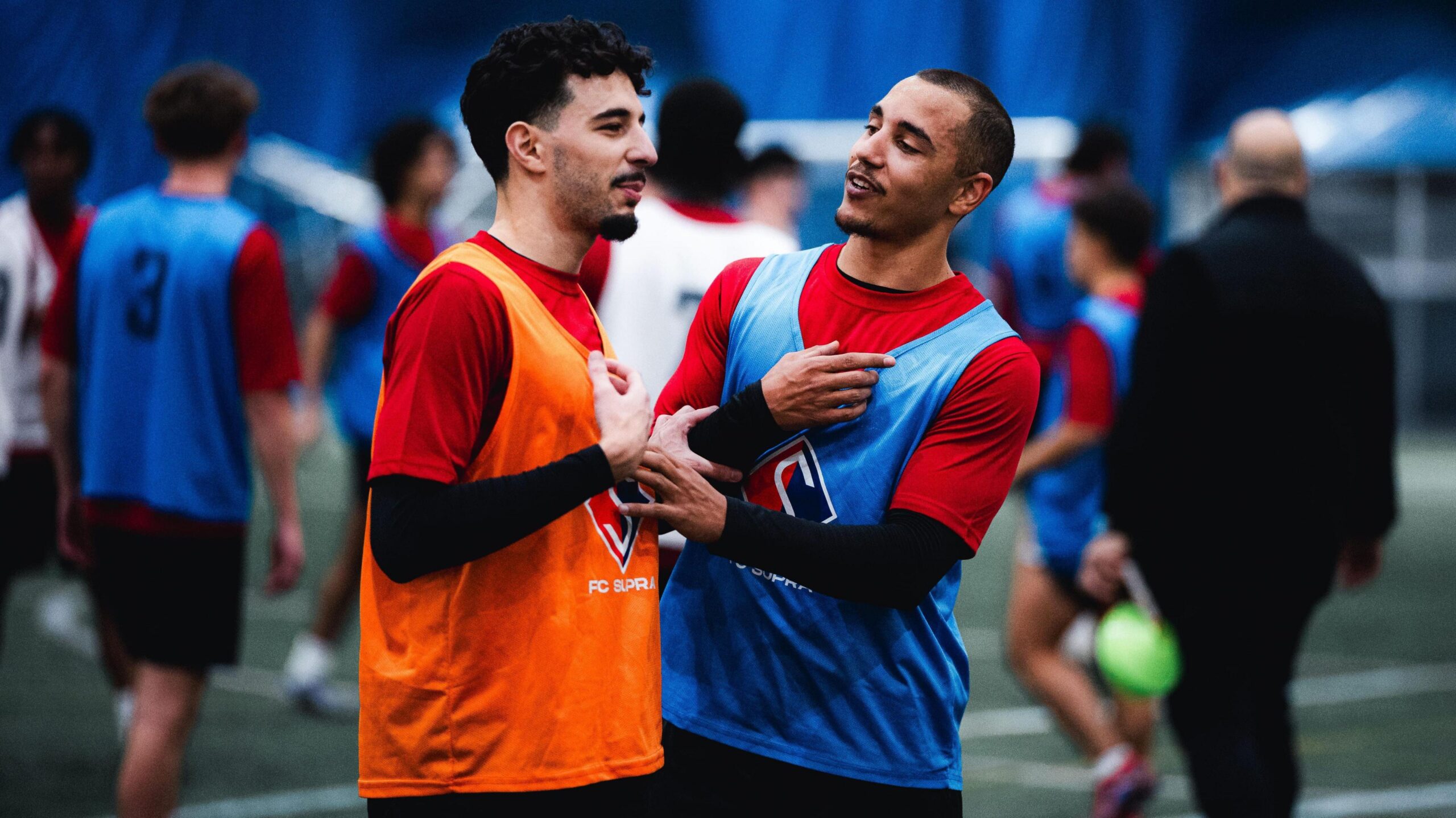
Rocco Placentino stood in front of Supra du Quebec’s players, coaches and club management ready to deliver a speech before the club’s first ever training session.
As the club’s co-founder and president tried to find the words, he became emotional looking at what had been created and what was staring back at him.
Former Canada international Placentino saw a group of players and coaches all born or raised in Quebec, Canada.
They had been brought together, inspired by Bilbao’s Athletic Club, to help put the only French-speaking province in Canada on the footballing landscape.
“It’s done with local pride, local players, local staff, local upper management and local partnerships,” said Placentino of Supra, who continue their pre-season preparation on Sunday before competing in the Canadian Premier League.
 Supra du Quebec
A ‘melting pot’ of Quebec
Placentino was raised in Montreal and played for Quebec’s other professional football team, Major League Soccer side CF Montreal, as well as having spells in Italy’s second and third divisions.
While Montreal throw their scouting net across the world to be competitive, FC Supra are focusing on local players who may have overlooked.
They want to give other players from Quebec the chance to try and emulate Canadian internationals such as Saussolo’s Ismael Kone and Nice’s Moise Bombito.
Bombito was born in Montreal, while Kone moved to the city from the Ivory Coast aged seven, and their journeys highlight the rich cultural mix and football obsession found in Quebec.
“The objective is to have a local pride program in the Canadian Premier League, a team that could furnish players that are local and multicultural,” said Placentino.
“I look at countries like Belgium and Iceland. If they’re able to build players and sell them worldwide to become phenom footballers, why can’t we do it in Quebec?
“A lot of players would fall through the cracks here and miss out on opportunities to shine and to be exposed at a higher level.
“All we need to do is take these ballers, put them in an environment that is very professional but also keeping that DNA of being street ballers.”
A unique touch showcasing Supra’s pride in their province is having the Quebec flag printed on their kits.
Paul Desbaillets, Supra’s chief branding officer, says the aim was to bring Quebec’s unique character to life.
“There’s always been a history of Quebec versus Canada,” he said.
“What makes us so proud exactly at this club is that here is more proof of why this province is so spectacular. We are a complete mix of French, Italian, British, Moroccan, Persian and Asian.
 Supra du Quebec
Embracing Supra’s original club
Supra du Quebec may be a new club, that are yet to play a competitive game, but the idea of the club colours and name all stemmed from one of Montreal’s first football teams.
Supra Montreal only operated between 1988 and 1992, but provided the environment for a six-year-old Placentino to form some of his earliest footballing memories.
“I remember going to games with my father and watching players that were mainly local players playing for Supra Montreal,” he said.
“I loved the colours. I loved the blue, white, and red.
“And I said, ‘You know what? I want to relive that experience as now a founder of this club and bring back that local pride and that Quebec feeling’. We wanted to relive it and modernise it the best way we could.”
Along with the colours and name, there is a more personal link between the two clubs through one of their new players, Alessandro Biello.
What makes the 19-year-old’s signing so special is that his dad, Mauro, played for the original Supra and captained Placentino while they played together at CF Montreal.
“When we signed [Alessandro] Biello every box was checked in terms of what we were looking for,” said Placentino.
“The work ethic, bleeding for the colours, bleeding for the city, playing in front of his family and friends, having that drive to do well with the Supra, so that maybe one day he could be sold to a team in Europe.
Rejecting 150 offers and gaining international interest
Quebec is home to roughly nine million people. To represent FC Supra a player or coach has to have been born, raised or have a deep connection to the state.
This transfer policy is similar to Athletic Club’s Basque-only approach, with Placentino hoping to visit the Spanish side to understand how growing a club using this transfer policy is possible.
The Supra president has already discovered some positives and negatives to running a policy like this, with the former Canada international having to reject more than 150 offers from players who had no connection to Quebec.
But despite a focus on growing local talent, there has also been interest from athletes who have moved away from Quebec to all corners of the globe but are keen to get involved with Supra.
“There are players who play in Guatemala, in Finland, in Iceland, in Sweden, in Malta that are all Quebec-based players and are saying, ‘I want to come home’,” explained Placentino.
“They can’t wait to come home and when you hear that, I get goosebumps.”
This feelings of the players, coaches and management are shared by Placentino, which is why the club’s motto is so poignant.

Leave a Reply