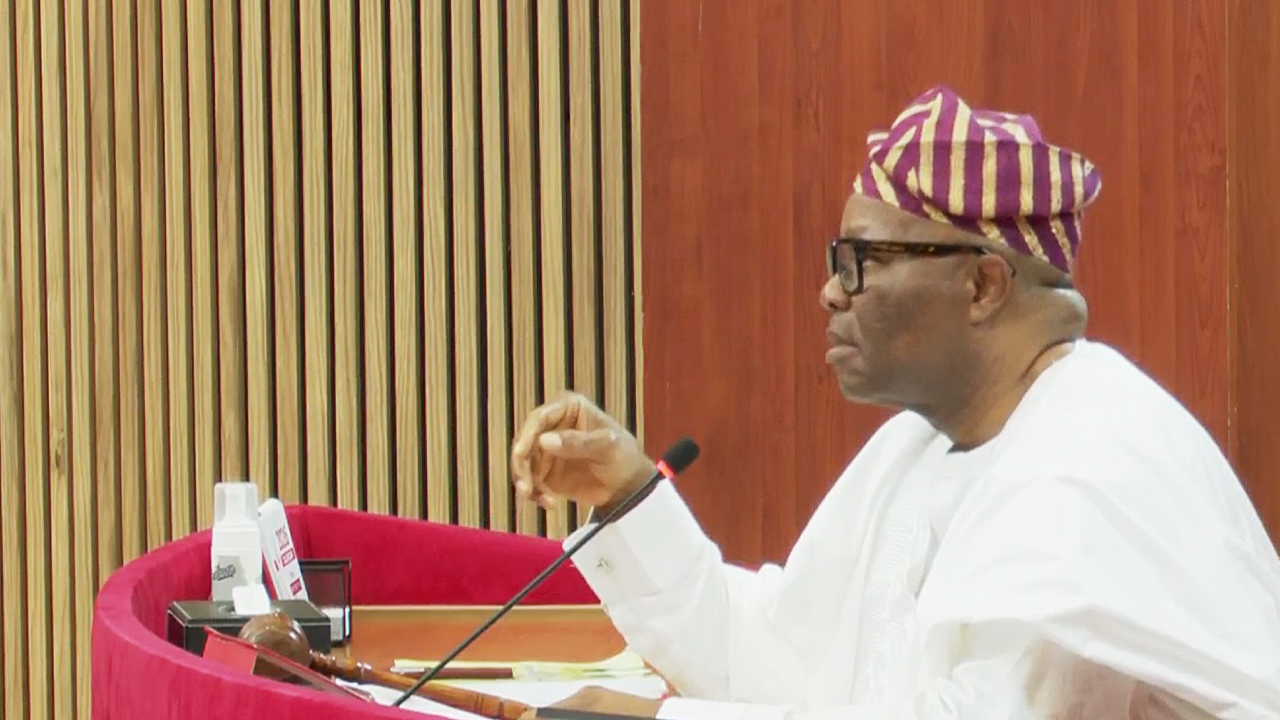
The Senate has appointed a 12-member conference committee to harmonise differences between its version of the Electoral Act (Amendment) Bill and that of the House of Representatives.
Senate President, Godswill Akpabio, announced the decision during an emergency plenary session on Tuesday.
“After consultation with the leadership, we have moved the number from nine to 12. I will now read out the names of the conference committee members from the Senate,” Akpabio said on the floor of the Senate.
The members are:
1. Senator Simon Bako Lalong – Chairman
2. Senator Mohammed Tahir Monguno – Member
3. Senator Adamu Aliero – Member
4. Senator Orji Uzor Kalu – Member
5. Senator Abba Moro – Member
6. Senator Asuquo Ekpenyong – Member
7. Senator Aminu Iya Abbas – Member
8. Senator Tokunbo Abiru – Member
9. Senator Niyi Adegbonmire (SAN) – Member
10. Senator Jibrin Isah – Member
11. Senator Ipalibo Banigo – Member
12. Senator Onyekachi Nwebonyi – Member
He urged the committee to treat its assignment as urgent, expressing optimism that the process could be concluded swiftly.
“When you meet, you should recognise that this is a matter of urgency. I believe that if you are able to conclude within the next few days or one week, the President should be able to sign the amended Electoral Bill into law within the month of February,” he said.

He said that the outcome would be transmitted promptly to President Bola Tinubu for assent within February.
Senator Akpabio subsequently struck the gavel, formally constituting the committee.
Tuesday’s session tended towards rowdiness, with speakers interrupted intermittently at the Red Chambers.
Disagreements emerged among lawmakers after a motion sponsored by Senator Tahir Monguno was put up for consideration.
He had suggested that the Senate reverse its approval of clause 60(3) of the Electoral Act (Repeal and Enactment) Bill, 2026. The clause concerns the modalities for the electronic transmission of election results.
Akpabio aligned with a proposal that recognises electronic transmission as the primary method, with manual submission of results using Form EC8A permitted only in cases of technical failure.

The proposal sparked debate, prompting Senator Enyinnaya Abaribe to call for individual voting, a request he later withdrew.
The emergency plenary was convened amid backlash over amendments to the Electoral Act, particularly provisions relating to the electronic transmission of election results.
The controversy centres on Clause 60(3), where the Senate, last week, removed the requirement for real-time electronic transmission, retaining the 2022 Act provision that empowers the Independent National Electoral Commission (INEC) to determine the mode of transmission.

There were also widespread protests, including the Occupy National Assembly demonstration in Abuja, where civil society organisations, opposition parties, and prominent figures such as Peter Obi and Rotimi Amaechi demanded mandatory real-time electronic transmission to strengthen electoral credibility.

But Akpabio has clarified that the Senate had not rejected electronic transmission, explaining that the removal of the phrase “real time” was intended to prevent legal complications arising from network failures and to allow INEC operational flexibility.

Leave a Reply