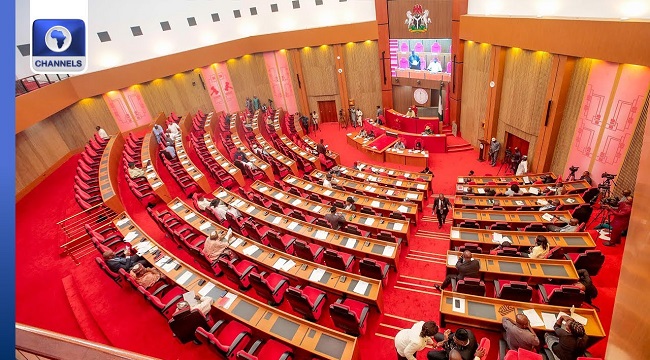
Proceedings in the Senate have been momentarily stalled as lawmakers began clause-by-clause consideration of the Electoral Act, 2022 (Repeal and Re-Enactment) Bill 2026, following a motion to rescind the earlier amendment.
The motion to rescind the bill was formally seconded on Tuesday, paving the way for the upper chamber to dissolve into the committee of the whole for detailed reconsideration and reenactment of the proposed legislation.
During the session, the Senate President, Godswill Akpabio, reeled out the clauses one after the other for deliberation. However, the process stalled when at clause 60, Senator Enyinnaya Abaribe (ADC/Abia South) raised a point of order, drawing immediate attention on the floor.
Following the intervention, murmurs spread across the chamber as lawmakers began speaking in small groups and approaching the Senate President’s desk for consultations.
The session immediately moved into a closed-door session.
READ ALSO: Senate Moves To Reconsider Electoral Act Amendment
Before rescinding the Electoral Act, the Red Chamber raised concerns over the timing of the 2027 general elections and technical inconsistencies in the legislation.
Rising under Order 52(6) of the Senate Standing Orders, the Senate leader, Opeyemi Bamidele, moved the motion to reverse the earlier passage of the bill and return it to the Committee of the Whole for fresh deliberations.
He explained that the development follows the announcement by the Independent National Electoral Commission (INEC) of a timetable fixing the 2027 general elections for February 2027, after consultations with the leadership of the National Assembly.
Bamidele stated that stakeholders had raised concerns that the proposed date conflicts with the provisions of the amended law, particularly the requirement that elections be scheduled not later than 360 days before the expiration of tenure.
He noted that upon critical review of the passed bill, the 360-day notice requirement prescribed in Clause 28 could result in the scheduling of the 2027 Presidential and National Assembly elections during the Ramadan period.
According to him, holding elections during Ramadan could negatively affect voter turnout, logistical coordination, stakeholder participation, and the overall inclusiveness and credibility of the electoral process.

Leave a Reply