To play this video you need to enable JavaScript in your browser.
- 46 Comments
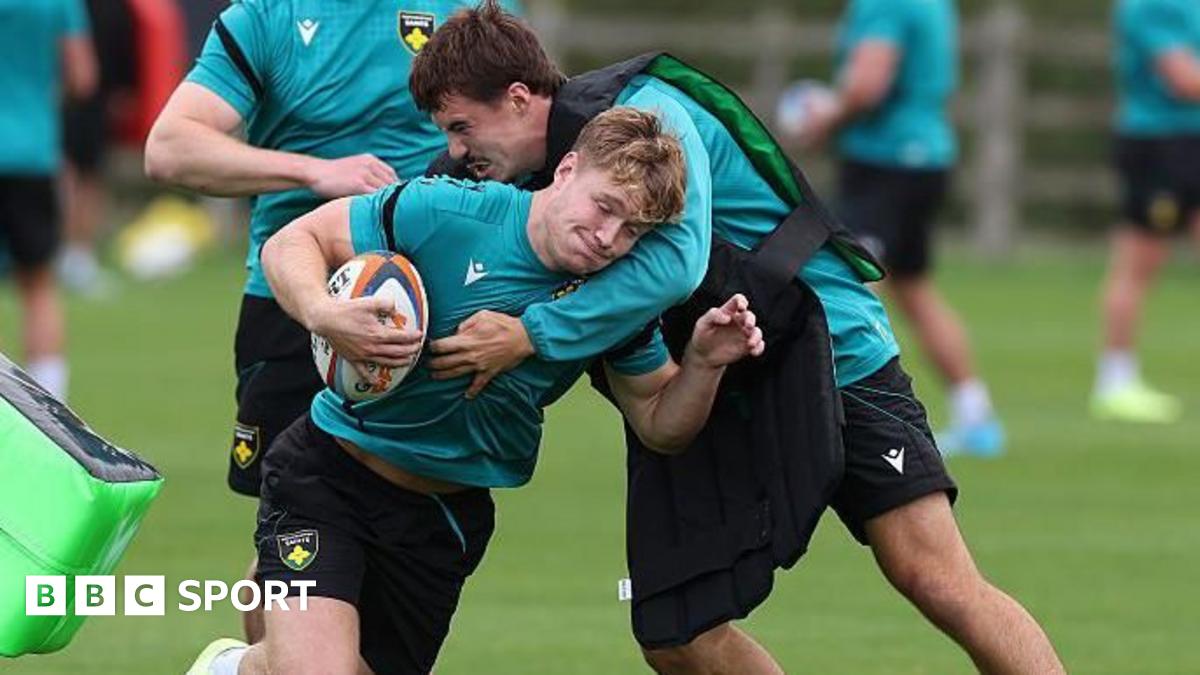
Prem clubs have agreed to significantly regulate contact training in a major breakthrough for the Rugby Players’ Association (RPA).
After years of lobbying from the players’ union, clubs will revolutionise how they record and share data around contact training, with detailed scrutiny of any concussion suffered.
There will be a staggered return to contact for international players following their five-week summer break, which will lessen the load on England’s top stars.
Players will also be required to wear Instrumented Mouthguards during contact sessions in the week rather than just during matches.
“The RPA has been working hard to produce the first change of this kind relating to the training environment globally,” the organisation’s general secretary Christian Day told BBC Sport.
“These changes will allow us to better identify when contact is occurring, understand what players are experiencing on the training field and to better protect all players as they return after their off-season break.”
England World Cup winner Steve Thompson, who has been diagnosed with early-onset dementia, which he attributes to the repeated brain trauma suffered during his rugby career, is among those to have called for drastic changes in the amount of contact in training.
‘89% wanted change to contact’
Changes to contact training has been an area of focus for professional players for a number of years. In 2023, 89% of players surveyed by the RPA said they wanted better regulation of contact in training.
While there won’t be a hard-and-fast limit on a week-to-week basis, senior figures in the process are confident that the introduction of oversight of how, when and where concussions and head impact exposures occur in training will shine a light on outliers.
As part of the new proposals, which have been ratified by the Professional Game Board:
‘The next step for elite rugby’
All players are currently given mandatory rest periods during the off-season. For example, England players who tour with the national side in the summer are then given five weeks mandatory rest before starting pre-season with their clubs, and then another five weeks before playing a match.
However when surveyed by the RPA, 36% of players said they were doing contact training in their first week of pre-season. This would mean an international player could conceivably be involved in contact training for as many as 47 weeks a year.
Under the new guidelines, which will be in place for the 2026/27 season, players will now experience a graduated return to contact, with no contact at all in week one and no full contact until the fourth week of their return. Clubs who fail to adhere to the new regulations could face a fine or a disciplinary case.
England’s most-capped men’s player Ben Youngs presented a BBC documentary exploring the issue of safety in rugby, and he believes regulation of training is a big move forward.
“Monitoring and limiting the amount of collisions and contact done within a training week is really, really important. That is the next step for elite rugby,” Youngs told the Rugby Union Weekly podcast.
Those involved in the agreement believe these changes to contact training will place the Prem at the forefront of player welfare as a league.
“Prem Rugby’s vision of becoming the best league in the world can only be achieved by ensuring our players are given world-leading support off the pitch,” said Phil Winstanley, rugby director at Prem Rugby.
“Working together with the RPA, RFU and our clubs, we will continue to raise standards off the pitch so our players can perform to the highest level on the field of play.”
Related topics
- Rugby Union

Leave a Reply