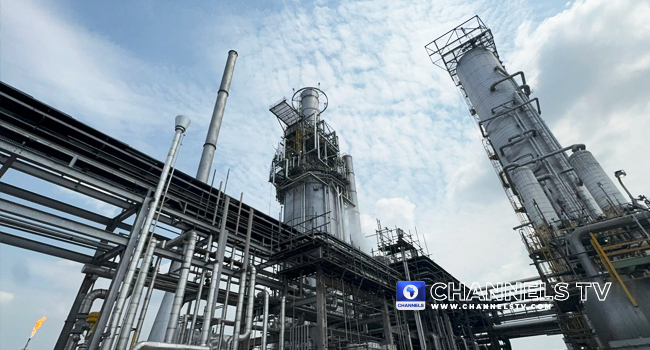
The President of the Petroleum and Natural Gas Senior Staff Association of Nigeria (PENGASSAN), Festus Osifo, says the old Port Harcourt refinery has been rehabilitated to about 90 per cent and can be brought back into operation within one week, if the Nigerian National Petroleum Company Limited (NNPCL) so decides.
Osifo disclosed this on Tuesday while speaking as a guest on Channels Television’s The Morning Brief programme.
According to him, the refinery is technically ready for operation, but profitability considerations remain a major factor influencing NNPCL’s decision on when to restart the facility.
“As of today, you can start the old Port Harcourt refinery, and it will function. You can put it on today, and it will function. However, NNPCL as a company is there to make a profit. So, if they want to start it today, within the next one week, they can bring it back to life,” Osifo said.
READ ALSO: Restructure, Buy Port Harcourt Refinery, Otedola Tells DAPPMAN Amid Brawl With Dangote
He explained that although extensive rehabilitation work has been carried out, operational losses could arise due to the cost of crude oil relative to the value of refined products.
“It has been rehabilitated up to about 90 per cent. But the challenge is that if you feed crude oil worth, say, five million dollars into the old Port Harcourt refinery, what you are likely to get at the other end when you sell the petroleum products may be about 4.5 million dollars. So, you put in five million dollars as input and get 4.5 million dollars as output.”
Osifo, however, noted that the investment in the refinery was not wasted, stressing that major components of the facility had been replaced during the rehabilitation exercise.
“The money that was thrown into the Port Harcourt refinery is not a loss. If you look at the old Port Harcourt refinery, almost all the compressors were changed, the control rooms were changed, and the panels were all changed. The contractors did not take them away,” he said.

He added that the value of the refinery has significantly improved compared to its condition before rehabilitation.
“In fact, if you value the refinery today, it will be much more valuable than the state it was in before the rehabilitation,” Osifo said.

Leave a Reply