


Intense US-Israeli bombardment sent flames and plumes of smoke into the night sky across Iran. Strikes hit Sanandaj near a media centre and across an expanse of the capital, Tehran.
Video: Intense US-Israeli bombardment across Iran
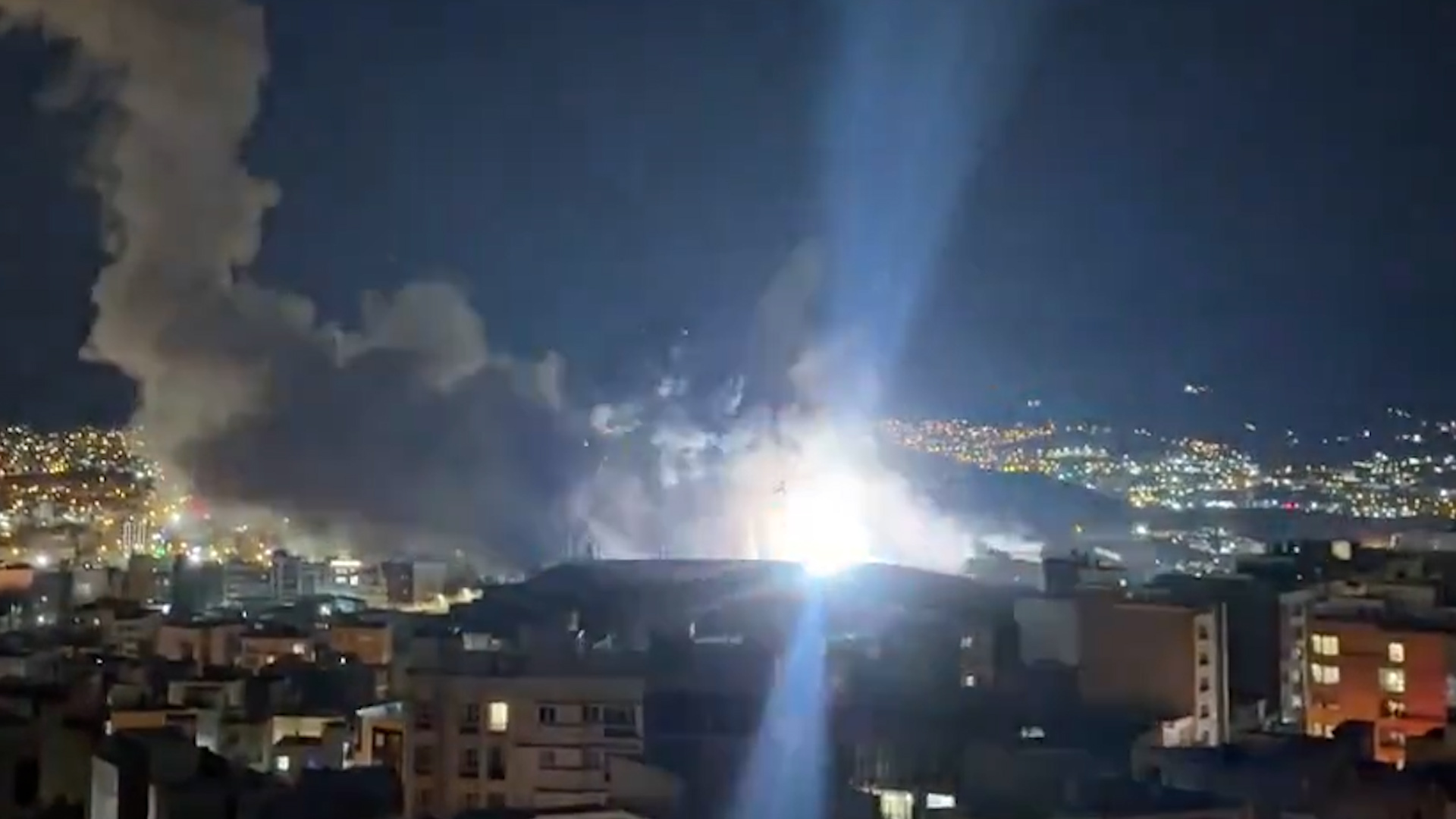


Intense US-Israeli bombardment sent flames and plumes of smoke into the night sky across Iran. Strikes hit Sanandaj near a media centre and across an expanse of the capital, Tehran.
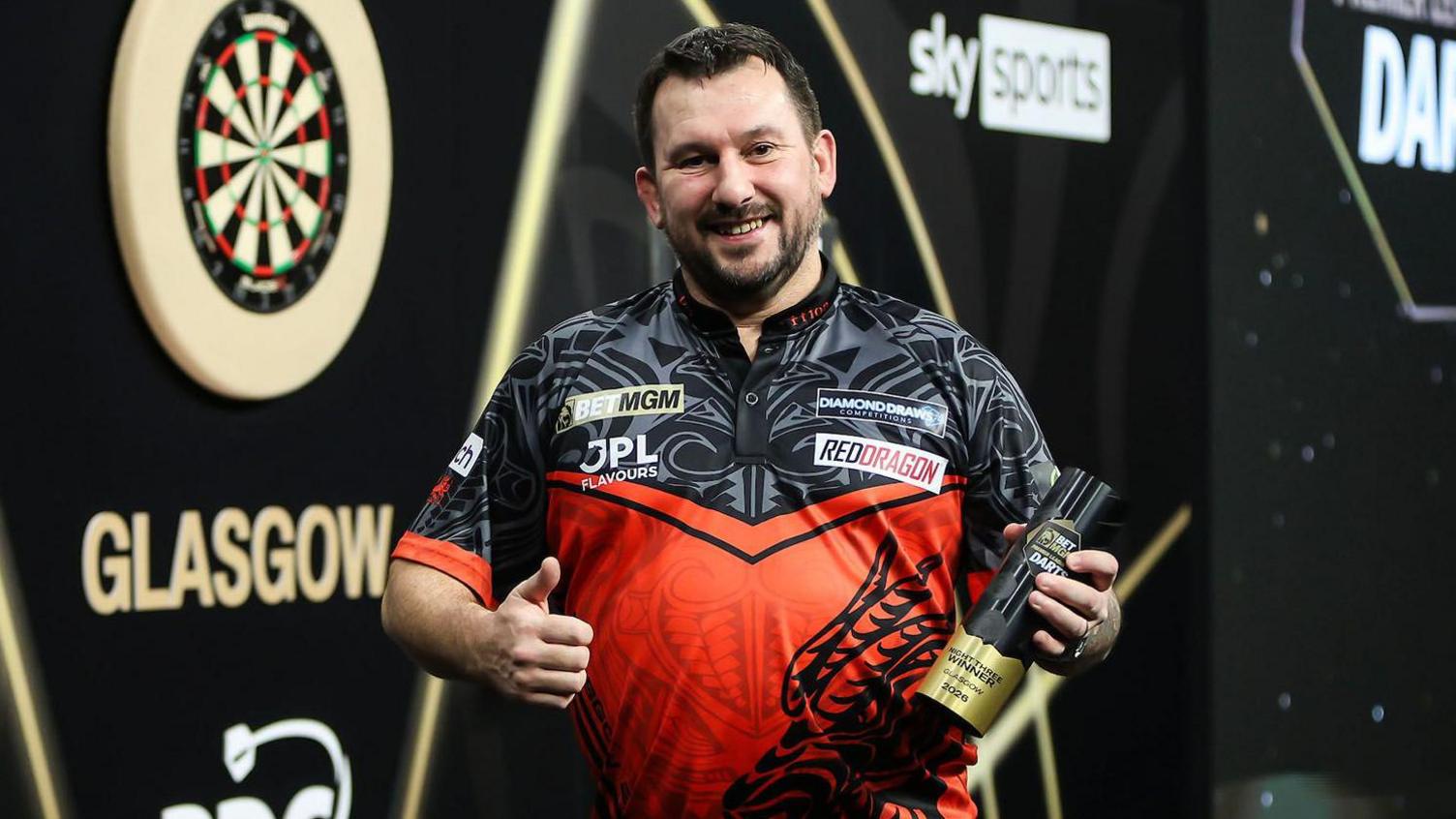
Jonny Clayton says it would be amazing to meet fellow Welshman Gerwyn Price in the final on night five of the Premier League Darts in Cardiff.
‘The Ferret’ sits top of the standings after four weeks and is on the opposite side of the draw to Price in the Welsh capital.
Both Welshmen have won a night in this year’s competition, with Price, 40, triumphing on night two in Antwerp and Clayton on night three in Glasgow.
“Two Welsh boys in the final, that would be amazing,” said 51-year-old Clayton.
“Obviously Jonny Clayton picking up the trophy would be a little bit better!
The Carmarthenshire native missed out on the previous two years of the Premier League, but says he is excited to return and play in Cardiff this time.
“I’ve been away from the Premier League for a couple of years now,” Clayton told BBC Sport Wales.
“I’m back in and back in Wales playing, so that’s all I want, my favourite tournament, my favourite city.
“There’s no better support than the Welsh. There’s only one major in Wales and it’s the Premier League night, to be a part of that in front of your own crowd is fantastic.”
Clayton admits having fan-backing for both himself and Price – often the target for booing in the past – will be unusual.
“It’s going to be mental, it’s going to be exciting, singing, chanting and they’re all behind us for a change,” he added.
Clayton won the Premier League title in his debut year in 2021, beating Portugal’s Jose de Sousa 11-5 in the final, something he is looking to do again.
“All I can do is to go out and try to play my best darts and if I can carry on doing that I’m doing something right.
“If it’s my campaign it’ll be my campaign. Hopefully it is and I can be double Premier League champion.”
With a highly competitive field of eight players which includes four world champions, you could be forgiven for not expecting the former plasterer to be top of the standings after four weeks.
Neither Luke Littler nor Luke Humphries have made the final in any of the four nights of action in 2026, despite being ranked number one and two in the world.
Clayton, however, has been the model of consistency in the 2026 tournament.
Winning his quarter-final match each week has ensured he has left with at least two points at each venue, the only player to have done so.
“I’ve been in the Premier League before so I know what you have to do,” he said, “It’s a bit of experience on my behalf.
“Points are so important whether it’s just the two points or it’s five points, if you can pick up two every week you’ll be close at the end of the 16th week for the 17th week [play-offs].”
He says consistency week-on-week is really important.
“Picking up nightly wins is a massive bonus,” added Clayton.
“I’ve got one under my belt, hopefully there is one Thursday night, and I can still be at the top when it comes to week 17.”
Clayton takes on World Championship runner-up Gian van Veen in the quarter-finals on Thursday, with the pair splitting their past meetings.
“We’re one win each but he’s at my home in Wales so hopefully that will be to my advantage and Gian can experience the proper Welsh crowds.
Thursday, 5 March – Utilita Arena, Cardiff
Quarter-finals
Michael van Gerwen v Luke Humphries
Gian van Veen v Jonny Clayton
Gerwyn Price v Stephen Bunting
Luke Littler v Josh Rock
Semi-finals
Van Gerwen/Humphries v Van Veen/Clayton
Price/Bunting v Littler/Rock
Final


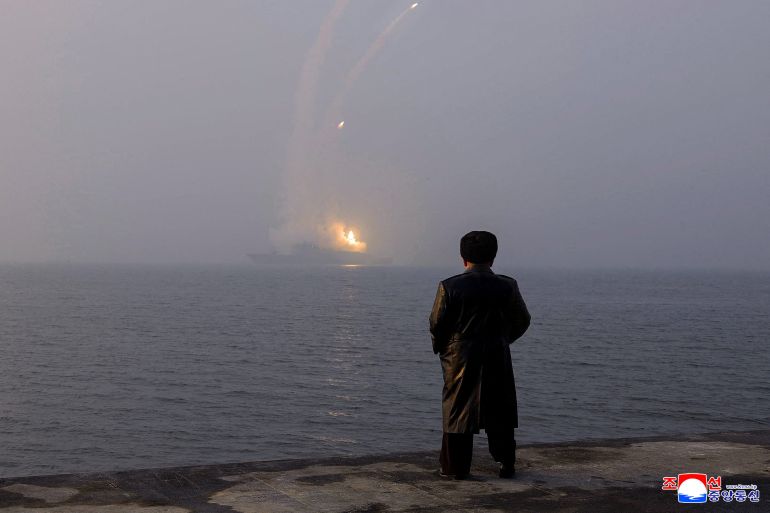
North Korean leader Kim Jong Un has overseen the test-firing of “strategic cruise missiles” from a new 5,000-tonne naval destroyer before the vessel’s official commissioning, according to state media.
Kim supervised the launch of sea-to-surface missiles from the destroyer Choe Hyon on Wednesday, assessing the test as a “core” element of the new warship’s capabilities, which he described as a “new symbol of sea defence” for his country.
list of 4 itemsend of list
Calling for the production of more warships of a similar class or better, Kim said his navy’s adoption of nuclear weapons was making progress.
“Our Navy’s forces for attacking from under and above water will grow rapidly. The arming of the Navy with nuclear weapons is making satisfactory progress,” Kim said at the Nampo Shipyard in the west of the country, according to North Korea’s official Korean Central News Agency (KCNA).
“All these successes constitute a radical change in defending our maritime sovereignty, something that we have not achieved for half a century,” he said.
South Korea’s official Yonhap news agency noted that North Korea uses references to “strategic” weapons to indicate they could have nuclear capabilities.
According to KCNA, over a two-day visit to the shipyard, spanning Tuesday and Wednesday, Kim inspected the Choe Hyon, the lead vessel in a new series of 5,000-tonne “Choe Hyon-class” destroyers currently under construction in North Korea.

In May 2025, North Korea’s ambitious naval modernisation programme suffered a major setback when a second Choe Hyon-class destroyer capsized during a botched side-launch ceremony at Chongjin Shipyard, an incident witnessed by the Korean leader.
Later, and in a rare admission of failure, KCNA reported that a launch mechanism malfunction caused the stern of the 5,000-tonne destroyer to slide prematurely into the water. The accident crushed parts of the hull and left the bow stranded on the shipway.
At the time, Kim characterised the launch failure as a “criminal act”, blaming the incident on “absolute carelessness” and “irresponsibility” across multiple state institutions.
This week’s missile tests come after the North Korean leader pledged in late February to lift living standards as he opened a rare congress of the governing Workers’ Party, held once every five years.
Kim told the congress that the ruling party was “faced with heavy and urgent historic tasks of boosting economic construction and the people’s standard of living”.
“This requires us to wage a more active and persistent struggle without allowing even a moment’s standstill or stagnation,” he said.
North Korea has prioritised nuclear weapons development and military strength above all else, claiming that it must be militarily strong to resist pressure from the United States and its ally, South Korea.
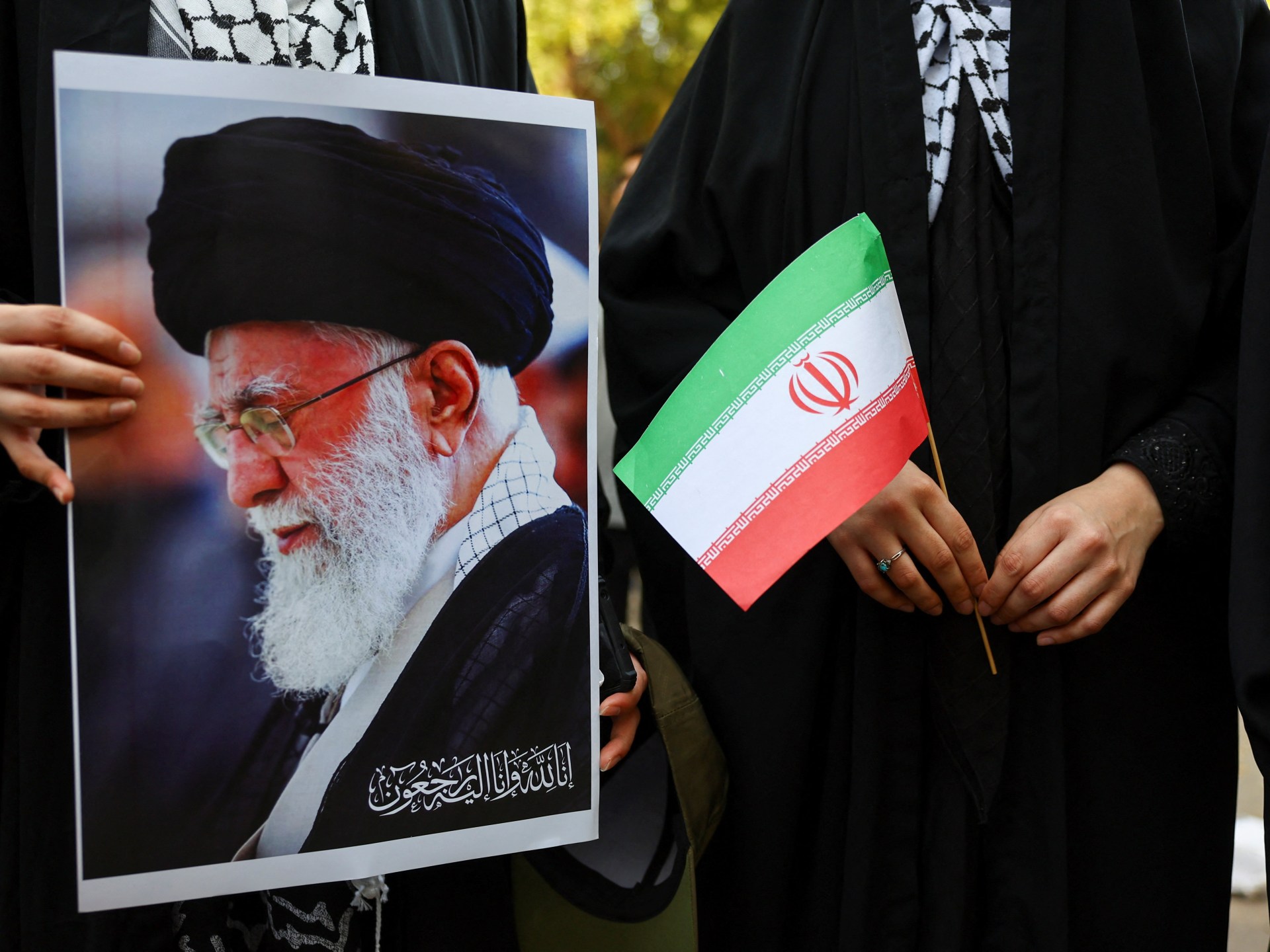
Iran’s Assembly of Experts is now tasked with choosing the next Supreme Leader. It elected Ayatollah Ali Khamenei in 1989.
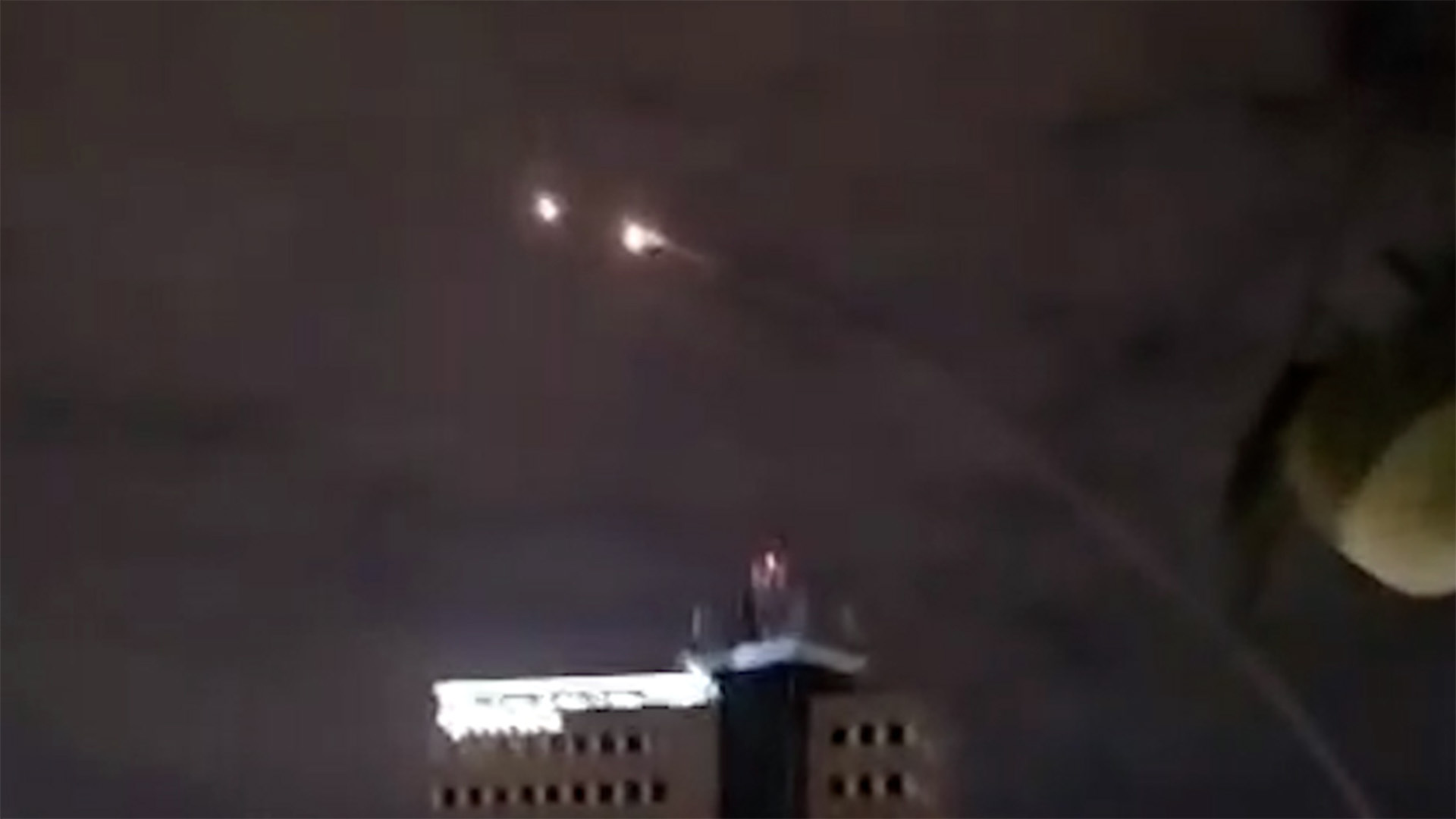
Interceptors were seen lighting up the sky over central Israel as sirens blared in response to an Iranian rocket barrage early Thursday morning.
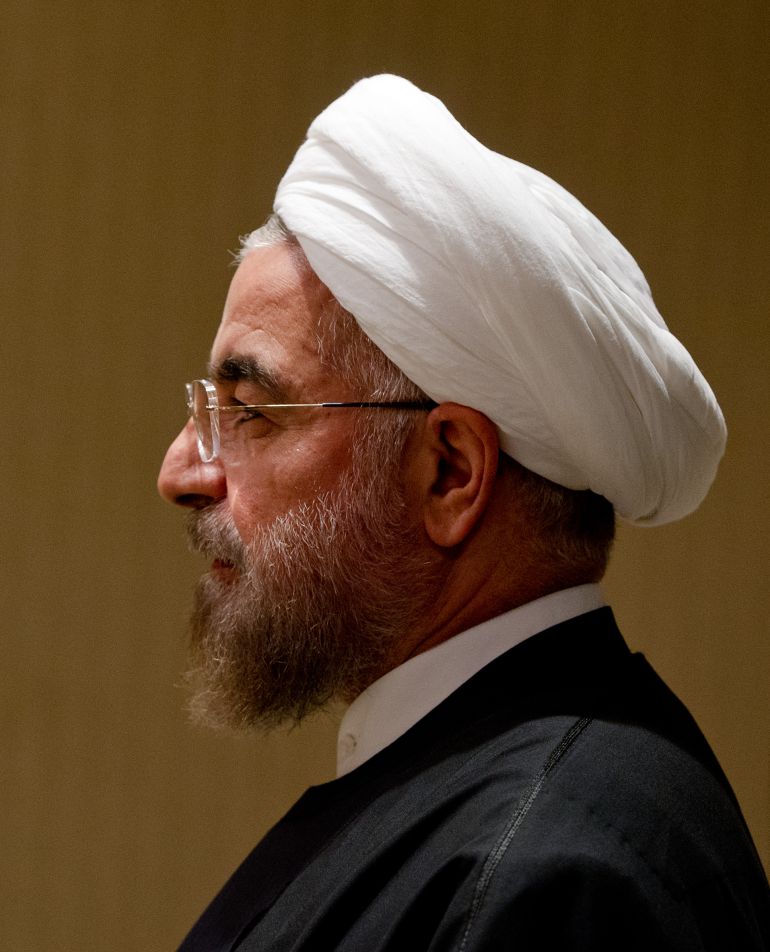
In Iran’s major turning points, Hassan Rouhani’s name tends to resurface – even when he is no longer at the centre of decision-making. And as the Islamic Republic enters a sensitive transitional phase after Supreme Leader Ali Khamenei was killed in a joint United States-Israeli strike, the question of which figures might be used to calm the domestic arena or rebalance power inside the system has returned to the forefront.
Rouhani, Iran’s former president (2013–2021), a Muslim leader with a doctorate in law, is not an outsider to the system he once promised to “reform”. He is a product of it: a longtime parliamentarian, a veteran of the national-security apparatus, and a former chief nuclear negotiator who rose to the presidency in 2013 as a pragmatist offering economic relief through diplomacy.
Rouhani was born in 1948 in Sorkheh, in Iran’s Semnan province. He received religious training in the Hawza system (Islamic religious seminary), then studied law at the University of Tehran, before earning a PhD in law from Glasgow Caledonian University in 1999.
After the revolution, he built his career through parliament. He was elected to the Majlis (Iran’s legislature) for five consecutive terms between 1980 and 2000, giving him practical political experience and longstanding relationships within the elite.
That background explains part of his later image as a “consensus man” more than an ideological confrontational leader: someone who moves within the rules of the game, not outside them.
To understand Rouhani’s political brand, it helps to place it in a longer arc of post-1979 ideological currents inside the Islamic Republic – an arc often described in Iranian political writing as a sequence of competing “discourses” that nonetheless remained anchored to the revolution and the system’s religious-constitutional framework.
Iran moved through phases that emphasised different priorities: currents sometimes described as “Islamic left”, “Islamic liberalism”, and a more market-oriented turn under former leader Hashemi Rafsanjani; then a period of “Islamic democracy” and “civil society” associated with Mohammad Khatami; followed by a social-justice-heavy, populist register under Mahmoud Ahmadinejad.
That’s when Rouhani arrived with the language of e‘tedal –or “moderation”.
Within that framework, “moderation” presents itself as an attempt to balance what supporters call the system’s two pillars: the “Republic” (pragmatism, governance, responsiveness) and the “Islamic” (ideals, clerical authority, revolutionary identity). This balance became central to Rouhani’s pitch in 2013: He promised to reduce external pressure, restart economic growth and lower domestic polarisation without challenging the authority structure that ultimately constrains any elected president in Iran.

Between 2003 and 2005, Rouhani led Iran’s delegation in nuclear negotiations with the “European troika” (Britain, France and Germany). He gained a reputation as a “pragmatist” among Western diplomats, while Iranian hardliners accused him of making concessions.
Later, that record became a pillar of his 2013 presidential campaign: a negotiator rather than a confrontationist.
In June that year, Rouhani won the presidency in the first round with more than 50 percent of the vote, avoiding a run-off in an election that saw high turnout.
Rouhani’s signature achievement was the 2015 nuclear agreement, the Joint Comprehensive Plan of Action (JCPOA), negotiated between Iran and the P5+1 – the US, China, Russia, France, United Kingdom and European Union.
Under the deal, the US and its allies lifted the bulk of sanctions imposed on Iran, and allowed Tehran access to more than $100bn in frozen assets. In exchange, Iran agreed to major caps on its nuclear programme.
At home, Rouhani sold the deal as a route to normalise the economy and curb inflation.
In May 2017, Rouhani won a second term with about 57 percent of the vote. Many inside Iran read the result as a bet by the country’s people on continued “opening” and reduced isolation.
But the power equation within Iran did not change. The presidency manages day-to-day governance, but it does not decide alone on the security services, the judiciary, the Revolutionary Guards or the core media architecture.
The diplomatic opening proved short-lived. In 2018, US President Donald Trump, in his first term, withdrew Washington from the JCPOA and reimposed sweeping sanctions, sharply limiting the economic gains Rouhani had promised. The reversal weakened Iran’s pragmatists and reformists, who had invested political capital in defending the agreement as the best available route out of isolation–while giving hardliners new ammunition to argue that negotiations with the US cannot deliver durable relief.
Rouhani’s presidency ended in 2021, and with the rise of conservative dominance within Iran’s politics, he appeared to be gradually pushed to the margins. He then became a member of Iran’s Assembly of Experts – the body constitutionally empowered to choose the supreme leader.
But in January 2024, the Reuters news agency reported that the Guardian Council barred Rouhani from running again for the Assembly of Experts.
Two years later, after the February 28 strike that killed Khamenei, the country – according to the constitution– entered a temporary arrangement phase until the Assembly of Experts selects a new leader. President Masoud Pezeshkian, Supreme Court Chief Justice Gholam-Hossein Mohseni-Ejei and Guardian Council member Ayatollah Alireza Arafi form the interim leadership council that are in charge until the Assembly of Experts announces its pick for the next Supreme Leader.
And from the hushed conversations and chatter that have emerged from within Iran’s elite circles over potential candidates for the supreme leader’s role, Rouhani’s name has resurfaced.
That possible return to political life, analysts say, is a testament to what Rouhani represents in Iran’s factional geometry: a governing style that privileges tactical compromise, economic management and controlled engagement – while remaining fundamentally loyal to the Islamic Republic’s constitutional-religious architecture.