Slider1
previous arrow
next arrow

News

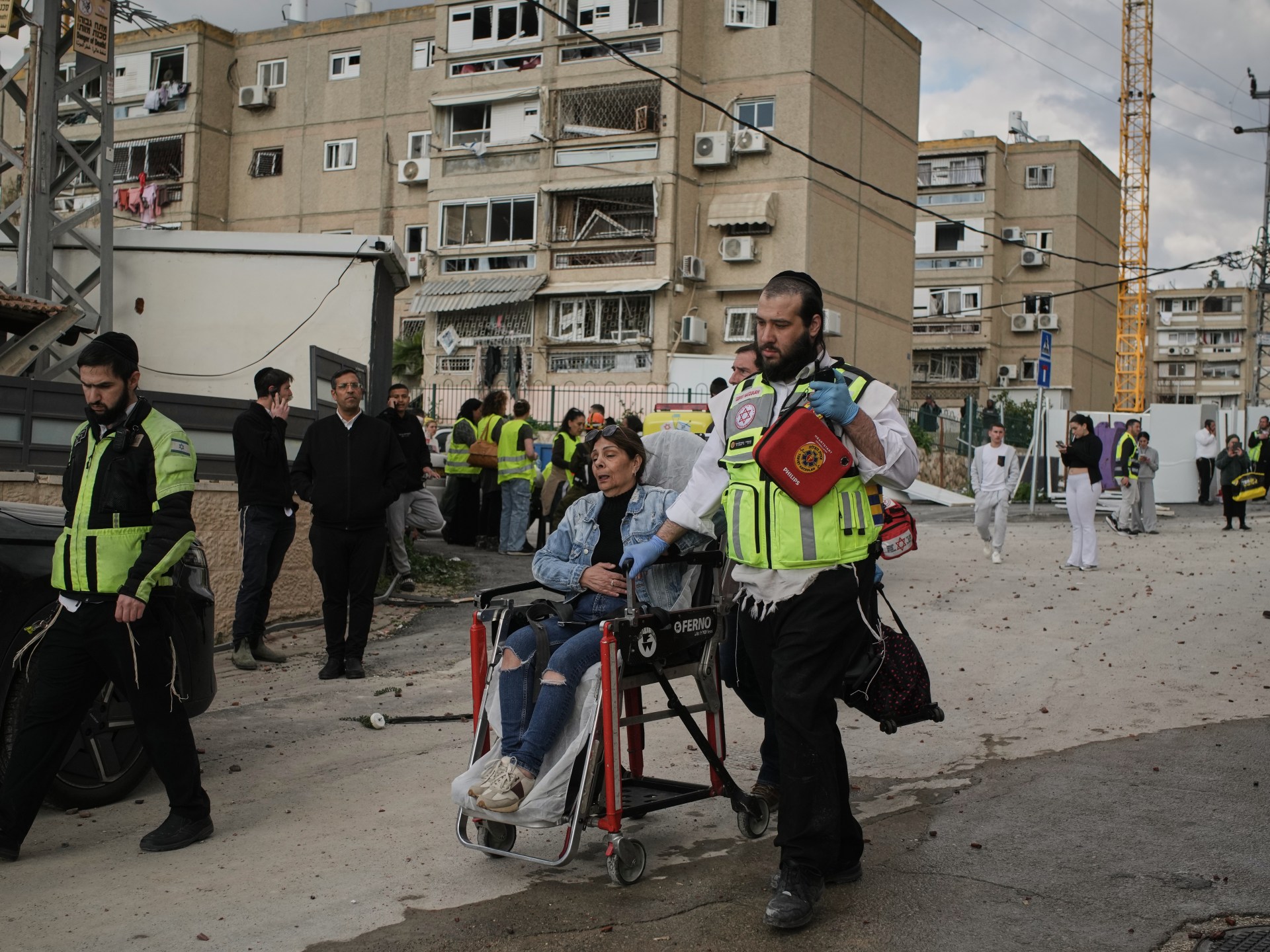
Israeli air attack targets hotel in Beirut

NewsFeed

Al Jazeera’s Zeina Khodr reports from the site of an Israeli attack on a hotel in Beirut’s Hazmiyeh suburb, an area not considered a ‘Hezbollah stronghold’. Attacks in other Beirut suburbs suggest Israeli operations are expanding beyond the group’s traditional base.

‘I want to turn bad Glasgow memories into good ones’

Richard Winton

BBC Sport Scotland

Hope Gordon remembers looking longingly out of the window of Yorkhill Children’s Hospital for day after day as a teenager.

She remembers seeing Glasgow outside. Remembers the SEC Armadillo being in the foreground. Remembers wondering what “the real world” outside the walls of her ward would hold for her.

The 31-year-old might have had to wait almost a couple of decades, but she will get her answer next summer.

Gordon will be part of Team Scotland for the Commonwealth Games in her home country, and will get to compete in the Armadillo in Para-powerlifting.

“To go from being that kid in that hospital bed, looking out of those windows, to actually being able to compete in that venue… it’s going to be really special,” she tells BBC Sport Scotland.

Glasgow, hospitals and ultimately the amputation of her left leg are a long way from the tiny settlement of Rogart, around 50 miles north of Inverness.

Growing up there, Gordon was always playing one sport or another so a little pain in her left knee was written off as just a natural consequence of that.

But one day, at the age of 12, the leg “stopped working” while she was at school.

“I thought I’d wake up the next day and be fine,” she says. “But one year later I was diagnosed with a condition called complex regional pain syndrome.”

The following nine years were gruelling. Repeated 450-mile round trips to Glasgow for an assortment of unsuccessful treatments. Hospital stays. Time in a wheelchair. But all the while, Gordon kept playing sport. It was her escape.

At the age of 21, she made the most consequential decision she ever could. “I eventually had it off,” she says of her left leg. Partially to stem any spread of the condition, partly to ease the pain, entirely to improve the quality of her life.

From canoeing, to skiing & now powerlifting

Hope GordonGetty Images

And how. A swimmer of some repute during her teenage years, Gordon maintained that initially but found herself keen to try something else.

That something would be para-canoeing. “You’ve still got the the water element and, if you’ve got a disability, water gives somebody such a sense of freedom because it’s easier to move around on water than on land,” she says. “It just ticked the boxes.”

Soon, she was invited on to the British team, moved to Nottingham and has been there since, winning world medals and Paralympic silver in Paris in 2024.

Gordon even found time to dip into winter sports, going to the 2022 Winter Paralympics as a nordic skier after being cajoled into giving it a go by 2026 Games flagbearer Scott Meenagh.

Canoeing is her main sport, though, to the extent that she will be competing at a World Cup event and World Championships either side of the Commonwealths.

And it is her training for that that led Gordon to choose powerlifting as her means of fulfilling a life’s dream of being part of Team Scotland.

“Bench press is one of the key exercises for canoeing so when the programme was announced, I looked at the list and I thought that might be the one,” she explains.

“I had to unlearn quite a bit and learn it again but hopefully it will benefit me on the water too.”

Gordon is keen to temper medal expectations, insisting these Games are actually about something much bigger for her than podium places.

Having watched some of the swimmers she trained with win gold in 2014 – “I was in the crowd and able to to sing Flower of Scotland three times watching Hannah Miley, Ross Murdoch and Dan Wallace” – she has long wanted to represent Scotland.

“Commies has been such a big dream for me,” explains the aspiring bagpiper, sitting in her English home surrounded by Scottish memorabilia. “More so than what some people might argue are bigger goals, like a Paralympics.

Related topics

  • Disability Sport
  • Commonwealth Games

How long can Israel sustain a military conflict with Iran?

Leaders in Israel and the United States have indicated that the conflict against Iran could continue for weeks.

The US, led by President Donald Trump, has emphasised that this will not be a problem, and that its military has the capacity to conduct an extended fight. But for Israel, already fatigued by the cost of having inflicted a genocide on Gaza, as well as wars or attacks in Lebanon, Syria, and a previous round with Iran, a lengthy conflict could be more costly.

Recommended Stories

list of 3 itemsend of list

Since it attacked Iran on Saturday, Israel has endured repeated missile and drone strikes, forcing widespread air raid alerts, school closures, and the mobilisation of tens of thousands of reservists.

Cities like Haifa and Tel Aviv have faced sustained attacks, emergency services are stretched, and a public, unused to war on the scale their government has inflicted upon others, has spent the past few days in and out of bomb shelters.

For now, enthusiasm for the war is high. Interviews with Israelis in most major cities show a hunger to confront an enemy that the public was told for decades was determined to exterminate them. With the exception of the far-left, politicians have rallied to the government banner.

“As soon as the war started, Israel was swept in a wave of militarism,” Israeli political economist Shir Hever said.

“It was not the same as [the June 2025 12-day war]. Then, it was mostly panic, an existential fear that Iran could destroy Israel. Now, it is gung-ho militarism and overconfidence. Even the war critics – who are few and far between – recommend that [Israeli Prime Minister] Netanyahu keep the war ‘short’, as if Israel can decide when it ends.”

Support for the war is part of what many see as a radicalisation of Israeli society. Previously peripheral far-right politicians have made their way into the centre of government, with political polarisation and economic strain accelerating the flow of the young and talented out of the country.

Those who remain are already conditioned to think of Iran as the fundamental enemy of their country, and weeks of war may militarise the society even further.

“It’s like the UK blitz in World War II,” Daniel Bar-Tal, an academic at Tel Aviv University, said.

“Then, the British accepted this bombardment because they saw themselves as fighting this ultimate evil. Israelis have the same feeling. We are indoctrinated into believing, almost from birth, that Iran is evil, which is reinforced through kindergarten, high school, and the army.”

For Bar-Tal, it is impossible to guess what kind of Israeli society might emerge from weeks of renewed war, only that the country’s past moral certitude in the righteousness of its establishment had not been dented by the massacres committed during the 1948 Nakba, nor the recent Gaza genocide.

“Now, we have a generation who are still more militaristic and more rightist, with Netanyahu telling us we now need to live by the sword. It’s just more evidence that Israel needs enemies to survive.”

Bombs and guns

Beyond the social impacts, Israel has military calculations to take into account if the war does drag on.

Most pressing is determining how long Israel can sustain the current levels of warfare against an opponent of Iran’s scale and military heft. This will be affected by both the support it receives from its allies, such as those in the US and Europe, and whether its defences become exhausted before those of Iran, defence analyst Hamze Attar said.

“In the first three days of the war, Iran launched more than 200 ballistic missiles at Israel,” he told Al Jazeera. “To put that into context, during the 12-day war, they launched around 500, each requiring that Israel counter by launching an interceptor rocket. That’s probably more than Israel has the capacity to counter, so, without US help, it would probably have lost control of its airspace by now.”

Israel has three different air defence systems: the Iron Dome, for short-range rockets and artillery; David’s Sling, to counter medium-range rockets and cruise missiles; and Arrow 2 and Arrow 3, designed to intercept ballistic missiles

The Israelis do not disclose the number of interceptors they have in stock, but Israel began to run low on interceptor stocks during the 12-day war, indicating that it will become more difficult to maintain a high level of interceptions if the war continues for a lengthy period. This would lead to a rationing of interceptors and a focus on defending military and political targets, potentially leading to more civilian casualties.

According to Israeli and US sources, Iran has been producing ballistic missiles at a rate of 100 per month in the aftermath of June’s conflict, Attar said, which would suggest that Tehran had already amassed a significant stockpile.

However, Attar was quick to point out that the Iranian threat is also based on the types of ballistic missiles they have.

“We don’t know what type of ballistic missiles,” Attar said, outlining the different types of missiles: long-range, reaching as far as Greece and the Mediterranean; medium-range, reaching Israel; and short-range, which can target the Gulf states.

“Likewise, we don’t know how many [missiles] they [Iran] had before the 12-day war, how many were destroyed during that war, or how many launchers they have,” Attar added. “If you don’t have the launchers, which the US and Israel are targeting, it doesn’t matter how many missiles you have. It’s like having bullets without a rifle.”

Economic considerations

More than two years of almost constant war have taken their toll on Israel’s economy, analysts warned, with the cost of munitions weighing on the Israeli purse, and the deployment of a reservist force numbered in their hundreds of thousands for periods far longer than any planners had originally conceived of.

Israel’s spending in 2024 on the wars in Lebanon and Gaza was reported to have reached $31bn, contributing to the country’s highest budget deficit in years. Preliminary figures from 2025 show spending on war reaching $55bn.

The pressure on the economy led to the downgrading of Israel’s sovereign credit rating in 2024 by all three major credit rating agencies.

“Israel is experiencing a debt crisis, an energy crisis, a transportation crisis, [and] a health service crisis,” Hever said.

But none of these would be enough to halt Israel’s military campaigns on their own, the political economist cautioned. “This is not a question of economy, but a question of technology.”

All you need to know about new F1 cars

Andrew Benson

F1 Correspondent
  • 22 Comments

The Formula 1 cars that will start the new season at this weekend’s Australian Grand Prix are very different from the ones that finished 2025.

Over the winter, the teams have been wrestling with the biggest rule change in F1 history – engines, chassis, tyres and fuel are all subject to new regulations.

On the surface, the cars look similar – they are still single-seaters with front and rear wings and exposed wheels.

But the engine design has changed, the chassis have a new aerodynamic philosophy, the fuels are fully sustainable carbon-neutral concoctions made from waste biomass or synthetic industrial processes, and the tyres are smaller.

The engines

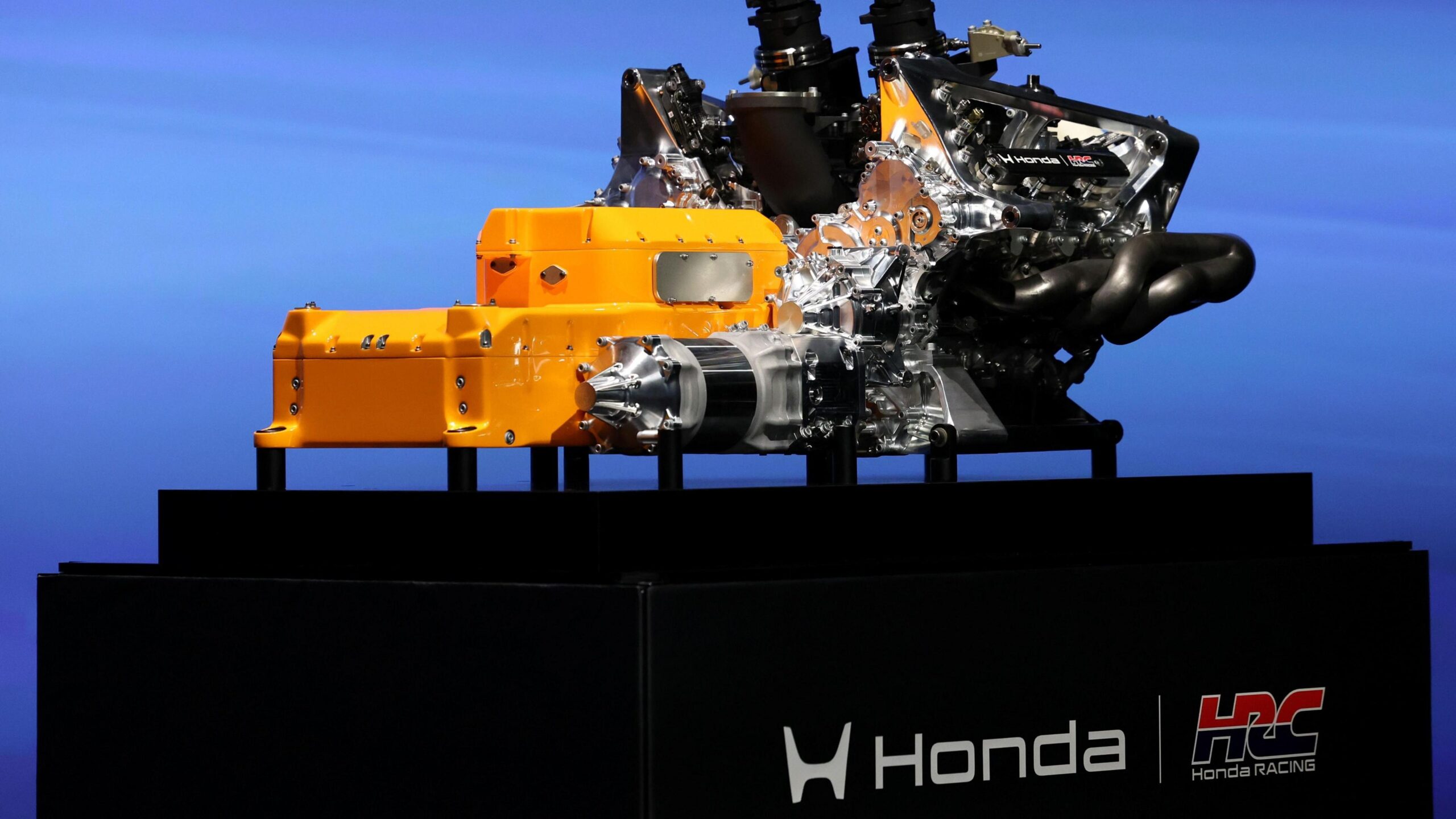
Just as last year, the engines are 1.6-litre V6 turbo hybrids producing close to 1,000bhp. But their architecture has changed and so has the split between internal combustion engine (ICE) and electrical parts of the power-units.

The split between ICE and electrical is more or less 50-50 (in reality, it’s more like 52-48, but that’s less catchy), where last year it was about 80-20.

The electrical side now produces up to 350kw (470bhp), three times as much as last year. But the battery is about the same size.

Between 2014-25 the engines had two motor generator units recovering energy – one on the rear axle known as the MGU-K (for kinetic) and one on the turbo shaft known as the MGU-H (heat).

Now, though, the MGU-H, which was ingenious but highly complex and expensive, has been removed, leaving only the K.

The idea was to attract more car manufacturers into F1. On that basis, it was a success – Audi, General Motors and Ford have all entered F1 because of the new rules, and Honda has reversed a decision to quit.

But the removal of the MGU-H, and the decision not to allow energy recovery from the front axle, has left the cars energy starved.

Their batteries are constantly being emptied and recharged but it’s impossible to recover enough energy to have maximum power at all times. This has led to some significant changes for the drivers, more of which in a moment.

The cars

Max Verstappen driving the 2026 Red Bull during pre-season testing in BahrainGetty Images

From 2022-25, the cars were based around an aerodynamic philosophy known as ‘ground effect’. They had curved venturi tunnels under the car – essentially turning the underside of the car into two giant wings – which created an area of low pressure that sucked the car to the track.

Governing body the FIA decided to abandon this approach because it led to cars that needed to be run low and with very stiff suspension for optimum performance. The drivers have welcomed this change because the previous cars were uncomfortable to drive and led to back problems.

The new cars have reverted to what is known as a “step-plane” philosophy. The underside is flat in the area between the wheels, with a central part – the chassis, in which the driver sits – lower than the floor on either side.

In addition, the cars have been made narrower, smaller and about 30kg lighter, to increase their manoeuvrability.

For now, the cars will be a little slower around a lap – it was about two seconds or so in pre-season testing in Bahrain. But that will change as development matures the designs.

The most obvious change, though, is to the front and rear wings.

The engine formula was arrived at before the chassis rules, and it quickly became obvious that the cars would be energy starved. So compromises had to be made to help the cars work better with the new engines and harvest sufficient energy.

Braking is the predominant way of recovering energy in a hybrid car, but the old cars would not have been braking for long enough to generate sufficient electricity.

To increase top speeds and increase braking distances, the rule-makers came up with moveable aerodynamics, which will be known as ‘straight-line mode’ – the front and rear wings will lie flat on the straights to reduce drag.

The tyres were reduced in width for the same reason – by 25mm at the front and 30mm at the rear.

The knock-on effect of that is that the old drag-reduction system (DRS) overtaking aid, which opened the rear wings on the straights for a speed boost for a car if it was within one second of the car in front, could no longer be used. The wings were already open for another reason.

Australian Grand Prix

Listen on Sounds

The complicated bit

So far, so relatively simple. But this is F1, so it gets complicated pretty quickly.

The need to recover energy to a much greater extent than last year, and the limited ways of doing that, have led to the driving challenge changing significantly.

Of course, in the corners, the drivers are still pushing the car to the limit of grip and going in, through and out of the bends as quickly as possible. The vast majority of the time, anyway.

Energy recovery has even changed that, though. In many corners, particularly slow-speed ones, drivers will be using higher gears than would be optimum if cornering speed were the only concern.

That’s to keep the turbo spinning so the engines can be run against the MGU-K to charge the battery.

But that’s just one way of recovering energy. The others are:

There are other layers of complication beyond that. We won’t go too deep, but one thing to know about is that, as things stand, teams are allowed to recover energy at the maximum 350kw during lift and coast, but only at 250kw when super-clipping.

There is ongoing debate about whether that should change and the full 350kw be allowed at all times, to make energy recovery more efficient and easier.

The engineers work out in advance the optimum use of the energy recovery and deployment around the lap to produce the best overall lap time.

Now we come to why we caveated the concept of the drivers being on the limit of grip in corners at all times. That’s because sometimes it’s more lap-time efficient not to deploy energy in high-speed corners, and save it for acceleration out of slow-speed ones.

What about using the energy?

Mercedes' George Russell with Ferrari's Charles Leclerc right behind him and then Williams' Carlos Sainz during pre-season testing in BahrainGetty Images

Generally, energy use is pre-set by the team. But there are situations in which the driver can take over control of the system.

One of these is the overtake mode described above. The other is a “boost” mode. This simply means that at the press of a button the driver can request maximum power from the battery.

Unlike overtake, this can be used at any point around the track, for both attack and defence.

Drivers will have to calculate whether to use it on a risk versus reward basis.

Related topics

  • Formula 1

More on this story

    • 2 days ago
    Gabriel Bortoleto drives the Audi on track in Bahrain
    • 4 hours ago
    A smiling George Russell speaking into an F1-branded microphone during a news conference at Bahrain testing
    • 2 days ago
    Fans cheer in the fanzone and hold up signs for Australian driver Oscar Piastri
    • 1 day ago
    Lewis Hamilton during an FIA-F1 news conference during pre-season testing in Bahrain. He is wearing a Ferrari t-shirt
    • 7 days ago
    Arvid Lindblad
    • 3 days ago
    Lewis Hamilton, wearing his red Ferrari suit and Lando Norris, wearing his papaya Mclaren suit, pose during the F1 2026 photocall in Bahrain
    • 5 days ago
    Valtteri Bottas in a Cadillac ahead of Gabriel Bortoleto in an Audi during F1 pre-season testing in Bahrain
    • 24 February
    Fernando Alonso driving the 2026 Aston Martin during testing in Bahrain
    • 6 days ago
    Red Bull's Max Verstappen, McLaren's Lando Norris and Mercedes' George Russell pictured together, with Mercedes' Kimi Antonelli in the background, during pre-season testing in Bahrain
    • 24 February
    F1 logo on the back of a mobile phone

Destruction seen after attack on Iran’s Assembly of Experts building

NewsFeed

Videos show the aftermath of an air attack on Iran’s Assembly of Experts building in the city of Qom, south of the Iranian capital Tehran. The Assembly is the body that will choose the successor to the assassinated Supreme Leader Ali Khamenei.

Man Utd eye wingers, after getting rid under Amorim

Simon Stone

Manchester United reporter
  • 131 Comments

Michael Carrick has said Manchester United could look to sign a left winger this summer – even though they spent the past three transfer windows under Ruben Amorim getting rid of wide players.

Historically, many successful United sides have been built around wingers.

George Best, Ryan Giggs, David Beckham and Cristiano Ronaldo are regarded among some of the club’s greatest players – while others such as Steve Coppell, Gordon Hill, Willie Morgan and Andrei Kanchelskis also made a significant impact.

Although not a winger in the orthodox sense, Busby Babe Eddie Colman was nicknamed ‘snake hips’ for his ability to change direction at top speed.

United began last season with five experienced wide players.

Between them, Jadon Sancho, Antony and Amad Diallo cost the club £173m.

Marcus Rashford and Alejandro Garnacho both came through the United’s youth ranks, although the latter was at Atletico Madrid before moving to Manchester as a 16-year-old in 2020.

Sancho is currently on loan at Aston Villa, having spent last season at Chelsea, who paid a £5m clause to send the 25-year-old back to United last summer rather than sign him permanently.

His contract is set to expire in the summer, and it seems unlikely United will keep the England international, signed by Ole Gunnar Solskjaer in 2021. Solskjaer intended to play him on the right but the player said his preference was to play on the left.

Antony left for Real Betis in a £21.65m deal last September, a couple of days after Garnacho joined Chelsea for £40m.

Rashford, who also prefers to play on the left, spent the second half of last season at Villa following a fall-out with Amorim, and then joined Barcelona on loan last summer.

Barca have a £26m option to buy Rashford, and talks have started over the possibility of triggering it.

However, sources close to the player have indicated no agreement is in place – and given Rashford has two years left on his £325,000-a-week United contract, further negotiation is going to be required.

It leaves Amad as the only orthodox wide player available to Carrick, although he has also used Patrick Dorgu, who joined from Lecce as a wing-back under Amorim, in a more offensive role.

Although it is not clear yet who will be in charge once the season has reached its conclusion, Carrick has repeatedly said the decisions he is making are for the club’s long-term interests.

Asked if left-wing specifically was an area that might need addressing, Carrick replied: “I think you’re always looking at the balance of the team and the squad to give you the utmost flexibility, so it’s definitely something to look at, for sure.”

Diomande and Gordon linked

Carrick did state the situation “was not a huge concern at the moment” and that he felt there were options available to him that allowed him variety in attack.

“We can still be dangerous,” said the 44-year-old.

“Matheus [Cunha] has played that role and caused big problems and had big moments. When he plays wide, he is tough to stop one-on-one.”

But Cunha is happiest drifting away from the touchline and likes to get on the ball in deeper or more central positions.

In the junior ranks, Gibraltar international James Scanlon was virtually an ever-present in the Premier League 2 side for the first half of the season and is capable of playing in an attacking role on both sides of the pitch, but he has now joined League Two promotion chasers Swindon on loan.

England Under-20 international Shea Lacey made a huge impact in three substitute appearances for the senior team but he prefers to play on the right. In any event, he has only been involved once since getting sent off in the FA Cup third-round defeat by Brighton on 11 January, when he was an unused substitute against Fulham last month.

Few supporters would claim United were wrong to get rid of Sancho or Antony.

Some believe Amorim could have handled the Garnacho situation better, although the Argentina international is yet to impress on a consistent basis at Chelsea, while Rashford’s time at his boyhood club seemed to have run its course.

Nevertheless, at a time when United are trying to control their budget and costs across the club are being cut, the wide-left situation highlights an historical weakness in their recruitment strategy.

It also raises questions about the wisdom of hiring a coach like Amorim, whose tactics differed so significantly from what fans had been used to.

United were prepared to sanction the £65m signing of Antoine Semenyo in January, but the former Bournemouth man opted to join Manchester City.

Amorim wanted to use the money elsewhere in his squad. United’s refusal suggests they are targeting specific areas, and the left side of their attack is one of them.

They are among several high-profile Premier League clubs to be linked with RB Leipzig’s 19-year-old Ivory Coast international Yan Diomande, who is likely to cost around £70m if he opts to move in the summer.

Newcastle’s Anthony Gordon has also been mentioned, although it is not clear whether United have an interest in the England international.

United’s situation is complicated by the fact they are prioritising bringing in at least one, and possibly two central midfield players.

Experienced Brazil captain Casemiro is leaving at the end of the season and £50m Uruguay international Manuel Ugarte has only made three substitute appearances – totalling 27 minutes – under Carrick.

No changes can be made until the transfer window opens anyway, so, for now, Carrick must make the best of his present options.

“We’re always thinking of that perfect scenario of mixing players together and connections and seeing how it suits on the pitch,” he said.

Related topics

  • Manchester United
  • Premier League
  • Football

More on this story

  • Manchester United bench
  • Ask Me Anything logo