Slider1
previous arrow
next arrow

News

‘Worst-case scenario’: Trump weighs replacing Khamenei as leader of Iran

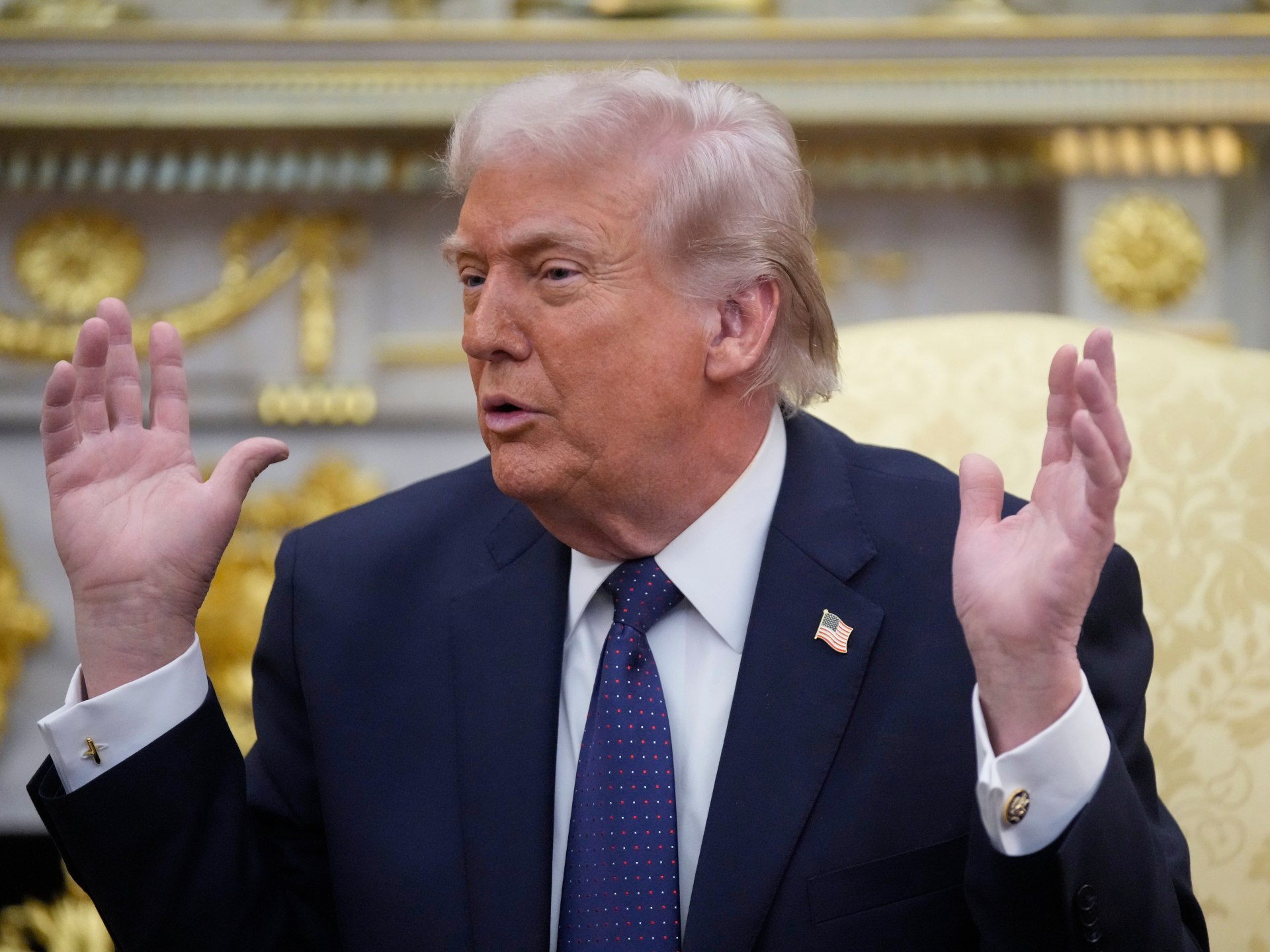
United States President Donald Trump has publicly mused about the leadership he would like to see in Iran following the assassination of Ayatollah Ali Khamenei.

During an Oval Office appearance on Tuesday with German Chancellor Friedrich Merz, one reporter asked Trump what plans he had made for a “worst-case scenario” in Iran, as the US and Israel continue to wage war on the country.

Recommended Stories

list of 3 itemsend of list

Trump replied that he had few worries from a military standpoint, but he expressed concern that Khamenei could be succeeded by another leader unfriendly to US priorities.

“I guess the worst case would be we do this, and then somebody takes over who’s as bad as the previous person, right? That could happen. We don’t want that to happen,” Trump said.

“It would probably be the worst. You go through this and then, in five years, you realise you put somebody in who is no better.”

Shifting rationales

The US and Israel launched their military offensive on February 28, and Iran has responded with a barrage of attacks primarily aimed at Israel and US bases across the Middle East.

The death toll in Iran has reached at least 787 people. Injuries and deaths have also been reported across the region. At least six US service members have been killed in the fighting.

The Trump administration has offered a range of rationales to justify the attack, though experts have condemned the offensive as a violation of international law.

One of the rationales offered by Trump himself was the removal of Khamenei’s government.

In a prerecorded statement published over the weekend, Trump said the US military action was designed for “eliminating imminent threats from the Iranian regime”.

He added that he sought to “prevent this very wicked, radical dictatorship from threatening America” and issued a call for Iranian opposition members to “take over your government”.

Other administration officials, however, attempted to downplay regime change as a motive for the ongoing attacks, including Secretary of Defence Pete Hegseth.

“This is not a so-called regime change war,” Hegseth told reporters on Monday. “But the regime sure did change, and the world is better off for it.”

Venezuela a model for Iran?

Still, in Tuesday’s remarks, Trump suggested a vision for Iran’s future that reflects the outcome of his recent military intervention in Venezuela.

On January 3, Trump authorised a military attack on the South American country that culminated with the abduction of then-President Nicolas Maduro and his wife Cilia Flores. The couple is currently in New York, where they await trial on charges related to drug trafficking.

Following Maduro’s removal, his vice president, Delcy Rodriguez, was sworn in as Venezuela’s interim leader, with the Trump administration’s support.

Ever since, Rodriguez’s government has largely acceded to US demands, including by surrendering millions of barrels of Venezuelan oil.

Trump, meanwhile, has warned that Rodriguez could “pay a very big price, probably bigger than Maduro”, if she “doesn’t do what’s right”.

But on Tuesday, Trump once again indicated that the Rodriguez government has been cooperative, and he was satisfied with the results of January’s attack in Venezuela. He hinted it could be a model for Iran’s future, as well.

“Venezuela was so incredible because we did the attack, and we kept government totally intact. And we have Delcy, who’s been very good. We have the whole chain of command,” Trump said.

He also underscored the economic benefits he hopes to extract, as the US continues to exercise control of Venezuela’s oil. He called the process “seamless”.

“The relationship’s been great. We’ve taken out a hundred million barrels of oil already. And a big part of that goes to them, and a big part goes to us,” Trump said.

“It’s been great. We paid for the war many times over, and we’re going to be running the oil. And Venezuela’s going to make more money than they ever made.”

Barriers to Trump’s vision

But Trump nevertheless signalled that there were hurdles to implementing a Venezuela-style regime change in Iran.

The US and Israeli attacks on Iran, Trump indicated, had killed many of the alternative leaders he had hoped to see in power.

“Most of the people we had in mind are dead,” Trump said. “We had some in mind from that group that is dead. And now, we have another group. They may be dead also, based on reports.”

He added that his options for replacing Khamenei were running low. “Pretty soon, we’re not going to know anybody.”

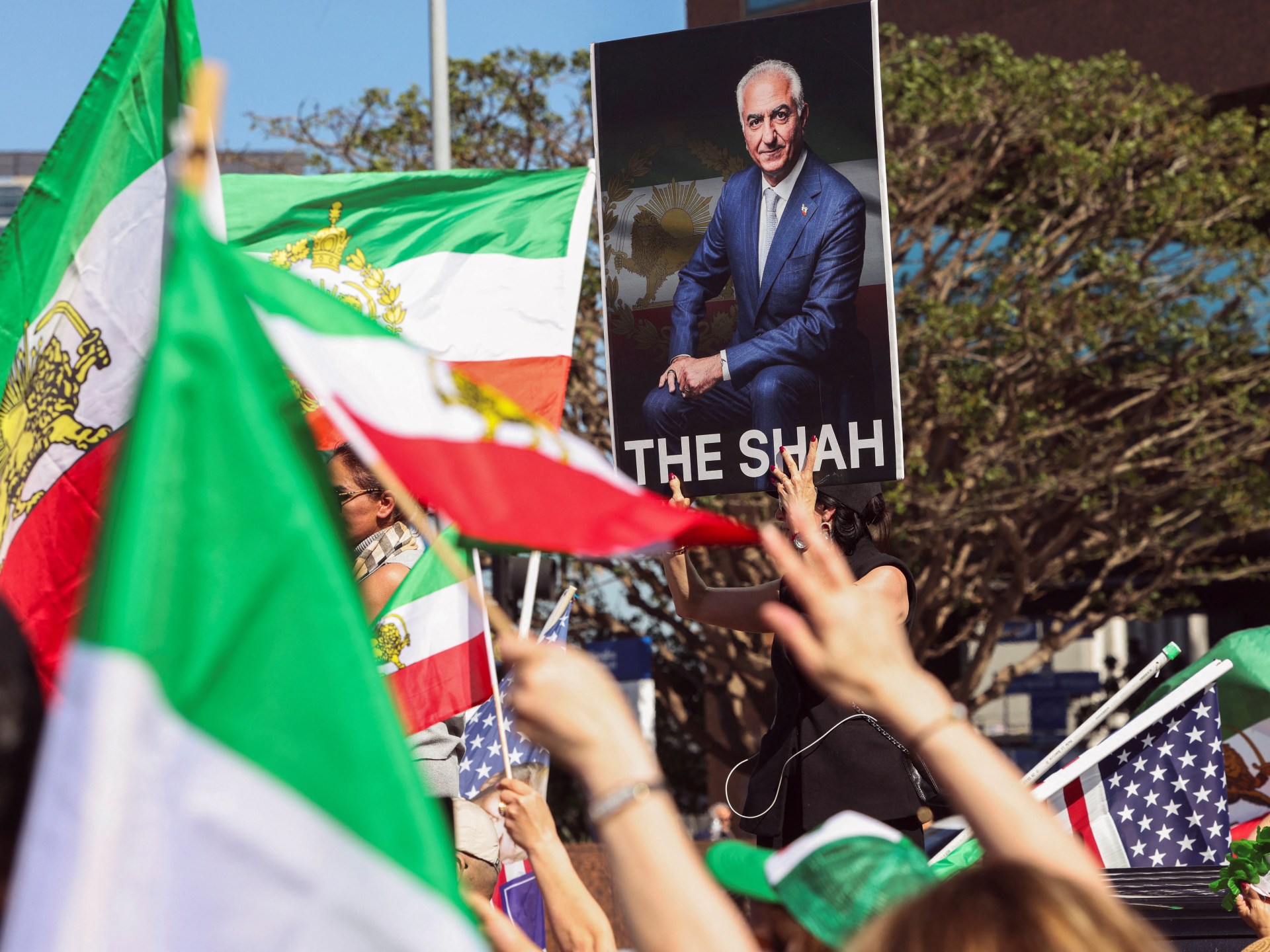
Still, Trump has repeatedly expressed ambivalence about the leadership prospects of Reza Pahlavi, the son of Iran’s last shah, who was exiled during the 1979 revolution.

Pahlavi, 65, has pitched himself as a candidate to lead Iran on an interim basis, in a bid to restore democracy.

But critics have argued that Pahlavi is a divisive figure. His father oversaw human rights abuses during his time as monarch, and Pahlavi himself has been accused of attacking fellow dissidents and failing to build a coalition.

When asked if Pahlavi could be an alternate leadership candidate, Trump demurred.

“I guess he is. Some people like him,” Trump said, before adding, “We haven’t been thinking too much about that. It would seem to me that somebody from within, maybe, would be more appropriate.”

Trump then explained he would prefer a moderate, “somebody that’s there, that’s currently popular, if there is such a person”. Still, he did offer light praise for Pahlavi, repeating a comment he had previously made about the shah’s son.
Tinubu Directs Immediate Release Of Funds For Space Assets Maintenance

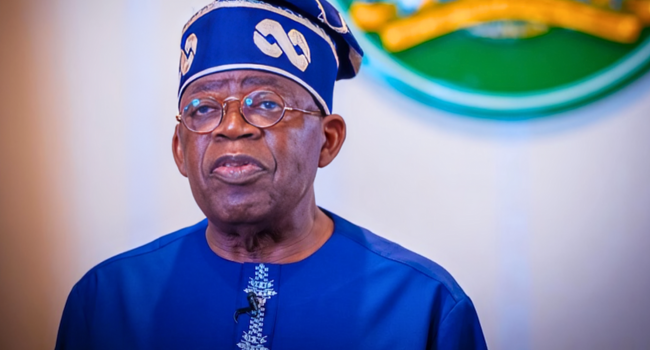
President Bola Tinubu has directed the immediate release of approved funds for the maintenance of Nigeria’s space assets in line with the National Space Policy and Programme.

He reiterated his administration’s commitment to the realisation of Nigeria’s space policy and programme as outlined in the revised 25-year roadmap for space development.

“I hereby approve that the cost of the implementation of the approved revised 25-year roadmap for the implementation of the national space policy be forwarded to the Federal Executive Council for consideration and approval,” he said.

The President, who was represented by Vice President Kashim Shettima, gave the approval on Tuesday during the first meeting of the National Space Council held at the Presidential Villa, Abuja.

He said, “Nigeria will not watch the new frontier unfold from the sideline. We will participate, we will compete, we will contribute. Our space ambitions must be anchored in outcomes, accountability and national value.

“We must build a programme that serves the farmer in the field, the teacher in the classroom, the entrepreneur in the market, the soldier on duty, the researcher in the laboratory and the policy maker who must plan with evidence rather than guess work. This is how a nation turns attitude into advantage.”

President Tinubu assured that his administration, through the Renewed Hope Agenda, is committed to developing the society “by engaging relevant human resources for the socio-economic improvement of our nation.

“We shall be steadfast in providing the required support to the success of the space programme as well as relevant resources needed for its growth and the successful realisation of the mandate of the nation’s space agency,” he added.

READ ALSO: Tinubu Nominates Taiwo Oyedele As Minister Of State For Finance

The President noted that his administration’s investments in the sector are prompted by the opportunities in outer space “as a new frontier for human development, as a stimulus for increased technological advancement and economic diversification.”

He explained that outer space provides “a unique challenge and platform for effective exploration and exploitation of the nation’s natural resources as well as the protection of its environment.

President Tinubu continued: “Space technology remains the foundation for cyber security and a vibrant digital economy. The space economy is rapidly growing and it’s expected to exceed 1 trillion dollars by 2040. When we invest in space, we are not funding a distant dream.

“We are funding precision in agriculture and security in our borders; we are funding early warning systems against floods and fires, smarter cities, safer skies, stronger communications and a digital economy that can compete with the best in the world. We are funding the confidence of a nation that refuses to be trapped by the limits of yesterday.”

Urging the space agency to be alive to its mandate of ensuring that space assets and resources over Nigeria are used responsibly, President Tinubu directed the agency to “employ all legally available means to enforce the space regulation and spectrum management framework for a secure utilization of space assets and resources over Nigeria on behalf of the National Space Council as provided in the NASDRA Act 2010.

“I also direct all MDAs, stakeholders and the private sector to comply with the space regulatory framework. This directive also includes timely release of all approved funds for this purpose by the Federal Ministry of Finance,” the President further stated.

Shedding more light on the outcome of the meeting, the Minister of Innovation, Science and Technology, Kingsley Udeh, described the National Space Council meeting chaired by the Vice President, on behalf the President, as a historic meeting with landmark outcomes for the improvement of Nigeria’s space industry and ecosystem.

According to him, other decisions taken at the meeting included the approval of the “conditions of Service and Staff Regulation” of the Nigerian Space Research and Development Agency to align with international best practices.

He explained that the development is intended to give those working in the space industry a competitive level of remuneration to ensure that Nigerian experts in the space industry and ecosystem do not leave the country but are retained to maintain and sustain the nation’s space programme.

“Another resolution passed by the Council is to set up a working group of space experts to work on the revised Nigeria 25-year space programme roadmap,” the Minister disclosed.

He listed members of the working group to include the Nigerian Space Research and Development Agency, the Nigerian Communications Commission (NCC), the National Defence Space Agency, the Nigerian Communications Satellite (NIGCOMSAT), as well as other stakeholders in the Nigerian space ecosystem.

He also appreciated the Council for approving the development and operationalisation of the Bola Ahmed Tinubu Space Centre in Ekpe.

Trump mulls exiled Iranian dissident Reza Pahlavi as regime successor

NewsFeed

US President Donald Trump said he is not looking for somebody “who is no better” than Ayatollah Ali Khamenei as Iran’s leader, as exiled opposition figure Reza Pahlavi is discussed as a possible alternative. Trump said he wants a leader who can “bring it back for the people”.

England deliver Wiegman’s ‘clear win’ to make World Cup statement

Emma Sanders

BBC Sport women’s football news reporter
  • 158 Comments

A “clear win” was what Sarina Wiegman wanted from her England side against Ukraine – and that was what the Lionesses delivered.

Knowing just one team from their group qualifies automatically for the 2027 Women’s World Cup, England needed to make their superiority count.

World champions Spain await them in April, with many expecting the two sides to go head-to-head for the top spot in their qualifying group.

So when England went into the half-time break on Tuesday at 0-0 against a Ukraine side 30 places below them in Fifa’s rankings, fans could be forgiven for anxiety.

    • 3 days ago

‘They didn’t figure it out in first half’

It was a new-look England as Wiegman is managing the return of several key players from injury, while rewarding those in form.

Manchester City’s Laura Blindkilde Brown was handed a rare start, while London City Lionesses defender Poppy Pattinson made her debut in the second half.

The back four in the starting XI had fewer than 100 caps combined – with captain Leah Williamson earning 65 of them – as Maya Le Tissier was at right-back over Lucy Bronze, while Taylor Hinds started her third game in four matches at left-back.

In-form Jess Park was playing out wide, as she has done for Manchester United so impressively this season, rather than in midfield where Wiegman has often used her.

It was uncharacteristically experimental from Wiegman considering this was their first competitive fixture since Euro 2025 and it took time to take shape.

England had 40 touches in the opposition box and 85% of the possession in the first half, but failed to score from their 15 efforts on goal.

The tempo had dropped, Ukraine were defending well and England’s hopes of flying out of the blocks had not materialised.

“They didn’t quite figure it out in the first half. They were a little bit stunned about what to do,” ex-England midfielder Fran Kirby told BBC Radio 5 Live Extra.

“Ukraine defended really well. They were really tight between the lines and they made it very difficult for England.

“They needed to have a little bit more composure in the box instead of crossing it for the sake of crossing it.

“The second half showed that they learned from the first half in terms of what wasn’t working.”

With a side stacked full of quality, the two-time European champions responded in the second half.

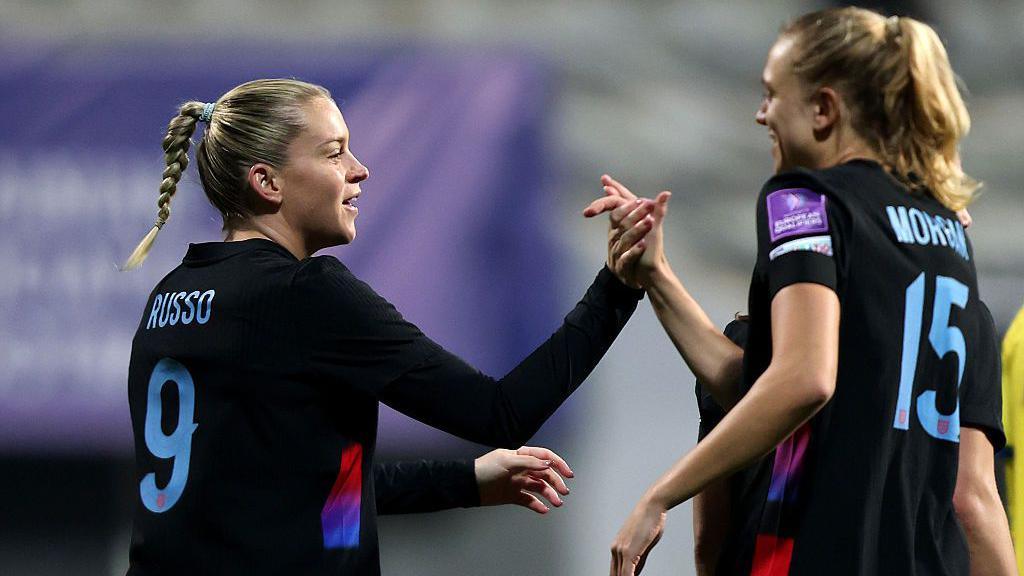
Arsenal striker Alessia Russo netted two goals in four minutes to put England in control, before a double from Georgia Stanway took them out of Ukraine’s reach.

Wiegman’s “clear win” was confirmed when Park also scored twice later on.

“I think it took us the first half to break them down. We were still very good in the first half. They were defensively solid,” said Russo afterwards.

“When the spaces opened, we took our chances. I wouldn’t say it was relief [when we scored]. We knew we had the quality in us and it was just executing it.

How does victory set England up?

Maya Le Tissier and Georgia StanwayGetty Images

Tuesday’s match was played in Turkey, with Ukraine unable to host the fixture because of the ongoing war with Russia.

Ukraine’s players had to take a 15-hour coach journey to the Mardan Stadium for the game.

The Lionesses, back-to-back European champions, had recognised superstars in their squad, and went to the match as heavy favourites.

It was a fixture they simply had to win.

Rivals Spain did their part with a 3-0 win over Iceland and they will be expected to get maximum points against weaker opposition in their upcoming fixtures.

If the Lionesses hope to keep up with the defending world champions, and give themselves a chance of earning automatic qualification, they need to beat Ukraine and Iceland, and do it convincingly.

It could come down to goal difference to separate England and Spain, though there is a lot of football still to be played before then.

It was a message Wiegman made subtly before the match – that England needed to be ruthless.

“It is very important, of course, we know the group. For ourselves, we want to play a very good game and we want to get a clear win which gives us a good starting position going into the next game against Iceland,” she said before kick-off.

April’s first showdown against Spain at Wembley is likely to be hugely significant. It will be a repeat of the Women’s World Cup final in 2023 – where Spain beat England – and the Euro 2025 final, where the Lionesses got their revenge.

And that is clearly on the players’ minds with England midfielder Georgia Stanway “very disappointed” to have conceded against Ukraine, impacting the goal difference.

“We’ll look back and see what the mistake was,” she said. “Potentially it was me. I needed to track her but I need to watch it back. Overall, it was a solid start.”

A graphic that reads 'Follow our women's football TikTok' with a picture of a mobile phone

Related topics

  • England Women’s Football Team
  • Football
  • Women’s Football

Lionesses deliver Wiegman’s ‘clear win’ to make World Cup statement

Emma Sanders

BBC Sport women’s football news reporter
  • Comments

A “clear win” was what Sarina Wiegman wanted from her England side against Ukraine – and that was what the Lionesses delivered.

Knowing just one team from their group qualifies automatically for the 2027 Women’s World Cup, England needed to make their superiority count.

World champions Spain await them in April, with many expecting the two sides to go head-to-head for the top spot in their qualifying group.

So when England went into the half-time break on Tuesday at 0-0 against a Ukraine side 30 places below them in Fifa’s rankings, fans could be forgiven for anxiety.

    • 2 days ago

‘They didn’t figure it out in first half’

It was a new-look England as Wiegman is managing the return of several key players from injury, while rewarding those in form.

Manchester City’s Laura Blindkilde Brown was handed a rare start, while London City Lionesses defender Poppy Pattinson made her debut in the second half.

The back four in the starting XI had fewer than 100 caps combined – with captain Leah Williamson earning 65 of them – as Maya Le Tissier was at right-back over Lucy Bronze, while Taylor Hinds started her third game in four matches at left-back.

In-form Jess Park was playing out wide, as she has done for Manchester United so impressively this season, rather than in midfield where Wiegman has often used her.

It was uncharacteristically experimental from Wiegman considering this was their first competitive fixture since Euro 2025 and it took time to take shape.

England had 40 touches in the opposition box and 85% of the possession in the first half, but failed to score from their 15 efforts on goal.

The tempo had dropped, Ukraine were defending well and England’s hopes of flying out of the blocks had not materialised.

“They didn’t quite figure it out in the first half. They were a little bit stunned about what to do,” ex-England midfielder Fran Kirby told BBC Radio 5 Live Extra.

“Ukraine defended really well. They were really tight between the lines and they made it very difficult for England.

“They needed to have a little bit more composure in the box instead of crossing it for the sake of crossing it.

“The second half showed that they learned from the first half in terms of what wasn’t working.”

With a side stacked full of quality, the two-time European champions responded in the second half.

Arsenal striker Alessia Russo netted two goals in four minutes to put England in control, before a double from Georgia Stanway took them out of Ukraine’s reach.

Wiegman’s “clear win” was confirmed when Park also scored twice later on.

“I think it took us the first half to break them down. We were still very good in the first half. They were defensively solid,” said Russo afterwards.

“When the spaces opened, we took our chances. I wouldn’t say it was relief [when we scored]. We knew we had the quality in us and it was just executing it.

How does victory set England up?

Maya Le Tissier and Georgia StanwayGetty Images

Tuesday’s match was played in Turkey, with Ukraine unable to host the fixture because of the ongoing war with Russia.

Ukraine’s players had to take a 15-hour coach journey to the Mardan Stadium for the game.

The Lionesses, back-to-back European champions, had recognised superstars in their squad, and went to the match as heavy favourites.

It was a fixture they simply had to win.

Rivals Spain did their part with a 3-0 win over Iceland and they will be expected to get maximum points against weaker opposition in their upcoming fixtures.

If the Lionesses hope to keep up with the defending world champions, and give themselves a chance of earning automatic qualification, they need to beat Ukraine and Iceland, and do it convincingly.

It could come down to goal difference to separate England and Spain, though there is a lot of football still to be played before then.

It was a message Wiegman made subtly before the match – that England needed to be ruthless.

“It is very important, of course, we know the group. For ourselves, we want to play a very good game and we want to get a clear win which gives us a good starting position going into the next game against Iceland,” she said before kick-off.

April’s first showdown against Spain at Wembley is likely to be hugely significant. It will be a repeat of the Women’s World Cup final in 2023 – where Spain beat England – and the Euro 2025 final, where the Lionesses got their revenge.

And that is clearly on the players’ minds with England midfielder Georgia Stanway “very disappointed” to have conceded against Ukraine, impacting the goal difference.

“We’ll look back and see what the mistake was,” she said. “Potentially it was me. I needed to track her but I need to watch it back. Overall, it was a solid start.”

A graphic that reads 'Follow our women's football TikTok' with a picture of a mobile phone

Related topics

  • England Women’s Football Team
  • Football
  • Women’s Football

US midterm primary season kicks off in shadow of Iran war

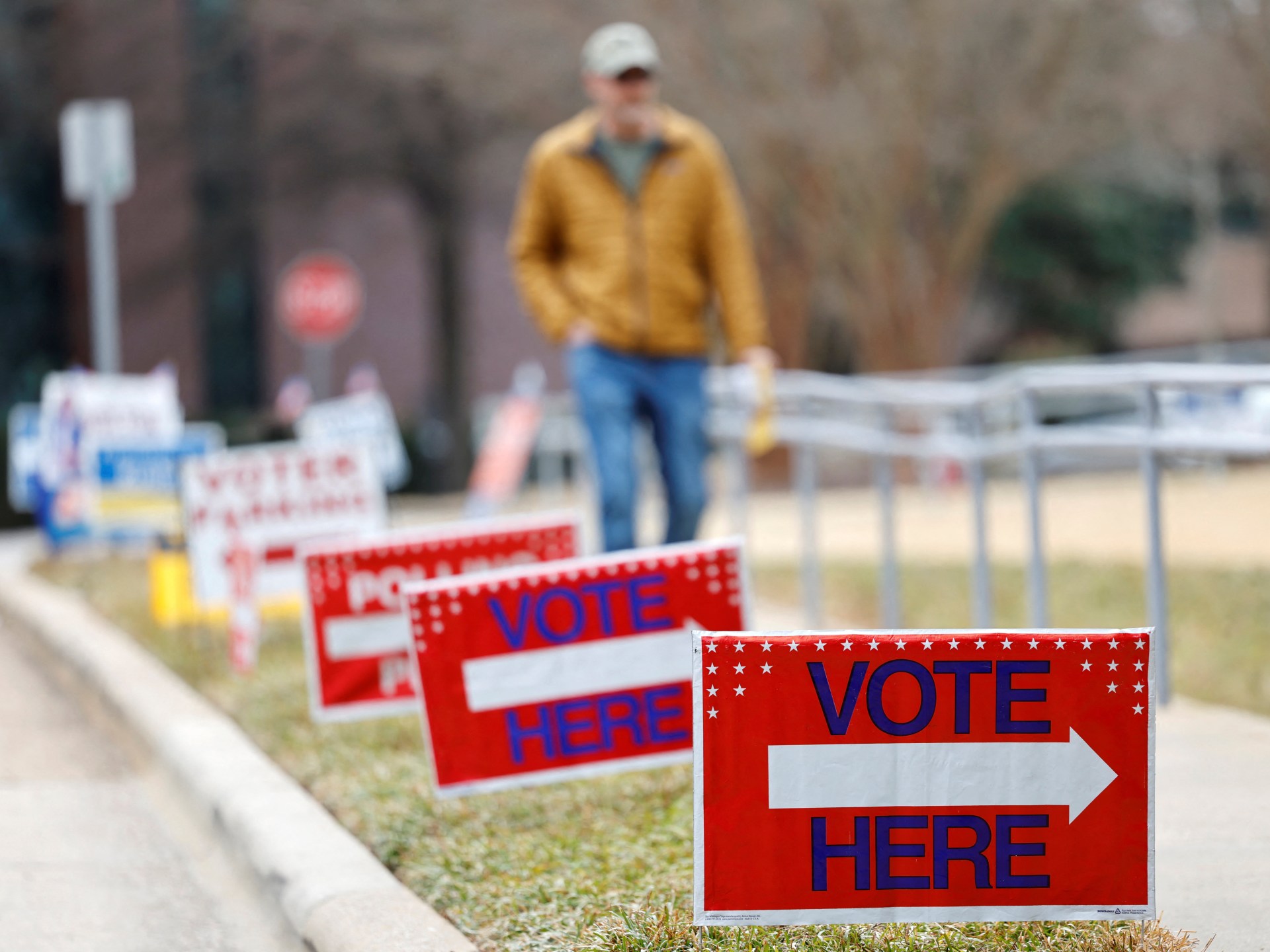
The 2026 primary season, in which voters in the United States determine which candidates will represent the major Republican and Democratic political parties in the November midterm elections, has begun in earnest with votes in Texas, North Carolina and Arkansas.

The polls kicked off just four days after the US and Israel launched attacks on Iran, sparking a regional war that has seen Iran launch retaliatory strikes across the Middle East. The fighting has so far left hundreds dead, including at least 787 in Iran, six members of the US military, and several civilians across the Gulf.

Recommended Stories

list of 3 itemsend of list

At the same time, the war has touched on several issues expected to dominate the US midterm season, with Democrats hammering concerns over US affordability and Republicans seeking to square US President Donald Trump’s “America First” vows with the latest military adventurism.

The outcome of Tuesday’s election will give an early temperature of the US electorate ahead of the midterm vote, which will determine whether Republicans maintain their slim control over both the US Senate and the House of Representatives.

One of the biggest tests will be in Texas, where Democrats have long hoped to win a statewide office, something they have not done since 1994.

Some watching politics have suggested a match-up between Democratic hopeful James Talarico, who has pitched himself as a Christian liberal and centrist seeking to speak directly to Trump’s voters, and Republican challenger Ken Paxton, who has hewed closely to Trump, could give Democrats the best shot at turning a seat in the US Senate.

Talarico, a seminary school student, has walked a careful line on Iran’s war, posting following Saturday’s strikes: “No More Forever Wars”, a reference to Trump’s own campaign pledge.

In a subsequent speech, Talarico referenced the US military members killed since the war began, but otherwise avoided wading deeply into the politically charged subject.

His primary election opponent in the Senate race, Democrat congresswoman Jasmine Crockett, has taken a more confrontational approach, in line with a fiery, forthright style she has said the party needs in the age of Trump.

“The question is, how many more lives will have to be lost before people will heed the warnings?” she said in a video response to the strikes, pointing to the high population of US veterans in the state.

“This president has engaged in lawlessness since the day that he took office, and unfortunately, it is us – us Americans – that are going to suffer.”

Paxton, the current attorney general in Texas, has defended Trump’s attacks – but with an apparent eye towards growing unrest from Trump’s “Make America Great Again” (MAGA) movement. In the final stretch of the race, he assured reporters that Trump was seeking a swift end to the fighting.

“He wants to get this over with,” he said.

Incumbent Senator John Cornyn has also said he was satisfied with Trump’s justifications for the strike, with the president portraying Iran’s ballistic and nuclear capabilities as an imminent threat to the US, claims for which he has provided little evidence.

“It takes a lot of political courage, because these things are easier to start than they are to end,” Cornyn said in an interview with Face the Nation published on Monday.

A test of party direction 

To be sure, the war has overlain, rather than transformed, many of the issues already dominating the race, including the cost of living, immigration, artificial intelligence, housing, healthcare and civil rights under the Trump administration.

In North Carolina, progressive candidate Nida Allam was quick to connect the war to support received by her opponent, incumbent Representative Valerie Foushee, from defence contractors and artificial intelligence super PACs, as well as her past support from the American Israel Public Affairs Committee (AIPAC).

The issue dovetails with Allam’s opposition to an AI data centre in her district, in a race that has become the most expensive in the state’s history.

In an advertisement released on Monday, Allam focused on the bombing of a girls’ school in Minab, Iran, that left at least 165 dead, calling herself a “proudly un-compromised, pro-peace leader”.

Foushee, meanwhile, has co-sponsored legislation to rein in Trump’s ability to strike Iran, accusing the president of “violating the Constitution and risking another open-ended war with no clear objectives and no exit strategy”.

Both parties will also select their candidates to run for the open Senate seat left by retiring Republican Thom Tillis. Democrats will be hoping for an upset in November in the so-called “purple” state. having a roughly equal makeup of Democrats and Republicans.

Former Governor Roy Cooper, who has warned of “another costly, drawn-out war that puts our troops in harm’s way and removes focus and resources from needs here at home”, is considered the frontrunner in the crowded Democratic primary race, which includes five other candidates.

On the Republican side, former Republican National Committee chairman Michael Whatley, who has been endorsed by Trump and has vowed to remain the president’s “ally in the Senate”, is expected to take victory in a six-way Republican race.

A wave of Democratic voter turnout on Tuesday would be a sign of strength heading into the November polls.

Opposing parties typically perform well in US midterm elections, and polls have shown dismay over Trump’s immigration policies, his stewardship of the US economy, and his military actions in Venezuela and, most recently, Iran.

Republicans have sought to seize on Trump’s claims of policy success during a first term that has stretched presidential norms and transformed the government.

Also closely watched will be the US Senate race in Texas between 78-year-old Representative Al Green, who was kicked out of Trump’s State of the Union address earlier this month after holding up a sign accusing the president of racism, and 37-year-old Representative Christian Menefee.

Both incumbents have been forced to face off for the Democratic ticket following the latest round of congressional redistricting in the state.

Another indication of the potency of Trump’s continued hold over the party could be the Texas race between Republican Representative Dan Crenshaw and challenger, state lawmaker Steve Toth.

Crenshaw has been a vocal supporter of many of Trump’s policies, including his decision to launch a war with Iran, but has been critical of several figures in the president’s orbit.