The Six Nations trophy is to be “retired from ceremonial use” and replaced after being damaged by fire in an accident during transit.
The trophy was damaged after round three of the tournament, when the vehicle carrying it was involved in an incident, according to a statement on the Six Nations website.
No passengers were injured but the trophy sustained “fire damage” in the aftermath and the manufacturers decided it cannot be restored to its former state.
An “identical exhibition trophy” will be used for the remainder of the championship, with a new one being commissioned in time for the 2027 Six Nations.
“Whilst in transit during round three of the Guinness Men’s Six Nations, an incident occurred involving the vehicle carrying the championship trophy,” the statement reads.
“Thankfully no passengers were injured, however the trophy sustained fire damage and following an assessment by the official trophy manufacturer, unfortunately it cannot be restored to its full presentation standard.
“In keeping with these presentation standards, respect for the significance of winning the Six Nations – one of sport’s most prestigious titles – and to preserve the integrity of the trophy and its heritage, it will be retired from ceremonial use.”
The trophy, which is 75cm tall and made of silver, was created in 2015 to reflect the tournament’s evolution to six teams after Italy joined the fold in 2000.
Current holders France are favourites to retain their crown after winning the opening three games of this year’s tournament.
“Whilst this accident is hugely unfortunate, the situation adds another chapter to the history of a trophy that represents one of global sport’s most celebrated tournaments, with its roots reaching back to 1883,” the statement continues.
“A new trophy will be commissioned in the same design as the original, with materials from the original being incorporated into the new trophy, ensuring its history is respectfully transferred to the new creation.”
Liverpool manager Arne Slot says most Premier League games are no longer a “joy to watch” and his “football heart doesn’t like” the emphasis on set-pieces this season.
Of the total scored in the league this season, 27.5% have been non-penalty set-piece goals – the second-highest rate since 2009-10.
Arsenal’s prowess from set-pieces has been a key part of their title challenge, with their 16 goals from corners – three more than anyone else – equalling the most in a Premier League season.
All three of Liverpool’s goals in the first half of their 5-2 win against West Ham United on Saturday came from corners.
Set-piece coach Aaron Briggs left Anfield on 30 December and Slot’s side have scored the most goals in the league from set-pieces in 2026, excluding penalties.
“You have to accept it,” said Slot. “I think it’s mainly here in the Premier League. If I watch other leagues I don’t think there’s so much emphasis on set-pieces.
“If I watch an Eredivisie game, which I still do, I see goals being disallowed and fouls on goalkeepers being given and I think ‘wow, that’s a big difference’. Here, you can almost hit a goalkeeper in his face and the referee still says ‘just go on’.
“Do I like it? My football heart doesn’t like it. If you ask me about football, I think about the Barcelona team from 10, 15 years ago. Every Sunday evening you were hoping they would play.
“Now, most of the games I see in the Premier League are not for me a joy to watch but it’s always interesting because it’s so competitive.
“That is what makes this league great because there is so much competitiveness. Everyone can win against everyone.”
Slot accepted that set-pieces are the “new reality of the Premier League” and believes it could even become a theme at junior level.
“We aren’t going to change it,” added the Dutchman as he previewed Tuesday’s game against Wolverhampton Wanderers.
14 hours ago
1 day ago
Wirtz should return next week
Slot has suggested Florian Wirtz is poised to miss the back-to-back games against Wolves this week because of the back injury he sustained in the warm-up against Nottingham Forest last weekend.
The Germany playmaker missed Liverpool’s win against West Ham and is most likely to return in the Champions League game against Galatasaray on 10 March.
“I don’t have anything different to say to what I said on Saturday,” said Slot.
“The game on Tuesday will probably come too soon, and maybe the game on Friday as well.
Kyiv, Ukraine – No nation knows more than Ukraine about how to down Iranian-made or designed drones.
Tens of thousands of them have rained death over it since 2022, and now, Ukrainian experts will help shoot them down over Gulf nations, British Prime Minister Keir Starmer announced on Sunday.
Recommended Stories
list of 4 itemsend of list
Just days earlier, Ukrspecsystems, one of Ukraine’s largest drone manufacturers, opened a factory in the eastern English town of Mildenhall to churn out up to 1,000 unmanned aircraft a month.
Ukraine’s former top general and current ambassador to the United Kingdom, Valerii Zaluzhnyi, attended the opening, the BBC reported.
Back in 2022, when Moscow started the full-scale invasion of Ukraine, some Western military analysts believed that two ex-Soviet armies would fight each other using obsolete stratagems and weapons.
Who would have thought that four years later, China, the United States and Europe would scrutinise the war’s technological and tactical breakthroughs, a combination of unorthodox, hi-tech solutions and jury-rigged fixes that make warfare cheaper and arms manufacturing faster and deadlier?
“Undoubtedly, Bundeswehr in particular and NATO in general are closely studying this war’s technological innovations,” Nikolay Mitrokhin of Germany’s Bremen University told Al Jazeera, referring to German armed forces.
“Firstly, there’s a task to modernise [military] equipment and machinery according to [the war’s] outcomes,” he said.
Secondly, the newest Western technologies are being tested during the war, including German air defence systems and certain drones, he said.
And thirdly, Western armies will learn how to wage wars when drones dominate the front line, and traditional weapons and ammunition lose their role, he said.
Ukraine’s military ingenuity
A top US military official compared Ukrainian servicemen with MacGyver, a fictional secret agent from the 1980s’ television series who used his wits, engineering skills and whatever was at hand to get out of death traps.
Outmanned and outgunned, Ukrainians “have MacGyver-ed and come up with whatever they have to do to get to an outcome they need”, US Army Secretary Dan Driscoll said in November. “There are no rules to get to that outcome.”
Army SOS, a Kyiv-based startup, is one example.
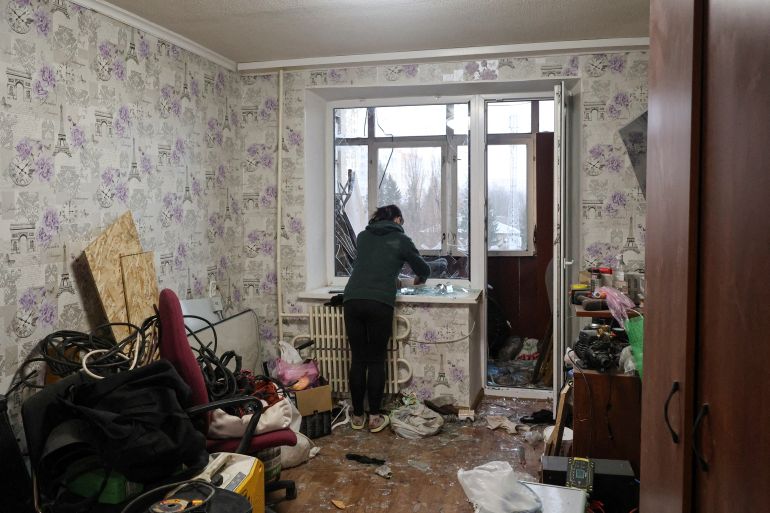
A resident removes broken window glass inside her apartment, damaged by a Russian drone attack, in Kharkiv, Ukraine, February 26, 2026 [Vyacheslav Madiyevskyy/Reuters]
It began by raising money to buy flak jackets and deliver them to the front line, but its volunteers kept hearing one persistent request – “Guys, give us maps”.
Instead of printing them out, Army SOS developed software that turns any cheap tablet or smartphone into a precision guidance system that acquires and transmits coordinates for correcting artillery fire.
It calculates the distance to targets, directs shots and even gets meteorological data that can affect each shot.
But Russia follows suit by “mirroring and scaling up” Ukraine’s findings, Andrey Pronin, one of the pioneers of drone warfare in Ukraine, told Al Jazeera.
The mirroring takes weeks.
In early 2023, Ukrainian engineers were the first to attach barely visible optic fibre to drones to make them immune to radio jamming, but their commanders initially rejected the innovation, Pronin said.
But Russians mimicked and scaled up the invention – and these days, forests in front-line areas are covered with countless glistening threads of optic fibre that resemble post-apocalyptic Christmas decorations.
Meanwhile, Russian optic fibre drones began reaching Kharkiv, Ukraine’s second-largest city that sits 40km (25 miles) from the Russian border, and Zaporizhzhia, the administrative capital of the eponymous eastern region.
Drones of all shapes and sizes buzz in the sky over the front line 24/7, risking Russia’s use of large columns of soldiers.
In 2022, these columns failed to enter Kyiv.
“I heard them. And I was killing them,” serviceman Bohdan Yavorsky told Al Jazeera.
On the invasion’s third day, he and 21 other servicemen and barely-armed volunteers ambushed and immobilised a column of three dozen Russian tanks and armoured vehicles in Bucha, north of Kyiv.
Yavorsky and his men fled in getaway civilian cars and sent the column’s coordinates to Ukraine’s air force, which bombed it within 30 minutes.
By 2026, Russia no longer risks amassing such large groups.
It dispatches soldiers in twos or threes to infiltrate the front line, carry ammo and jamming equipment and wait for more twos or threes.
They have cheap smartphones with Alpine Quest, a topographic app that lets one move around using coded coordinates without access to the internet or the Global Positioning System (GPS).
“We didn’t know the names of villages we were told to go to,” Mohammad (not his real name), a Tajik labour migrant who was duped into becoming a Russian soldier and was taken prisoner in eastern Ukraine last year, told Al Jazeera.
Soldiers on both sides use anti-thermal camouflage to avoid being detected by the drones’ thermal vision devices, hang fishnets over roads and mount electric scooters or snowmobiles to evade explosives-laden first-person-view drones.
Ukraine’s entire navy consisted of three dozen decades-old vessels that could fit into one small harbour in the Black Sea port of Odesa.
They were almost all annihilated in 2022, and Russia’s Black Sea Fleet based in annexed Crimea gained control of Ukraine’s territorial waters as Russian vessels shelled Odesa.
But by mid-2023, Ukraine developed sea drones that destroyed Russia’s largest ships – while aerial unmanned aircraft attacked a dry dock in the southern Crimean port of Sevastopol that had for decades been used to repair ships.
“What was critical for Russia wasn’t damage to vessels, it was damage to the shipyard,” Kyiv-based analyst Ihar Tyshkevich told Al Jazeera. “This is the reason why a large part of the Black Sea Fleet vessels were relocated to [eastwards, to the Russian port of] Novorossiysk.”
China watches war developments
Beijing is also especially eager to study and adopt the innovations of war, analysts said.
“Of course, they’re watching,” Temur Umarov, a Sinologist and China expert with the Carnegie Endowment for International Peace, a Berlin-based think tank, told Al Jazeera.
Beijing’s close attention to every development in Russia dates back to the 1950s, when the Soviets were crucial in shaping newborn Communist China’s armed forces and military industrial complex.
“Both the Chinese military, scientific community, as well as economists and historians [are watching] everything that is happening in Russia,” Umarov said.
China, however, has a major problem with adopting the new tactics, another military analyst warns.
“Horizontal algorithms”, or rapid, real-time sharing of data on the battlefield to process intelligence faster, along with the top-down delegation of responsibilities, almost don’t get implanted in authoritarian or totalitarian nations, Pavel Luzin, a Russia-born senior fellow at the Jamestown Foundation, a US think tank, told Al Jazeera.
The war’s main challenge is “organisational principles such as coordination building, delegation of decision making, logistics and so on”, Luzin said.
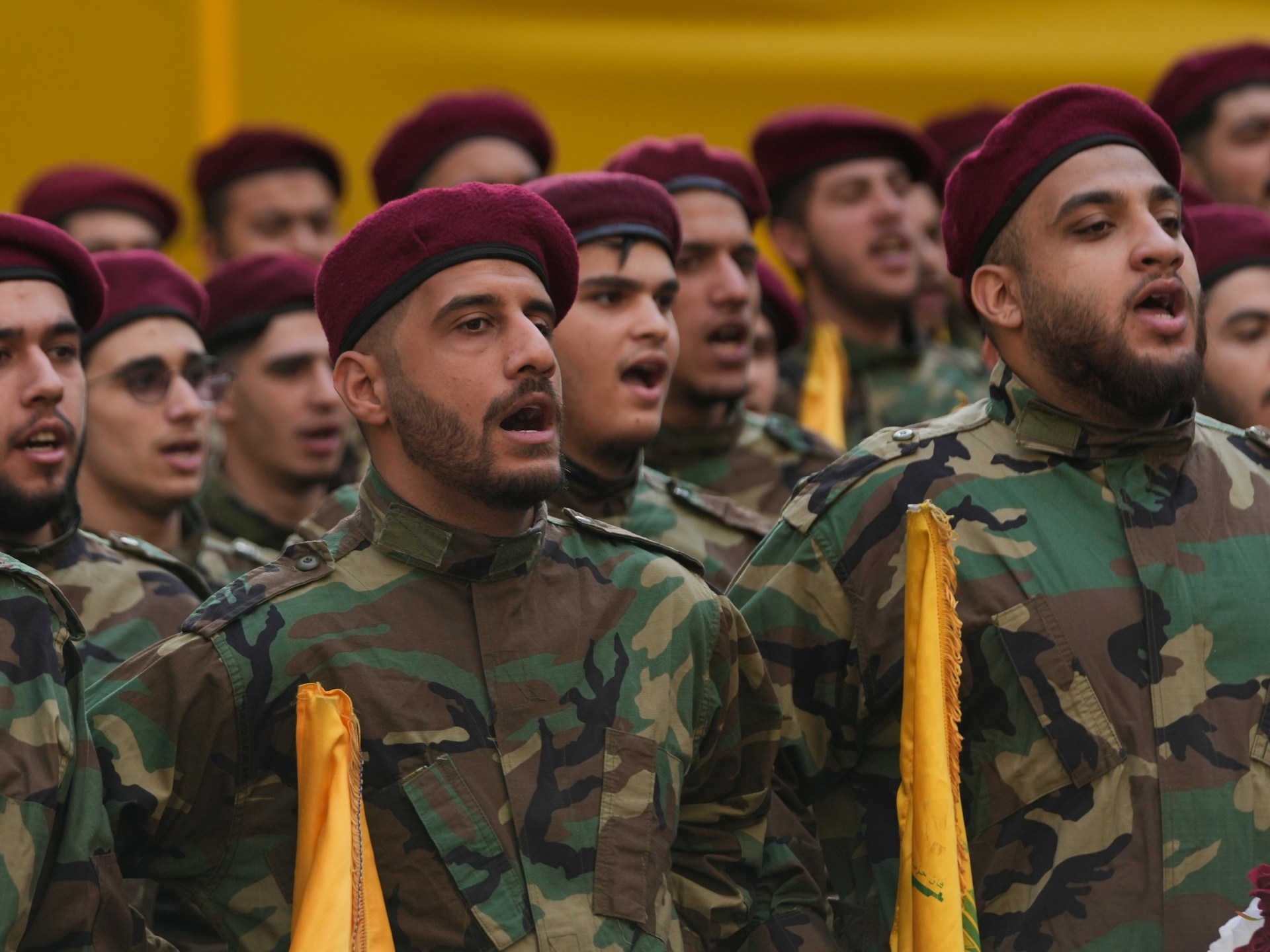
Lebanese Prime Minister Nawaf Salam says Hezbollah’s military and security activities are banned, hours after Israel responded to the Iran-linked group’s rocket and drone attack by launching air raids on the southern suburbs of Beirut.
“We announce a ban on Hezbollah’s military activities and restrict its role to the political sphere,” Nawaf said on Monday in a statement.
Recommended Stories
list of 3 itemsend of list
“We declare our rejection of any military or security operations launched from Lebanese territory outside the framework of legitimate institutions.”
The prime minister said all Hezbollah military activities are “illegal” and called upon the security forces to “prevent any attacks originating from Lebanese territory”.
“We declare our commitment to the cessation of hostilities and the resumption of negotiations,” he added.
The Iran-allied Lebanese armed group said earlier on Monday that its attack on a military missile defence facility near Haifa was in retaliation for the killing of Iranian Supreme Leader Ali Khamenei, “in defence of Lebanon and its people”, and “in response to the repeated Israeli aggressions”.
Israel responded by bombing Beirut’s suburbs and southern Lebanon and killing more than 30 people and injuring 149, according to the state-run National News Agency.
In a statement on Monday, the Israeli army said an overnight strike in Beirut had killed Hussein Makled, described as the head of Hezbollah’s intelligence headquarters.
It accused Makled of being responsible for compiling intelligence assessments on Israeli forces and coordinating with senior Hezbollah commanders to plan attacks against Israel and said operations against the group would continue.
Hezbollah, which operates independently from the Lebanese government, has been weakened by a 2024 war, which saw Israel kill most of the group’s military and political leaders.
Under growing pressure from the United States and Israel, Lebanese authorities agreed to disarm Hezbollah, which dismissed the plan as a US-Israeli ploy and refused to surrender its weapons north of the Litani River. The group maintained that a ceasefire signed in November 2024 applied to disarmament exclusively south of the waterway.
Last month, the Lebanese government said its military would need at least four months to complete the second phase of its plan to dismantle Hezbollah’s arsenals in the country’s south. The second phase concerns the area between the Litani and the Awali rivers, about 40km (25 miles) south of Beirut.
It announced in January that it had completed the first phase of its five-stage plan, covering the area between the Litani and the southern border with Israel.
The military escalation between Israel and Hezbollah could deepen the crisis in Lebanon, which has been suffering from economic and political woes for years.
Salam called the Hezbollah attack “an irresponsible and suspicious act that jeopardises Lebanon’s security and safety and provides Israel with pretexts to continue its aggression”.
The Israeli army also ordered residents to leave 18 villages and towns, claiming they were being used by Hezbollah.
Al Jazeera’s Zeina Khodr, reporting from Beirut, said a humanitarian crisis was in the making as hundreds of thousands of people fled from southern Lebanon and the capital’s southern suburbs.
“This is part of Israel’s strategy to punish the supporters of Hezbollah and those who live in areas under Hezbollah’s influence,” she said.
Khodr added that Israel’s objective was to “turn them against the group and blame it for escalating what had been a simmering conflict”.
The US embassy in Beirut called on American citizens to not travel to the country and urged those already there to “depart Lebanon NOW while commercial flight options remain available”.
At least 555 people have been killed in US-Israeli strikes across 131 counties in Iran, the Iranian Red Crescent Society says, amid another wave of intensive attacks and Iranian counterstrikes on Israel and US assets in the Middle East region.
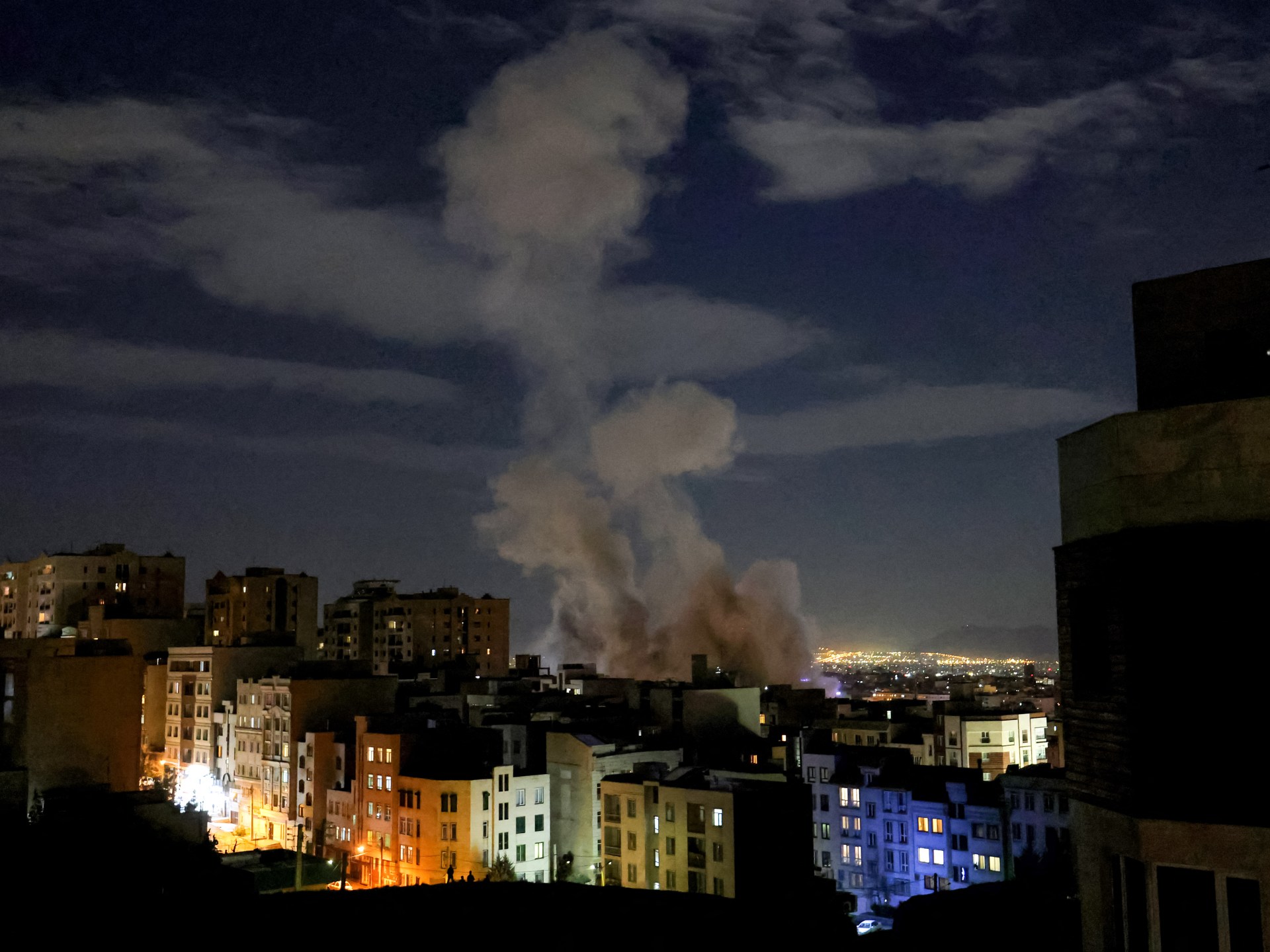
At least 35 people were killed on Monday morning in southern Iran’s Fars province, according to the Mehr news agency. The outlet also reported more than 20 people killed in an attack on Niloofar Square in Tehran.
Recommended Stories
list of 3 itemsend of list
The Fars news agency said at least two people were killed in the central city of Sanandaj as several residential buildings next to the city’s police station were destroyed. The Tasnim news agency said US and Israeli forces dropped six missiles on different parts of the city, including densely populated neighbourhoods.
Reza Najafi, Iran’s ambassador to the International Atomic Energy Agency (IAEA), the United Nations nuclear watchdog, told reporters that US-Israeli air strikes had targeted Iran’s Natanz nuclear enrichment site on Sunday.
“Their justification that Iran wants to develop nuclear weapons is simply a big lie,” Najafi said, describing the facility as “peaceful”.
Israel and the US have not issued any statements confirming strikes at the site, which the United States bombed during the 12-day war between Iran and Israel in June.
Al Jazeera’s Tohid Asadi, reporting from the Iranian capital, said the latest strikes were indicative.
“This shows the scope of the attacks on Iran, with raids targeting not just political centres and military headquarters,” he said. “We are witnessing damage to civilian buildings, with some of them fully demolished in some cases. And this is concerning because the civilian fatalities are growing.”
Videos verified by Al Jazeera also showed huge clouds of smoke billowing behind buildings near the international airport in the central Iranian city of Kermanshah.
Iranian authorities reported that the death toll from an Israeli attack on a girls’ school in Minab on Saturday rose to 180.
Hossein Kermanpour, the head of public relations at Iran’s Ministry of Health, added that the “same type” of missile was used to attack the Gandhi Hospital in Tehran on Sunday. The hospital was badly damaged, and patients were evacuated.
The Israeli military on Monday said Iran had launched more missiles and that air defences were operating to intercept the projectiles. It called on residents to take shelter and remain in protected spaces until informed.
Israeli police said nine people were killed after an Iranian missile attack on the central city of Beit Shemesh. Eleven people were reported missing as rescuers searched for survivors.
Iran continued with its retaliatory strikes on Qatar, Bahrain, Jordan, Oman, Kuwait, Saudi Arabia and the United Arab Emirates, with attacks reported on airports, residential buildings and hotels.
Countries in the Gulf have pledged to defend themselves against Iranian attacks, including by “responding to the aggression”.
A favourite tactic of war is to try to decapitate the enemy leadership. While such strategies might work in certain contexts, in the Middle East, they have proven to be a disastrous choice.
For sure, the assassination of an enemy leader might give a quick boost of popularity amid war. Certainly, United States President Donald Trump and Israeli Prime Minister Benjamin Netanyahu are basking in the limelight of their perceived “success” in assassinating Iranian Supreme Leader Ali Khamenei.
But killing an 86-year-old man who had already been planning his succession due to his ill health is not that much of a feat considering the overwhelming firepower that the US and Israel together possess. More importantly, eliminating him does not necessarily mean that what follows would be a leadership or a regime that would accommodate Israeli and US interests.
That is because leadership assassinations do not lead to peaceful outcomes in the Middle East. They can open the door for much more radical successors or for chaos that leads to violence and upheaval.
A brief glance at recent history shows that whenever Israel and the US have tried the idea of leadership “decapitation” in various conflicts in the region, the results have been disastrous. In the case of Iraq, its leader Saddam Hussein was captured by US forces and handed over to allied Iraqi forces who executed him. This ended a regime that was openly antagonistic to Israel, but it also opened the doors for pro-Iranian forces to take power.
As a result, in the following two decades, Iraq served as a launching pad for Iran’s regional proxy strategy, which saw it build a powerful network of nonstate actors that threatened US and Israeli interests.
The security vacuum created by the US invasion triggered various insurgencies, the most devastating of which was the rise of ISIL (ISIS), which swept through the Middle East, killing thousands of innocent people, including US citizens, and triggering a massive refugee wave towards US and Israeli allies in Europe.
Another case in point is Hamas. Since the early 2000s, Israel has repeatedly tried to assassinate its leaders. In 2004, it succeeded in killing its founder Sheikh Ahmed Yassin and then his successor Abdel Aziz Rantisi, who was considered a moderate. A few assassinations later, Yahya Sinwar was elected head of Hamas in Gaza and went on to plan the October 7, 2023, attack.
Hezbollah has a similar history. Its late leader Hassan Nasrallah, who successfully led the expansion of the group to a formidable nonstate power, ascended to its leadership after Israel assassinated his predecessor Abbas al-Musawi.
Two and half years of war and mass killing of leadership may now have devastated both armed groups, but Israel has failed to assassinate the idea behind them: resistance to occupation. The current lull in fighting may be the quiet before another storm.
In the Iranian case, it is highly unlikely that whoever replaces Khamenei would be as open to negotiations as he was. The statements by the Omani interlocutors during the talks in Muscat and Geneva pointed to major concessions on the nuclear issue that Iran under Khamenei was prepared to make. It is unlikely that his replacement would have the political space to follow suit.
If Israel and the US continue their campaign and really push for state collapse in Iran, what comes out of that ensuing chaos could be anyone’s guess. But if we are to go by recent experiences in Iraq and Libya, a security vacuum in Iran would have devastating consequences for US allies in the region and in Europe.
That raises the pertinent question of what Israel and the US stand to gain from their “decapitation” strategy in Iran.
For Netanyahu, the assassination of Khamenei is a major success. Facing crucial elections that could mean the possible end of his political life and maybe his imprisonment over four corruption charges, the short-term gain in popularity and votes is worth it. Israeli leaders do little thinking and planning on the mid- to long term and do not have to bear the consequences of military adventurism abroad. After all, Israeli society is very much in favour of it.
But for Trump, the gains are not as apparent. He gets to brag about killing an 86-year-old ailing leader of a faraway country to a public that has no appetite for war. At a time of a continuing cost-of-living crisis in the US, he is spending billions of taxpayer dollars to fight a war against a country that posed no imminent threat, a war that many Americans are increasingly identifying as “Israel’s war”.
Instead of projecting power, Trump risks showing weakness and being seen as a US president fooled into starting a costly war to ensure the political survival of the prime minister of a foreign country.
It is clear for now that the US president has drawn a line at putting US boots on the ground. At some point, he will have to end the bombardment campaign and pull US troops. He will leave behind a disaster that US allies in the region will have to bear the brunt of. US regional alliances are sure to suffer. Domestic audiences are sure to ask questions.
This will be yet another US military adventure in the region that will cost US taxpayers’ money, US soldiers’ lives and foreign policy clout and offer no return. The hope is that Washington may finally learn its lesson that assassinations and decapitation strategies don’t work.