Slider1
previous arrow
next arrow

News

We’ll Deliver Our Best, But 2027 Election May Not Be 100% Perfect – INEC

The Chairman of the Independent National Electoral Commission (INEC), Prof. Joash Amupitan, has assured Nigerians that the commission possesses the capacity to electronically transmit election results in 2027, though he cautioned that a “100 per cent perfect election” cannot be guaranteed.

Amupitan gave the assurance on Sunday during the Citizens’ Town Hall programme aired live on Channels Television and themed, ‘Electoral Act 2026: What it means for your votes and the 2027 elections.’

He urged Nigerians to temper expectations, stressing that while INEC would strive to deliver its best performance, perfection remains unrealistic.

“Let me just appeal to Nigerians, because I have noticed now that what Nigerians desire is a perfect election. And INEC will strive as much as possible to give this country the best election.

“However, we may not be able to achieve a 100 per cent perfect election for now. But as far as electronic transmission of results is concerned, I said it before the FCT Area Council that we have the capacity to transmit the results, and that we’re going to transmit the results. The only concern was real-time,” he said.

Describing elections as the foundation of democratic governance, the INEC chairman underscored the importance of voter education and transparency.

READ ALSO: [2027] INEC To Conduct Mock Presidential Poll

“Election, for that matter, is the lifeblood of democracy. According to Abraham Lincoln, the ballot is more powerful than the bullets. Also, the ignorance of a voter is very inimical to the security of a nation.

“So, that is why we cannot underscore the role of INEC, as well as the civil society, in guaranteeing a transparent and credible election,” he stated.

Amupitan disclosed that INEC played an active role in shaping the Electoral Act 2026, explaining that the review process began about three years ago through a joint committee made up of the National Assembly, civil society organisations and the commission.

“As of the time I was taking over, the work was almost concluded. But nonetheless, we still made some important provisions and recommendations in the new acts,” he said.

Addressing the long-running debate over electronic transmission of results, which gained prominence after the 2023 general elections, Amupitan revealed that INEC advocated for mandatory transmission during legislative discussions.

“Now, even talking about the transmission of the results, you will notice that the original provision that came out of the retreat from the National Assembly was not exactly what you have today.

“But when INEC came in, we talked of transmission being mandatory. But let us be sincere and honest. The only problem that we had was how to define what we call real time,” he explained.

He cited the recent Federal Capital Territory Area Council elections to illustrate challenges surrounding real-time transmission, particularly in remote areas.

“Let’s look at the FCT area council election that just took place. Now, there are six area councils in the FCT. The results came out on time in five area councils. But in the Kuje area council, we have 10 wards. And the results in one ward, Kabi, did not come until the following day, Sunday.

“Now, on Saturday, when we mobilised and sent people to that ward from Kuje town, Kabi ward is about three-and-a-half hours’ drive. And the terrain is very bad. So I was worried.

“When we sent our polling officials and security agencies to that ward, the moment they entered that place, we could not reach them. They were not accessible by phone. And nobody could speak to them until we had to send somebody on Saturday morning, just to be sure that they were safe, before we now got the results.

“They brought the results to Kuje town. And then it was collated along with the remaining nine wards before the result could be declared,” he recounted.

Despite the delay, Amupitan maintained that transmission itself was not the principal challenge, pointing instead to network adequacy and logistics.

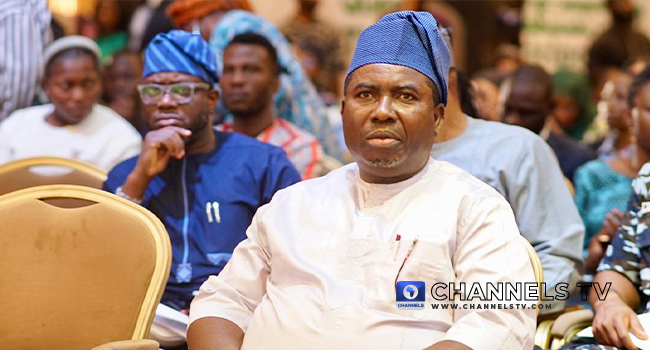
A cross-section of panels at Citizens’ Townhall. Photo: Taiwo Adesina/Channels TV

“I don’t see the issue of transmission as really a problem. I don’t see it as an issue because, from my little experience, over four months now in INEC, the problem is not even the network.

“The problem I have seen is the adequacy of the network we have. For instance, you expect that in a place like FCT, you should be able to transmit your results without any encumbrance. But we had a situation where it was impossible for us to have a real-time transmission of results, especially from the Kabi ward, until the following day. And in some of the wards, some results were transmitted,” he said.

He emphasised that logistics remain critical to election credibility, warning that operational shortcomings can erode public trust.

“So, talking about logistics, I’ve said it often that your election can be as good as your logistics. So, where there is logistics failure, you know that you are beginning to fail.”

While acknowledging that the FCT poll encountered “some logistic issues,” including human errors, he said corrective measures were already underway.

“As a regulatory body, we’re determined to achieve all this. But nonetheless, we have to admit that there were some logistical issues. Some were purely human, which we are trying to address,” he added.

Looking ahead, Amupitan expressed optimism that the 2027 general elections would represent a marked improvement, citing increased voter awareness and stronger public demand for accountability.

“But I want to assure you that the election of 2027 will be the best election that Nigerians will have because Nigerians of 2023 are different from what you have in 2027. People are much more aware. And you know the correlation between elections and development.

“Nobody is happy about the classification of Nigeria as an underdeveloped country. So we want a situation where our process will be able to guarantee the confidence and the transparency that people want to see in their system.
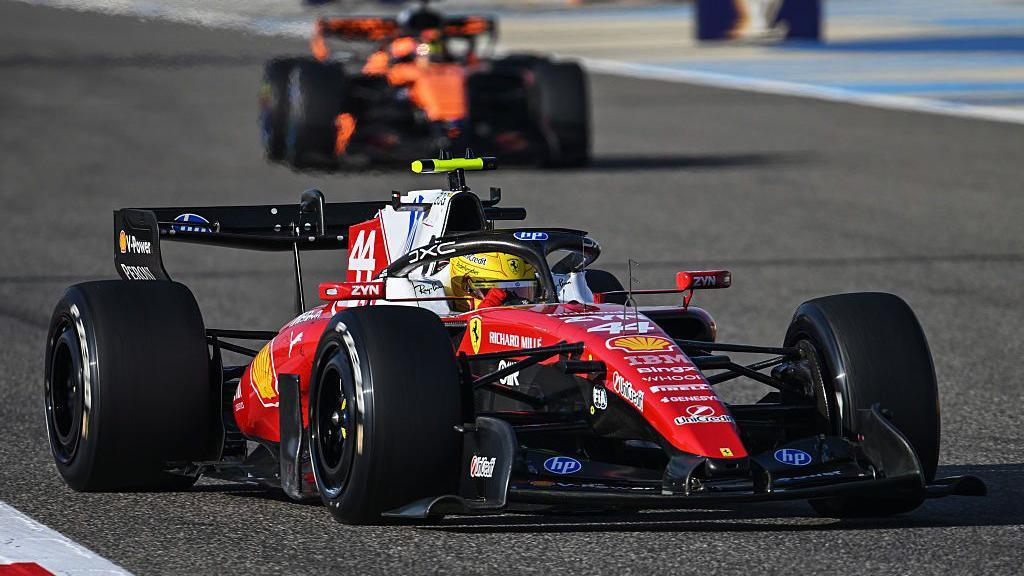
New era of Formula 1 – what is changing in 2026?

Lorraine McKenna

BBC Sport Journalist
  • 92 Comments

The 2026 Formula 1 season is almost here and there are plenty of changes for fans to get used to at the first race in Australia.

Will ‘ridiculously complex’ rules be a hit?

F1 is stepping into the unknown with some of the biggest rule changes the sport has ever seen, with the power unit, chassis, tyres and fuel all new for 2026.

Cars are now smaller and more environmentally friendly, with engines that have a near 50-50 split between electric and internal combustion power – and use fully sustainable fuels.

However, there is concern within F1 about the degree of energy management required, and how that will affect driving styles during qualifying and races.

The drag reduction system (DRS) has been replaced with overtake mode, which gives drivers a burst of extra electric energy when they are within one second of the car ahead at a detection point, typically the final corner.

DRS no longer exists because of active aero, which allows both the rear and front wings to adjust angles on the straights to reduce drag and to increase downforce in the corners.

During the second week of pre-season testing, Ferrari turned heads with their rotating ‘upside down’ rear wing when the car’s straight-line mode was activated.

Opinions were mixed on the new cars and regulations over the six days of testing in Bahrain.

    • 30 minutes ago
    • 17 December 2025

Brit Lindblad the only rookie

To play this video you need to enable JavaScript in your browser.

British teenager Arvid Lindblad is the sole rookie driver this year and is partnering Liam Lawson at Racing Bulls.

The 18-year-old, who has a Swedish father and a mother of Indian descent, entered the record books last year when he became the youngest winner in Formula 2 history, aged 17 years and 243 days.

Barcelona v Madrid – F1 El Clasico

F1 gets its own version of ‘El Clasico’ this season as Barcelona will be joined by Madrid in hosting races in Spain.

The Spanish Grand Prix will now be held in the Spanish capital from 11-13 September at the Madring, a new purpose-built, 22-corner track which uses both public roads and private land.

Hadjar accepts Red Bull second seat challenge

Isack Hadjar walks in the Bahrain paddock with new team-mate Max VerstappenGetty Images

Isack Hadjar has been handed a promotion for 2026 following the departure of Yuki Tsunoda and will partner four-time world champion Verstappen at Red Bull.

The 21-year-old Frenchman spent his rookie season at sister team Racing Bulls and gained his maiden podium – a third place at the Dutch Grand Prix.

Hadjar’s first target will be to get close enough to Verstappen in order to share the points load with the Dutchman.

The last time Verstappen was beaten by a team-mate was at the Azerbaijan Grand Prix in April 2023, when Sergio Perez claimed victory and he finished runner-up.

Since then, however, the struggles of the second seat driver have persisted, and Perez eventually left the team at the end of 2024.

Last year, Lawson was given a chance to shine but the New Zealander was dropped back down to Racing Bulls after only two races and was swapped with Tsunoda.

Cadillac boost grid from 10 teams to 11

Sergio Perez jumps out of the Cadillac after stopping on track in testingGetty Images

F1 welcomes its first start-up entry on to the grid since Haas 10 years ago with the arrival of fellow American team Cadillac.

Opting for the experience of Mexican Perez and former Mercedes driver Valtteri Bottas – both multiple grands prix winners – Cadillac, who are using a Ferrari power unit, had a mixed pre-season testing, with a few issues here and there that kept both drivers sat in the garage.

Team principal Graeme Lowdon, though, says fans should not read too much into testing, as he is “extremely happy with the team [and] very, very happy with the platform that we’re building”.

Audi are also newcomers in 2026, making their debut in the sport having acquired the Swiss-based Sauber team.

The German outfit have decided not to play it safe in their first campaign and have designed and built an in-house power unit.

    • 3 days ago

Can Aston Martin and Honda iron out issues?

Lance Stroll sits in the Aston Martin car without his race helmetGetty Images

Aston Martin are at the beginning of their new works partnership with Honda, so maybe a few teething problems were to be expected. However, the team’s running in Bahrain was a disappointment from start to finish.

The power unit by the Japanese manufacturer suffered with reliability issues and on the final day of action, the team called time on their programme after only six laps for Lance Stroll – a lack of engine parts curtailing their data gathering following Fernando Alonso’s battery-related problem the day before.

Silverstone hosts first sprint since 2021

The British Grand Prix has been chosen as one of the six tracks to host a sprint event this season, marking Silverstone’s return to the shorter race format for the first time since its introduction in 2021.

The Chinese and Miami Grands Prix are back for a third consecutive year, while Canada, Zandvoort in the Netherlands and Singapore are holding a sprint race for the first time.

This year is the Dutch Grand Prix’s swansong in Formula 1 following its comeback in 2021 after a 36-year absence.

Related topics

  • Formula 1

More on this story

    • 5 days ago
    Arvid Lindblad
    • 1 day ago
    Lewis Hamilton, wearing his red Ferrari suit and Lando Norris, wearing his papaya Mclaren suit, pose during the F1 2026 photocall in Bahrain
    • 4 days ago
    Red Bull's Max Verstappen, McLaren's Lando Norris and Mercedes' George Russell pictured together, with Mercedes' Kimi Antonelli in the background, during pre-season testing in Bahrain
    • 6 days ago
    Fernando Alonso driving the 2026 Aston Martin during testing in Bahrain
    • 6 days ago
    F1 logo on the back of a mobile phone

‘There were tears – but I had to peek behind curtain of head injuries in rugby’

Ben Youngs

Former England scrum-half

I could not hold it together any more. I had to step away.

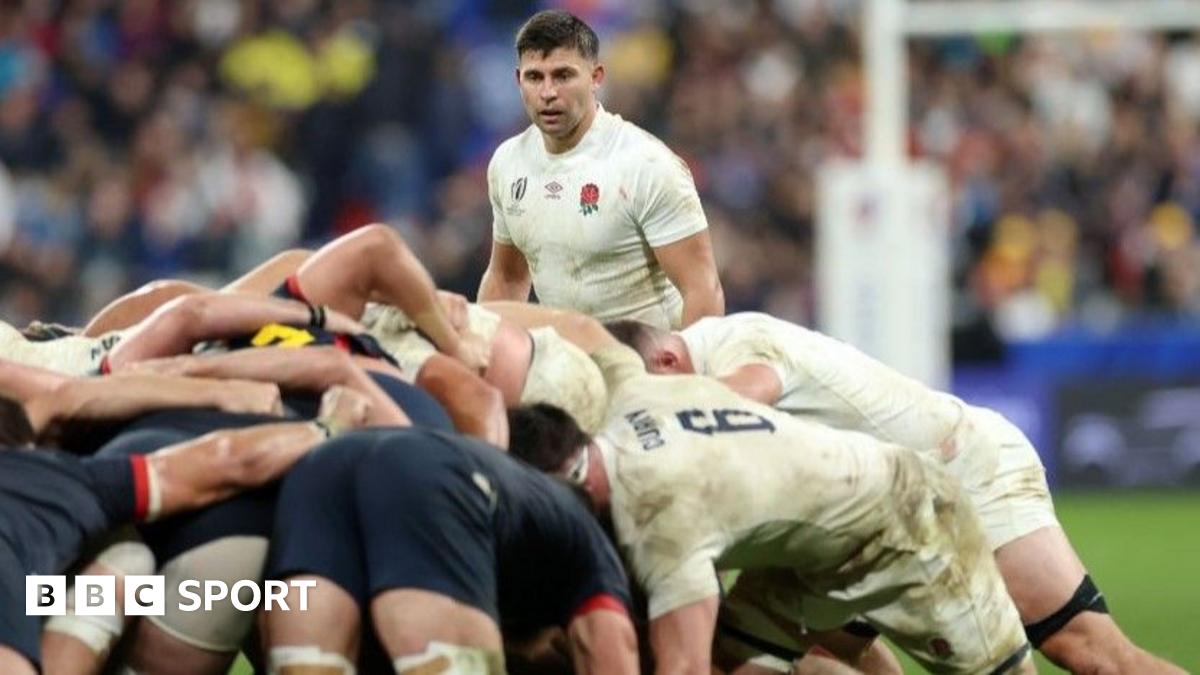
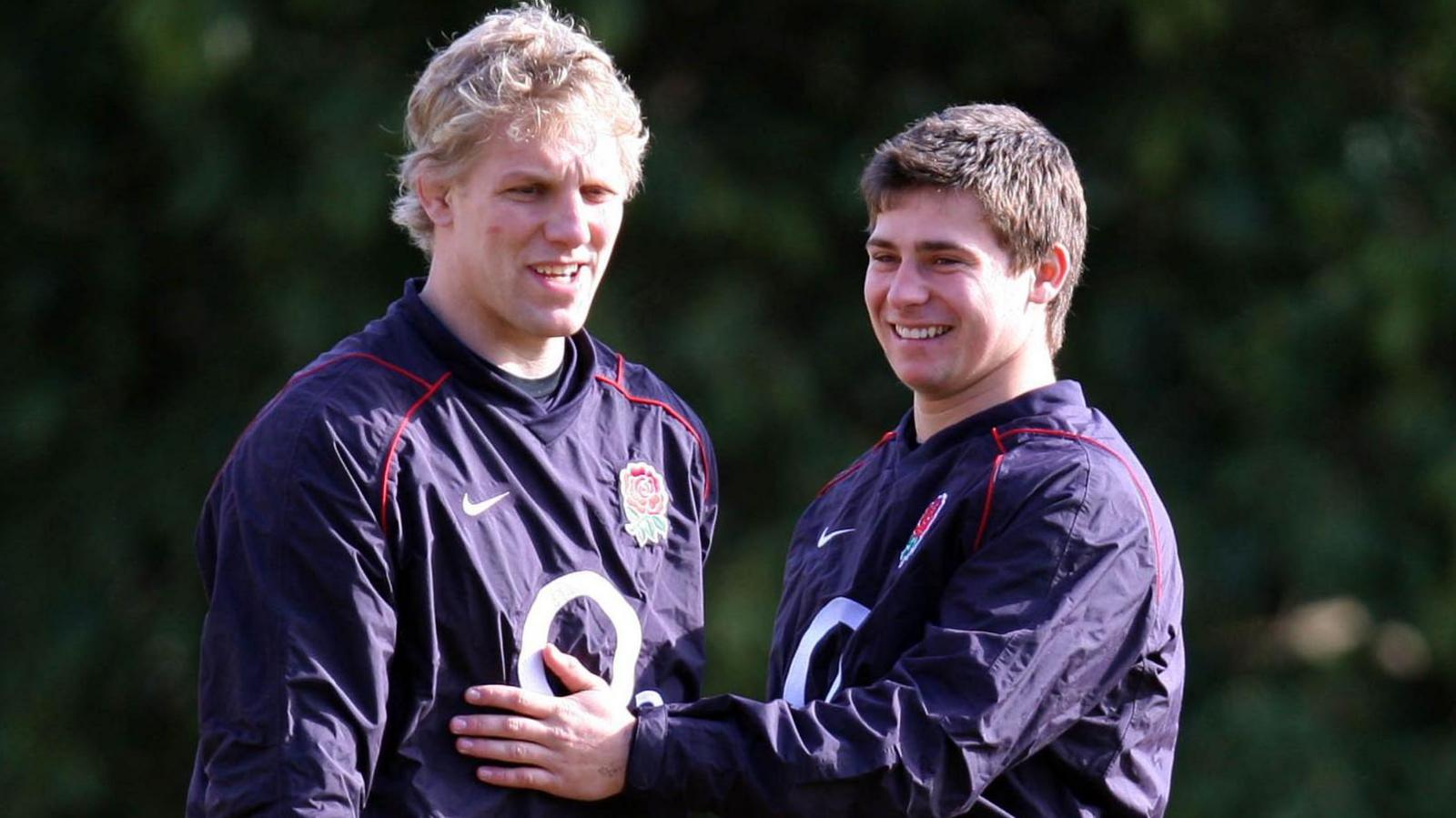
As I made my way down the stand, tears streamed down my face. I took a moment to look over the pitch, took a deep breath, and returned to give my former England and Leicester Tigers team-mate Lewis Moody a big hug.

As tough as it was discussing his diagnosis of motor neurone disease (MND), what set us both off was talking about the sport we love – rugby.

Despite a number of high-profile former rugby players having had the disease, there is no scientific evidence definitively linking MND with repeated concussion. Even if there was, Moody – nicknamed ‘Mad Dog’ in the Tigers dressing room – has no regrets about the hard-hitting way he played our wonderful game.

Rugby is beautiful but also brutal, and with that comes the risk of head injury.

I started wondering, is the game ‘Mad Dog’ and I played at the highest level really that safe? Is the game I take my young son Boris to play every Sunday really that safe?

Ben Youngs Investigates: How Safe Is Rugby?

Watch on iPlayer

When I first got the call about taking part in the BBC documentary – Ben Youngs Investigates: How Safe Is Rugby? – I was sceptical and worried about what I might find out.

Concussion, long-term health issues, former players struggling – those stories have dominated the conversation around my sport.

I want more people playing rugby, rather than being scared to take the field.

But the more I thought about it, the more I realised this was an opportunity to peek behind the curtain and find out what rugby is doing to combat head injuries.

My career started in an era when there was no such thing as an on-field head injury assessment – if you went off, you were letting your team down.

It ended at a time when Ireland’s Garry Ringrose pulled himself out of a 2025 British and Irish Lions Test – which would have been one of the biggest matches of his life – because of concussion symptoms.

My former England team-mate Anthony Watson revealed to me in the documentary he cheated the head injury assessment (HIA) system – by learning the five words he knew he would be asked to repeat – to return to the field in the second Lions Test in 2017.

When my former team-mate Tom Croft asked if I would have pulled out of the 2019 Rugby World Cup final if I had felt concussion symptoms, I was honest and said no.

That was the biggest game I ever played, and I still stand by the statement that I would have dealt with the consequences afterwards.

    • 17 minutes ago

To play this video you need to enable JavaScript in your browser.

‘I would not let my children play rugby’ – Thompson

Moody and Ant had no regrets, but I also caught up with another former team-mate and World Cup winner Steve Thompson, who has early onset dementia.

I loved playing with Steve, as he was one of the senior players who took me under his wing at the 2011 World Cup.

‘Tommo’ – a hard-nosed hooker – did not feel protected during his career, and I was shocked to hear how brutal training sessions were in the early days of professionalism, which was before my time.

They were doing two training sessions a day, hitting up to 100 live scrums at times. Concussion was not recognised, and players would be moved to the side if they were knocked out.

A regular comment from players and coaches would be: “It is all right – he is just having a little sleep.”

‘Tommo’ is part of a concussion lawsuit against the sport’s authorities, who deny liability, and was clear he would not let his children play, as he feels the game is still not safe despite the various measures that have been introduced because players are now bigger, faster and stronger at all levels.

The fact he would swap a World Cup – which he cannot even remember winning – to have worked on a building site reflects his current thoughts on the game.

During the interview he often lost his train of thought and opened up about experiencing suicidal thoughts.

I struggled after the interview to come to terms with it all – it was like someone had replaced the guy I played with.

To play this video you need to enable JavaScript in your browser.

A culture shift – how the past informs the present

Truthfully, my meeting with Lindsay Starling – the science and medical manager for World Rugby – surprised me.

The past has led us to where we are now and, despite being a former player, I was not aware of the level of detail that has gone into head-injury studies.

So much investment has been made into making the game safer, and things like the introduction of smart mouthguards – and an independent doctor at matches to oversee head injury assessments – now take the decision away from the player about whether they should continue playing.

My professional career spanned from 2007 to 2025, while Thompson and Moody retired in 2011 and 2012. I am incredibly grateful I was around when the full HIA protocol was introduced in 2015.

The experiences of my generation – for example England World Cup winner Kat Merchant telling me how she ended up cowering in a dark room because of the impact of bright lights and loud sounds on her head after multiple concussions – remains important in keeping the conversation going about safety.

Seeing the science behind why and how certain calls are made – like when Starling talked me through how the smart mouthguard works to alert the pitchside doctor of the need for an HIA – improved my understanding, and I am passionate about increasing awareness around head injuries and symptoms.

I have also seen first-hand how this has trickled down to grassroots. As I stood with my dad and brother Tom – both former England players – watching one of my son Boris’ matches, we saw one of his team-mates coming off the field for an HIA.

To play this video you need to enable JavaScript in your browser.

I want brain testing to be the norm

The Rugby Football Union (RFU) has a free brain test available to any retired elite English player.

I would have gone if I felt any symptoms after my playing career, but I never did.

Deep down, I felt that I had been protected and that I was going to be OK. As a scrum-half, I played in a position that involved the least amount of contact.

The documentary was the reason I went for a brain test, but ultimately it was not just about me as I want to make it the norm for other former players to follow.

My brother Tom, who I played with during my professional career, is a perfect example of someone who should consider being tested, as he played in the front row.

Lying under the MRI scanner and having my brain scanned brought nerves I was not expecting.

No matter the growth and investment, there is always a risk in playing a contact sport.

I was so glad to be calling my family to tell them that my results were clear.

When you are living your dream, you do not tend to take a step back from the sport you love to consider how safe it really is.

Having done all this, rugby has surpassed my interpretation of how much is going on.

The sport really is pioneering in the way it is trying to look after players and do as much research as possible.

It has also learnt from previous mistakes in terms of reducing contact in training and improving the HIA protocol, which is simply now too hard to cheat as the words are constantly changing.

Going forward, we need to be looking at things like reducing the length of the season and further cuts to the amount of contact in training, and we will also always need to tread carefully between player responsibility and safety protocols.

To play this video you need to enable JavaScript in your browser.

Related topics

  • Insight: In-depth stories from the world of sport
  • Rugby Union

‘I knew the risks, I’d do it again’ – Moody opens up in new BBC documentary

To play this video you need to enable JavaScript in your browser.

Nine seconds of silence.

After Ben Youngs asks whether Lewis Moody ever saw a risk to playing rugby, his former team-mate takes his time before beginning his answer.

There is a lot to consider.

Moody played alongside Youngs at the highest level. He won 71 caps for England. He toured with the British and Irish Lions. He won domestic and European titles as part of a notoriously hard-edged Leicester team.

Through it all, Moody was famed for his full-throttle commitment. His disregard for pain and his endless appetite for collisions and close-quarters combat earned him the nickname ‘Mad Dog’.

In his playing days, the only risk Moody seemed to be concerned with was that some ounce of effort would be left unspent in pursuit of victory.

Looking back, the 47-year-old says it wasn’t that simple.

“I do think I was very aware of the risks rugby presented, when you go and smash yourself into another human being week in week out, day in day out,” Moody tells a new BBC documentary – Ben Youngs Investigates: How Safe Is Rugby?

“I think I was acutely aware of the risks that come with injury and concussion, but I was happy that the reward and the joy of playing the sport far outweighed any of those.

“I enjoyed what I did so much that I was prepared to put up with that, and I would do again. I loved it… I absolutely loved it.”

Last year, Moody was diagnosed with motor neurone disease (MND) – a degenerative muscle-wasting condition.

Several rugby players have had the same news.

Rugby league legend Rob Burrow died in June 2024. Scotland international Doddie Weir and former Springbok Joost van der Westhuizen also died with the condition.

Ed Slater, whose career at Leicester overlapped with Moody’s by a season, retired from playing in July 2022 after tests showed he too had MND.

There is no proven link between rugby of either code and MND, though elite athletes in general are disproportionally affected by the condition.

It is thought low levels of oxygen in the body during intense exercise damage motor neurone cells, triggering the disease in those who are susceptible either though genetics or environmental factors.

Despite that, Moody recognises rugby has become linked with MND in much of the public’s mind.

“I don’t get frustrated by it,” he says.

“It is an easy assumption to make, because you have had a couple of high-profile rugby players with MND, that playing rugby makes you more likely to get MND. But that is not the truth.

Ben Youngs Investigates: How Safe Is Rugby?

Watch on iPlayer

Moody retired from rugby 14 years ago. It was a very different game then.

In September 2007, Moody faced Tonga in a must-win Rugby World Cup pool-stage match for England.

Less than two minutes in, attempting to charge down a kick, his head was rocked back by the opposition fly-half’s knee. Moody sprawled still on the turf, his arms limp by his side.

A medic ran on, helped Moody into a sitting position, gave him a sip of water, a sponge to the back of the neck and a pat on the back before the flanker gingerly got to his feet to cheers from the crowd.

Shortly after half-time, Moody was caught heavy and high as opposite number Nili Latu jumped into a tackle. The slow-motion big-screen replay, showed Moody’s head rocked back by the impact, drawing winces and groans from fans inside Parc des Princes in Paris.

Moody lay on his side, eyes shut, slumped on the turf. The referee awarded a penalty and gave Latu a gentle ticking-off. Moody eventually got up and played on once again.

A day later, England had a day off. Against the advice of the team doctor, Moody joined his team-mates on a day out at EuroDisney.

“I went on some ride – I think it was called the Black Hole – and as soon as it started, my head was ringing,” remembers Moody.

    • 11 minutes ago

It was a realisation the game was waking up to, as well.

Unlike with MND, there is a proven link between repeated blows to the head and brain injury.

Five years after Moody’s match against Tonga, American Football’s National Football League agreed a compensation settlement with former players for concussion-related brain injuries.

Payments in the years since have exceeded a billion dollars.

A group of former rugby players are in the process of taking their own legal action against the game’s authorities, claiming more should have been done to protect them.

Elite rugby now has arguably the most stringent measures around concussion.

Head contact is rigorously policed. The tackle height has been lowered. Players are sent off for tackles that would barely have raised an eyebrow, never mind a red card, a generation ago.

High-tech mouthguards measure the impact of each collision, triggering touchline alerts if thresholds are exceeded. Independent matchday doctors review collisions on monitors. Stand-down periods for any player with a concussion are mandatory and guided by medical experts.

“I think the game now is safer than it’s ever been,” adds Moody, who was cleared of early onset dementia when he took part in a study at University of Edinburgh.

But he has seen close up what his fellow World Cup winner Steve Thompson has gone through. Thompson, 47, has early onset dementia and is part of that legal action against the game’s authorities.

“I roomed with ‘Thommo’ for years, and I’ve seen him and spent time with him since, and he’s genuinely struggling,” says Moody.

“I’m glad those studies exist because there are plenty of lads that are struggling and do need support.

“The whole concussion campaign and movement at the time was really important in highlighting that there is a challenge and a problem that we have been ignoring for a long time.

To play this video you need to enable JavaScript in your browser.

Moody says, since going public with his diagnosis in an interview with BBC Breakfast in October, he has been learning to live with the uncertainty over his future and the development of his own case of MND

“Without getting too ‘woo woo’, there is a Buddhist saying on a podcast that ‘yesterday’s dead, tomorrow isn’t born, there is only today’,” he says.

“That helped me simplify how life with MND continues because there is no certainty around what the future looks like.

“I’ve met people that have been living with it for 12 years, 15 years and I’ve also met people who have it for six months and it’s really aggressive.

“Everything that I’ve experienced so far and have been told is that mine is slow-progressing. For me, it’s about being as normal as possible until things aren’t normal. And then it’s readjusting to that new normal.

“That may sound really difficult for people to understand, but it’s how I simplify living with it. It’s how I deal with it now and it’s good now, so that’s all that matters.”

Moody is also ready to start using his platform to raise awareness of MND, like Burrow, Weir and Slater have done, though has yet to announce what shape that might take.

“Doddie and Rob came into the MND world with far less information and not much hope,” Moody said. “I come in now because of those guys and I have almost been handed the baton, almost like ‘here you go’.

“I have been in conversation with Ed. With the messaging and awareness, I feel in a unique position where I can piggyback off the work they have all done and impact going forward in that MND space.

“I want to use my platform for as big an impact as I can.

Related topics

  • England Rugby Union
  • Rugby Union

More on this story

Analysis: Khamenei’s killing leaves Iran’s ‘axis’ in disarray

The killing of Iranian Supreme Leader Ali Khamenei in a United States-Israeli air campaign has sent shockwaves through the Middle East, decapitating the leadership of the “axis of resistance” at its most critical moment.

For decades, this network of groups allied with Iran was Tehran’s forward line of defence. But today, with its commander-in-chief dead and its logistical arteries cut, the alliance looks less like a unified war machine and more like a series of isolated islands.

Recommended Stories

list of 4 itemsend of list

Hassan Ahmadian, a professor at the University of Tehran, warned that the era of strategic patience is over and the Iranian government is now prepared to “burn everything” in response to the attacks.

While Tehran promised to retaliate against the US and Israel “with a force they have never experienced before”, the reaction from its key proxies in Lebanon, Yemen and Iraq revealed a deep hesitation driven by local existential threats that may outweigh their ideological loyalty to a fallen leader.

Hezbollah: Walking between raindrops

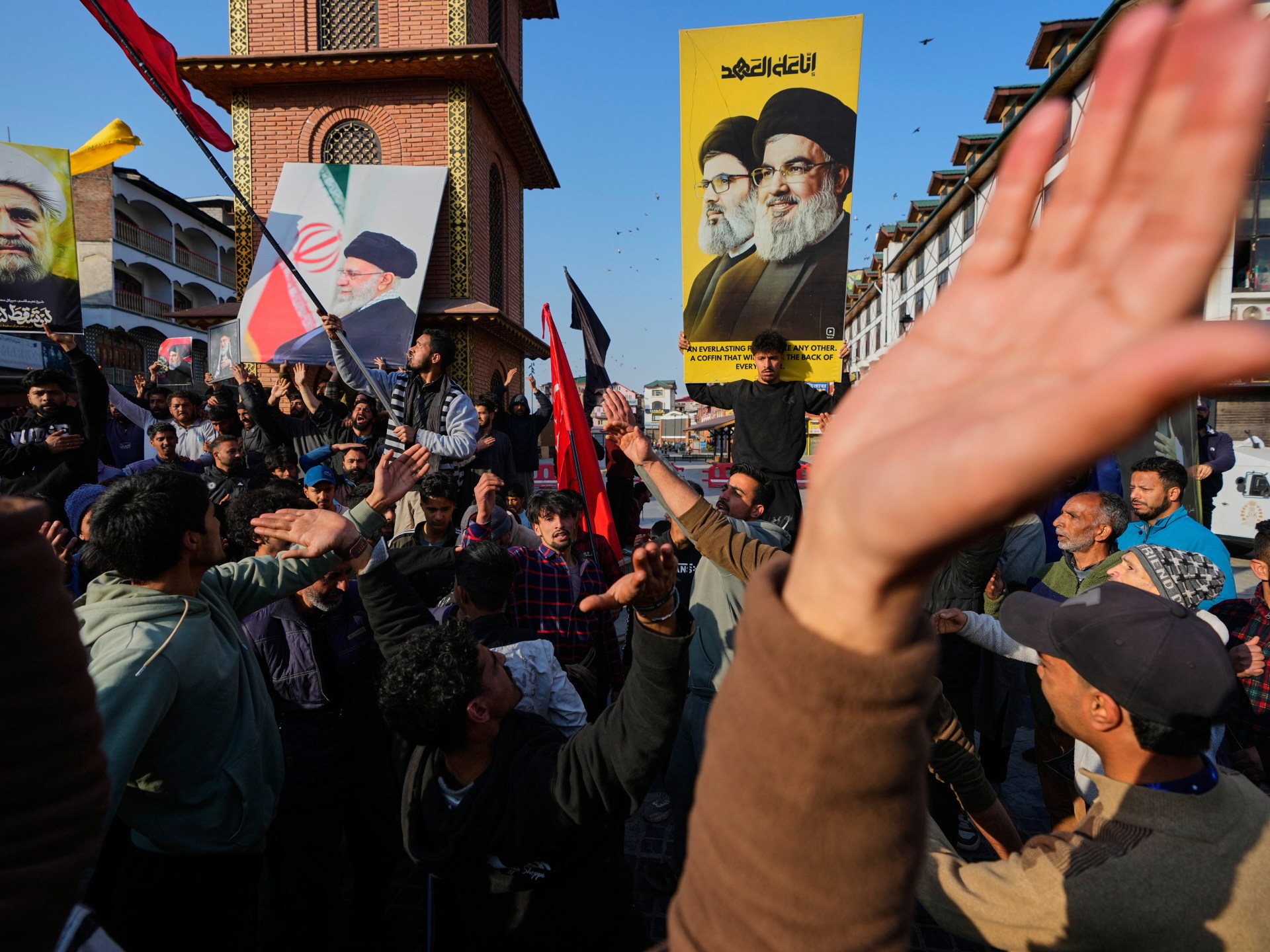
In Beirut, the response from Hezbollah, long considered the crown jewel among Iran’s regional allies, has been cautiously calibrated.

After Sunday’s announcement of Khamenei’s death, the group issued a statement condemning the attack as the “height of criminality”. However, Al Jazeera correspondent in Beirut Mazen Ibrahim noted that the language used was defensive, not offensive.

“If one dismantles the linguistic structure of the statement, the complexity of Hezbollah’s position becomes clear,” Ibrahim said. “The secretary-general spoke of ‘confronting aggression’, which refers to a defensive posture. … He did not explicitly threaten to attack Israel or launch revenge operations.”

This caution is rooted in a new strategic reality. Since the collapse of Bashar al-Assad’s government in Syria in late 2024, the “land bridge” that supplied Hezbollah has been severed. Ali Akbar Dareini, a Tehran-based researcher, noted that this loss “cut the ground link with Lebanon”, leaving the group physically isolated.

Now with top leaders of Iran’s Islamic Revolutionary Guard Corps (IRGC) killed alongside Khamenei, Hezbollah appears paralysed – caught between a battered domestic front in Lebanon and a vacuum of orders from Tehran.

The Houthis: Solidarity meets survival

In Yemen, the Houthis face an even more volatile calculus.

In his first televised address after the strikes on Iran began on Saturday, the group’s leader, Abdel-Malik al-Houthi, declared his forces “fully prepared for any developments”. Yet his rhetoric notably emphasised that “Iran is strong” and “its response will be decisive,” a phrasing that analysts interpreted as an attempt to deflect the immediate burden of war away from the Houthis.

The Houthis are under immense pressure. While they have successfully disrupted Red Sea shipping and fired missiles at Tel Aviv, they now face a renewed threat at home.

The internationally recognised Yemeni government, having won a power struggle against southern separatists, has sensed a shift in momentum. Defence Minister Taher al-Aqili recently declared: “The index of operations is heading towards the capital, Sanaa,” which the Houthis control. The statement signalled a potential ground offensive to retake Houthi territory.

This places the Houthis in a bind. While Houthi negotiator Mohammed Abdulsalam recently met with Iranian official Ali Larijani in Muscat, Oman, to discuss “unity of the arenas”, the reality on the ground is different. Engaging in a war for Iran could leave the Houthis’ home front exposed to government forces backed by regional rivals.

“Expanding the circle of targeting will only result in expanding the circle of confrontation,” the Houthi-affiliated Supreme Political Council warned in a statement that threatened escalation but also implicitly acknowledged the high cost of a wider war.

Iraq: The internal time bomb

Perhaps nowhere is the dilemma more acute than in Iraq, where the lines between the state and the “resistance” are dangerously blurred.

Iran-aligned militias, many of which operate under the state-sanctioned Popular Mobilisation Forces, are now caught in a direct standoff with the US. Tensions have simmered since late 2024 when Ibrahim Al-Sumaidaie, an adviser to Iraq’s prime minister, revealed that Washington had threatened to dismantle these groups by force, a warning that led to his resignation under pressure from militia leaders.

Today, that threat looms larger than ever. Unlike Hezbollah or the Houthis, these groups are technically part of the Iraqi security apparatus. A retaliation from Iraqi soil would not just risk a militia war but also a direct conflict between the US and the Iraqi state.

With the IRGC commanders who once mediated these tensions now dead, the “restraining hand” is gone. Isolated militia leaders may now decide to strike US bases of their own accord, dragging Baghdad into a war the government has desperately tried to avoid.

Resistance without a head

Khamenei’s assassination has essentially shattered the command-and-control structure of the “axis of resistance”.

The network was built on three pillars: the ideological authority of the supreme leader, the logistical coordination of the IRGC and the geographic connection through Syria. Today, all three are broken.

“The most important damage to Iran’s security interests is the severing of the ground link,” Dareini said. With Khamenei gone, the “spiritual link” is also severed.

What remains is a fragmented landscape. In Lebanon, Hezbollah is too exhausted to open a northern front. In Yemen, the Houthis face a potential domestic offensive. In Iraq, militias risk collapsing the state they live in.

After Iran’s salvo hit their skylines, will Gulf states enter the war?

Doha, Qatar— When Iranian missiles slammed into Doha, Dubai and Manama over the weekend, they shattered more than glass and concrete – they also were a blow to the Gulf states’ carefully cultivated image as oases of stability, insulated from the crises and conflicts in the rest of the Middle East.

Now, countries in the region face what analysts describe as an impossible choice: strike back and risk being seen as fighting alongside Israel, or remain passive while their cities burn.

Recommended Stories

list of 4 itemsend of list

“For people and political leaders here, seeing Manama, Doha and Dubai bombed is as strange and unimaginable as seeing Charlotte, Seattle, or Miami bombed would be for Americans,” Monica Marks, a professor of Middle East politics at New York University Abu Dhabi, told Al Jazeera.

The attacks came as Iran retaliated against a massive joint US-Israeli assault that began on Saturday. The operation killed Iran’s Supreme Leader Ayatollah Ali Khamenei and other senior military leaders, and struck military and government sites across Iran. A school was also hit, and at least 148 people were killed in that strike alone.

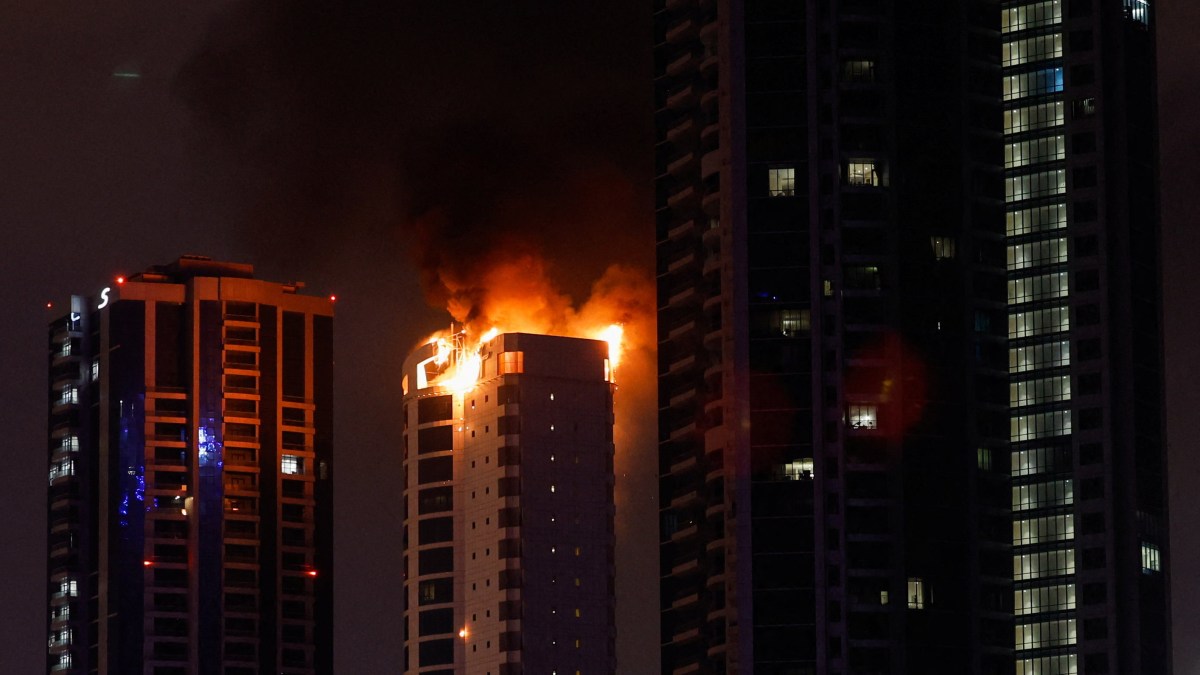
Tehran retaliated with missiles and drones targeting Israel and US military assets across the Gulf, killing at least three people in the United Arab Emirates (UAE), where at least 58 people had been injured as of Sunday evening. Either missiles — or debris after they were intercepted — hit landmark buildings and the airport in Dubai, high-rises in Manama, and Kuwait’s airport, with smoke also seen billowing from some neighbourhoods in Doha. Saudi Arabia said Iran also struck Riyadh and its eastern region. Qatar said 16 people had been injured on its soil, while five people were injured in Oman, 32 in Kuwait and four in Bahrain.

A war they tried to stop

The Gulf states did not want this confrontation. In the weeks leading up to the attack, Oman had been mediating indirect talks between Washington and Tehran, with Foreign Minister Badr Albusaidi declaring that peace was “within reach” after Iran agreed never to stockpile enriched uranium and to dramatically dilute its existing enriched uranium.

Still, hours later, the US and Israel launched missiles.

“GCC [Gulf Cooperation Council] states have seen this war coming in slow motion for weeks, if not months, and have exerted a huge amount of effort to stop it,” Marks said.

They knew, she added, that a cornered Iranian regime would “choose fratricide before suicide”, taking its Gulf neighbours hostage rather than accepting defeat.

Rob Geist Pinfold, a lecturer at King’s College London, agreed that the Gulf states had tried hard to prevent military action.

“The GCC states did not want this war. They tried to lobby against it,” he told Al Jazeera. Against that backdrop, he said, the prospect that they might join the war — and be seen as “working with the Israelis, is a huge challenge for their legitimacy”.

Yet remaining passive carries its own risks. Pinfold described the Gulf states’ predicament as a “conundrum”: doing nothing while Iran strikes repeatedly is just as damaging to their standing as entering the war.

“At the end of the day, these governments are responsive to popular opinion,” he said. “They want to be seen as protecting their people, protecting their territory and their sovereignty.”

Both analysts suggested the Gulf states may ultimately choose to act – but on their own terms.

Pinfold argued they are more likely to launch strikes themselves, possibly through a joint GCC effort like the Peninsula Shield Force (PSF), rather than simply opening their airspace for US and Israeli operations.

The PSF was a unified army created in 1984 by the GCC, which evolved into the Unified Military Command in 2013.

“They don’t want to be seen as working for Israel or working with Israel,” he said. “They want to be seen as leading, not just following.”

This would allow the Gulf states to “get in the driving seat” and demonstrate agency after weeks of being sidelined, Pinfold added.

“It’s been the US and Israel that started this war. It was Iran that escalated it. So now the Gulf states are in a position where they can show that they are not just passive – they’re not just the people being bombed.”

Nightmare scenarios

The immediate fear for Gulf leaders centres on their most vulnerable infrastructure. Marks identified what she called the “real nightmare scenario”: Strikes on power grids, water desalination plants and energy infrastructure.

“Without air conditioning and water desalination, the scorching hot and bone-dry Gulf countries are essentially uninhabitable,” she said.

“Without energy infrastructure, they’re unprofitable. Gulf states will take whatever steps they deem will least jeopardise those interests.”

Pinfold, however, argued that the deeper threat is not physical but reputational.

The lasting damage, he warned, would be to the Gulf states’ soft power – their brand as stable, predictable havens for investment and tourism in a turbulent region.

“These strikes do damage to that reputation,” he said.

A new era of state-on-state war?

Both analysts noted that the current crisis marks a dramatic shift in regional security dynamics. For years, the Gulf states focused their concerns on non-state actors such as the Houthis in Yemen or Hezbollah in Lebanon.

That calculus has now changed.

“What we’re seeing is a new paradigm in the Middle East, or a return to a very old paradigm, of state-on-state warfare,” Pinfold said.

“We’re not seeing as much grey zone warfare in terms of disinformation, proxy war, and whatnot. We’re actually seeing a new level of escalation.”

Marks observed that before the war broke out, Gulf states – including the UAE – had come to view Israel as a greater threat to regional stability than Iran, particularly after Israel’s strike on Hamas leaders in Qatar last September.

“That assessment looks very different today,” she said.

Iran’s opening salvo, she added, has been “broad and alarmingly scattershot” – and much worse could be yet to come.

For now, the Gulf states are rapidly recalibrating. Their next moves will depend on whether Iran offers what Marks called “a more rational escalatory ladder” – one that might allow them to stay on the sidelines, exactly where they want to be.