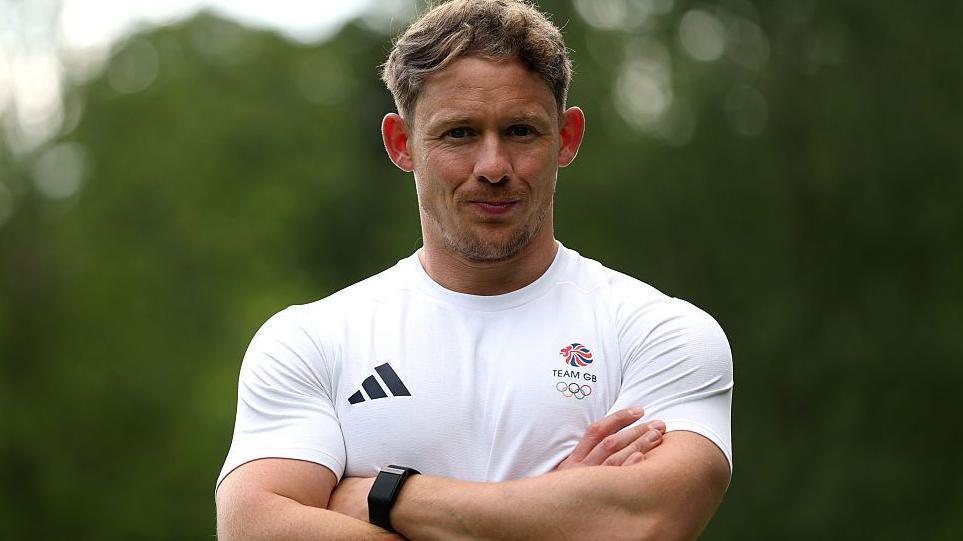
Team GB had their most successful Winter Olympics, winning three gold medals among the five-medal haul in Milan-Cortina. But not every athlete performed to their potential. Bobsleigher Greg Cackett gives his personal account after missing out on the podium in the four-man event.
It’s been two weeks since my Winter Olympic medal dreams ended.
I’m a brakeman in the Team GB four-man bobsleigh team that slipped from the bronze medal position to seventh on the final day of the Milan-Cortina Games.
Four years of graft, setback, support and joy were disfigured across four heats of competition.
In the immediate aftermath, near-miss grief played out across our faces while families revelled in the simple fact we were there. The ache of profound disappointment when your world insists it’s an achievement is strange to process.
The awkwardness of feeling too successful for pity, too unsuccessful for celebration.
It had been a fraught journey this season for the crew, getting high-performing athletes to the start line in perfect condition.
Between 2018 and 2022, a period we’re proud of, we rose from the unfunded wilderness, to a UK Sport-backed quadrennial, leading to a special period of British bobsleigh history.
We became the first-ever British European champions – upsetting the huge German dominance – we won multiple World Cup races, World Championship silver and bronze.
Understandably, we entered the Olympic year full of confidence that we could win a medal.
It may seem ironic, but winter athletes are built in the summer.
Training for five seconds of explosiveness means: weights, sprints, plyometrics and pushing sleds in the sun.
It is a critical window to maximise your athleticism before the rigours of roadside fast food, dubious hotel nutrition and hauling equipment in minus temperatures seek to take it away.
- 22 February
Three races was all we had to dial in before the Games
But just before this winter’s competition season started, something seismic occurred in our team.
Taylor Lawrence, our bionic Royal Marine, picked up the first major injury of his career, ruling him out before Christmas.
Our start was compromised despite efforts of our excellent alternates Olly Butterworth, Alex Cartagena and Ben Simons.
It wasn’t until New Year, with Taylor’s return, Leon Greenwood’s move back to a familiar left handle and my own healing from rampant tendinopathies, that our mojo showed signs of life.
Three races was all we had to dial in before the Olympics. We progressed, falling just short of the podium before the Games.
No bother, we thought, progress is progress. I mentioned how hard it is getting high-performers to the start line. The taper, a tightrope.
The faster the body, the more at risk, particularly in a sport that combines immense amounts of force production with the spine-squishing violence of the run itself.
The Olympic village presents challenges too. Going weeks without meal variety, many of us lost weight – despite the pizza station.
By the third week of breakfast quattro formaggi, you’d conscientiously object too.
Four-man was also the last event down the newly built Cortina track, the pressure ratcheting up on Team GB with every Olympic near-miss until Matt Weston’s brilliant skeleton gold opened the medal floodgates.
We bore thumb-twiddling witness to everyone’s partying relief while still waiting for our event.
Into competition week, training speeds were lacking. Not always cause for alarm, you never know what equipment games teams play.
Brad Hall’s incredible driving success brings with it an interminable pressure to deliver. Mistakes on unfamiliar tracks from pilots experimenting with fast lines is to be expected.
These are the layers of pressure and responsibility Brad and other pilots contend with.
There was tension the night before our competition. These things came into focus: food frustration, race-line struggles, Taylor’s resurgent calf issue. Would we start well? How to manage our situation?
Opting for a human, rather than objective performance approach, we left the village for a team pub dinner. Long lamented burgers and chips tasted like Michelin star cooking.
This reset a few fraying fibres and we took to the ice the following day in high spirits.
In a quiet moment on the sled truck, I hugged Brad and told him whatever happened, we’d walk away from our Olympic careers proud and grateful. I will always have exceptional pride in him.
Passengers to the medal dream slipping away, it’s impacted us differently.
Taylor, Brad and myself, a shared grief blurred with pride of the journey we navigated over so many years. Leon Greenwood, a fizzing ball of positivity disappointed to miss the medal but overjoyed at his maiden Olympics. Ultimately, the rise and fall of a sliding track reflects the careers of those brave enough to enter it.
I have been devoted to winning an Olympic medal since I stumbled into sprinting aged 21. I ran the 100m in 10.2sec and after injury stalled me, I escaped to bobsleigh.
Now 36, this was my third and final Winter Olympics.
For me, and I hope something resonates for you, I’ve learned that it doesn’t serve me to dwell on those things I can’t control. What serves is looking through the lens of people who love me most.
- 22 February
Winter Olympics 2026
6-22 February
Related topics
- Winter Sports
- Bobsleigh
- Winter Olympics

Leave a Reply