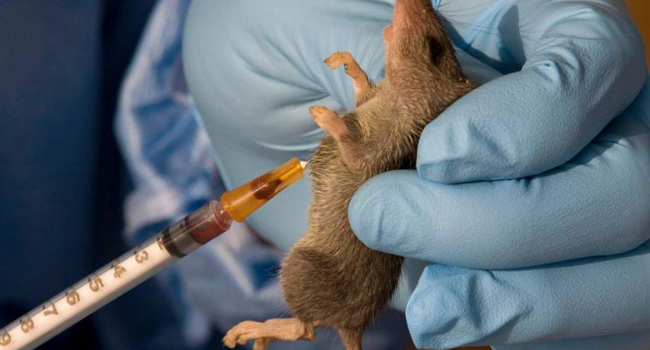
Ten people, including two healthcare workers, have died from Lassa fever complications in Benue state.
The Commissioner for Health and Human Services, Dr. Peter Ogwuche, disclosed this during a press briefing in Makurdi, while speaking on the containment measures.
He said the state had recorded 52 confirmed cases out of the 315 suspected cases reported.
According to him, 14 patients of the 52 cases are healthcare workers, out of which six are medical doctors.
“Since the Lassa Fever outbreak, 10 mortalities have been recorded from the 52 confirmed cases, while 315 suspected cases were reported,” Ogwuche said.
“The high number of health workers infected with Lassa fever leaves room for improvement, as 14 medical personnel have been infected.
“Six of the health workers infected are medical doctors, one pharmacist, four nurses, two health extension workers, and a potter. A surveillance team has been deployed to all 23 local government areas, but Makurdi, Guma, Buruku, and Okpokwu, which have active cases, are being closely monitored,” he added.
READ ALSO: We Will Reduce Lassa Fever Incidence In 10 Years – NCDC DG
Earlier, the Nigeria Centre for Disease Control (NSDC) reiterated its plans to reduce the incidence of Lassa fever to an appreciable level within the next 10 years.
NCDC Director-General, Jide Idris, said that vaccine development for Lassa fever takes time.
“We would reduce the incidence of Lassa fever to an appreciable level in the next 10 years. I said that because developing a vaccine for Lassa fever takes a long time,” he said on Channels Television’s The Morning Brief on February 23.
Noting that the death rate remains high and that efforts are underway to bring it down to less than 10 per cent, Idris said a group of experts was working on vaccine development in collaboration with colleagues and stakeholders from parts of Africa and outside the continent.
Lassa fever is an acute viral haemorrhagic illness caused by the Lassa virus, a member of the arenavirus family.
It is an animal-borne, acute viral illness spread by the common African rat, also known as the Mastomys rat species.
It is endemic in Nigeria and other parts of West Africa.

Leave a Reply