The Israeli Knesset is pushing through a bill that, if passed, would allow the occupation authorities to legally execute Palestinians. This development has attracted hardly any international attention, but for Palestinians, it is yet another looming horror.
The bill is part of the deal that allowed the formation of Benjamin Netanyahu’s coalition government in late 2022. It was demanded by Itamar Ben-Gvir, now national security minister, who has led a reign of terror across the West Bank for the past three years.
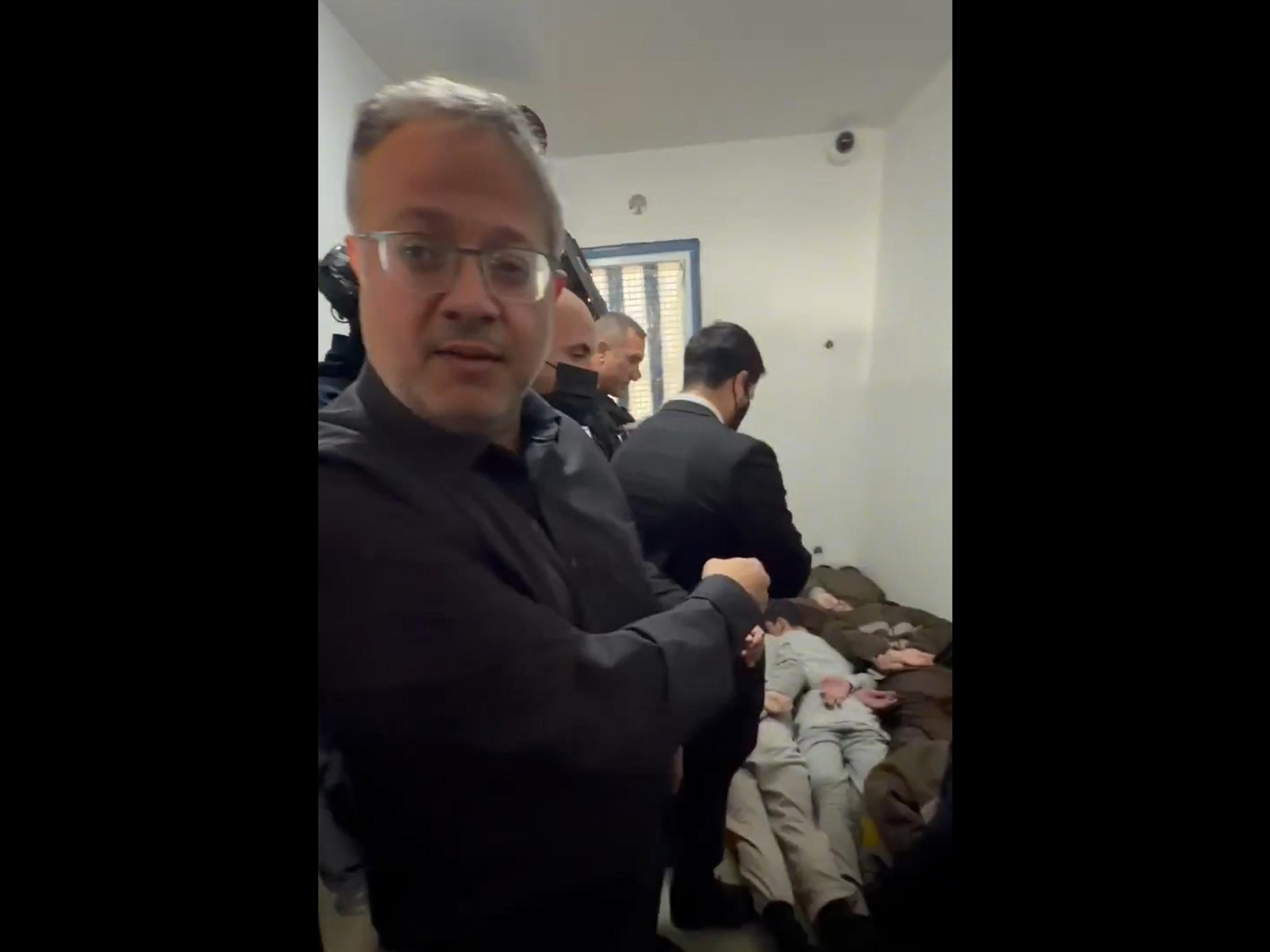
In November, the bill passed its first reading, and in January, its provisions were revealed: execution carried out within 90 days of sentencing, no appeals, and death by hanging. Palestinians charged with planning attacks or killing Israelis would face the death penalty. Ben-Gvir has repeatedly called for the execution of Palestinians, most recently during his visit to Ofer Prison, where he filmed himself overseeing the abuse of detainees.
That we got to this point is hardly surprising. For decades, the international community has neglected the fate of Palestinian prisoners. In the past two and a half years, there has been almost no global reaction to the mass brutalisation of Palestinians held in Israeli jails with or without charges. Israeli efforts to legalise executions of Palestinian is the logical next step in eliminating the Palestinian question.
‘Prisoners’ or captives?
The use of the term “prisoners” to refer to Palestinians held by Israel is deceptive. It strips this cruelty of its context – the military occupation and colonisation Palestinians live under. Prisoners of war or captives are much more accurate terms. That is because Palestinians are taken away either for resisting the occupation or for no reason at all – for the sake of terrorising their families and communities.
Currently, more than a third of the Palestinians Israel is holding are under “administrative detention” – ie, they are being held without charge – and some are women and children. Palestinians are also “tried” in military courts, which are blatantly biased against the occupied population.
I, myself, was a victim of this system of oppression through unjust detention.
In November 2015, Israeli soldiers burst into my home in Ramallah and took me away. They tortured and isolated me for weeks without even telling me what I was accused of.
Eventually, they came up with an accusation of “incitement”, for which they did not produce any evidence. They kept me under their “administrative detention”, or what is really an arbitrary arrest. The abuse continued, and during one interrogation session, an Israeli officer threatened me with rape.
They treated me like an animal without rights or legal protection. Representatives from the International Committee of the Red Cross were prevented from visiting me. I was released only after I went on a hunger strike for three months and my condition deteriorated to a dangerous level.
This happened to me 10 years ago, long before October 7, 2023. Back then, the international community was turning a blind eye to Israel’s violations of international law through administrative detention and abuse.
After October 7, the conditions in Israeli military prisons worsened, with rampant torture, starvation and medical neglect. At least 88 Palestinians have been killed in Israeli detention since then. The international community has remained silent, issuing an occasional weak condemnation.
Legalising the illegal
Israel’s brutal mistreatment of detained Palestinians is in direct violation of the Geneva Conventions, which it is a party to. By virtue of being under occupation, Palestinians are considered a protected population and have rights which the Israeli authorities have systematically denied.
Nevertheless, the international community has accepted these flagrant violations. Under the guise of anti-terrorism, the international discourse has transformed Palestinians from an occupied people to threats to Israeli and international security.
Not even the shocking images and testimonies of mass rape at Israeli detention centres managed to overturn this flawed framing.
In this context, the death penalty bill is not an extremist proposal; it fits right into the pattern of the brutalisation of Palestinian detainees.
From the perspective of the Palestinians, this bill is yet another tool of Israeli revenge. If passed, it would spread more fear and further diminish any peaceful resistance against the Israeli settlers’ violent assaults on the Palestinian people and their property.
The bill is also a nightmare for every family that has a member in an Israeli prison. They have already been pushed to the edge by the lack of information about their loved ones since a ban on visiting amid the spike in deaths in detention.
Even more horrific is the prospect that the bill may be applied retroactively. This means anyone with the charges of planning or causing the death of an Israeli could be executed.
There are currently reports in Israeli media that supposedly, the Israeli government is under pressure not to push forward with this law. There have been some suggestions to amend the text to make it more palatable. But we know that Israel will eventually get to executing Palestinians. Just as it has done with other laws, it will deceptively manoeuvre to minimise reactions but still proceed with what it wants to do.
As Israel is well on its way to bulldozing through yet another international legal norm, the most it will likely get is “calls for restraint” or “statements of condemnation”. Such weak rhetoric has enabled its onslaught against international law for the past few decades, and especially during the past two and a half years.
If the international community wants to salvage what is left of the international legal regime and save face, it is time to radically change its approach.
Instead of making weak statements about respect for international law, they must impose sanctions on Israel. Israeli officials who have been accused of committing crimes against Palestinians should not be hosted but held to account.
Only then can there be hope for the safe and peaceful return of all Palestinian prisoners – something that was already agreed upon during the Oslo Accords. And only then can there be hope that Israeli efforts to dismantle international law so it can do as it pleases in Palestine will be stopped.

Leave a Reply