Iran has warned it will show “zero restraint” if the country’s energy facilities are targeted again, a day after Israel struck Iran’s critical South Pars gasfield and Tehran hit energy facilities across the Gulf region in retaliation.
“Our response to Israel’s attack on our infrastructure employed FRACTION of our power. The ONLY reason for restraint was respect for requested de-escalation,” Foreign Minister Abbas Araghchi had written in a post on X on Thursday.
Recommended Stories
list of 3 itemsend of list
“ZERO restraint if our infrastructures are struck again.”
South Pars is Iran’s biggest source of domestic gas supply, providing 80 percent of the country’s natural gas needs.
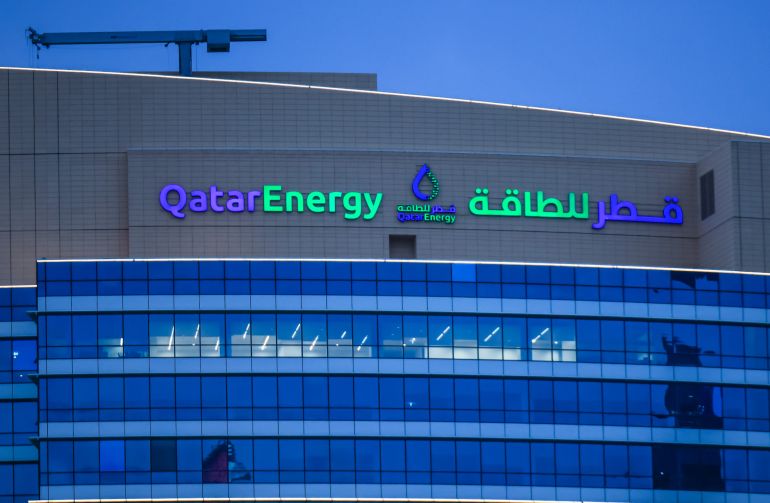
The warning comes as Qatar continues to assess damages at its Ras Laffan Industrial City site, which processes approximately 20 percent of the global supplies of liquefied natural gas (LNG), after an Iranian attack.
The strike wiped out about 17 percent of Qatar’s LNG export capacity, causing an estimated $20bn in lost annual revenue and threatening supplies to Europe and Asia, according to QatarEnergy’s CEO.
Saad al-Kaabi told the Reuters news agency that two of Qatar’s 14 LNG trains, the equipment used to liquefy natural gas, and one of its two gas-to-liquids facilities were damaged in Iranian strikes this week.
The repairs will sideline 12.8 million tonnes of LNG production per year for three to five years, he said.

“I never in my wildest dreams would have thought that Qatar would be – Qatar and the region – in such an attack, especially from a brotherly Muslim country in the month of Ramadan, attacking us in this way,” al-Kaabi said in an interview.
Tehran has been firing missiles and drones across the Middle East in response to the United States-Israeli war on Iran, which began on February 28.
Meanwhile, Israeli Prime Minister Benjamin Netanyahu reiterated in a news conference that the aim of the war on Iran was to remove the nuclear and ballistic missile threats “before they’re buried deep underground and become immune from aerial attack”.
The prime minister said Israel and the US were “destroying the factories that produce the components to make missiles, wiping out their industrial base in a way we didn’t before”, claiming that Iran’s “command and control structure is in utter chaos”.
Netanyahu also stressed that Israel “acted alone” in striking Iran’s South Pars gasfield and added that it would hold off on any further attacks on energy infrastructure at the request of US President Donald Trump.
Earlier on Thursday, Trump said he had told Israel not to repeat its attacks on Iranian natural gas infrastructure, after tit-for-tat strikes on energy plants sent energy prices spiralling.
Iran’s attacks on energy infrastructure have heightened tensions with its Arab Gulf neighbours, who have condemned the strikes as a violation of international law.
Iran has also effectively blocked the Strait of Hormuz, a critical Gulf waterway through which about one-fifth of the world’s oil and LNG supplies transit, driving soaring petrol prices and global concerns about rising inflation.
‘Stay away from oil and gas facilities’
During Thursday’s interview with Reuters, al-Kaabi said QatarEnergy may have to declare force majeure on long-term contracts for up to five years for LNG supplies bound for Italy, Belgium, South Korea and China due to the two damaged trains.
“I mean, these are long-term contracts that we have to declare force majeure. We already declared, but that was a shorter term. Now it’s whatever the period is,” he said.
QatarEnergy had declared force majeure on its entire output of LNG after earlier attacks on its Ras Laffan production hub, which came under fire again on Wednesday. “For production to restart, first we need hostilities to cease,” al-Kaabi said.
The damaged units cost about $26bn to build, al-Kaabi said. He also told Reuters that the scale of the damage from the attacks has set the region back 10 to 20 years.
“If Israel attacked Iran, it’s between Iran and Israel. It has nothing to do with us and the region,” he said.
“And so now, in addition to that, I’m saying that everybody in the world, whether it’s Israel, whether it’s the US, whether it’s any other country, everybody should stay away from oil and gas facilities.”

Leave a Reply