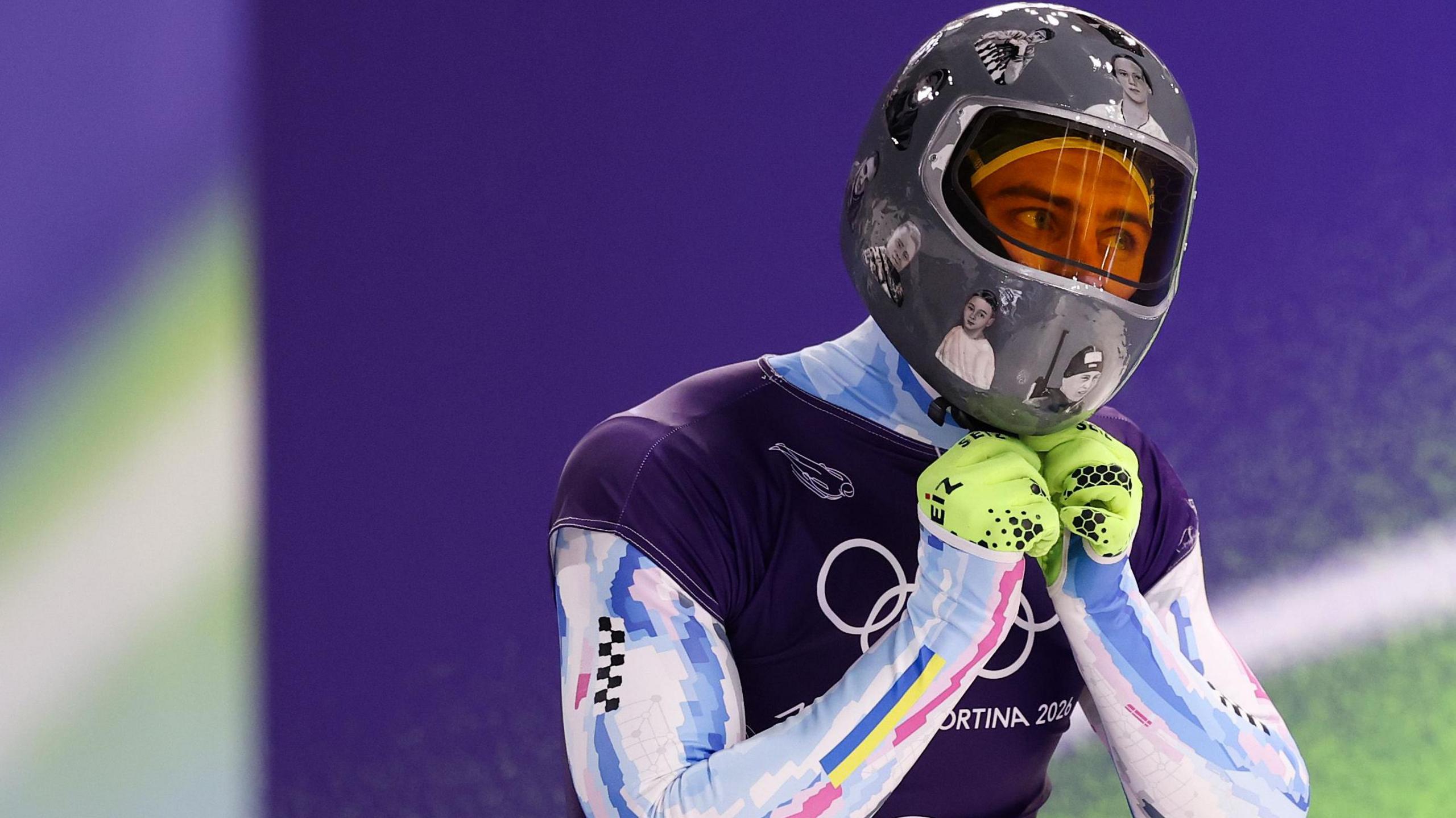
Ukrainian skeleton pilot Vladyslav Heraskevych has been banned from competing at the Winter Olympics for continuing to wear a helmet which features images of athletes killed during Russia’s invasion of his home country.
Heraskevych, who wore the helmet in all of his training runs before the competition began on Thursday, was told by the International Olympic Committee (IOC) on Tuesday it “does not comply” with the Olympic charter and said he was not allowed to wear it.
But on Wednesday he again wore the helmet to official training and told BBC Sport he believed he “has all the rights” to wear it.
IOC president Kirsty Coventry visited the 26-year-old at Cortina’s sliding track before the first skeleton heat on Thursday and the IOC said Heraskevych “did not consider any form of compromise”.
In a statement, the IOC added: “The IOC was very keen for Mr Heraskevych to compete. This is why the IOC sat down with him to look for the most respectful way to address his desire to remember his fellow athletes who have lost their lives following Russia’s invasion of Ukraine.”
The IOC had said Heraskevych could pay tribute to the fallen athletes by wearing a black armband during competition and could show his helmet in mixed zones, news conferences and on social media but that “the field of play is sacrosanct”.
They had expressed a desire for him to stop wearing the helmet, saying they would “beg” – as they wanted him to compete.
Rule 50.2 of the Olympic Charter states: “No kind of demonstration or political, religious or racial propaganda is permitted in any Olympic sites, venues or other areas.”
But Heraskevych believes his tribute is no different to those that other athletes have displayed – such as figure skater Maxim Naumov, who held up a photo of his parents, who were among 67 people killed in a plane crash in Washington DC, while waiting for his score to be announced on Tuesday.
Based on his training times, Heraskevych was a potential outside chance for a medal.
But the IOC said the decision to “withdraw his accreditation” was “taken by the jury of the International Bobsleigh and Skeleton Federation (IBSF) based on the fact that the helmet he intended to wear was not compliant with the rules”.
The IOC added that athletes are able to “express grief with dignity and respect” at multi-faith centres in the Olympic villages.
It also pointed out that Heraskevych has been “supported by the IOC for the last three editions of the Games” and that he is an Olympic scholarship athlete.
“Following Russia’s invasion of Ukraine in 2022, the IOC also set up a solidarity fund for Ukrainian sport to support the athletes’ preparations for the Paris 2024 Olympic Games,” it added.
- 12 hours ago
Winter Olympics 2026
6-22 February
Related topics
- Winter Sports
- Winter Olympics

Leave a Reply