Fifa president Gianni Infantino says he feels “very reassured” that co-hosts Mexico can still stage “spectacular” World Cup games despite an outbreak of cartel violence.
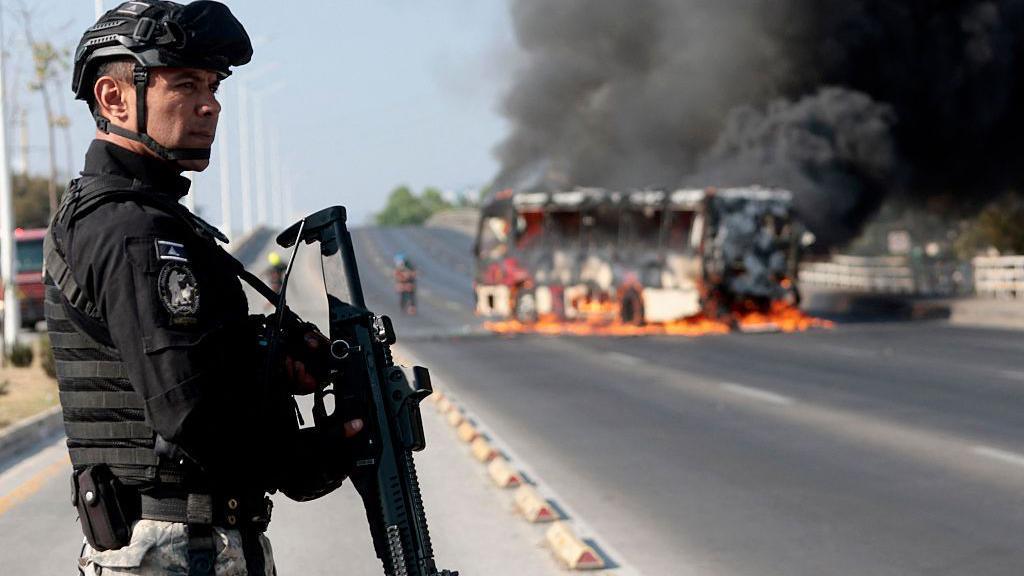
The Jalisco New Generation (CJNG) drug cartel – one of the country’s most feared criminal organisations – has engaged in gun shootouts with the Mexican military, blocked roads and burned vehicles in response to the killing of its leader Nemesio Oseguera Cervantes, known as ‘El Mencho’, in an army operation.
Mexico will join Canada and the United States in hosting the World Cup between 11 June and 19 July.
“Very reassured, everything’s good. It’s going to be spectacular,” Infantino told news agency AFP.
Guadalajara, the capital city of Jalisco where the violence began, is scheduled to host four matches at this summer’s tournament.
Fifa said it was “closely monitoring” the situation in Mexico earlier on Tuesday.
A Fifa spokesperson said the governing body “remain in constant communication with the authorities”.
“We will continue to follow the actions and directions from the different government agencies, aimed at maintaining public safety and restoring normalcy, and we reiterate our close collaboration with federal, state, and local authorities,” they said.
At least 25 National Guard officers were killed in the first 24 hours after El Mencho’s killing.
Violence began in the central-western Jalisco state – where a code red security situation has been declared – and has now spread to at least a dozen more regions, with videos posted online showing gunmen patrolling streets and smoke billowing over cities.
To play this video you need to enable JavaScript in your browser.
‘Difficult to manage spiralling situation’
Security at this summer’s tournament could be compromised if the violence becomes a protracted cartel conflict, experts have told BBC Sport.
“When you push down on the cartels you do get pushback – the danger is that it can be very difficult to manage a security situation that spirals out of control,” said Javier Eskauriatza, assistant professor of criminal law at the University of Nottingham.
The power vacuum created by El Mencho’s killing could lead to a period of instability and further conflict as contenders vie to replace him.
“In general the cartels have an economic interest in making sure the World Cup is peaceful,” Dr Eskauriatza added.
“Yes they pay off politicians and local police forces, but they also buy restaurants and own hotels. They are part of the economic system.
To play this video you need to enable JavaScript in your browser.
‘Moderate risk for tourists this summer’
The CJNG is estimated to be worth more than £10bn and has tens of thousands of members. It has been responsible for a series of killings of politicians, massacres and kidnappings since its formation in 2009.
But some cartel figures retain a level of popularity within local communities in Mexico, as they provide financing for local infrastructure and facilities.
“The response by the CJNG is, in a way, required by the rules of the game – if you have your leader nabbed, you have to respond, otherwise you look weak,” said Dr Eskauriatza.
“They are not idiots – they know that social media will film and amplify these videos for them and and they have made sure the response looks national.”
The US government has advised Americans in Jalisco to shelter indoors until further notice, while fellow World Cup co-host nation Canada has cancelled flights to the Puerto Vallarta airport, and flight tracking apps showed many aeroplanes returning to their departure destinations around the world.
“In terms of tourists, I would say there will be a moderate risk for them,” said Karina Garcia-Reyes, senior lecturer in criminology at UWE Bristol.
 Getty Images
‘Risk of new period of instability’
Security planning for the World Cup has already been under scrutiny over the deployment of Immigration and Customs Enforcement (ICE) officers to major US cities by President Donald Trump, leading to the killings of two US citizens by federal agents so far this year, and a series of mass protests.
Last month, Football Supporters Europe said it was “extremely concerned by the ongoing militarisation of police forces in the US”.
Now eyes are on Mexico and whether it can guarantee the safety of travelling fans.
Four football matches – two in the top flight and two in the second division – were postponed on Sunday because of the violence.
“People in Mexico are hoping that this is a one-off retaliation and that as the cartel reorganises itself, things will settle down,” said Monica Serrano Carreto, professor of international relations at El Colegio de Mexico.
“But there is also a risk that this leads to a new period of instability, unpredictability and the violence continues.
“The type of weapons that the cartel has access to means that a military-style confrontation in the aftermath is inevitable – the government would have known that. We have seen in the past they [the cartel] even have weapons capable of shooting down helicopters.
 Getty Images
Mexico has been under increased political pressure to take action against cartels in the past year.
“This response is not unique but is very serious and very high scale,” said Jon Benjamin, UK ambassador to Mexico between 2021 and 2024.
Related topics
- Football
- FIFA World Cup

Leave a Reply