To play this video you need to enable JavaScript in your browser.
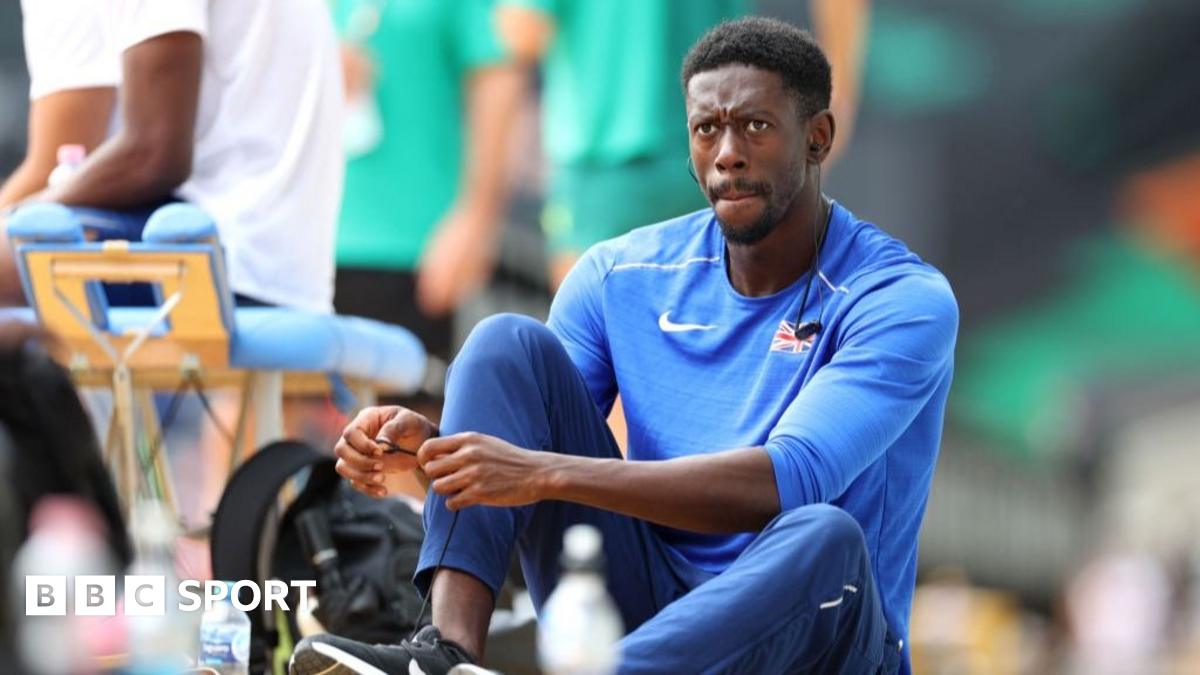
Former Great Britain sprinter Reece Prescod has given the clearest indication yet that he will take performance-enhancing drugs as part of the controversial Enhanced Games – saying: “If that’s something that will take me to the next level, I’m not against it.”
Prescod, who announced his retirement last August after a career in which he took part in three World Championships and the Tokyo 2020 Olympic Games, added that it would be “interesting to know that’s how fast I can run with the additional help”.
The Enhanced Games permit athletes, under medical supervision, to take drugs banned in mainstream sport.
Last month, having signed up to the project after retiring from elite sprinting, Prescod told the BBC that he would not take performance-enhancing drugs.
But speaking in Abu Dhabi at an Enhanced Games training camp before its inaugural competition in Las Vegas in May, the former Olympian now says he is open to doing so.
“I will have a conversation with the doctors and see if that’s going to be part of my journey, but as it stands right now, my initial focus is to train” he told BBC Sport.
“I’ve got the medical team to support me and if that’s something I feel like I can take, that will take me to the next level, I’m not against it.”
‘Mind-boggling’
When asked how he thought it would feel if he takes some of the drugs being made available – which include steroids, growth hormone and testosterone – Prescod said: “It’s quite mind-boggling, if I’m being honest.
“Obviously during my career, I abided by the rules. I never had any sort of violations, missed tests, anything like that.
“If that’s the journey I go down with enhancements here and I run extremely fast, it’ll just be interesting to know that’s how fast I can run with the additional help.”
During three months of training in the United Arab Emirates, 39 athletes in sprinting, swimming and weightlifting will be offered performance-enhancing drugs that are approved by the US Food and Drug Administration (FDA).
Organisers say the competitors will undergo strict medical assessments at a hospital on the outskirts of Abu Dhabi, and claim the event – which has a prize pot of $25m and offers appearance fees and bonuses of up to $1m for breaking a world record – will deliver transparency and health safety by removing the stigma of enhancement.
But it has also been condemned by a range of sports and anti-doping bodies for normalising doping, endangering athletes’ health, and harming the integrity of sport.
Last year, World Aquatics became the first international sport federation to ban athletes, coaches and officials from its events if they have taken part in the Enhanced Games.
When asked if he was worried about any long-term side effects that could harm his health, Prescod said: “With anything in life, any sort of medication, there’s always a risk with that kind of situation.
“I trust in the doctors and I trust what’s going on here.”
The fourth-fastest British man over 100 metres, with a personal best of 9.93 seconds, Prescod says the prospect of financial security was a major factor in his decision. But he has been criticised by UK Athletics, which said it was “disappointed” by the sprinter signing up.
“Obviously there’s been some controversy around the decision and I can understand everyone’s entitled to their opinion but ultimately it’s my decision – I’m going to stand by it,” he said.
“They’d probably be better to actually speak to all the athletes and try and improve the service that they’re given. They need to focus on improving that.
‘Throwing stones’
Enhanced Games chief executive and co-founder Max Martin told BBC Sport he was “very excited about expanding beyond the three sports that we’re currently offering”.
He said: “What else can we do in long distance triathlons? What can we do in cycling? What can we do in marathon running?
“We’re speaking to athletes already outside of the core three sports.”
The prospect of athletes from more sports participating in the event has dismayed UK Anti-Doping chief executive Jane Rumble, who said: “I’m really disappointed in the round about the Enhanced Games, and about the sports that are taking part, so all I can do is emphasise my deep concern about the health risks and safety risks and encourage everyone to stay 100% clean and true.
“The concept flies in the face of what sport is all about.
“The key concern that I’ve got about the potential impact is on the next generation of young people who may tune in and watch.
“I believe it sends a dangerous message about PEDs [performance-enhancing drugs] with little if anything said about the health risks associated, and those risks are significant.”
When asked if athletes could be put at risk, Martin said: “I think there is a risk with anything in life.
“There’s people every year that die from taking aspirin, but we take the right precautions under the highest clinical and medical standards to mitigate that risk as much as we possibly can.”
The Enhanced Games’ website is advertising a product it says will boost testosterone and longevity, and Martin acknowledges the sale of lifestyle health products will be a key part of its business model.
“We utilise sports to create awareness that performance enhancements under the right clinical and medical supervision can actually be very good for people” he claimed.
“And once we have that awareness, we give people access to those performance enhancements.”
‘People are going to see me as a villain’
To play this video you need to enable JavaScript in your browser.
Olympic swimmer Ben Proud was the first British athlete to join the Enhanced Games, with governing body Aquatics GB saying it was “immensely disappointed”, condemning his decision “in the strongest terms”.
“I knew signing up to this was going to absolutely ruin my credibility as a traditional swimmer,” he said. “If I came here and did it ‘unenhanced’, going back to the traditional world, people are going to see me as a villain or a dirty swimmer or a cheat.
“That’s never how I wanted to have my reputation. I did my career to the highest standards. World Aquatics have put the ban on everyone who endorses the Enhanced Games [so] I will never swim in the traditional sense again and therefore the question is; why wouldn’t I mould myself to these new set of rules?
“Why wouldn’t I take part in the study [and] be a part of the enhanced programme to the full extent?”
When asked if his decision was based purely on money, Proud said: “I built this skill and that skill had no value in swimming anymore.
“Even though I did all these things, I rarely received any sort of compensation. And you start to think, especially as a 30-31 year old, what use is this? What’s the point of spending 15 years building a skill just to retire and forget about it for the rest of my life?

Leave a Reply