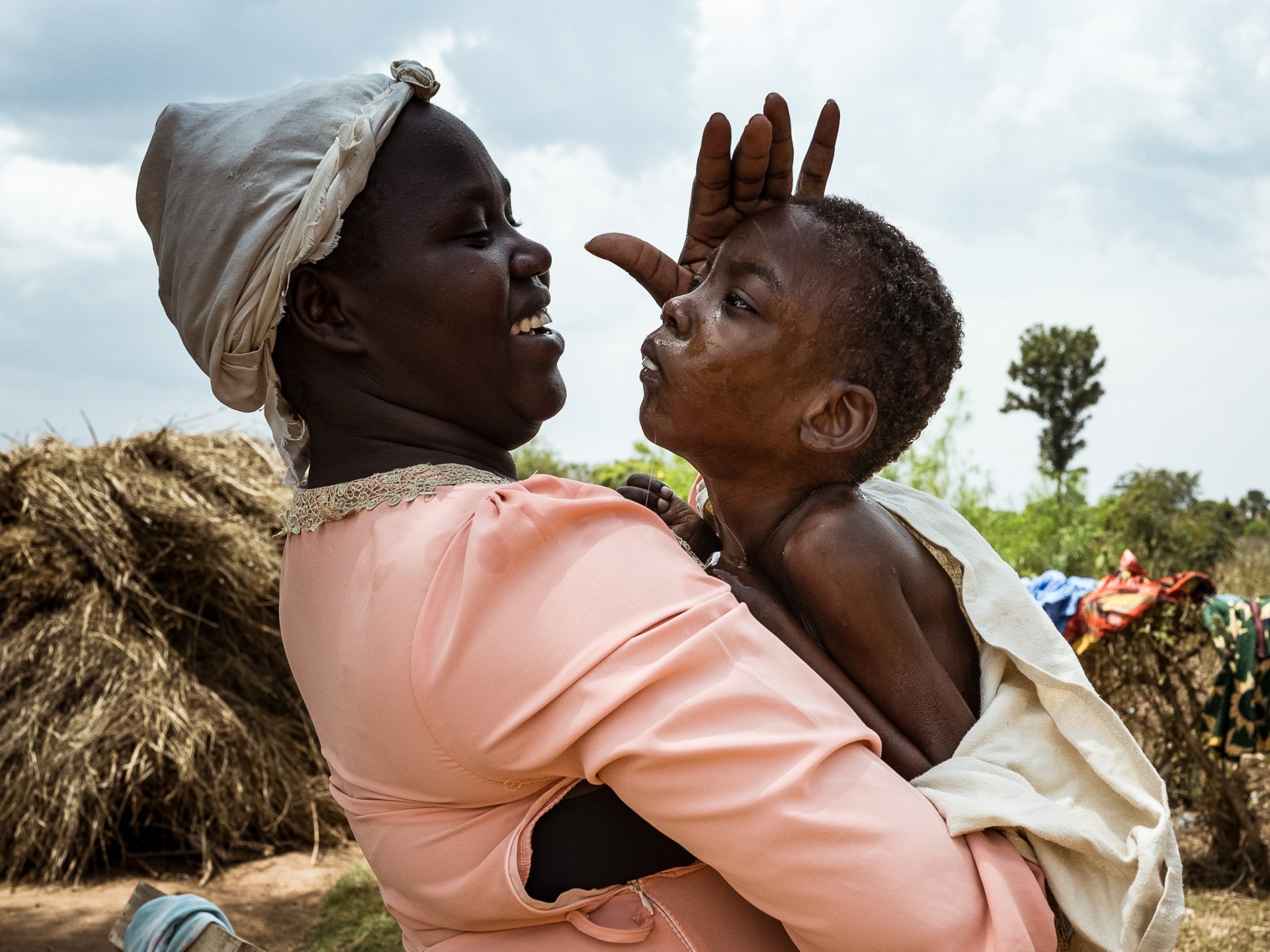
Owalai, Uganda – Martha Apolot navigates a dusty path through fields of cassava and millet under the searing hot sun. She carries a hoe on one shoulder, the blade carefully balanced, and over the other, her eight-year-old son, Aaron.
Every day, the 21-year-old mother takes Aaron to the fields where she works.
“Aaron is so weak, so I have to carry him from the house and lay him somewhere so I can work,” Martha says quietly, holding Aaron on her lap as she sits on the bare earth inside their tiny, single-room hut in Owalai, a rural hamlet in eastern Uganda.
They return home when it’s time to feed Aaron or when he has soiled himself, not when the tilling is done.
Aaron has an undiagnosed disability. He cannot walk, talk, eat solid foods or hold up his head without support. The back of his head is balding from lying down and prone to sores. He needs constant care, but Martha has no one else to look after him while she works.
Martha was 13 when a man lured her from her schoolyard and raped her. She did not know the man and never saw him again, she says. Her memories of that day are traumatic, and she goes quiet, breathing deeply and looking skyward.
Her pregnancy created an immediate rift within her family.
“My dad did not want me to come home, but my mother pleaded with my father to [let me] stay,” she explains after a long pause.
The seventh of eight children, Martha ran away, spending months at friends’ homes. Eventually, her older brother Paul, with whom she is close, tracked her down and told her their parents had accepted the situation and she could return home.
Aaron’s birth was long and complicated. After 15 hours of labour, doctors at the hospital in the city of Soroti admitted the teenager for an emergency caesarean section
Martha remembers the love she felt when she first saw her baby. “I felt so good, receiving my child. He was so handsome,” she recalls.

Leave a Reply