To play this video you need to enable JavaScript in your browser.
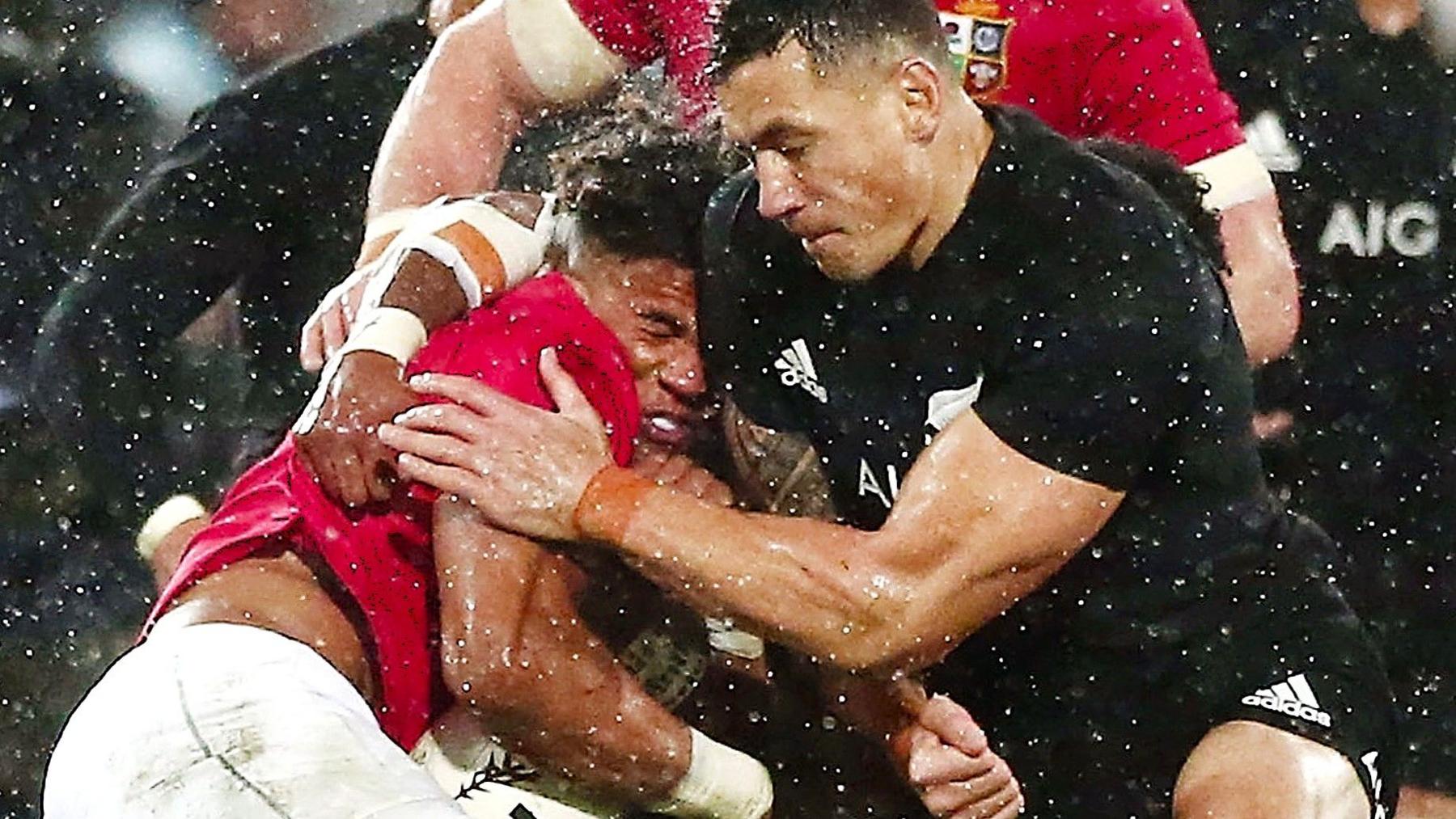
Former British and Irish Lions wing Anthony Watson says he cheated a head-injury assessment to get back on the pitch after Sonny Bill Williams’ infamous high tackle in the second Test of the 2017 series in New Zealand.
Williams was shown a 25th-minute red card after driving a straight shoulder into Watson’s head as the wing gathered a loose ball and attempted to run upfield.
Watson says he had previously committed a series of five words to memory to help him pass a part of the head-injury assessment when players are tested on their recall.
“I knew the impact was big and as I got in to do the protocol I was starting to feel a bit hazy,” Watson recalled in an interview with a new BBC documentary – Ben Youngs Investigates: How Safe Is Rugby?
“I just want to caveat this by saying that I love the medical staff there at the Lions and they had no idea I was doing this.
“At that stage I knew the protocols – they give you five words to remember so it is ‘elbow-apple-carpet-saddle-bubble’. That is what I had.
Ben Youngs Investigates: How Safe Is Rugby?
Watson had appeared unsteady in the aftermath of the collision, failing in an initial attempt to stand from a kneeling position.
Jack Nowell replaced Watson as he was assessed for signs of concussion, but six minutes later, Watson jogged back on to the pitch and proceeded to play the remainder of the Lions’ 24-21 win.
Watson also played 72 minutes of the drawn series decider at Eden Park seven days later.
The recall element of the head injury assessment has since changed.
Instead of being asked to recall a set list of five words, with results compared to a baseline set when unimpaired at the start of the season, a random sequence is generated from a bank of 20 different words for each assessment.
Players are penalised for incorrect answers, meaning learning and repeating all 20 would result in a fail.
Watson’s fellow England wing Jonny May admitted in 2019 that, after a head knock in a game against Wales, he had tried, and failed, to pass the same part of the test by repeating words.
Players are also tested on their balance and orientation, and have to pass all elements of the assessment to return to play.
Independent doctors also review video replays and data from smart mouthguards to review collisions. In rare cases they can overrule the results of an assessment if they still have concerns about a player’s performance in it or there was an error in administering it.
Watson, 32, who retired from rugby in January 2025 after failing to recover sufficiently from a back injury, says he has no regrets about prioritising that match over his health.
“That night I had a pretty mental headache,” he added
“But if I could go back to then I wouldn’t do anything different – it was the second Lions Test. If I report a concussion there, I might rule myself out for next week and then wait four years to potentially do it again.”
On last summer’s Lions tour to Australia, Garry Ringrose made a different choice.
The Ireland centre had been passed fit to play in the second Test against the Wallabies but withdrew himself from the match after feeling the recurrence of concussion symptoms from an incident two weeks before.
“Fair play to him,” said Watson of Ringrose ruling himself out of action.
“It is hard to say, ‘No I can’t play because I have a concussion’ because no-one can see it – it is not visible.”
Watson also believes that today’s players could not circumvent testing as he did.
“It is too hard to fudge it now and I don’t think it is possible,” he added.
“I don’t think so [that there is a problem with player safety in rugby].
Related topics
- British & Irish Lions
- Rugby Union
- 3 hours ago


Leave a Reply