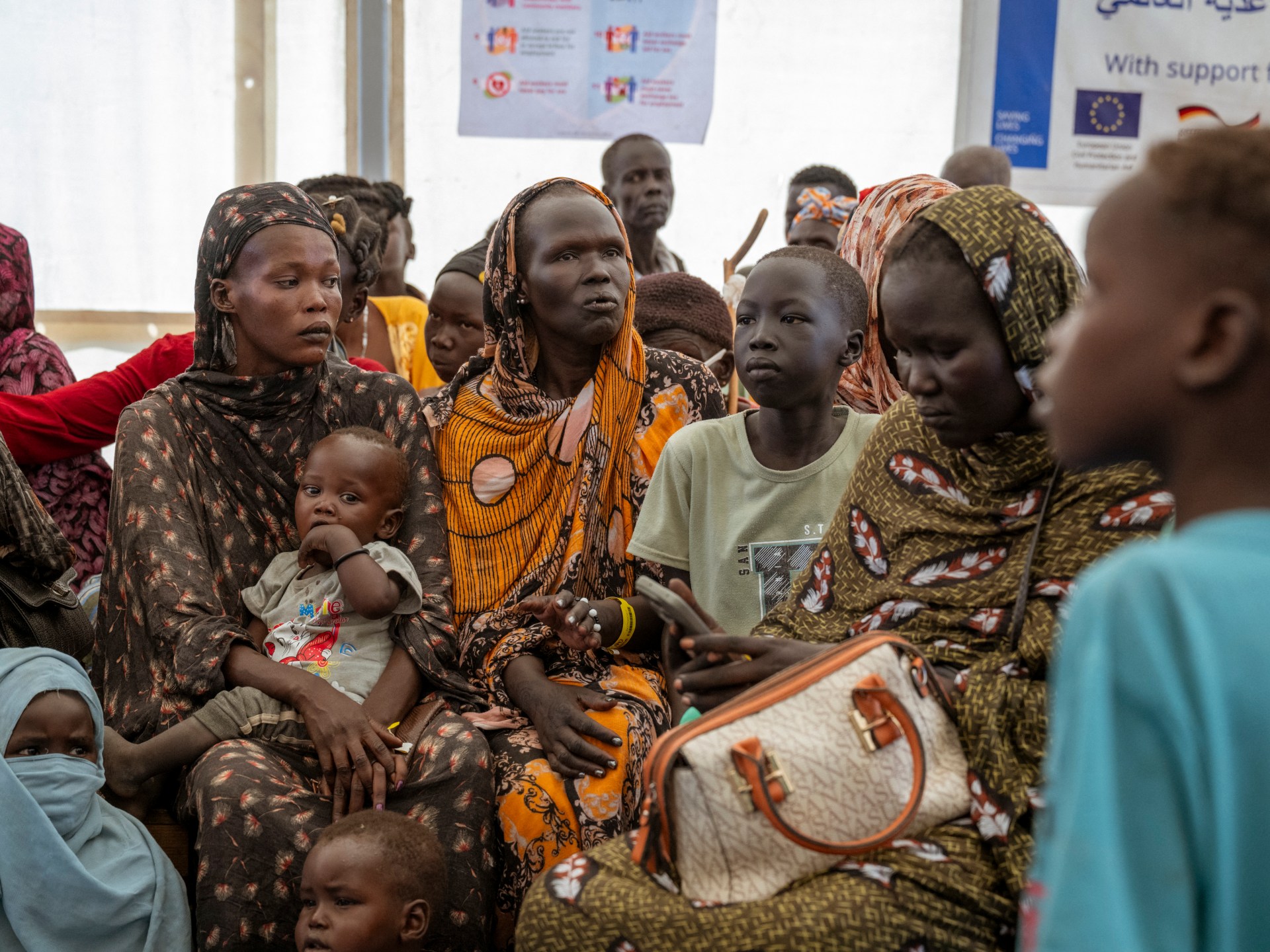
Ajok Ding Duot crouches on the dusty floor of a displacement camp in South Sudan’s Lakes State, cracking nuts open one by one.
She and her family of 10 arrived here about two weeks ago, fleeing intensifying fighting between government and opposition forces in neighbouring Jonglei state.
Recommended Stories
list of 3 itemsend of list
While they have found temporary shelter, Duot said there was hardly anything to eat at the camp. To survive, they rely on these nuts and wild fruits.
“We don’t know anything about what the government is doing. They’re fighting, but we don’t know what the problem is,” she told Al Jazeera.
“We’re in darkness. It’s only ever the humanitarian organisations who help.”
South Sudan has seen renewed fighting in recent weeks between government soldiers and fighters loyal to the Sudan People’s Liberation Army-in-Opposition (SPLA-IO).
The United Nations says an estimated 280,000 people have been displaced by the fighting and air attacks since late December, including more than 235,000 across Jonglei alone.
The UN’s children agency UNICEF also warned last week that more than 450,000 children are at risk of acute malnutrition due to mass displacement and the halting of critical medical services in Jonglei.
Nearly 10 million people need life-saving humanitarian assistance across South Sudan, a country still reeling from a ruinous civil war that killed nearly 400,000 people and displaced millions between 2013 and 2018.
Humanitarian operations, however, have been crippled by attacks and looting, with observers saying both sides in the conflict have prevented assistance from reaching areas where they believe civilians support their opponents.
The UN’s World Food Programme (WFP) suspended its activities last week in Baliet county, in Upper Nile state, following repeated attacks on a convoy carrying humanitarian assistance.
The WFP said the suspension would remain in place until the safety of its staff could be guaranteed and authorities take immediate action to recover the stolen supplies.
Hospitals closed
Separately, medical humanitarian NGO Doctors Without Borders, known by its French initials MSF, said last week a hospital in Jonglei was hit by a government air attack, marking the 10th attack in 12 months on an MSF-run medical facility in the country.
In addition, the MSF health facility in Pieri, also in Jonglei, was looted by unknown assailants, forcing staff to flee. The organisation said the violence had left some 250,000 people without healthcare, as the NGO had been the only medical provider in the area.
MSF said the targeted attacks on its facilities have forced the closure of two hospitals in the Greater Upper Nile and the suspension of general healthcare activities in Jonglei, Upper Nile and Central Equatoria states.
Gul Badshah, operations manager for MSF, told Al Jazeera the NGO has not been allowed to access its care facilities in opposition-held areas in Jonglei since December.
“We are in constructive dialogue with the government and the relevant authorities to allow us and also facilitate access” to the people seeking help at the facilities, said Badshah.
Reporting from a displacement camp in Bor, Jonglei state, Al Jazeera’s Malcolm Webb said women there described being subjected to sexual attacks.
“Two of them [the women] told us … that they had been raped as they fled, a third one said she had narrowly missed being raped by soldiers when someone came to save her,” said Webb.
“Sexual violence was widely reported to have been used as a weapon of war during the last civil conflict,” added Webb, noting there are growing concerns from the international community and humanitarian groups “that rates of sexual violence are going to go up once again”.
On Sunday, UN chief Antonio Guterres “strongly” condemned the escalating violence in the country and warned that civilians continue to bear the brunt of the conflict.
In a statement, the secretary-general called on all parties “to immediately and decisively halt all military operations, de-escalate tensions through dialogue, uphold international law, protect civilians, and ensure safe and sustained humanitarian access and the security of aid workers and United Nations peacekeeping personnel and their assets”.

Leave a Reply