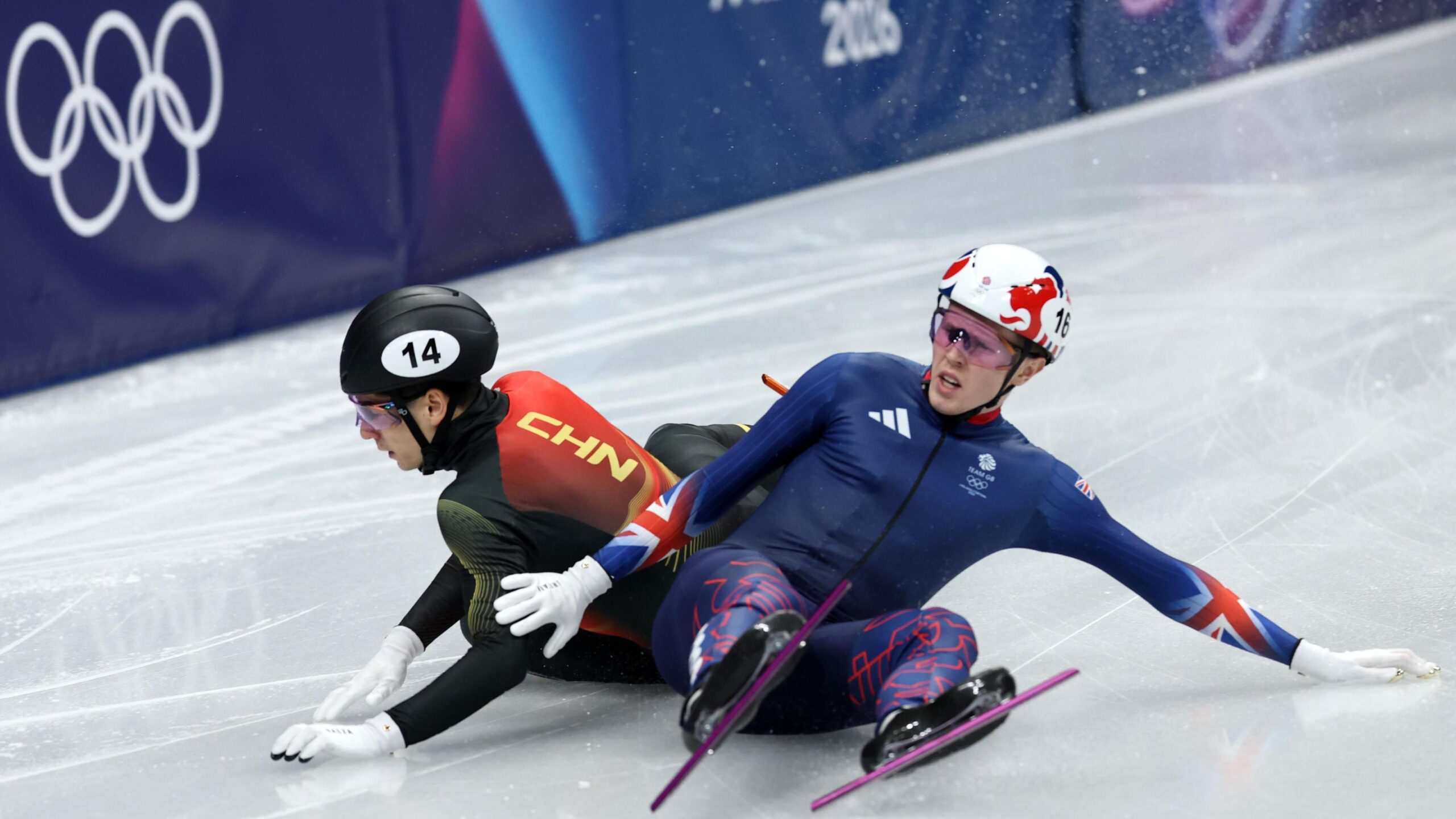
Great Britain has fallen 25 years behind the best short track nations in the world amid outdated facilities and rising costs, according to British Ice Skating’s head of performance.
Team GB’s only short track representative at Milan-Cortina 2026, Niall Treacy, crashed in all three events – 500m, 1,000m and 1500m.
The 25-year-old reached the final of the 1500m, finishing ninth. But he was the only Brit to compete, with Team GB unable to fill their quota of three athletes.
It is a far cry from eight years ago, when a well-funded team of five were sent to PyeongChang 2018 with realistic medal hopes.
But a failure to get on the podium in Korea saw the sport’s funding slashed, and head of performance Jon Eley says they have been rebuilding ever since.
Former short track skater Eley – who represented Britain in three Olympics between 2006 and 2014 – told BBC Sport: “Go back to PyeongChang, where short track was funded well and we had a world champion [Elise Christie] in the team. That was a Games when we were disappointed not to win a medal.
“Since then, we have been rebuilding. During that time many teams have gone to the next level of performance and resources.
“When I made the team 25 years ago and we moved to Nottingham, we had one of the best facilities in the world; now, we don’t have an international standard arena. We have a lot of work to do.”
- 9 hours ago
‘Padding costs £30k a week’
 Getty Images
Britain has no international quality rinks to host short track events – such as an arena with soft padding around the barriers in case of crashes – meaning Treacy trained with the Dutch national team ahead of the Olympics.
And Eley says there are no plans to improve facilities, due to a lack of funding as well as the greater popularity of other winter sports.
“If you do that [install padding] you can’t have hockey on the rink, you can’t have pucks with the pads, so you are cutting the use of the facility,” he said. “Ice hockey is a big participation sport in the UK.
“We had that in the lead up to PyeongChang, a hybrid system – pads in place during the week then they take them out on the weekend when the hockey team played.
“But it was costing £30,000 a week because of how much work it took to take the barriers in and out.
“Plus, the cost of running rinks in the last few years has gone through the roof, the cost of freezing the ice and the price of energy.”
Instead, short track will have to be clever with their funding and facilities – and Eley says they could look to a sport where Britain have had Olympic success.
Two of Britain’s three golds at Milan-Cortina have been in skeleton, despite training on a single track in Bath with no ice.
However, a clear talent ID and training programme brought success, followed by funding to allow for greater strides to be made in design and hiring world-class coaches.
“From a skeleton perspective, they might not have loads of access to tracks, but what they do, they do very well,” he said. “So we can learn from them.”
Winter Olympics 2026
6-22 February
Related topics
- Short Track Skating
- Winter Sports
- Winter Olympics

Leave a Reply