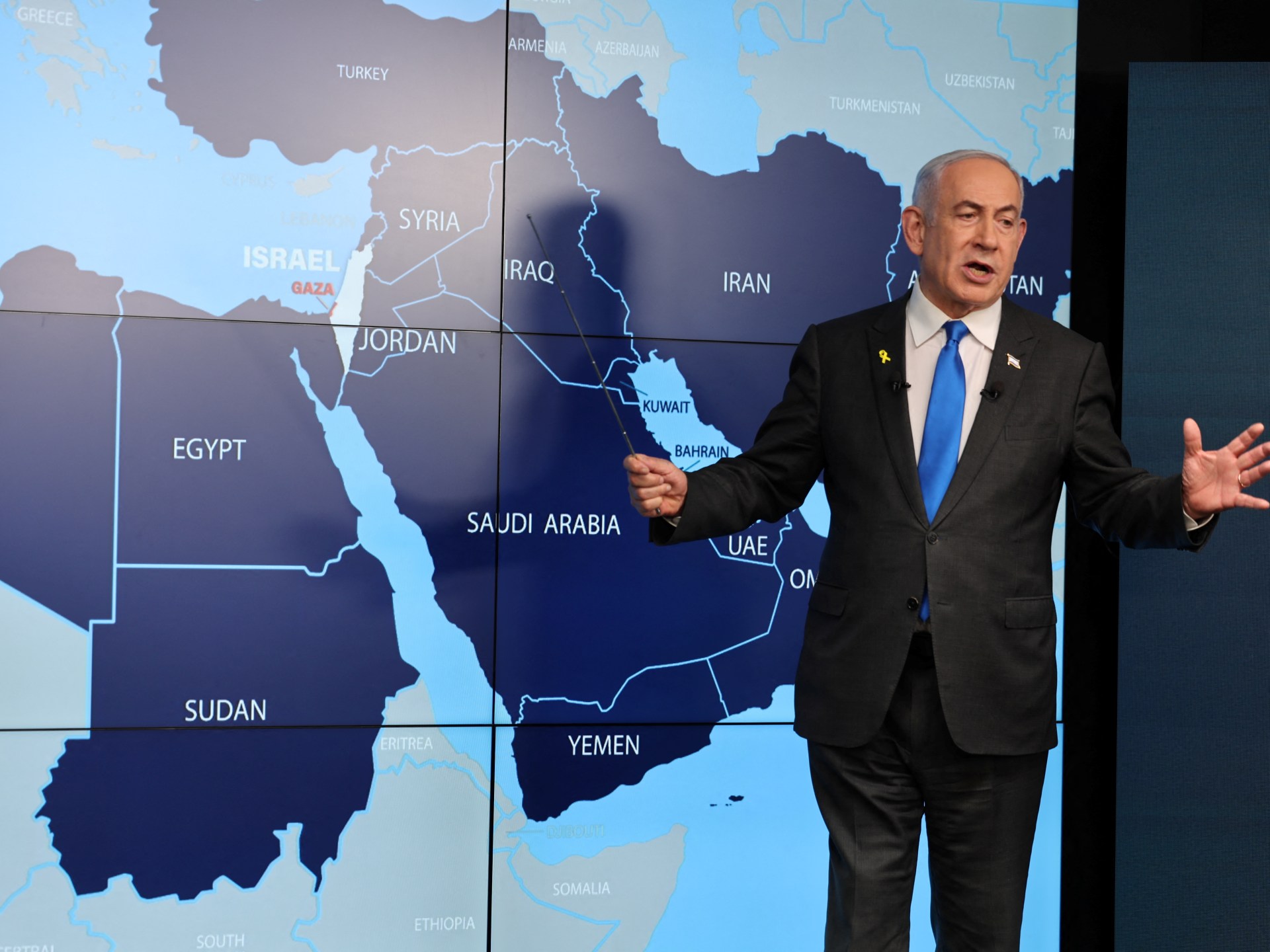
Prime Minister Benjamin Netanyahu has succeeded where countless previous Israeli leaders have failed: persuading the United States to join Israel in launching open-ended strikes against its regional nemesis, Iran.
So far, those attacks have killed more than 1,400 people in Iran, while 1,000 have been killed in Israeli strikes on Lebanon, as well as dozens of others in regional countries hit by the overspill that many had predicted.
Recommended Stories
list of 3 itemsend of list
Oil prices, a critical factor for the world economy, have been pushed to new highs, drawing the prospect of shortages and potential rationing even closer.
In the US, Democrat lawmakers, as well as some prominent members of President Donald Trump’s usually loyal support base, such as media personality Tucker Carlson and leading podcast host Joe Rogan, have broken into open revolt, with no clear agreement on what a potential resolution to the war might look like, or how the diplomatic rift it has opened between the US and its European and Western allies might be healed.
But little of that might matter for Netanyahu, compared with the gains he will feel he has already achieved from the conflict. Here’s a look at how the Iran war may solve some of the problems Netanyahu has faced for years.
The Iranian threat
Netanyahu has long warned about the threat from Iran to Israel, and the wider world, for years. He has infamously taken posters with him to the United Nations to claim that Iran was close to a nuclear weapon, and the dangers that would lead to.
Israel had long felt unable to emerge victorious from any conflict fought against Iran if it did not have US backing. And yet that support never came – until Trump came along.
Last year, Trump agreed to join in on Israel’s June war against Iran, but quickly moved to end the conflict after Iranian nuclear sites were hit. However, this time, Trump was in on the conflict from the start.
The conclusion of the conflict is unknown, but Netanyahu will feel a measure of success in finally convincing the US to join Israel in launching a war against Iran, and the image of the two countries as direct partners in a conflict.
And even if the war doesn’t lead to the fall of the Iranian government, the Islamic Republic has been weakened, and may pose less of a threat to Israel in the long term.
Coupled with the depletion of the power of Iran’s regional “Axis of Resistance” – including the heavy attacks on the Lebanese group Hezbollah and the fall of Syria’s Bashar al-Assad – Netanyahu can argue that Israel has no one to be afraid of in the region, and is the undisputed hegemon.
Netanyahu’s corruption trials
Netanyahu currently faces trial on three corruption charges dating back to 2019. Accusations that he has been manipulating events to delay and sideline the criminal proceedings against him have run the length of his genocidal war on Gaza, with postponements and interruptions to the trial often linked to events in the conflict, and Netanyahu using them as justification to avoid attending hearings.
Earlier this month, Netanyahu repeated President Donald Trump’s previous appeal to Israel’s President Isaac Herzog to pardon the prime minister, allowing him to avoid the trials and the potential 10-year sentence he faces if found guilty.
Netanyahu hasn’t let go of the topic, even with war raging against Iran. In his first news conference since the war started – a full 12 days into the conflict – he labelled the legal proceedings against him an “absurd circus”, and said that Herzog needed to do “the right thing” and wrap up the case, allowing him to devote his full attention to the war and regional diplomacy.
“He [Herzog] needs to give the State of Israel the time, and me the time, to do what is necessary – not only to defeat our enemies but also to create tremendous opportunities for peace, prosperity and alliances in our region,” Netanyahu told reporters on March 12. “Tremendous things lie ahead, and I am working on them right now. I would like to be completely unencumbered.”
But earlier in the same week, Israel’s Ministry of Justice said it would be inappropriate to issue a pardon while Netanyahu’s trial is ongoing.
The roadblocks to overhauling the judiciary
Efforts by Netanyahu and his right-wing allies to overhaul the judiciary, essentially removing it as a check on the government, have for years been roundly rejected by the prime minister’s opponents.
The matter dominated the first few months of Netanyahu’s election victory at the end of 2022, with tens of thousands of Israelis taking to the streets to denounce what they said was a “coup”. But that protest movement weakened after the October 7 attack, and the genocidal war on Gaza began in October 2023.
However, Netanyahu, even as the war against Iran rages, has not dropped the issue, and instead has been accused of using the war as cover to advance controversial legislation. In mid-March, Netanyahu’s coalition began attempting to push through legislation in parliament that would split and divide the attorney general’s powers, weakening the authority of the position, as well as giving the government greater control over the country’s media.
The proposed legislation would also establish a politically appointed panel to probe government failures in the run-up to the October 7 attack.
Responding to the government’s move, opposition leader Yair Lapid, who has gone to pains to support the war on Iran and was vocal in his backing of the genocide on Gaza, nevertheless accused the Parliament Speaker Amir Ohana, and “all the extremists” in the coalition, of not caring that Israel was at war.
“While the entire country is standing together, the coalition is promoting its extremist agenda and stealing money for political purposes,” he said in a statement.
Criticism of the treatment of Palestinians
Israeli violence against Palestinians has surged across the occupied West Bank, while in Gaza Israeli has imposed further restrictions on those still trapped in the enclave since the war with Iran began.
On March 11, both the European Union and the United Kingdom demanded that the Israeli government take action to halt the violence in the occupied West Bank which, at that time, had killed six Palestinians since Israel attacked Iran.
But violence against West Bank Palestinians – including by Israeli soldiers – has continued, and the death toll now stands at 11 since the war began. More than 1,000 Palestinians have been killed in the West Bank since October 7, 2023.
Among those killed there since the war against Iran began were members of the Bani Odeh family – a mother and father, Waad and Ali, and two of their children, five-year-old Mohammad and seven-year-old Othman. They were shot and killed by Israeli soldiers while they travelled in the village of Tammun on March 15, in a case that has attracted international condemnation, but few repercussions.
In Gaza, already decimated after two years of near-total war, the situation remains desperate. On Wednesday, the United Nations again urged Israel to relax wartime restrictions and allow aid into the enclave. UNRWA chief Philippe Lazzarini warned that disproportionate action on the part of Israeli troops, carried out with absolute impunity, was being normalised. Despite that, with attention focused on Iran, there is little pressure for Israel to fulfil the commitments it made as part of the October ceasefire agreement to allow large amounts of humanitarian aid to enter Gaza.
Netanyahu’s election fears
Dogged by scandal and widely blamed by much of the Israeli public for his and his government’s failings before the October 7 attack, Netanyahu was at risk of losing elections slated for later this year, and the consequences that would potentially have for his legal troubles.
According to a poll carried out by the Hebrew-language newspaper Maariv shortly before the Iran war began, Netanyahu was tied in a virtual dead heat with former Prime Minister Naftali Bennett.
Netanyahu still has a lot of work ahead of him. However, according to a more recent poll by the same title, confidence in Netanyahu’s ability to oversee the war had increased from an already overwhelming 60 percent at the start of the war to 62 percent.

Leave a Reply