- 254 Comments
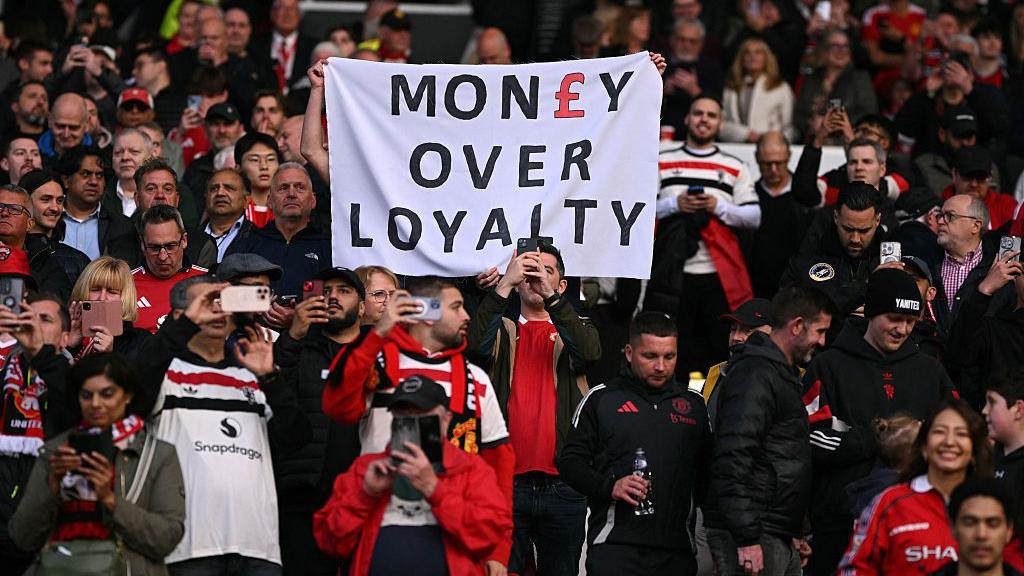
Fans of the Premier League’s six wealthiest clubs are paying an average of £74 per ticket for each match they attend, while ticket revenues are soaring, according to data from a new report.
The Uefa European club finance and investment landscape report shows that Arsenal, Chelsea, Liverpool, Manchester City, Manchester United and Tottenham earned an average of 19% more money from selling tickets for home matches in 2025 than in 2024.
Among Premier League clubs, Arsenal made the most per fan, per match, earning an average of £89 per ticket.
The biggest increase in ticket income was earned by Liverpool, who made 27% more than the previous year, for a total of £120m.
The figures include matches in all European and domestic competitions and comprise the average price for general admission and hospitality tickets.
The cost of competing for trophies, increasing operational expenses, and the threat of complying with financial regulations have all been used by clubs as reasons to justify rises.
“There is a big problem with ticket prices, and these figures are definitely not fair for fans,” says Thomas Concannon, Premier League network manager for the Football Supporters’ Association.
“We believe there should be a league-wide ruling on home ticket prices – it would protect fans and make for a more competitive league.
‘English football has a spending problem’
The report shows the 20 Premier League clubs are well ahead of their European rivals when it comes to overall revenue, earning a combined total of £6.5bn.
That is almost double the revenue of the next highest division, Germany’s Bundesliga, whose 18 clubs made a total of £3.4bn.
La Liga clubs earned a fraction less, while Serie A teams’ total revenues were £2.55bn and Ligue 1 totalled £2.2bn.
Of the 25 clubs who generated the most revenue, 11 were English.
The difference can be attributed to the fact that the full complement of Premier League clubs earn far more than those in other countries in areas such as broadcasting income and commercial revenue.
For example, relegated Ipswich Town earned more in TV revenue last year than Barcelona.
But those revenues did not mean the Premier League clubs turned a collective profit.
Only five made a profit while 15 made losses.
Across the division, there was a combined pre-tax loss of £559m.
Chelsea – with £355m – made the second-highest loss in European football history while Spurs (£129m) were the the third-biggest losers in 2025, with Aston Villa fifth (£85m).
“The wealthier clubs seem to have the impression that as they increase their revenues, the supporters get richer too and can afford to pay a lot more money – that’s not the reality,” Concannon says.
Do expenses justify charging fans high prices?
Following a series of ticket price rises, the FSA launched a national campaign called ‘Stop Exploiting Loyalty’ in 2024, calling on supporters to protest against what it sees as clubs taking advantage of fans’ devotion.
Since the campaign began, some clubs have gone further by removing concessionary discounts, and announcing further price rises.
Clubs with new-build or redeveloped stadiums – including Arsenal, Liverpool, Manchester City and Spurs – have also increased the proportion of hospitality tickets available for each game.
“Limiting concessions, and completely getting rid of them in some cases, is something we completely disagree with,” Concannon says.
“Hospitality has an impact on tickets for the long-standing matchgoing fan. There is a Premier League rule saying the most expensive tickets should subsidise the cheapest ones, but fans really don’t feel like they’re seeing that.
“It has a huge impact on the atmosphere too.”
The data shows all 20 Premier League clubs made a combined total of £920m from ticket sales last year – an increase of £90m from the previous year.
That total is almost double the total of £514m in ticket income earned by Spanish clubs.
But Premier League fans are not paying the highest prices of all – Paris St-Germain (£121), Barcelona (£101), and Real Madrid (£94) are all more expensive for fans per match on average.
Other clubs in their respective leagues charge significantly lower prices, however, meaning the average fan in Ligue 1 or La Liga is paying much less.
In some regards, Premier League clubs’ outgoings have significantly increased.
Between them, the 20 Premier League clubs have more than 11,000 full-time employees, an increase of 8% on the previous year. That is thanks largely to expansions in the commercial teams of clubs at the top end.
And operating costs – including things like utilities, transport, insurance, marketing, and administration – rose by 11% to a league-wide total of £1.77bn.
Wages paid to footballers totalled £3.1bn across the division in 2025, which was neither an increase nor a decrease.
“We can say costs are increasing and football clubs are not immune to that, but the vast majority of their expenditure is still player wages and transfer fees,” says Dan Plumley, principal lecturer in sport finance at Sheffield Hallam University.
“Clubs are constantly chasing revenue down, not to make a profit, but to stretch their squad costs as much as possible.
“That’s where clubs run the risk of alienating fanbases because a lot of fans will see that for what it is.
Related topics
- Manchester United
- Liverpool
- Chelsea
- Premier League
- Manchester City
- Tottenham Hotspur
- Arsenal
- Football

Leave a Reply