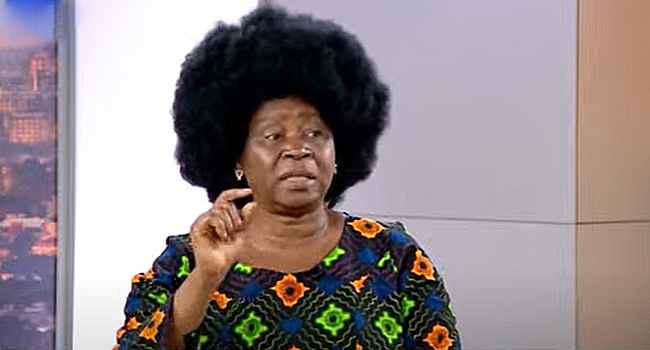
A former Country Director of ActionAid Nigeria, Ene Obi, has raised concerns over the increase in campaign spending limits introduced in Nigeria’s newly amended electoral law, questioning both the practicality of the figures and the sources of campaign financing.
Obi spoke on Sunday at the Citizens’ Townhall on the Electoral Act 2026 held in Abuja, where she examined key provisions of the new legislation and their implications for Nigeria’s electoral process.
Reacting to the revised spending thresholds, Obi noted that while the limits were adjusted from those contained in the 2022 law, the new figures raise critical questions about equity and transparency in political participation.
“For the campaign limits now, the presidential campaigns used to be five billion in 2022, and now it has been taken to ten billion, and the governorship, from one billion has been taken to three billion.
“Many people look at who wants to go in for elections, where are they going to get one billion? Another thing we need to look at is the source of whatever money they are talking about,” she said.
READ ALSO: Amended Electoral Act Has Given Us Hope — Ex-INEC ICT Director
She warned that without stronger oversight of funding sources, the higher ceilings could deepen concerns about undue influence in the political process.
Nigeria’s electoral framework was revised after President Bola Tinubu signed the Electoral Act 2026 into law on February 18, following its passage by the National Assembly.
The new law significantly increases campaign spending limits, raising the presidential cap from ₦5 billion to ₦10 billion and the governorship limit from ₦1 billion to ₦3 billion.
Senate candidates can now spend up to ₦500 million, House of Representatives candidates ₦250 million, and State Assembly candidates ₦100 million, while the donation limit jumps from ₦50 million to ₦500 million.
The Act also mandates electronic transmission of results, formally recognises BVAS, imposes stricter penalties for electoral offences, and shortens timelines for resolving election disputes.
‘Timely Electoral Preparations’
Obi also highlighted the importance of the amendment in addressing logistical delays that affected previous elections, particularly in relation to procurement and planning timelines for the electoral body.
“For the 2022 Electoral Act, the issue was that it was getting too late so that INEC could roll out their work, and now you are saying six months before, with procurement and all the bottlenecks, that is why a new amendment is important.”
She added that financial independence and early planning remain crucial to improving election administration.
Weighing in on electronic transmission of results, Obi emphasised that the 2022 law had already recognised technology such as the Bimodal Voter Accreditation System (BVAS) and permitted transmission, but implementation challenges stemmed largely from human factors rather than legal gaps.
“When you are looking at the Electoral Act of 2022, it acknowledges the BVAS and also allows transmission. The issues of transmission, we are talking about it as if it never happened, or it wasn’t there; it was there. The human element brought in the issue of glitches because they had the capacity.”
She explained that the focus should be on whether results are transmitted at the point of accreditation, rather than on connectivity delays.
“What we are saying is that you can transmit, whether you are talking about real-time or not, where you are accredited, the machine is able to do transmission at that time. Whether it connects at that time is secondary; did you transmit at that very moment? That is what we are talking about,” she said.

Leave a Reply