To play this video you need to enable JavaScript in your browser.
- 307 Comments
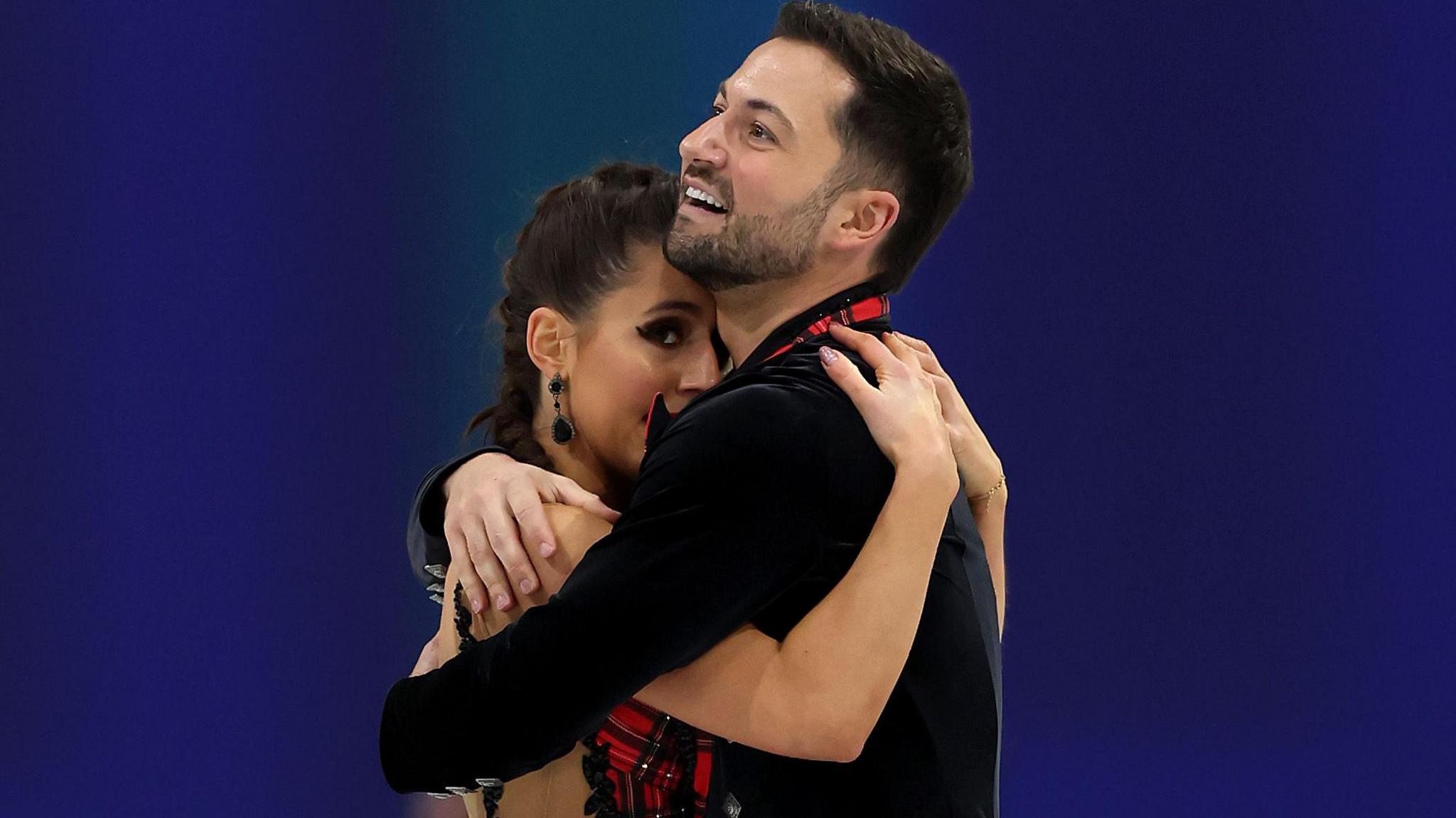
Lilah Fear said she could not believe the “costly and devastating” error she made which meant she and partner Lewis Gibson missed out on the ice dance medals at Milan-Cortina 2026.
Fear and Gibson finished seventh overall, meaning they failed to reach their goal of being the first British figure skaters in 32 years to win an Olympic medal.
Fear tripped on the second element of their free-dance routine, and despite skating cleanly for the remainder it proved too much of an obstacle to overcome.
It means the wait goes on for British skating since Dame Jayne Torvill and Sir Christopher Dean won bronze at the Lillehammer Games in 1994.
To play this video you need to enable JavaScript in your browser.
“I can’t believe it happened,” Fear said afterwards. “I am replaying it in my head and it’s just such a shame. I don’t really have the words yet. It will take me some time to process.”
Gold went to France’s Guillaume Cizeron and Laurence Fournier Beaudry, who top scored across both rhythm and free dance. It is Cizeron’s second successive Olympic gold after winning at Beijing 2022 with ex-partner Gabrielle Paparakis.
Cizeron and Fournier Beaudry have been at the centre of controversy in recent months, but have been the best couple in ice dance since partnering in November and outshone the competition in Milan.
- 2 hours ago
Fear, 26, and 31-year-old Gibson were fourth after the rhythm dance – the first section of the ice dance competition – leaving them work to do. They scored 85.47 in their rhythm dance to lie behind Gilles and Poirier in third.
It meant Fear and Gibson needed to deliver a showstopping performance in their Scottish-themed free dance to earn Britain’s first medal of the 2026 Winter Games.
Resplendent in tartan, they danced to The Bonnie Banks of Loch Lomond, Auld Lang Syne and The Proclaimers hit I’m Gonna Be (500 Miles) – in a routine they had honed with highland dance experts to perfect the choreography.
And it started magnificently as they scored big on their complex opening, a multi-stage stationary lift.
But as they moved into their second element, sequential twizzles – a rotation while moving across the ice – Fear visibly wobbled. It meant they got a negative score on the grade of execution, a fatal blow in an Olympic final.
“It was just a really costly technical mistake, which was tough very early in the programme because I knew that we’d lost bronze at that point,” Fear told BBC Sport.
“But I also really wanted to not let the Olympic experience just disappear because of that so it’s this battle of taking it in and doing my best the rest of the way while also knowing what I’d just done.
“And it’s not what we’ve trained, it was costly and devastating.”
They skated clean thereafter and got good scores in their rousing finish – a series of Highland jigs combined with a dance lift – but the damage was done, as their overall technical score suffered greatly.
It was clear from their faces that they knew they had not been perfect. Fear had appeared nervous before the routine and looked devastated afterwards as it became clear that the pressure told.
“When you don’t perform the way you want to, on any day, it’s tough to take but at the Olympic Games, it’s even harder,” Gibson said.
“I think we’ll look back at this one day and 100% learn from it. We do that at every single event that we go to and compete in. We’ll just move forward.”
The ‘Disco Brits’ are the darlings of British figure skating, and are popular internationally for their vibrant, skilful routines.
And they have had an impressive year in which they became the first Brits to win a medal at a World Championship for 40 years; they also got on the podium in Sheffield at their home European Championships. But there will be no Olympic medal to round it off.
Winter Olympics 2026
6-22 February
Related topics
- Winter Sports
- Winter Olympics
- Figure Skating

Leave a Reply