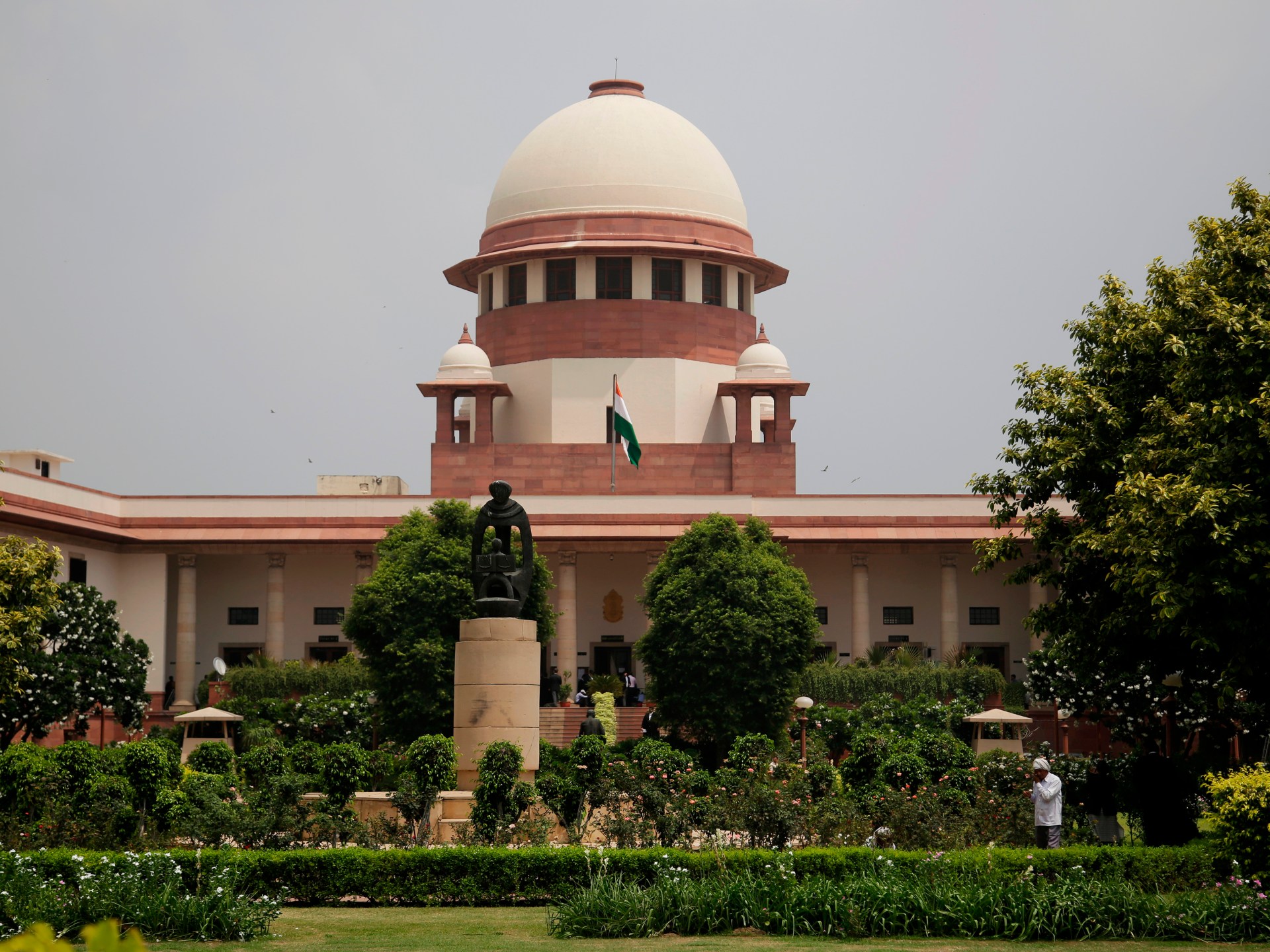
India’s Supreme Court has allowed the country’s first case of passive euthanasia – withdrawal of artificial life support – for a 32-year-old man who has been in a vegetative state for more than 12 years.
A bench of Justices J B Pardiwala and K V Viswanathan on Wednesday permitted the withdrawal of life support to Harish Rana, a resident of the northern state of Uttar Pradesh, who suffered severe head injuries after falling from a building in 2013.
Recommended Stories
list of 4 itemsend of list
“The patient’s next of kin and the medical boards have reached the opinion that CAN [clinically administered nutrition] administration should be discontinued,” the Press Trust of India news agency quoted the Supreme Court bench as saying.
The court was hearing a petition filed by Rana’s father, seeking permission to withdraw life-sustaining treatment for his son. The family said Rana was being kept artificially alive.
The court in its ruling said Rana exhibited “no meaningful interaction” and had been dependent on others for “all activities of self-care”.
“His condition has shown no improvement,” the court was quoted as saying by legal news website, Bar and Bench.
India recognised passive euthanasia in 2018, permitting the removal of life support under strict conditions to allow death to occur naturally. But this marks the first time that a court has approved its use for an individual.
Doctors had already concluded that Rana has virtually no chance of recovery.
But because he does not have a living will – a legally binding document outlining preferences for medical care in the event of a terminal condition – he has not been able to give his consent for passive euthanasia.
His parents, therefore, had petitioned the court to allow him to be taken off life support.
Active euthanasia, in which substances are directly administered to cause death, remains illegal in India.
But the debate in India over allowing someone to die dates to the 2011 case of Aruna Shanbaug, a nurse who spent 42 years in a vegetative state following a brutal sexual assault.
The Supreme Court rejected a plea by Shanbaug’s family to end her life, and she died from pneumonia in 2015 aged 66.
But the court did issue a landmark opinion, recognising passive euthanasia under strict safeguards and with judicial approval.
The move relied on earlier judgements that recognised the constitutional right to die with dignity, and served as a prelude to the expanded 2018 ruling on passive euthanasia.
For years, Iran’s leaders believed time was on their side.
After the United States withdrew from the 2015 nuclear agreement, known as the Joint Comprehensive Plan of Action (JCPOA), Tehran effectively adopted what later came to be described as a “strategic patience” approach. Rather than immediately counter-escalating, Iran chose to endure economic pressure while waiting to see whether diplomacy could be revived.
The logic behind the strategy was simple: eventually, Washington would recognise that confrontation with Iran was against its own interests.
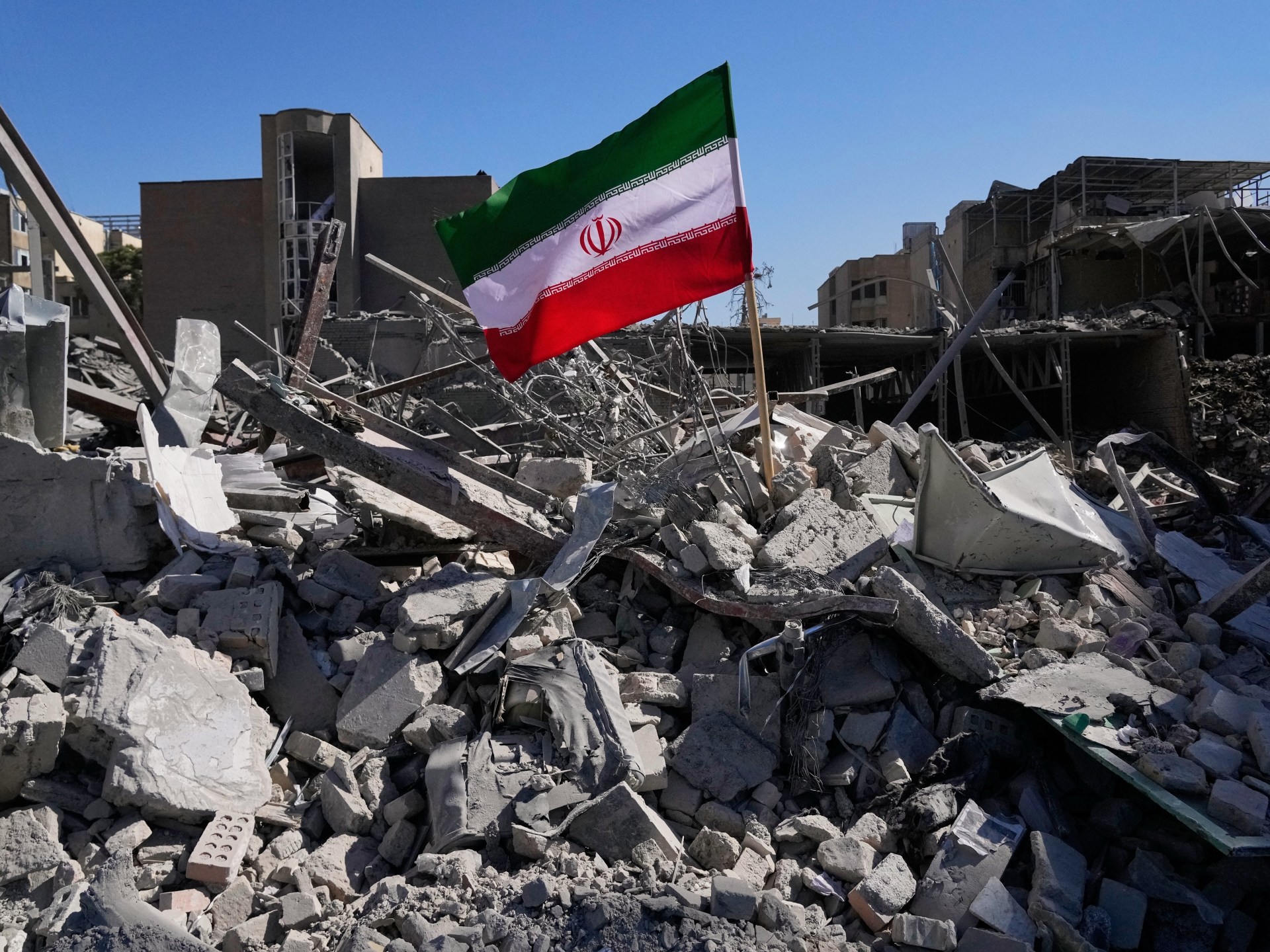
Today, that assumption lies shattered.
The collapse of diplomacy and the outbreak of war have forced Iran’s leadership to confront a painful reality: their belief that the US would ultimately act rationally may have been a profound miscalculation.
If Iran survives the current conflict, the lessons Iranian leaders draw from this moment may motivate them to pursue a nuclear deterrent.
The strategy of waiting
After the first Trump administration withdrew from the JCPOA and launched its “maximum pressure” campaign in 2018, Tehran initially avoided major counter-escalation. For nearly a year, it largely remained within the deal’s limits, hoping the other signatories, particularly Europeans, could preserve the agreement and deliver on the promised economic benefits despite US sanctions.
When that failed, Tehran began gradually increasing its nuclear activities by expanding enrichment and reducing compliance step by step while still avoiding a decisive break.
The pace accelerated after Iran’s conservative-dominated parliament passed a law mandating a significant increase in nuclear activities, in the wake of the assassination of top nuclear scientist Mohsen Fakhrizadeh. The shift was reinforced further by the 2021 election of conservative President Ebrahim Raisi.
The ultimate goal was to rebuild negotiating leverage, as Tehran believed that broader geopolitical and regional trends were gradually shifting in its favour. From its perspective, China’s rise, Russia’s growing assertiveness, and widening fractures within the Western alliance suggested that Washington’s ability to isolate Iran indefinitely might weaken over time.
At the same time, Iran pursued a strategy of reducing tensions with its neighbours, seeking improved relations with Gulf states that had previously supported the US “maximum pressure” campaign. By the early 2020s, many Gulf Cooperation Council countries had begun prioritising engagement and de-escalation with Iran, culminating in moves such as the 2023 Saudi-Iran rapprochement brokered by China.
Against this backdrop, even as tensions rose, Tehran continued to pursue diplomacy. Years of negotiations with the Biden administration aimed at restoring the JCPOA ultimately produced no agreement. Subsequent diplomatic efforts under Trump’s second presidency also collapsed.
Underlying this approach was a fundamental assumption: that the US ultimately preferred stability to war. Iranian officials believed Washington would eventually conclude that diplomacy, rather than endless pressure or a major war, was the most realistic and least costly path forward.
The joint US-Israeli assault on Iran has now exposed how deeply flawed that assumption was.
The return of deterrence
While Tehran based its strategy on mistaken beliefs about the rationality of US foreign policy, Washington, too, is misreading the situation.
For years, advocates of the maximum pressure campaign argued that sustained economic and military pressure would eventually fracture Iran internally. Some predicted that war would trigger widespread unrest and even the collapse of the regime.
So far, none of those predictions has materialised.
Despite the enormous strain on Iranian society, there have been no signs of regime disintegration. Instead, Iran’s political base — and in many cases broader segments of society — has rallied in the face of external attack.
Furthermore, Iran spent years reinforcing its deterrence capabilities. This involved expanding and diversifying its ballistic missile, cruise missile and drone programmes and developing multiple delivery systems designed to penetrate sophisticated air defences. Iranian planners also drew lessons from the direct exchanges with Israel in 2024 and the June 2025 war, improving targeting accuracy and coordination across different weapons systems.
The focus shifted towards preparing for a prolonged war of attrition: firing fewer but more precise strikes over time while attempting to degrade enemy radar and air defence systems.
We now see the results of this work. Iran has been able to inflict significant damage on its adversaries. Retaliatory attacks have killed seven Americans and 11 Israelis, placing a growing strain on US and Israeli missile defence systems, as interceptors are steadily depleted.
Iranian missile and drone strikes have hit targets across the region, including high-value military infrastructure such as radar installations. The closure of the Strait of Hormuz has sent global energy markets into turmoil.
Apart from the immense cost of war, the US decision to launch the attack on Iran may have another unintended consequence: a radical shift in Iranian strategy.
For decades, Supreme Leader Ali Khamenei maintained a longstanding religious prohibition on nuclear weapons. His assassination on the first day of the war may now motivate the new civilian and military leadership of the country to rethink its nuclear strategy.
There may now be fewer ideological reservations about pursuing nuclear weapons. The logic is simple: if diplomacy cannot deliver sanctions relief or permanently remove the threat of war, nuclear deterrence may appear to be the only viable alternative.
Iran’s actions in this conflict suggest that many leaders now see patience and diplomacy as strategic mistakes. These include the unprecedented scale of Iranian missile and drone attacks across the region, the targeting of US partners and critical infrastructure, and political decisions at home that signal a harder line, most notably the appointment of Mojtaba Khamenei as supreme leader.
The choice of Khamenei’s son breaks a longstanding taboo in a system founded on the rejection of hereditary rule and reflects a leadership increasingly prepared to abandon previous restraints.
If a more zero-sum logic of deterrence takes hold across the region, replacing dialogue as the organising principle of security, the Middle East may enter a far more dangerous era in which nuclear weapons are viewed as the ultimate form of deterrence and nuclear proliferation can no longer be stopped.
A statue was placed on the National Mall in Washington DC depicting US President Donald Trump and convicted sex offender Jeffrey Epstein in a pose inspired by the film ‘Titanic’.
Russian drone strikes on the eastern Ukrainian city of Kharkiv have killed two people and wounded several others, local officials said.
“A civilian enterprise caught fire as a result of the enemy strike,” Kharkiv regional governor, Oleh Syniehubov, said on Wednesday, adding that three women and four men had been hospitalised.
Recommended Stories
list of 3 itemsend of list
Kharkiv Mayor Ihor Terekhov confirmed Syniehubov’s remarks, posting on the Telegram messaging app that preliminary information showed two people were killed.
Governor Syniehubov said the wounded were in serious condition and receiving necessary medical assistance.
Kharkiv, Ukraine’s second-largest city, lies about 30km (18 miles) from the Russian border.
It was encircled at the start of Russia’s full-scale invasion four years ago but withstood early advances by Moscow’s forces, who were later pushed back in 2022. The city has since been a frequent target of Russian air and drone attacks.
The United States is pushing Kyiv and Moscow to agree to an elusive peace deal, with the war now in its fifth year, but a third round of three-party talks has been derailed by the sprawling war in the Middle East, launched by the US and Israel against Iran.
Cruise missiles were seen launching into the sky as North Korean leader Kim Jong Un oversaw tests from a new naval destroyer aimed at assessing the warship’s capabilities.
The US-Israeli war on Iran has exposed divisions among Europe’s far-right parties and personalities.
In one camp, Atlanticists such as Nigel Farage, founder of the populist hard-right Reform UK party, support the war.
Recommended Stories
list of 4 itemsend of list
In a recent post on X, he urged United Kingdom Prime Minister Keir Starmer to “back the Americans in this vital fight against Iran!”
Days later, he stated that any refugees fleeing Iran “should be housed in the Middle East and not in Britain”.
Spain’s far-right Vox party has also backed the war, criticising Prime Minister Pedro Sanchez after the left-wing prime minister condemned it as an “unjustified” and “dangerous military intervention”.
Others are more sceptical.
Nigel Farage, right, speaks next to US President Donald Trump during a campaign rally at Phoenix Goodyear Airport in Goodyear, Arizona, US, October 28, 2020 [Jonathan Ernst/Reuters]
Tino Chrupalla, co-chair of Alternative for Germany (AfD), warned that US President Donald Trump was becoming a “president of war”.
Markus Frohnmaier, the AfD’s lead candidate for state elections in Baden-Wurttemberg, told Welt that the war must be considered in a “nuanced way” and that it is in “Germany’s interest” not to experience “new migration flows” as a result of it.
In the UK, two combative figures, Tommy Robinson and Paul Golding, are diverging over the war.
Robinson, an Islamophobe and staunch supporter of Israel, has enthusiastically supported it, while Golding, leader of the far-right Britain First party, took to X to write: “Not our fight, not our war. Put Britain First.”
Other parties appear hesitant.
Marine Le Pen, leader of France’s far-right National Rally, criticised US intervention in Venezuela in January, stating “the sovereignty of States is never negotiable”.
However, after the Iran war began, she expressed cautious support, telling French media that she found “nothing shocking” about President Emmanuel Macron’s announcement that France was sending an aircraft carrier to the Mediterranean in response to the widening conflict.
The limits of far-right unity
The split in opinion over Iran reflects a “paradox” about the European far right, Tim Bale, a politics professor at Queen Mary University of London, told Al Jazeera.
The hard right is often “seen as riding a wave built on similar grievances and concerns in every country – most obviously around immigration”, he said.
“It’s also built on nationalism and, as a result, there are limits both to cooperation between different parties in different countries.”
He said that historically, parts of the far right in countries such as France and Germany have viewed the United States with suspicion, while others, particularly in countries where anti-communism shaped post-war politics, tended to see Washington as a strategic ally.
That divergence is now resurfacing over Iran.
Morgan Finnsio, a Swedish researcher who studies far-right movements, noted that the Western far right has long aspired to ideological unity but has consistently fractured over geopolitical issues.
He told Al Jazeera that factions were previously split over Russia’s full-scale invasion of Ukraine in February 2022.
Divisions now centre on Trump’s “radical new geopolitical orientation, with its consequences such as attacking Venezuela [and] threatening Greenland”, he told Al Jazeera.
“In recent years, [Vladimir] Putin’s Russia, Trump’s United States, and [Benjamin] Netanyahu’s Israel have all courted European far-right actors,” said Finnsio, adding that “these outside powers have geopolitical preferences that tend to be absorbed by their allies and proteges.”
Those with closer ties to Washington or Israel have supported the onslaught in Iran, which has killed more than 1,000 people, he said. Parties with stronger ideological or political affinities with Russia, which maintains ties with Iran, have been more cautious or openly opposed.
Far-right positions on foreign conflicts are “more motivated by the particular geopolitical circumstances at a given time” rather than principles, Finnsio said.
Existing fault lines
Finnsio said these divisions are maintaining an “already-existing” split.
Whether the Iran war will impact elections remains to be seen, he added.
In the UK, Bale said it could.
“Farage’s gung-ho attitude to the attack on Iran may please some of his party’s base, but voters as a whole aren’t enthusiastic, and Reform UK will likely perform less well than it would have done in contests coming up this spring.”
Reform UK is currently leading national opinion polls.
Its leadership has backed the war, but polling suggests its voters are less enthusiastic, with a March 2026 YouGov survey showing that only 28 percent of Reform UK voters strongly support US military actions against Iran.
More broadly, analysts suggest that a close association with US President Donald Trump could become politically risky.
“I think any European far-right actor that is seen as being too close to Trump may find themselves discredited to some extent,” said Finnsio, while cautioning that the longer-term landscape remains uncertain.
Even when the war enters political debate, analysts say it is more likely to be reframed through domestic issues for the far right.
Finnsio pointed to Sweden’s September elections as an example.