France preparing to escort ships in Strait of Hormuz when war calms: Macron

French President Emmanuel Macron has said France and its allies are preparing a “purely defensive” mission to escort vessels through the Strait of Hormuz once the “most intense phase” of the US-Israeli war on Iran ends.

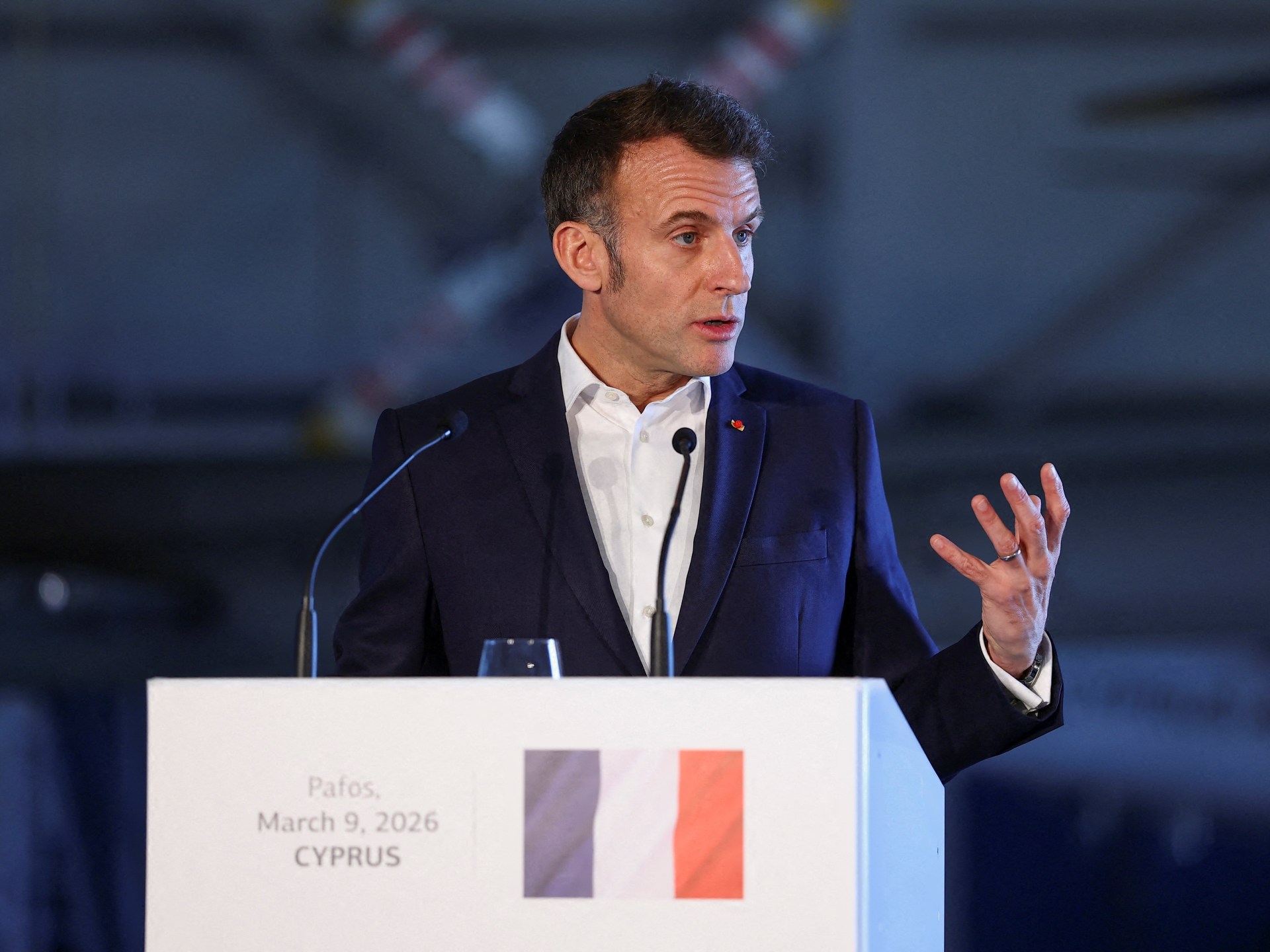
Speaking in Cyprus on Monday, Macron said the “purely escort mission” must be prepared by both European and non-European countries.

Recommended Stories

list of 3 itemsend of list

Its purpose “is to enable, as soon as possible after the most intense phase of the conflict has ended, the escort of container ships and tankers to gradually reopen the Strait of Hormuz”, the French president said, without providing further details.

Macron’s comments come as global oil prices have surged amid continued attacks by the United States and Israel against Iran, as well as retaliatory Iranian missile and drone strikes across the wider region.

The war has effectively shut down the Strait of Hormuz, a strategic Gulf waterway through which about 20 percent of the world’s oil supplies pass, while Iranian attacks on energy infrastructure in the Middle East also have raised concerns.

Responding to Macron’s comments, top Iranian security official Ali Larijani said, “It is unlikely that any security will be achieved in the Strait of Hormuz amid the fires of the war ignited by the United States and Israel in the region.”

Larijani added in a social media post that security is also unlikely to be restored as a result of plans designed by “parties that were not far removed from supporting this war and contributing to its fanning”.

While European countries have been largely sidelined as the war escalates, several – including France, the United Kingdom and Greece – have sent military assets to Cyprus following an Iranian-made drone attack on a British base on the island.

Greece has dispatched four F-16 fighter planes to the Paphos airbase and its two state-of-the-art frigates Kimon and Psara are patrolling offshore Cyprus, tasked with intercepting any missiles or drones.

Last week, Macron ordered the French frigate Languedoc to waters off Cyprus to bolster the country’s anti-drone and anti-missile defences.

“When Cyprus is attacked, then Europe is attacked,” Macron said after meeting with Cypriot President Nikos Christodoulides and Greek Prime Minister Kyriakos Mitsotakis in Paphos on Monday.

The French president said he would also deploy a total of eight warships, two helicopter carriers and the nuclear-powered aircraft carrier Charles de Gaulle to the Eastern Mediterranean and the wider Middle East region, calling the move “unprecedented”.

France’s objective “is to maintain a strictly defensive stance, standing alongside all countries attacked by Iran in its retaliation, to ensure our credibility, and to contribute to regional de-escalation”, Macron said.

“Ultimately, we aim to guarantee freedom of navigation and maritime security.”

With the closure of the Strait of Hormuz sending oil prices soaring, finance ministers from the Group of Seven (G7) countries met in Brussels on Monday to discuss how to respond.

Crude oil prices have increased by about 50 percent since the US and Israel launched the war last month, with international benchmark Brent crude prices surpassing $100 a barrel on Monday.

French Finance Minister Roland Lescure told reporters that the G7 ministers did not make a decision on the potential release of emergency oil stocks amid the war. “What we’ve agreed upon is to use any necessary tools if need be to stabilise the market, including the potential release of necessary stockpiles,” Lescure said.

Paul Hickin, editor-in-chief and chief economist at Petroleum Economist, said getting the Strait of Hormuz reopened is the main priority. “That’s not going to happen in any shape or form until there’s a resolution to the conflict,” Hickin told Al Jazeera.

He explained that several countries in the Middle East, such as Kuwait and Iraq, are dependent on the strait to get their energy supplies to market.

“Kuwait and Iraq and those producers, they are really having a shut-in, and it will take a little bit of time to get back up and running,” said Hickin.

“That is the big risk, the knock-on effect … Getting those ships back, getting that infrastructure back up and running, it’s a slow process. So prices won’t come back down as quickly as many may think.”
US senators demand probe into ‘appalling’ attack on girls’s school in Iran

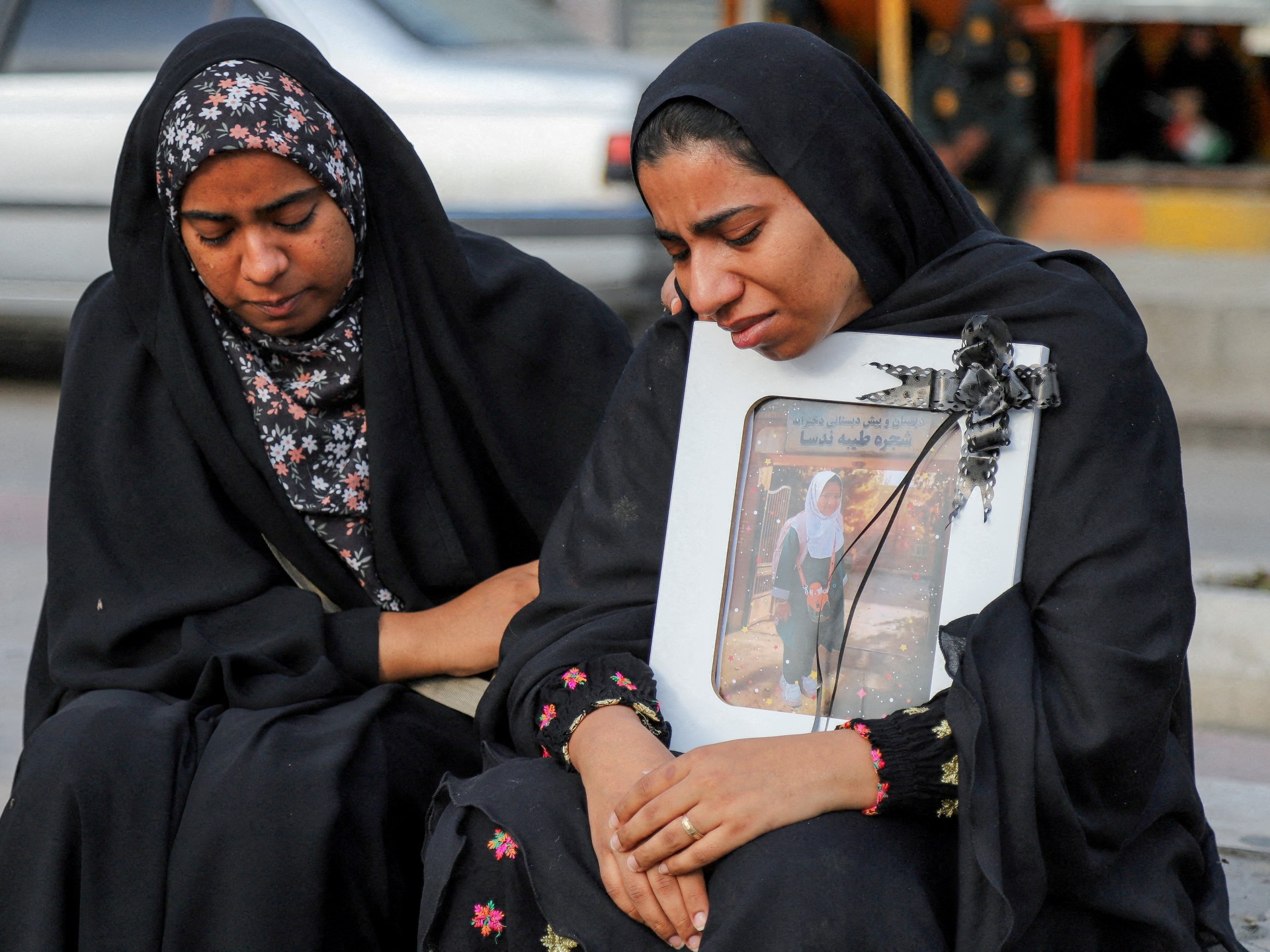
Top Democratic senators in the United States have called for an investigation into the strike against a girls’ school in southern Iran, saying that the Pentagon must “provide clear answers” about the incident that killed at least 170 people.

Six lawmakers said in a joint statement late on Sunday that they are “horrified” by the bombing of the elementary school in Minab during the opening US-Israeli strikes against Iran on February 28.

Recommended Stories

list of 3 itemsend of list

“The killing of school children is appalling and unacceptable under any circumstance,” said the senators who serve as the top Democrats on national security panels.

The push comes as new footage of the attack suggested that the site of the school was likely hit by a Tomahawk missile – a weapon used by the US that Israel and Iran do not possess.

The bombing of the elementary school in Minab has become emblematic of the growing civilian death toll from the conflict.

Iranian officials have said that US and Israeli strikes have damaged other schools as well as dozens of medical centres, residential buildings, street markets, a water desalination plant and other civilian targets.

US and Israeli attacks have killed 1,255 people – mostly civilians – in Iran since the start of the war, according to Deputy Health Minister Ali Jafarian.

“They were living in their homes or [were] at their workplace,” the health minister told Al Jazeera in a TV interview.

Hegseth on rules of engagement

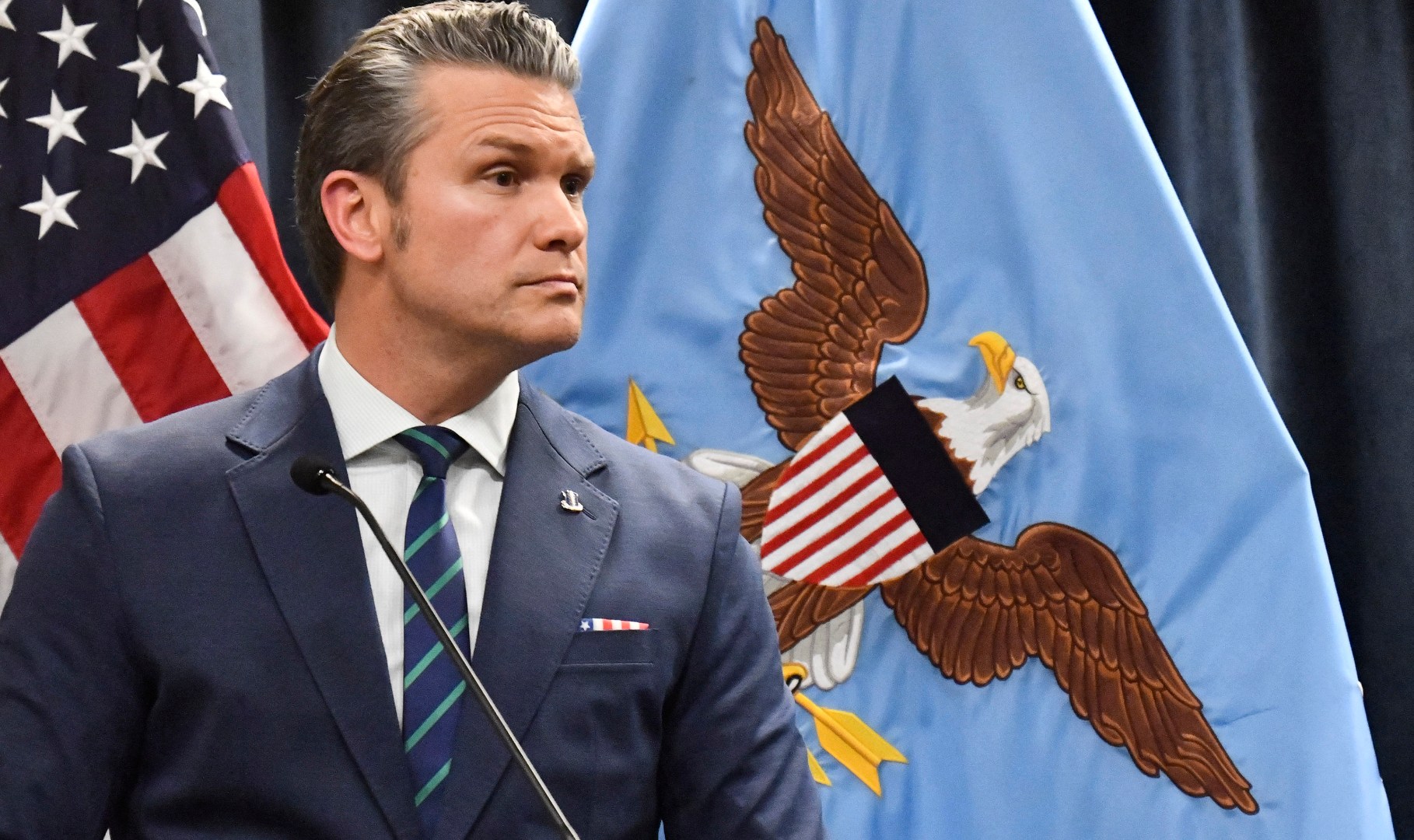
In their statement, the US senators noted that Pentagon chief Pete Hegseth has openly boasted about loosening the rules of engagement in the attacks against Iran to allow US forces to bomb the country with little restraint.

“Secretary Hegseth needs to ensure the Department of Defense’s ongoing investigation into this strike is thorough, including whether any policy decisions may have contributed to the catastrophe, and provide clear answers to the American public and Congress about how and why this tragedy unfolded,” they said.

The legislators – who include Brian Schatz, Jeanne Shaheen, Jack Reed and Elizabeth Warren – said the “incident and any like it must be fully and impartially reviewed”.

Last week, Hegseth told reporters that US jets are unleashing the “most lethal” strikes on Iran with “maximum authorities”.

“No stupid rules of engagement, no nation-building quagmire, no democracy building exercise, no politically correct wars – we fight to win, and we don’t waste time or lives,” he said on March 2.

Days later, Hegseth emphasised that the rules of engagement are meant “to unleash American power, not shackle it”.

Despite mounting evidence and multiple visual investigations by news outlets suggesting that the strike on Minab was carried out with US weapons, US President Donald Trump has accused Iran of bombing the school.

“In my opinion and based on what I’ve seen, that was done by Iran,” Trump said last week.

For his part, Hegseth has stopped short of echoing the US president’s claim, stressing on multiple occasions over the past days that the Pentagon is investigating the incident.

‘US needs to stop focusing on denial’

Annie Shiel, US director at Center for Civilians in Conflict (CIVIC), said there have been numerous incidents in recent years where the US “reflexively” denies civilian harm “only for investigations by the media, civil society, and the US military itself to prove otherwise”.

In 2021, the Pentagon initially denied killing civilians in a strike during the withdrawal in Afghanistan, calling the attack a “righteous” one that targeted ISIL (ISIS).

But weeks later, it acknowledged that the attack was a “tragic mistake” that killed 10 people, including seven children, after independent investigations confirmed the identities of the victims.

Shiel said the Trump administration is treating the “devastating” strike in Minab like a public relations issue.

“The US needs to stop focusing on denial and get to the truth about what happened and why through a thorough, transparent, independent investigation,” Shiel told Al Jazeera.

On Friday, United Nations experts condemned the Minab attack as a “grave assault on children”.

“An attack on a functioning school during class hours raises the most serious concerns under international law and must be urgently, independently, and effectively investigated, with accountability for any violations,” they said.

US military kills six in strike on alleged drug boat in the Eastern Pacific

The United States military says it has killed six men in a strike on an alleged drug-smuggling vessel in the Eastern Pacific Ocean as part of a campaign against traffickers.

The attack on Sunday brought the death toll to at least 157 people since early September when President Donald Trump’s administration began targeting those it calls “narcoterrorists” in small vessels.

Recommended Stories

list of 3 itemsend of list

“Intelligence confirmed the vessel was transiting along known narco-trafficking routes in the Eastern Pacific and was engaged in narco-trafficking operations,” General Francis Donovan, commander of US Southern Command, posted on X with a video showing a small boat being blown up as it floated on the water.

As with most of the military’s statements on the more than 40 known strikes in the Eastern Pacific and Caribbean Sea, US Southern Command said it targeted alleged drug traffickers along known smuggling routes. The military did not provide evidence that the vessel was ferrying drugs.

Trump has said the US is in “armed conflict” with cartels in Latin America and has justified the attacks as a necessary escalation to stem the flow of drugs into the US. But his administration has offered little evidence to support its claims of killing “narcoterrorists”.

In a meeting with Latin American leaders on Saturday, Trump encouraged them to join the US in taking military action against drug-trafficking cartels and transnational gangs, which he said pose an “unacceptable threat” to the region’s security.

To that end, Ecuador and the US conducted military operations this past week against organised crime groups in the South American country.

With Saturday’s gathering, Trump aimed to demonstrate that he remains committed to focusing US foreign policy on the Western Hemisphere, even while waging a war on Iran that has had repercussions across the Middle East.

Critics have questioned the overall legality of the boat strikes as well as their effectiveness, in part because the fentanyl behind many fatal overdoses is typically trafficked to the US over land from Mexico, where it is produced with chemicals imported from China and India.

The boat strikes also drew intense criticism after the revelation that the military killed survivors of the very first boat attack with a follow-up strike. The Trump administration and many Republican lawmakers said it was legal and necessary while Democratic lawmakers and legal experts said the killings were murder, if not a war crime.

What defence support could Ukraine offer Middle East states amid Iran war?

Ukrainian President Volodymyr Zelenskyy has said that Kyiv could provide defensive systems as well as assistance to civilians and American soldiers “deployed in certain countries” in the Middle East as the war in Iran continues.

He has reportedly proposed an exchange of Ukrainian defensive technology to combat Iranian drones in return for advanced US defensive systems to use in the war against Russia.

The US-Israel-Iran conflict, which started 10 days ago when the United States and Israel launched strikes on Iran and killed Iran’s supreme leader, Ayatollah Ali Khamenei, has continued to escalate. Iran has responded with strikes on Israel and US military assets and other infrastructure in Kuwait, Bahrain, Qatar, Saudi Arabia and the United Arab Emirates.

As Gulf and other Middle Eastern states continue to attempt to intercept incoming drones and missiles with US-supplied air defences, the US has asked Ukraine to contribute some of its own air-defence systems.

Here is what we know.

What has the US requested from Ukraine and why?

The US has asked for Ukraine’s help in defending Washington’s allies in the Middle East against Iranian missile attacks on infrastructure and US military assets, Ukraine’s president confirmed last week.

At the moment, the US is using air defence systems such as the Patriot, Terminal High Altitude Area Defense (THAAD) batteries and Airborne Warning and Control System (AWACS) aircraft, to intercept Iranian drones and missiles targeting its military assets in the region. The Patriot Advanced Capability-2 (PAC-2) and PAC-3 are advanced surface-to-air missile defence systems.

However, these types of systems are extremely expensive, costing millions of dollars for each interceptor missile fired, and there are concerns that supplies of US interceptor missiles could run low.

“We received a request from the United States for specific support in protection against ‘shaheds’ in the Middle East region,” Zelenskyy wrote in an X post on March 5.

Shahed drones, particularly the Shahed-136, are Iranian-designed “kamikaze” or loitering munitions which are very low cost compared to the interceptors being used by the US. Costing roughly $20,000-$35,000 each, these GPS-guided drones are about 3.5m (11.5 feet) long and fly autonomously to pre-programmed coordinates to strike fixed targets with explosive payloads. They blow up as they hit their targets.

Over the course of the Iran war, Shahed-136 drones have targeted Middle Eastern countries including Saudi Arabia, Bahrain, Qatar and the UAE where US military assets and troops are hosted. Experts estimate that Iran has thousands of these drones.

Iran has also been supplying Moscow with many thousands of Shahed drones during Russia’s war on Ukraine.

During the course of Russia’s four-year war on Ukraine, Ukraine’s domestic arms industry has been forced to innovate, building low-cost interceptor drones priced at roughly $1,000 to $2,000 to counter Russian attacks with imported Iranian Shahed-136s.

Kyiv is now mass-producing these low-cost interceptor drones.

“The role of Shahed-type drones in long-range attacks has become more prominent in Ukraine after Russia took Iranian technology, improved it, and built it in previously unimaginable numbers,” Keir Giles, a Eurasia expert for the UK-based think tank Chatham House, told Al Jazeera.

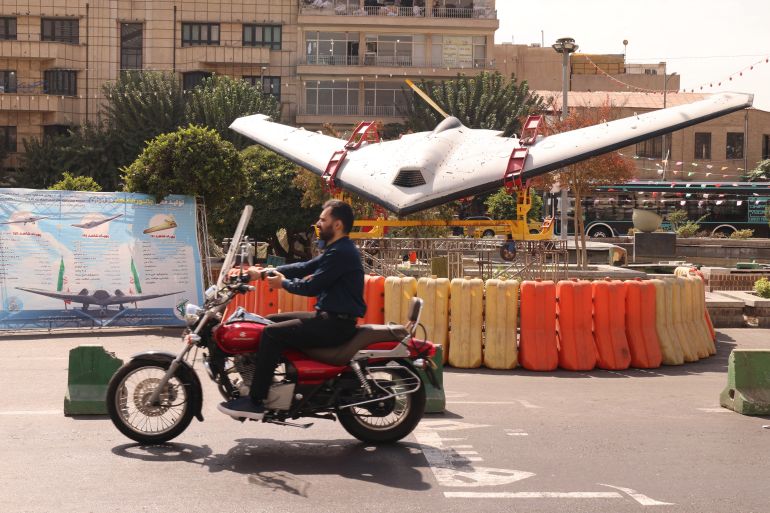
Shahed drone
A man rides a motorcycle past a Shahed drone in Tehran’s Baharestan Square on September 27, 2025, as part of an exhibit to mark the ‘Sacred Defence Week’ commemorating the 1980-88 Iran-Iraq War [Atta Kenare/AFP]

What has Zelenskyy said?

Zelenskyy has posted several statements on social media confirming that he is ready to help Middle Eastern countries defend their territories by providing technical expertise.

“Ukrainians have been fighting against ‘shahed’ drones for years now, and everyone recognises that no other country in the world has this kind of experience. We are ready to help,” he wrote on X on March 5.

“I gave instructions to provide the necessary means and ensure the presence of Ukrainian specialists who can guarantee the required security.

“Ukraine helps partners who help ensure our security and protect the lives of our people.”

It is understood that Ukraine is in talks with several Middle Eastern countries about this.

On Monday, Zelenskyy said Ukraine has deployed interceptor drones and a team of specialists to help protect US military bases in Jordan.

Zelenskyy wrote on X that he has also spoken directly to Saudi Crown Prince Mohammed bin Salman (MBS) about “countering threats from the Iranian regime”.

He also said he had spoken with the leaders of Bahrain, Jordan, Kuwait, Qatar and the UAE.

Zelenskyy has repeatedly stressed that Ukraine must not weaken its own air defences. However, it is mass-producing this equipment now, and may well be able to afford to share.

“The fact that there are surplus capabilities ready to be sent to the US and the Middle East is unsurprising because Ukraine has led this innovation,” Giles said.

Zelenskyy has therefore proposed an exchange of air defence systems with the US ones being used in the Middle East.

“We ourselves are at war. And I said, completely frankly, that we have a shortage of what they have. They have missiles for the Patriots, but hundreds or thousands of ‘shaheds’ cannot be intercepted with Patriot missiles – it is too costly,” Zelenskyy said.

“Meanwhile, we have a shortage of PAC-2 and PAC-3 missiles. So, when it comes to technology or weapons exchange, I believe our country will be open to it.”

Zelenskyy may also have good political reasons for extending help, analysts say.

“The US has declined support for Ukraine on the ground that it had insufficient supply of air defence munitions, and now more of those Patriots have been fired in the Middle East in a few days, than have been supplied to Ukraine in four years,” Giles said.

“Zelenskyy will be aware that in providing this assistance, he is not only shaming the US, but also directly supporting potential friends and partners in the Middle East, who before now have been ambivalent to the situation in Ukraine,” Giles said.

INTERACTIVE_THAAD_GAZA_ISRAEL_IRAN_MISSILE_INTERCEPTOR_FEB25, 2026-1772104791

Who else has sent defensive backup to the Gulf?

European countries including the United Kingdom, France, Spain, Portugal, Greece and Italy have pledged to provide defensive backup to Gulf nations over the past week. Additionally, Australia said it was deploying military assets to the region.

Wary of becoming directly involved in the US-Israeli war on Iran, European countries have nevertheless been drawn into the conflict by attacks on a British base on Cyprus in the Mediterranean and Iranian strikes on Western allies in Gulf countries that host US troops in military bases.

What will happen next?

Just as Ukraine is getting involved in the war, Russia might too, say experts.

“We should not be surprised if before long, as well as Russian technology in Iranian drones, we see Iran launching Shaheds manufactured in Russia,” Giles said.

He described Russia as a “primary beneficiary of current US actions,” pointing to how the surge in oil prices, the relaxation in US curbs on Russian energy exports to keep crude and gas prices under control, and the diversion of air defence munitions from Europe to the Middle East all helped Moscow. These, he said, “are all lifelines for Russia”.

Iran’s authorities showcase continuity as they back new leader during war

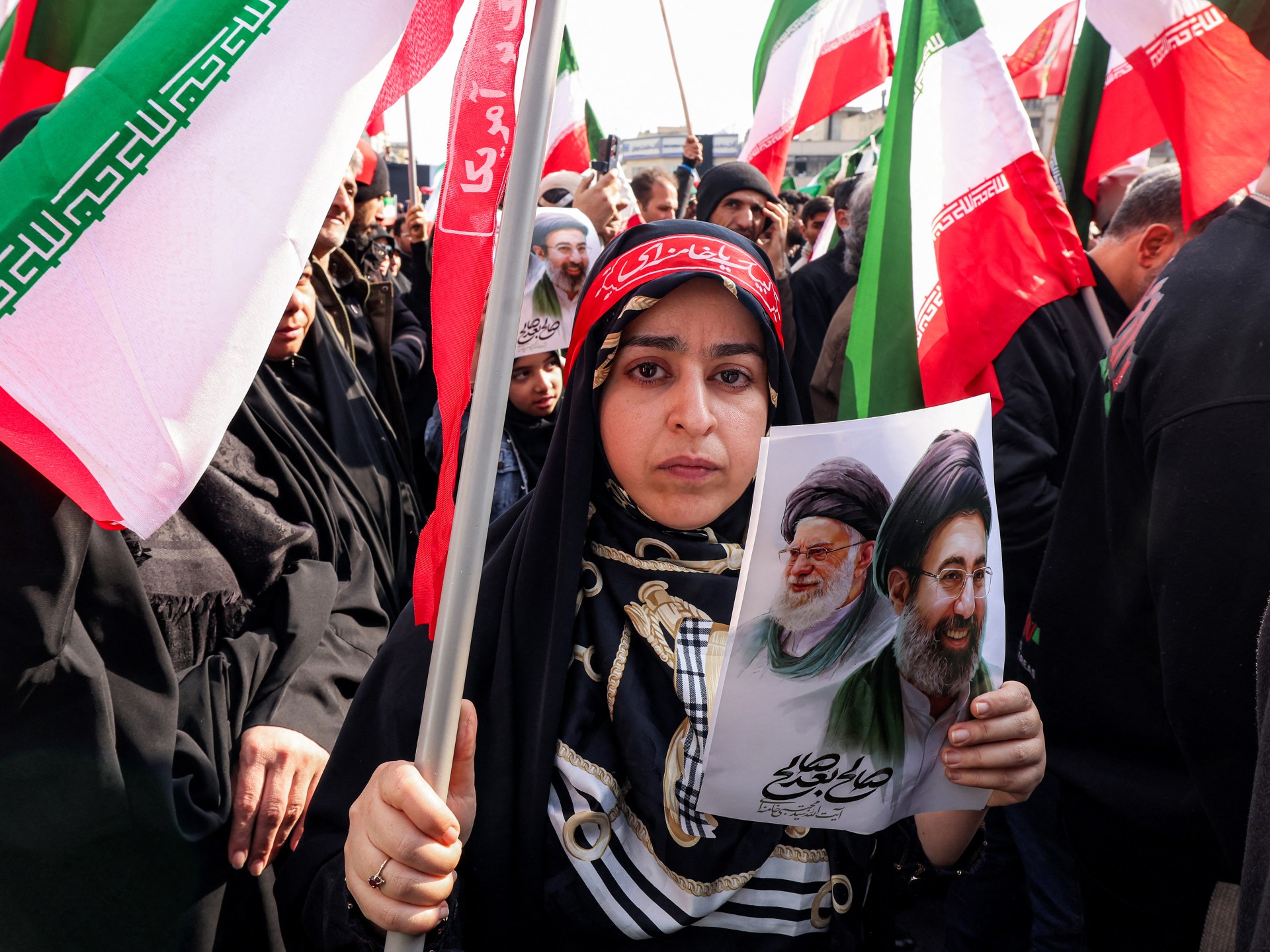
Tehran, Iran – Commanders, politicians and religious authorities in Iran are rallying around the flag and hinting at a prolonged war after Mojtaba Khamenei was selected as supreme leader as the country is under fire from the United States and Israel.

The 88-member Assembly of Experts, made up of religious leaders, approved the second son of Ayatollah Ali Khamenei as his successor after he was killed on February 28, the first day of the war. The younger Khamenei was tasked with steering the “holy establishment of the Islamic Republic”, state television said overnight into Monday.

Recommended Stories

list of 3 itemsend of list

The 56-year-old Mojtaba Khamenei has hardly made any public appearances or remarks but is believed to have acted as a powerbroker with deep connections to the Islamic Revolutionary Guard Corps (IRGC). His ascension signals continuity for the theocratic establishment that came to power after the 1979 Islamic revolution.

The IRGC, which was originally created to operate in parallel to the country’s regular army to safeguard the establishment but has since turned into a major military and economic force, was among the first to pledge allegiance to the new leader.

It said its forces are prepared to “fully obey and sacrifice for the divine commands” of Khamenei to “maintain the values of the Islamic revolution and safeguard the legacies” of the first two supreme leaders, Ali Khamenei and Ruhollah Khomeini.

The aerospace, ground, naval and other major forces of the IRGC issued separate statements of support.

The Iranian army, the high command of police and the Defence Council also said they were prepared to take orders from Mojtaba Khamenei, and Intelligence Minister Esmaeil Khatib said his selection shows that “Islamic Iran knows no dead ends and always has a bright outlook of victory.”

The powerful 12-member constitutional watchdog known as the Guardian Council called the selection of Mojtaba Khamenei a “balm for the pain” of losing his father while influential seminaries across the country and the heads of government, the judiciary and parliament issued similar statements.

Ali Larijani, the secretary of the Supreme National Security Council, appeared relatively less enthusiastic but emphasised that the process was done legally so he backs it.

“During the recent period, many negative narratives and campaigns were carried out, but the transparent and lawful process undertaken by the Assembly of Experts provided a clear response to those narratives,” he told state media in an apparent reference to media reports that he and some others were opposed to the choice.

Larijani stressed that the office of the supreme leader must be assisted by all as a “symbol of national unity” and expressed hope that during Mojtaba Khamenei’s time, “Iran is aligned with the path of development, economic conditions are improved, and more calm and welfare is provided for the people”.

All who praised the new leader referred to him as “ayatollah”, indicating that his religious standing has been upgraded from the lower rank of hojatoleslam as part of his ascension to the highest political and religious office in the country.

Hardline state-affiliated media and supporters went as far as calling him “imam”, a title used to describe significant religious figures and regularly used by state media to describe his father and Khomeini, the first supreme leader.

State television broadcast images of the news of Khamenei’s selection being announced at important mosques in Tehran, Mashhad, Isfahan and other cities across the country.

Mass text messages sent by the state to Iranians invited people to gather at Enghelab (Revolution) Square in downtown Tehran and spots in other cities on Monday afternoon to “renew the covenant with the martyred imam of the Muslim nation and pledge allegiance to the supreme leader selected by the Assembly of Experts”.

Israeli and US warplanes bombed Tehran and Isfahan in the afternoon, two days after sweeping attacks on the capital’s oil reserves and refineries left thick black smoke hanging over the city.

Rocky road ahead

The younger Khamenei faces myriad challenges, most prominently the threat of assassination in the foreseeable future as the US and Israel have promised to keep taking out Iranian leaders.

Some local and Israeli media have claimed he may have been wounded in a strike, but details were unclear. There was no clarity from officials on whether Khamenei is expected to make an appearance anytime soon.

US President Donald Trump has repeatedly said he is unhappy with the selection and will aim to kill the new leader because he wants the US to play a role in deciding Iran’s future leadership.

The younger Khamenei’s ascension suggests more hardline factions in Iran’s establishment retain power and could indicate that the government has little desire to agree to new negotiations with the US in the short term.

The commanders of the IRGC and the army have continued shooting projectiles since his selection with one IRGC commander telling state television that the country is capable of keeping up considerable attacks for at least six months.

US officials have also expressed eagerness to continue the war in pursuit of their objectives, including dismantling Iran’s nuclear and missile programmes and cutting off support to regional allies in the “axis of resistance”.

Its members – including Hezbollah in Lebanon, the Houthis in Yemen and armed groups in Iraq – released statements backing Khamenei’s selection.

Khamenei is also leading Iran at a time when the US is trying to curb its oil exports, a key revenue stream, while tightening sanctions that have heavily damaged the Iranian economy.

The Strait of Hormuz is expected to remain a flashpoint area as shipping is disrupted. Iran is also experiencing one of its highest inflation rates in decades at about 70 percent with annual food inflation rates shooting above 100 percent, according to the Statistical Centre of Iran.

Israeli forces kill Palestinian journalist Amal Shamali in Gaza attack

Palestinian journalist Amal Shamali, who worked as a correspondent for Qatar Radio, has been killed in an Israeli air strike on the Nuseirat refugee camp in central Gaza, the Palestinian Journalists Syndicate (PJS) says.

Shamali, who was killed on Monday, also “worked with several Arab and local media outlets and was among the journalists who continued performing their media mission despite the ongoing assault and war on the Gaza Strip”, the PJS said in a statement.

Recommended Stories

list of 3 itemsend of list

More than 270 journalists and media workers have been killed in Gaza since Israel launched a genocidal war against Palestinians in the territory on October 7, 2023, in response to Hamas-led attacks on southern Israel.

“This represents one of the bloodiest periods for journalists in modern history, reflecting the scale of the deliberate targeting of Palestinian journalism in an attempt to silence the voice of truth and prevent the documentation of the crimes and violations committed against the Palestinian people,” the PJS said.

The PJS also said: “Targeting journalists will not succeed in breaking the will of the Palestinian journalistic community or deterring it from fulfilling its professional and humanitarian mission of conveying the truth and documenting the crimes and aggression faced by the Palestinian people.”

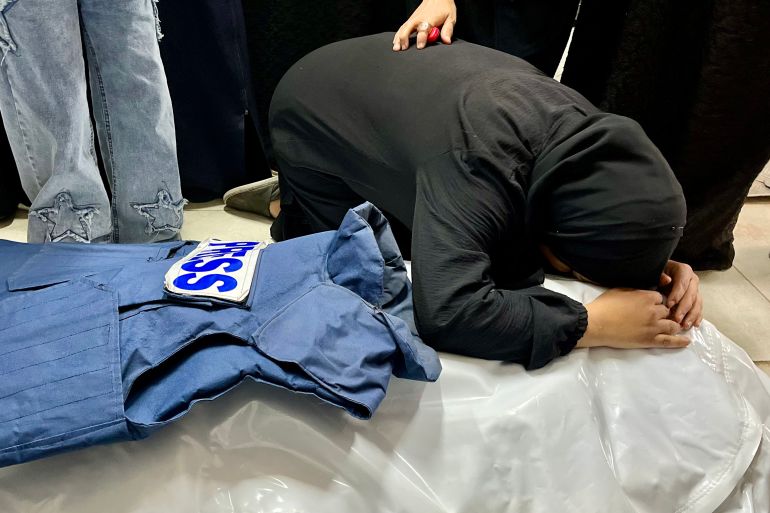
A woman mourns over the body of journalist Ahmed Mansur at Nasser Medical Complex in Khan Yunis in the southern Gaza Strip on April 8, 2025. [AFP]
A woman mourns over the body of journalist Ahmed Mansur at Nasser Medical Complex in Khan Younis in the southern Gaza Strip on April 8, 2025 [File: AFP]

Gaza’s Government Media Office released a statement after Shamali’s killing, saying it “strongly condemns the systematic targeting, killing, and assassination of Palestinian journalists by the Israeli occupation”.

The office also said it “holds the Israeli occupation, the U.S. administration, and the countries participating in the crime of genocide – such as the United Kingdom, Germany, and France – fully responsible for committing these heinous and brutal crimes”.

It called on international and regional media associations, the international community and human rights organisations to condemn “the crimes” committed against Palestinian journalists and media professionals working in Gaza and to work towards holding Israel accountable for its “ongoing crimes” against Palestinian journalists.

Israeli attacks have killed about 13 journalists every month over more than two years of war, according to a tally by Shireen.ps, a monitoring website named after Al Jazeera journalist Shireen Abu Akleh, who was shot and killed by Israeli forces in the occupied West Bank in 2022.

Of those journalists, at least 10 of them worked for Al Jazeera, including Al Jazeera Arabic correspondent Anas al-Sharif, who had reported extensively from northern Gaza.

Israel’s war on Gaza has been the single deadliest conflict for journalists.

Dozens of protesters, waving Palestinian flags and chanting slogans against Israel, protest Israel's attacks on Gaza in the Syrian capital Damascus, on August 11, 2025.
Dozens of protesters condemn Israel’s attacks on journalists in Gaza in the Syrian capital, Damascus [File: Izz Aldien Alqasem/Anadolu]

According to Brown University’s Costs of War project, more journalists have been killed in Gaza since the war began on October 7, 2023, than in the US Civil War, World Wars I and II, the Korean War, Vietnam War, the wars in the former Yugoslavia and the post-9/11 war in Afghanistan – combined.

As per a report released early this year by the International Federation of Journalists (IFJ), Palestine was the deadliest place to work as a journalist in 2025.

The IFJ said the Middle East was the most dangerous region for media professionals, accounting for 74 deaths last year – more than half of the 128 journalists and media workers killed.

The Middle East was followed by Africa with 18 deaths, the Asia Pacific (15), the Americas (11) and Europe (10), according to the report.