Iran president tells Saudi crown prince that US threats cause instability


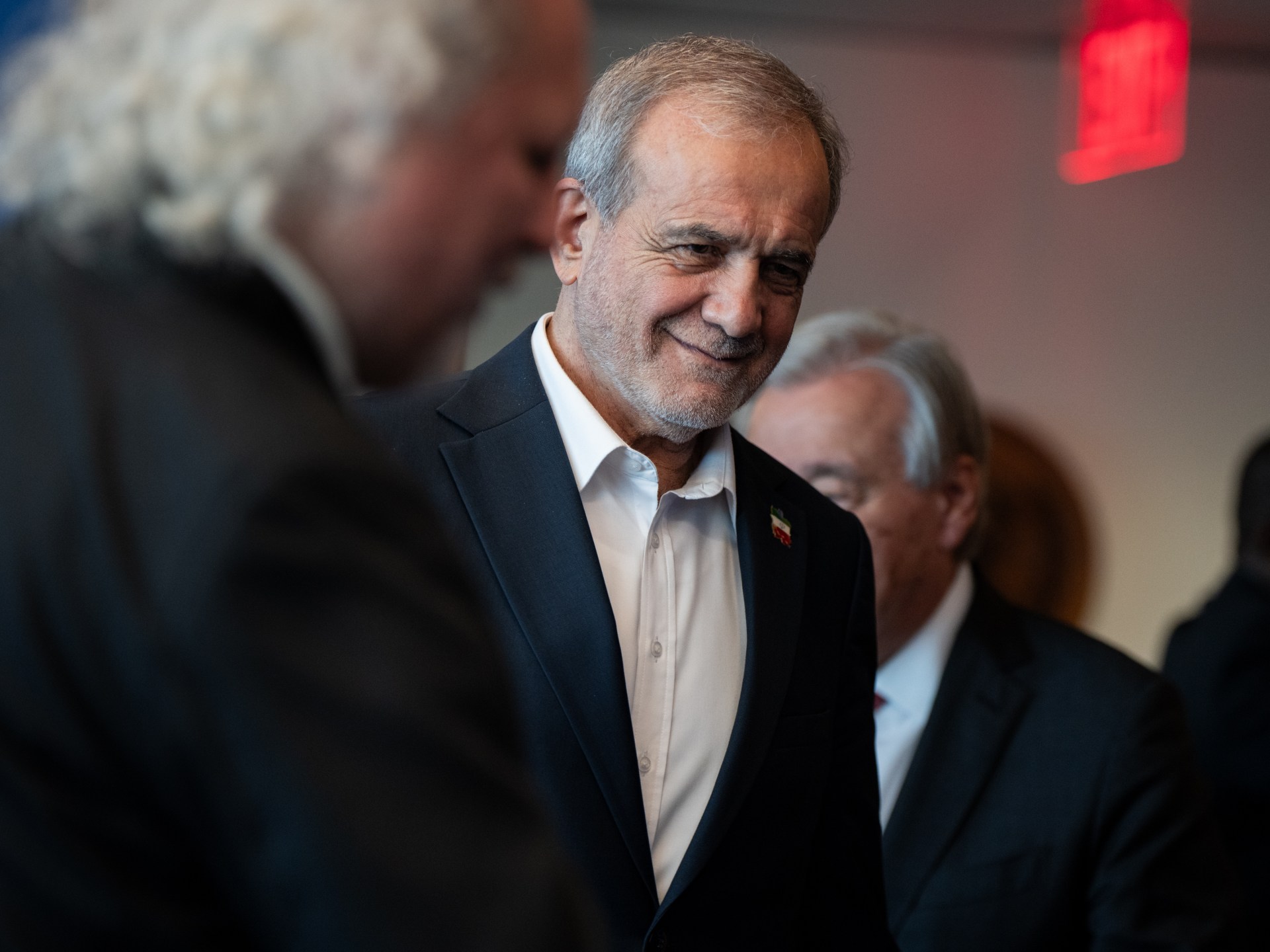
Iranian President Masoud Pezeshkian has held a phone call with Saudi Crown Prince Mohammed bin Salman (MBS) after a United States aircraft carrier arrived in the region amid growing fears of a new conflict with Israel or the US.

The US has indicated in recent weeks that it is considering an attack against Iran in response to Tehran’s crackdown on protesters, which has left thousands of people dead. US President Donald Trump has sent the USS Abraham Lincoln aircraft carrier to the region.

Recommended Stories

list of 3 itemsend of list

Pezeshkian hit out at US “threats” in the call with Saudi Arabia’s leader on Tuesday, saying they were “aimed at disrupting the security of the region, and will achieve nothing other than instability”.

“The president pointed to recent pressures and hostilities against Iran, including economic pressure and external interference, stating that such actions had failed to undermine the resilience and awareness of the Iranian people,” a statement from Pezeshkian’s office said on Tuesday.

The statement also said that Prince Mohammed “welcomed the dialogue and reaffirmed Saudi Arabia’s commitment to regional stability, security, and development”.

“He emphasised the importance of solidarity among Islamic countries and stated that Riyadh rejects any form of aggression or escalation against Iran,” it said, adding that he had expressed Riyadh’s readiness to establish “peace and security across the region”.

The official Saudi Press Agency (SPA) reported after the call that Prince Mohammed ‍told Pezeshkian that Riyadh would not allow its airspace or territory to be used for military actions against Tehran.

“HRH the Crown Prince affirmed during the call the Kingdom’s position in respecting the sovereignty of Iran, stressing that the Kingdom will not allow its airspace or territory to be used for any military actions against Iran or for any attacks from any party, regardless of their origin,” SPA reported.

“HRH the Crown Prince also affirmed the Kingdom’s support for any efforts aimed at resolving disputes through dialogue in a manner that enhances security and stability in the region,” the news agency added.

“The Iranian president expressed his gratitude to the Kingdom for its steadfast position on respecting the sovereignty and territorial integrity of Iran and conveyed his appreciation for the role undertaken by HRH the Crown Prince in exerting efforts and initiatives to achieve security and stability in the region.”

‘Neighbouring countries are our friends’

The call between the two leaders came after Trump repeatedly threatened to attack Iran during Tehran’s deadly crackdown on antigovernment protests this month. Last week, the US president dispatched an “armada” towards Iran but said he hoped he would not have to use it.

Delivering a speech in Iowa on Tuesday, Trump again said that a large “armada” was heading towards Iran and repeated his threats, saying that Tehran should yield to US demands.

“By the way, there’s another beautiful armada floating beautifully toward Iran right now. So we’ll see,” Trump said in his speech.

“I hope they make a deal. I hope they make a deal. They should have made a deal the first time. They’d have a country,” he said, in an apparent reference to US attacks on Iran last June.

Amid growing fears of a new war, a commander from Iran’s Islamic Revolutionary Guard Corps (IRGC) on Tuesday issued a warning to his country’s neighbours.

“Neighbouring countries are our friends, but if their soil, sky, or waters are used against Iran, they will be considered hostile,” Mohammad Akbarzadeh, political deputy of the IRGC’s naval forces, was quoted as saying by the Fars news agency.

Israel carried out a wave of attacks on Iran in June 2025, targeting several senior military officials and nuclear scientists, as well as nuclear facilities. The US then joined the 12-day war to bombard three nuclear sites in Iran.

The war came on the eve of a round of planned negotiations between the US and Iran over Tehran’s nuclear programme.

Since the conflict, Trump has reiterated demands that Iran dismantle its nuclear programme and halt uranium enrichment, but talks have not resumed.

On Monday, a US official said that Washington was “open for business” for Iran.

“I think they know the terms,” the official told reporters when asked about talks with Iran. “They’re aware of the terms.”

Ali Vaez, director of the Iran Project at the International Crisis Group, told Al Jazeera that the odds of Iran surrendering to the US’s demands are “near zero”.

Iran’s leaders believe “compromise under pressure doesn’t alleviate it but rather invites more”, Vaez said.

But while the US military builds up its presence in the region, Iran has warned that it would retaliate if an attack is launched.

Iran’s Foreign Ministry spokesperson warned on Tuesday that the consequences of a strike on Iran could affect the region as a whole.
Palestinian patients wait for reopening of the Rafah border


NewsFeed

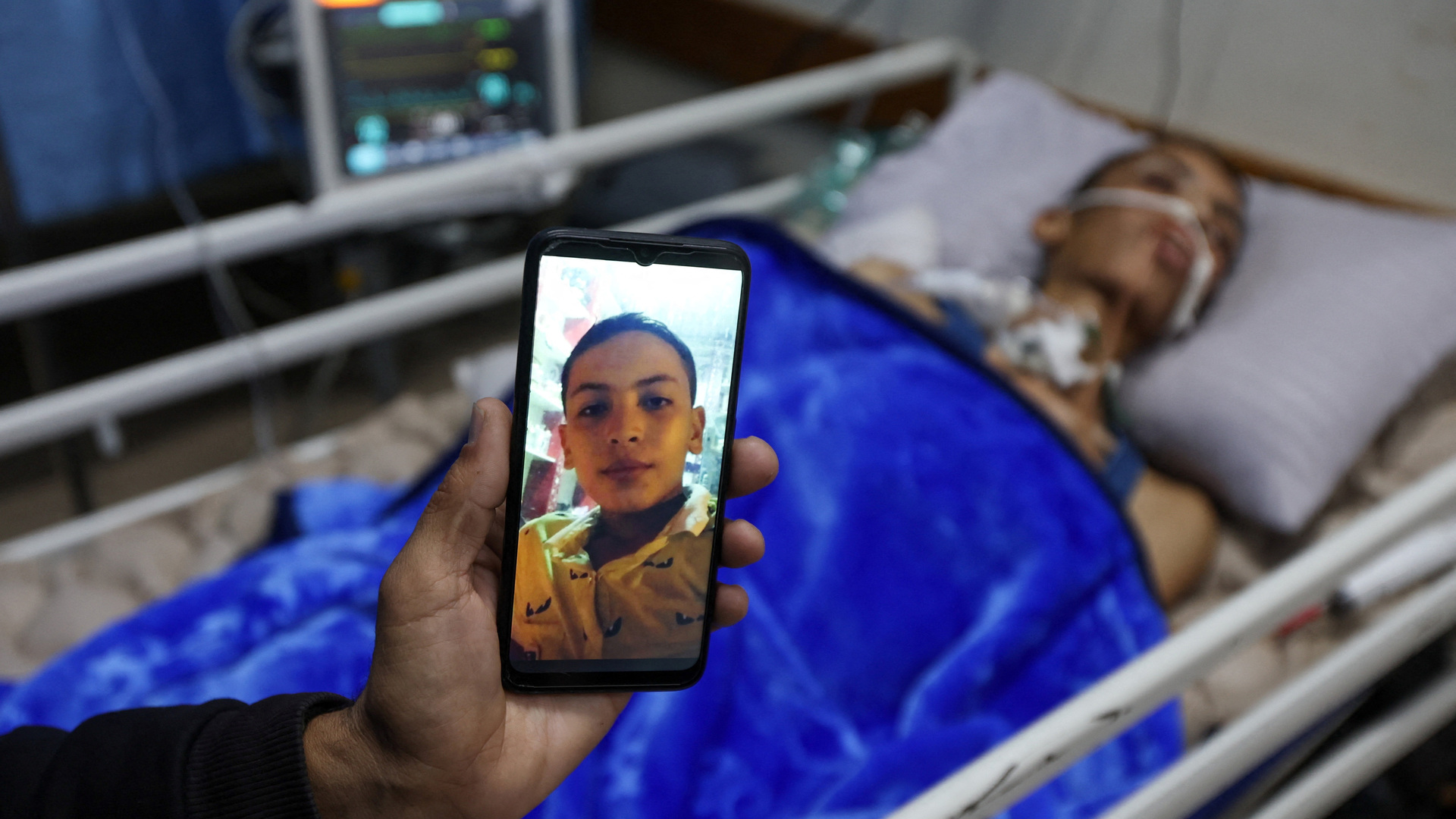
Palestinians in need of advanced medical care say they’re hopeful Gaza’s Rafah border with Egypt will reopen soon after Israel received remains of the last captive on Monday, a key part of the first stage of the US-backed plan to end the war.

CBS News’ Bari Weiss unveils new strategy amid backlash, viewership lags


CBS News Editor-In-Chief Bari Weiss has unveiled the network’s new plan to grow the audience amid efforts to broaden the network’s political appeal after a set of blunders.

Among the changes that were announced in an all-hands meeting on Tuesday, the network will bring on 18 new commentators akin to US cable news powerhouses, CNN, MS Now and Fox, as well as steep staffing cuts to those who don’t align with Weiss’s vision for the network, as first reported by NPR which sourced the information from a set of journalists within the network who spoke under condition of anonymity.

Recommended Stories

list of 4 itemsend of list

In an all-hands call with staffers, the network said that it will need to expand its reach beyond typical broadcasting and lean more into podcasting, according to audio first obtained by the outlet Business Insider.

“I’m here to tell you that if we stick to that [focusing on broadcast] strategy, we’re toast,” Weiss said.

The new hires include conservative podcasters Niall Ferguson and Patrick McGee and others like physician Mark Hyman, who has close ties to Health and Human Services Secretary Robert F Kennedy Jr who has been controversial for scaling back vaccines.

Weiss, who despite not having any previous television experience, was tapped in October to lead the storied news organisation after Paramount Skydance acquired the conservative opinion writer’s publication, The Free Press, for $150m amid efforts to reach a more politically diverse audience.

The hiring of Weiss was among several key moves the network made in recent months to appease the White House, including settling a lawsuit alleging that 60 Minutes doctored an interview with then–presidential hopeful Kamala Harris for $16m, and appointing Kenneth Weinstein, a former Trump administration official, as ombudsman to investigate allegations of bias.

Weiss missteps

“The honest truth is, right now, we are not producing a product that enough people want,” Weiss said in audio of the all-hands meeting, according to Business Insider.

But Weiss has been behind many of the recent decisions that led to a slump in viewership. The network’s town hall with Erika Kirk — wife of the murdered far-right provocateur Charlie Kirk, saw a 11 percent decline in viewership compared to typical viewership in the same time slot.

Weiss has also been behind several other missteps in her short tenure at the network thus far. She delayed the airing of a 60 Minutes segment about the notorious CERCOT mega prison in El Salvador. Weiss claimed that the segment, which was already set for air, needed more reporting, which correspondent Sharyn Alfonsi criticised, calling it a “political decision” in an email.

She also oversaw the relaunch of the CBS Evening News with a new host, former CBS Mornings anchor Tony Dokoupil, who has been with the network since 2016. The show has gone through five different anchor teams since he joined the network.

“We put too much weight on the analysis of academics or elites, and not enough on you,” Dokoupil said in a video promoting his new spot.

But that was not well received.

“You wouldn’t want ‘academics and elites’ who have actually studied a subject to outweigh the off-the-cuff opinions of village idiots. This is how we’re seeing the resurgence of measles, and the widespread belief in almost non-existent vote fraud, among many other great leaps backward in the Trump era,” Larry Sabado, director of the Center For Politics at University of Virginia, said in a post on X.

And that message has not won over viewers either. While CBS has been last place among broadcast evening news programmes for decades, it continues to lose its market share under Weiss. The network’s flagship news show lost more than a million viewers during its inaugural week under the new host compared to the same time the year before.

It comes as the network’s parent company continually lobs hostile takeover bids to Warner Bros Discovery, which would include another news network often in the White House’s crosshairs – CNN.

In December, Ellison visited the White House, as per media reports, and told Trump that Paramount would execute “sweeping changes” if it acquired CNN’s parent company.

Why is ‘Cloud Dancer’ the colour of the year?


We examine the online debate ignited by Pantone’s Colour of the Year, Cloud Dancer.

This episode dives into the discussion prompted by Pantone, unpacking the uneasy relationship between colour and fascism. From hardline efforts to regulate colour in public life to the ways vibrancy and maximalism reassert themselves, we explore how colour becomes a quiet form of resistance across art, fashion, film, and design.


Presenter:
Stefanie Dekker

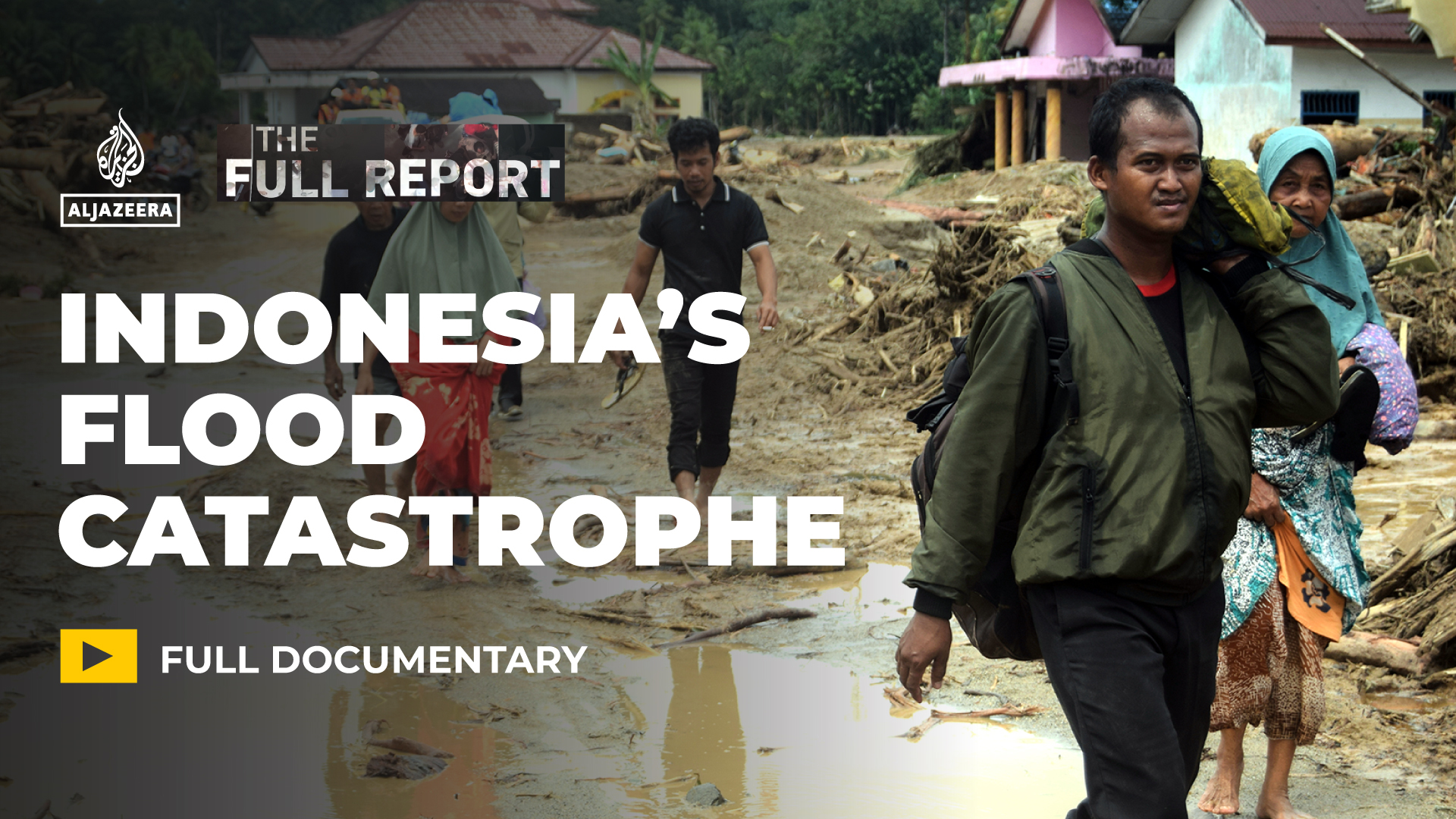
Indonesia’s Flood Catastrophe | The Full Report


A deadly cyclone hits Indonesia’s Sumatra, wiping out communities. Al Jazeera examines the scale of destruction.

In late November 2025, a powerful cyclone unleashed days of extreme rainfall across three provinces on the Indonesian island of Sumatra.

At least 1,100 people were killed, and more than 100 remain missing. Tens of thousands of houses were destroyed, and many public facilities were badly damaged. Entire villages have been wiped out by muddy floodwaters.

Al Jazeera’s Indonesia team has followed the story on the ground, hearing firsthand accounts from survivors, as emergency services fight to reach those in need. Weeks after the disaster, the struggle continues. People shelter in flimsy tents, which offer little protection from the extreme heat. Illnesses continue to spread. Survivors and political analysts alike question whether the government’s response has been efficient and coordinated enough.

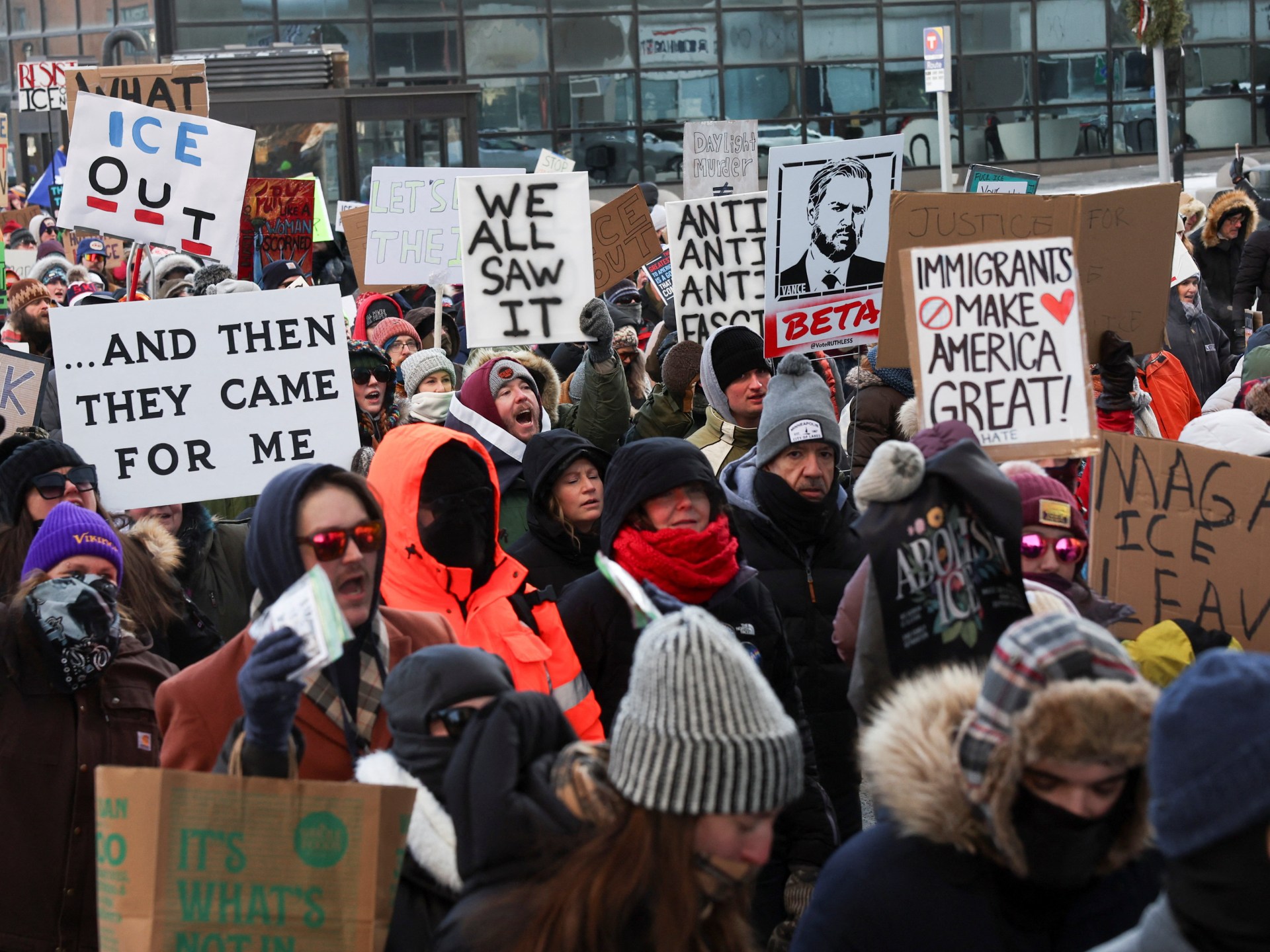
What ICE is doing to America is familiar to me as a Palestinian


The escalation of state violence in the United States has been unprecedented. In the span of three weeks, two people were shot dead in Minneapolis during “anti-immigration” raids. Both were branded “domestic terrorists”.

Meanwhile last week, US Immigration and Customs Enforcement (ICE) agents used five-year-old Liam Ramos as bait to get his asylum-seeking father to come out of their home; the two have now been taken to a detention centre in Texas. The administration calls this – the act of locking up children in mass detention camps – “immigration enforcement”. ICE detained at least 3,800 children last year, including 20 babies.

Across the country, the violence inflicted by ICE is creating a culture of fear within migrant communities.

I know this fear; I know this violence. These are the fear and violence that have long devastated my birthplace – Palestine. I hope Americans never have to deal with the scale of death, forced disappearances and violence that generations of Palestinians have had to suffer. But under US President Donald Trump, they are already now experiencing the tactics that are so familiar to Palestinian victims of the Israeli military and illegal Israeli settlers in the occupied West Bank.

The parallels are impossible to ignore.

In 2025, 32 people, called “illegals”, died in ICE custody, making it the deadliest year in two decades. They died of seizure, heart failure, stroke, respiratory failure, infectious disease, suicide or neglect. ICE accepted no responsibility for their deaths. In the occupied West Bank, where I was born, Israeli forces and settlers have killed more than 1,100 Palestinians in two years and four months.

Nearly 75 percent of the 68,440 people ICE detained last year had no criminal record. Thousands of Palestinians are currently being held in Israeli prisons without charge or a trial.

With the latest killings and kidnapping of US citizens, even people who are “legally” here are now afraid. There is a growing atmosphere of insecurity and anxiety that anyone at anytime can be disappeared or harmed.

Across the country, ICE violence is depriving children of education and businesses. For example, in the city of Charlotte, North Carolina, 30,000 students, nearly 20 percent of district enrolment, were absent the week after raids began in 2025, and in Los Angeles, shop owners reported a significant loss in sales as customers stayed home.

I know what it feels like to dread passing by armed security personnel who at any moment may shoot you and then call you a “terrorist”. My family members know what it is like to be besieged and stormed; to witness a public execution.

This type of violence has been the daily reality of Palestinians across historic Palestine long before October 7, 2023. After that day, it has just intensified. Just like in the US, children have also not been spared. Of the 240 Palestinians killed in the occupied West Bank in 2025, 55 were children.

Just this month, Israeli soldiers killed 14-year-old Mohammed Naasan during a raid on his village. They claimed he was running to them with a rock in his hand.

The Israeli military routinely fires live ammunition at Palestinian children and justifies it by claiming they were throwing stones. Apparently, a Palestinian child with a rock poses an existential threat to one of the most heavily armed militaries in the world, to soldiers in full body armour shooting from armoured vehicles.

Palestinian children are regularly used by Israeli soldiers as “human shields” when they raid neighbourhoods; their detention and abuse is often used to put pressure on family members to surrender — just as ICE did with Liam Ramos and his father.

In Israeli detention, at least 75 Palestinians were killed between October 7, 2023 and August 2025, including 17-year-old Walid Ahmad. In at least 12 cases, detainees died after being beaten or tortured by Israeli security forces.

The United Nations has documented systematic torture and ill-treatment including repeated beatings, waterboarding, stress positions, and the use of rape and other sexual and gender-based violence.

More than 300 Palestinian children are currently being held in military detention as of November 2025. These children are detained indefinitely without charge or trial based on secret evidence that is neither disclosed to them nor to their attorneys.

Among them was Mohammed Ibrahim, a 16-year-old Palestinian-American from Florida, who was held for over nine months. Upon his release, he had to be taken to hospital due to his poor condition and malnutrition. Ibrahim told his family he witnessed another teenager die in front of him in detention after being denied medical attention for scabies and a severe stomach virus.

The reason why the violence we see in the US is so reminiscent of what happens in the West Bank is because what we face: Security structures shaped by white supremacy and a colonial mindset.

The Israeli state perceives the Palestinian people as less than human and an immediate threat; that is why, in the Israeli state’s logic, they need to be kept in an apartheid system where they are surveilled, subjugated and eventually forced out.

Palestinians are murdered for simply being Palestinian, for refusing to leave their ancestral land, for serving as a testament that Palestine was never “without a land without people”.

In the US, too, the state has decided that there are some people who are less than human and pose an immediate threat. It too has deployed a heavily militarised force to spy on, subjugate and force them out, using technology first tested on Palestinians and imported to America.

Both repressive systems operate on the same principle that brown bodies and their allies can be detained without cause, shot without consequence, and left to die.

Of course, we cannot make a full parallel between the violence in the US and in Palestine.

The Israeli state has expressed through both actions and words a clear intent to fully eliminate the Palestinian people.

The Palestinians are currently facing a genocide in Gaza and at a slower rate in the occupied West Bank and East Jerusalem. The Israeli state has a clear project of erasure that seeks to wipe out even the historical records of Palestinian existence.

Nevertheless, it is clear that today Americans are getting a taste of what Palestinians have experienced for decades: state terror. This is what deploying armed forces who shoot citizens, who use five-year-old children as tactical bait, who let detainees die at unprecedented rates is called. In the United States, in Palestine and wherever power decides that certain lives do not count, the patterns of state terror repeat.

George Orwell wrote in 1984 that the Party’s final, most essential command was to reject the evidence of your eyes and ears. Before he died, his publisher released a statement: “The moral to be drawn from this dangerous nightmare situation is a simple one. Don’t let it happen. It depends on you.”

We are living that nightmare now, watching videos of executions and being told they were self-defence. We must be the ones to fight for change. Everywhere, we must be the ones who take the struggle for freedom into our own hands.