Bombardier stock dives on Trump threats of 50% tariff on Canadian planes

Shares of Canadian aeroplane maker Bombardier have plunged after United States President Donald Trump threatened to decertify the private jet maker’s large-cabin planes “and all Aircraft made in Canada”, and slap 50 percent import tariffs on new planes until Canada certified the latest aircraft produced by US rival Gulfstream.

The aeroplane maker’s stock was down 9 percent Friday morning on the heels of Trump’s late Thursday threats.

Recommended Stories

list of 4 itemsend of list

While a White House official told the Reuters news agency that Trump was not suggesting decertifying Canadian-built planes currently in operation, the president’s warning on Thursday night caused confusion and alarm among airlines and aviation analysts, along with buyers and owners of private jets.

“If, for any reason, this situation is not immediately corrected, I am going to charge Canada a 50% Tariff on any and all aircraft sold into the United States of America,” Trump said in a post on Truth Social.

Soar Aviation Law lawyer Amanda Applegate, a US specialist in business aviation law, said on Friday the post had prompted queries from clients who own, or want to buy, Bombardier planes.

There are also broader tensions between the neighbouring countries after Canadian Prime Minister Mark Carney, citing US trade policy, last week urged nations to accept the end of the rules-based global order that Washington had once championed.

Aircraft and aerospace parts have largely escaped the brunt of Trump’s US-led trade war, with Canadian-made planes continuing to be exported south of the border under the USMCA trade agreement.

Trump also said he was “decertifying their Bombardier Global Expresses, and all Aircraft made in Canada” until the Gulfstream planes were certified. Gulfstream is owned by General Dynamics.

That threat, if carried out, would have a drastic impact on US carriers like American Airlines and Delta Air Lines, which rely on Canadian-made aeroplanes for many of their regional services. The US is also the world’s largest market for business aviation.

Data provider Cirium has said there are 150 Global Express aircraft in service registered in the US, operated by 115 operators, and a total of 5,425 aircraft of various types made in Canada in service registered in the US, including narrow-body jets, regional jets and helicopters.

In a statement on Thursday, Bombardier said it had “taken note” of Trump’s post and was in contact with the Canadian government. It added that it employs more than 3,000 people in the US across nine major facilities, and creates thousands of US jobs through 2,800 suppliers.

Vonn says Winter Olympics comeback dream ‘not over’ despite injury in crash

Lindsey Vonn crashed and injured her left knee on Friday in her final downhill race before the Olympics, but said she still hopes to recover in time for the Milan Cortina Winter Games.

“This is a very difficult outcome one week before the Olympics … but if there’s one thing I know how to do, it’s a comeback,” the 41-year-old American wrote on Instagram, hours after she was airlifted off the course for medical checks. “My Olympic dream is not over.”

Recommended Stories

list of 4 itemsend of list

Vonn was the third skier to crash in the World Cup race in Crans-Montana when she lost control while landing a jump and ended up tangled in the safety nets on the upper portion of the course.

She got up after receiving medical attention for about five minutes, seemingly in pain and using her poles to steady herself. Vonn then skied slowly to the finish line, stopping a couple of times on the way down and clutching her left knee.

“I crashed today in the Downhill race in Switzerland and injured my left knee. I am discussing the situation with my doctors and team and will continue to undergo further exams,” Vonn wrote in her Instagram post. “Thank you for all of the love and support. I will give more information when I have it.”

The race, which was held in difficult conditions with low visibility, was cancelled after Vonn’s crash.

The American, who was expected to be one of the biggest stars of the Games, limped into a tent for medical attention before being airlifted away by helicopter, dangling from a hoist cable with two people attending her.

Before she entered the tent, Vonn had an anxious expression on her face, and her eyes were closed during a long embrace with teammate Jacqueline Wiles, who was leading the race when it was cancelled.

“I know she hurt her knee, I talked to her,” International Ski and Snowboard Federation CEO Urs Lehmann told reporters in the finish area. “I don’t know if it’s really heavy and [if] she won’t miss the Olympics. Let’s wait for what the doctors are saying.”

Vonn made a stunning comeback last season at age 40 after nearly six years away from ski racing. Skiing with a partial titanium implant in her right knee, she has been the circuit’s leading downhiller this season with two victories and three other podium finishes in the five races.

Including super-G, Vonn had completed eight World Cup races this season and finished on the podium in seven of them. Her worst finish was fourth.

The crash occurred exactly a week before the Milan Cortina opening ceremony.

Vonn’s first Olympic race is the women’s downhill on February 8. She was also planning on competing in the super-G and the new team combined event at the Games.

United States' Lindsey Vonn ahead of an alpine ski, women's World Cup downhill, in Crans Montana , Switzerland,
United States’ Lindsey Vonn before an alpine ski, women’s World Cup downhill, in Crans Montana, where competitors complained of poor conditions [Pier Marco Tacca/AP]

Women’s skiing at the Olympics will be held in Cortina d’Ampezzo, where Vonn holds the record of 12 World Cup wins.

Vonn was also planning on racing a super-G in Crans-Montana on Saturday in what would have been her final race before the Games.

Vonn was the sixth racer in Friday’s downhill and had registered the fastest time at the first checkpoint before landing a jump off-balance. She lifted her left arm and pole high into the air in an attempt to regain her balance. As she tried to brake, she got spun around and ended up in the nets.

Two other skiers had also crashed before her: Nina Ortlieb of Austria and Marte Monsen of Norway.

Ortlieb crashed on top in the same area as Vonn and Monsen hit the nets just before the finish area and had to be taken away in a sledge. The race was delayed after both of those crashes. But then two racers – Wiles and Corinne Suter, the Olympic champion, completed their runs.

Wiles barely could make the tight final left-hand turn that had tricked Monsen.

Romane Miradoli of France, who did complete her run as the second to start, said visibility was an issue, with snow falling.

“You can’t see,” Miradoli said, “and it’s bumpy everywhere.”

Asked if it was dangerous, Miradoli added, “We just couldn’t see well.”

Vonn has had numerous crashes in her career. One of her worst was at the 2013 world championships in Schladming, Austria, during a super-G that was also held in difficult conditions. Vonn then had to be airlifted off the course and tore apart her right knee. She returned the following season, got hurt again and missed the 2014 Sochi Olympics.

The race started Friday in a subdued mood in Crans-Montana, which is coping with the trauma of a devastating fire in a bar in the early hours of New Year’s Day that killed 40 people and injured more than 100. A minute’s silence was observed before racing.

South Africa orders expulsion of Israeli envoy, declared persona non grata

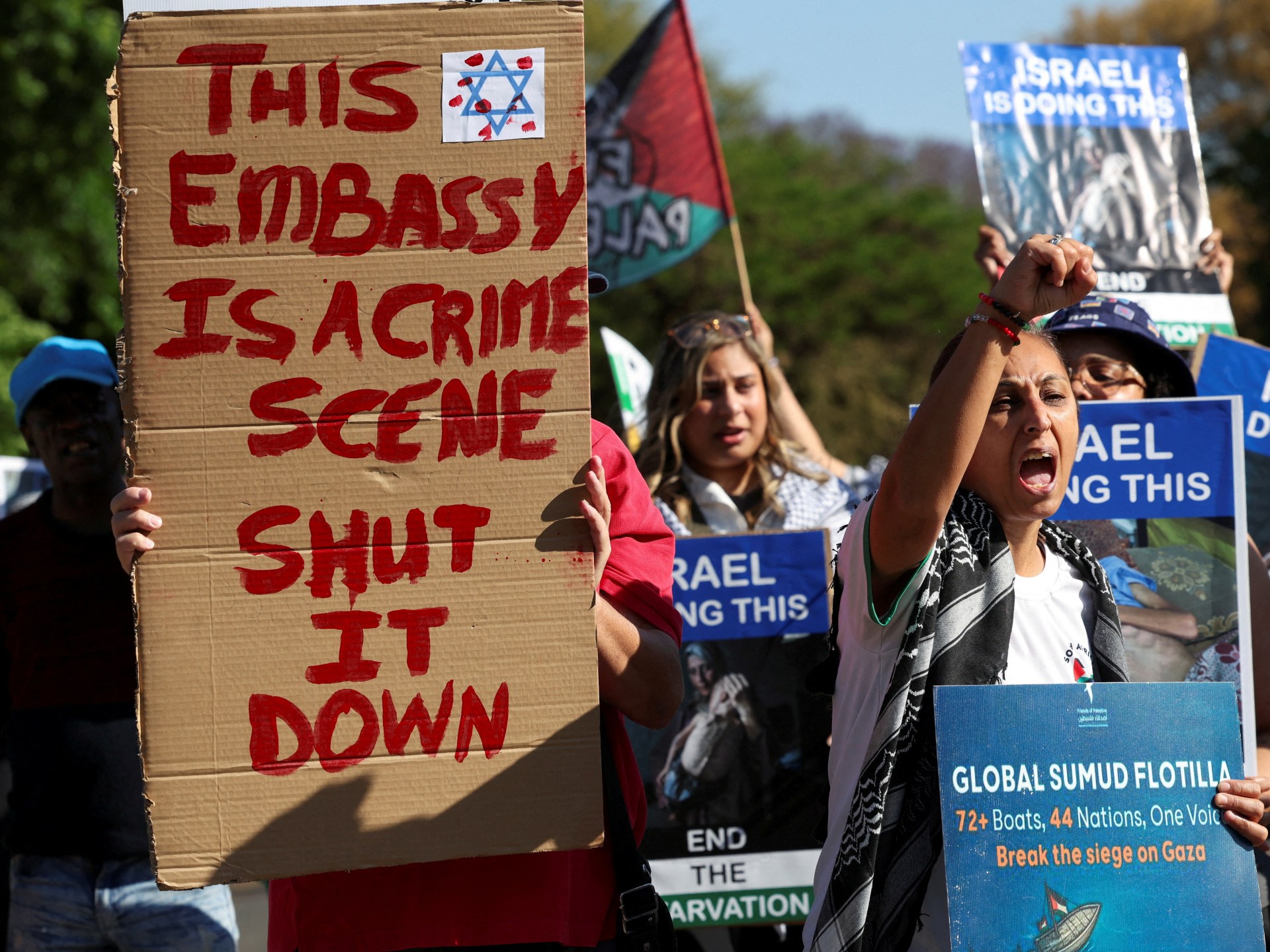
South Africa is expelling Israel’s envoy to the country, the foreign affairs ministry announced, accusing the Israeli official of engaging in “unacceptable violations of diplomatic norms” that challenge South African sovereignty.

The Department of International Relations and Cooperation said on Friday that it was giving Ariel Seidman, the charge d’affaires at the Israeli embassy, 72 hours to leave South Africa after declaring him persona non grata.

Recommended Stories

list of 3 itemsend of list

It accused Seidman of launching “insulting attacks” against South African President Cyril Ramaphosa on social media as well as “a deliberate failure” to inform the ministry “of purported visits by senior Israeli officials”.

“Such actions represent a gross abuse of diplomatic privilege and a fundamental breach of the Vienna Convention. They have systematically undermined the trust and protocols essential for bilateral relations,” the department said in a statement.

“We urge the Israeli Government to ensure its future diplomatic conduct demonstrates respect for the Republic and the established principles of international engagement.”

The announcement drew a rapid response from the Israeli Ministry of Foreign Affairs, which said it had declared senior South African diplomat, Shaun Edward Byneveldt, persona non grata and was giving him 72 hours to leave the country.

“Additional steps will be considered in due course,” the Israeli ministry said in a statement shared on social media.

Byneveldt is South Africa’s ambassador to the State of Palestine, working out of an office in Ramallah in the occupied West Bank, according to a South African government website.

Chrispin Phiri, spokesperson for South Africa’s foreign affairs ministry, said “Israel’s obstructionism forces a farcical arrangement where [Byneveldt] is accredited through the very state that occupies his host country”.

“This underscores Israel’s refusal to honour international consensus on Palestinian statehood,” Phiri wrote on X.

Genocide case

The tit-for-tat diplomatic moves come as tensions have soared between South Africa and Israel for months over Israel’s genocidal war against Palestinians in the Gaza Strip.

South Africa filed a case at the International Court of Justice (ICJ) in late December 2023, accusing Israel of committing genocide in the bombarded territory.

“South Africa is gravely concerned with the plight of civilians caught in the present Israeli attacks on the Gaza Strip due to the indiscriminate use of force and forcible removal of inhabitants,” the country said at the time.

United Nations experts and the world’s top human rights groups have also alleged Israel is committing genocide in Gaza, where Israeli attacks have killed at least 71,660 people since October 2023 and plunged the enclave into a humanitarian crisis.

South African activists also have drawn the ire of Israeli officials for accusing Israel of maintaining a system of apartheid in its treatment of Palestinians – similar to the one that existed in South Africa for decades.

The UN’s human rights chief said earlier this month that Israel maintains “a particularly severe form of racial discrimination and segregation that resembles the kind of apartheid system we have seen before”.

On Friday, Economic Freedom Fighters, a South African opposition party, welcomed the government’s decision to declare Israel’s envoy as persona non grata.

“From its repeated violations of United Nations resolutions, to its open defiance of international courts, to its brazen attacks on diplomats, journalists, humanitarian workers and civilians in Palestine and beyond, Israel has established itself as a rogue state that relies on intimidation and provocation rather than mutual respect,” it said.

Journalist Don Lemon arrested in connection to Minnesota ICE protest

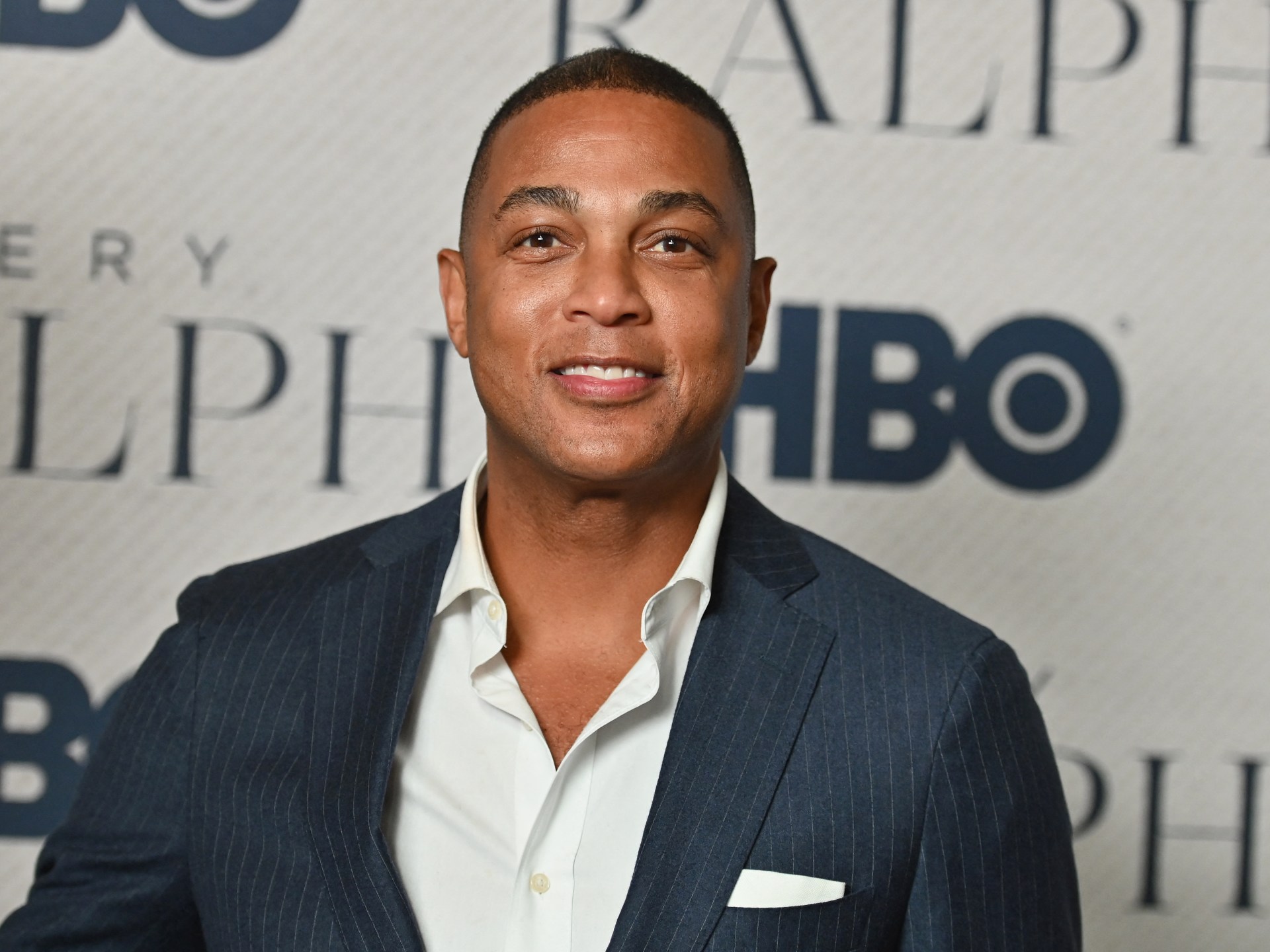
Journalist Don Lemon has been arrested in connection with his coverage of a protest against United States President Donald Trump’s deadly immigration enforcement operation in Minnesota.

Lemon’s lawyer, Abbe Lowell, said on Friday that the journalist had been arrested in Los Angeles, where he was covering the Grammy Awards.

Recommended Stories

list of 3 itemsend of list

It was not immediately clear what charges Lemon was facing. In recent weeks, however, the Department of Justice indicated it would target Lemon for his attendance at a January 18 protest, in which demonstrators disrupted a church service in the city of St Paul, Minnesota.

“Don has been a journalist for 30 years, and his constitutionally protected work in Minneapolis was no different than what he has always done,” Lowell said in a statement.

He pointed to the First Amendment of the US Constitution, which protects the freedom of the press.

“The First Amendment exists to protect journalists whose role it is to shine light on the truth and hold those in power accountable,” Lowell said. “Don will fight these charges vigorously and thoroughly in court”.

US Attorney General Pam Bondi confirmed the arrest on Friday, saying Lemon had been taken into custody with three others in connection with what she described as the “coordinated attack on Cities Church in St Paul, Minnesota”.

Lemon was part of a series of arrests that morning, all related to the church demonstration. They included independent journalist Georgia Fort, as well as activists Jamael Lydell Lundy and Trahern Jeen Crews.

Federal authorities had previously arrested Minneapolis civil rights lawyer Nekima Levy Armstrong and two others in connection with the protest.

Press freedom groups swiftly condemned the action, which they called a major escalation in the administration’s attacks on journalists.

“The unmistakable message is that journalists must tread cautiously because the government is looking for any way to target them,” Seth Stern, the chief of advocacy at the Freedom of the Press Foundation, said in a statement.

The National Press Club also denounced the arrests in a statement. “Arresting or detaining journalists for covering protests, public events, or government actions represents a grave threat to press freedom and risks chilling reporting nationwide,” it wrote.

Lemon had previously been an anchor for the CNN news network, but he was fired in 2023. He has since worked as an independent journalist, with a prominent presence on YouTube.

‘I’m here as a journalist’

During his online report from the church protest, Lemon repeatedly identified himself as a reporter as he interviewed both demonstrators and church attendees.

“I’m not here as an activist. I’m here as a journalist,” he told those present.

Protesters had targeted the church, which belongs to the Southern Baptist Convention, due to its pastor, David Easterwood, who also holds a role as the head of a field office for Immigration and Customs Enforcement (ICE).

Critics have questioned why the Justice Department swiftly opened a probe into the church protest, while it declined to open a civil rights investigation into an ICE agent’s killing of Renee Nicole Good in Minneapolis on January 7.

The department has not yet said if it will open an investigation into the January 24 killing of US citizen Alex Pretti by border patrol agents in Minneapolis.

“Instead of investigating the federal agents who killed two peaceful Minnesota protesters, the Trump Justice Department is devoting its time, attention and resources to this arrest, and that is the real indictment of wrongdoing in this case,” Lowell said in his statement.

MSF says it will not hand over staff details to Israeli authorities

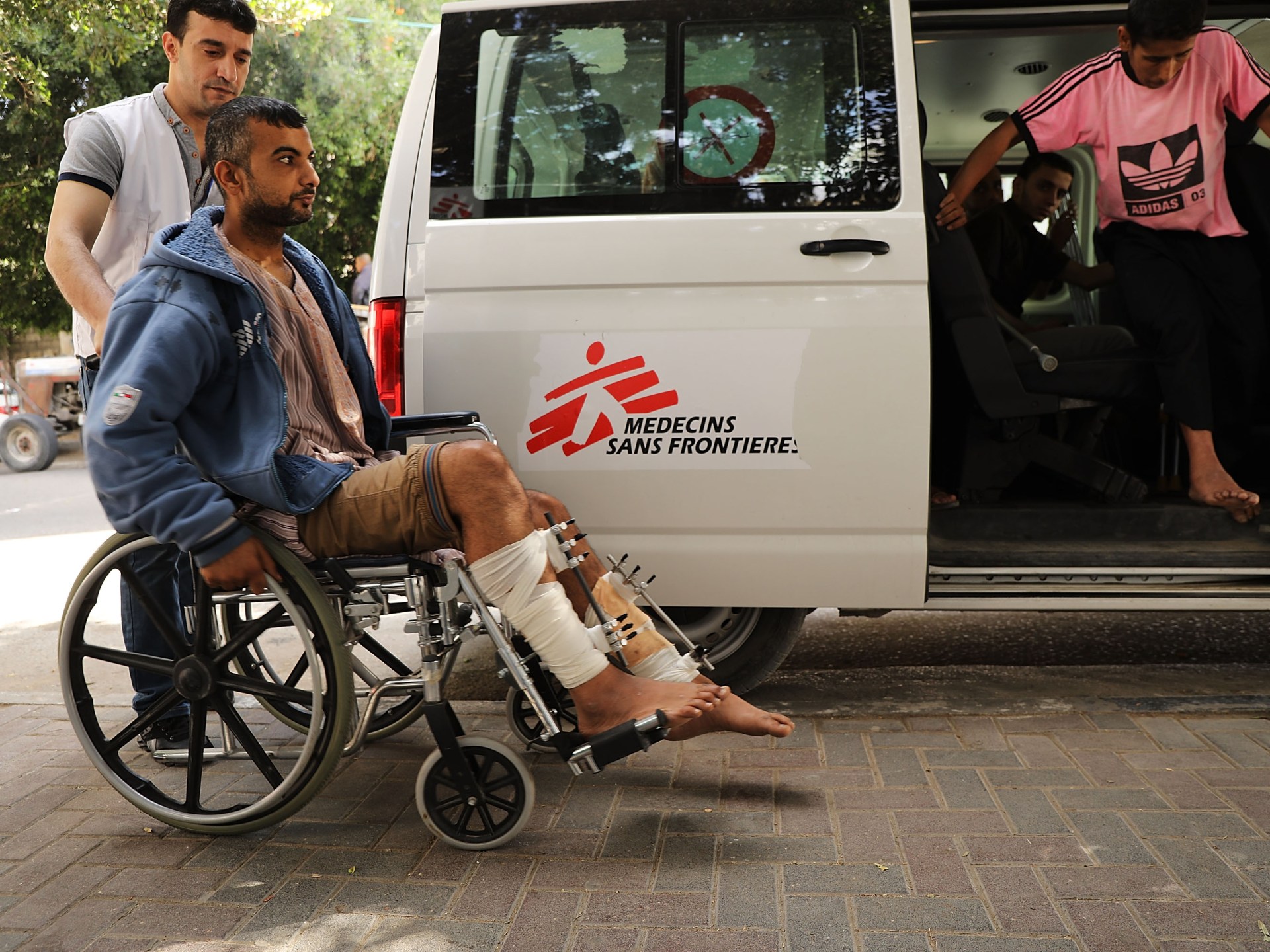
Doctors Without Borders, known by its French initials MSF, has said it will not provide Israeli authorities with the personal details of its staff working in Gaza and across the occupied Palestinian territory, citing concerns for staff safety and a lack of assurances over how the information would be used.

The decision on Friday follows criticism of MSF’s statement last week that it was prepared to share the names of its staff under strict conditions – a position that sparked concern among aid workers and rights advocates.

Recommended Stories

list of 4 itemsend of list

The organisation has since said it was unable to secure the guarantees it sought from Israeli authorities and has now ruled out sharing any staff data “under the current circumstances”, citing risks to its workers’ safety.

Israel demanded last year that several international aid organisations hand over detailed information about their staff, funding and operations as part of what it described as new “security and transparency standards”.

The move has been widely criticised by humanitarian groups, who say it risks further endangering aid workers in a context where Israel’s military has already killed more than 1,700 health workers since the start of its genocidal war against Palestinians in Gaza in October 2023, including at least 15 MSF employees.

Aid groups’ safety concerns

On January 1, Israel withdrew the licences of 37 aid organisations – including MSF, the Norwegian Refugee Council, the International Rescue Committee and Oxfam – saying they had failed to comply with the new requirements.

Under regulations issued by Israel’s Ministry for Diaspora Affairs, organisations are required to submit sensitive information, including passport copies, CVs and the names of family members, including children.

The rules also allow Israel to bar organisations it accuses of inciting racism, denying Israel’s existence or the Holocaust, or supporting what it calls “an armed struggle by an enemy state or a terrorist organisation”.

MSF said that after months of engagement with Israeli authorities, it concluded that it could not safely comply with the demands.

It comes after MSF previously saying it was prepared to share a defined list of Palestinian and international staff names, subject to “clear parameters”, and only with the express agreement of those concerned.

The organisation said this position had been defined following consultation with Palestinian colleagues, with staff safety as the central consideration.

However, MSF said it was unable to secure the concrete assurances it requested.

“These included that any staff information would be used only for its stated administrative purpose and would not put colleagues at risk; that MSF would retain full authority over all human resource matters and management of medical humanitarian supplies, and that all communications defaming MSF and undermining staff safety would cease,” the aid group said in a statement.

Humanitarian organisations fear that such data could be used to target aid workers in Gaza, the occupied West Bank and East Jerusalem.

Israel has accused MSF – without providing evidence – of employing people who fought with Palestinian armed groups, part of a broader campaign. Israeli officials have also alleged, without proof, that United Nations agencies and other humanitarian groups are linked to Hamas.

Aid organisations say such accusations have helped normalise attacks on humanitarian workers and undermine life-saving operations. According to the International Rescue Committee, Palestinians make up nearly one-fifth of all aid workers killed globally since records began.

‘Devastating impact’

MSF operates medical services across Gaza and the occupied West Bank, providing emergency and critical care. The organisation warned that expelling MSF from Gaza and the West Bank would have a “devastating impact” as Palestinians face winter conditions amid widespread destruction and urgent humanitarian needs.

Humanitarian conditions in Gaza remain dire, MSF said, with nearly 500 people killed since October, basic services largely destroyed and the health system “nearly non-functional”, with specialised care, such as burn treatment, unavailable.

In 2025, MSF said it provided 800,000 consultations, assisted one in three births and supported one in five hospital beds.

Can Trump’s ‘madman theory’ reshape Iran and the Middle East?

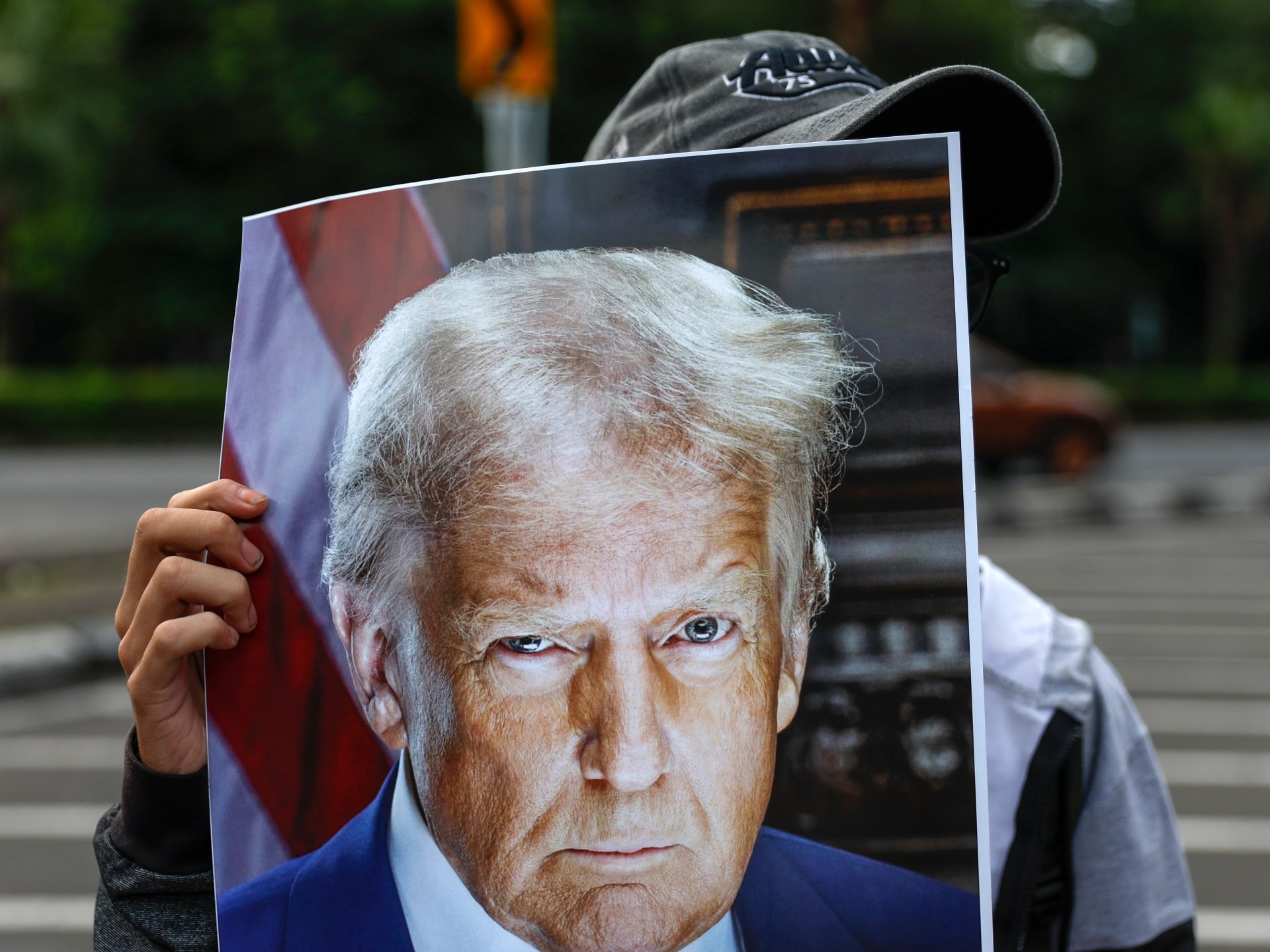
In June 2025, the United States had just struck Iranian nuclear sites, but rather than signal that the bombings were the opening salvo of a war between the US and Iran, President Donald Trump was quick to try to draw a line under the attack.

“Now is the time for peace,” was Trump’s message at the time.

Recommended Stories

list of 3 itemsend of list

Fast forward to the present day, and Trump is threatening an even bigger attack, and backing up the threat with a large-scale movement of US military assets, including an aircraft carrier, towards Iranian waters.

Trump says that these threats are his way of convincing the Iranians to agree to a deal – reported to include demands to effectively end Iran’s nuclear programme, limit its ballistic missile programme, and stop support for allies across the Middle East.

This is the Trump school of foreign policy: heavy on threats, and willingness to carry out calibrated and – at least initially – confined military action, designed to avoid US military entrenchment. At the same time, Trump says that he is not necessarily a supporter of regime change, but leaves the door open for it.

Trump actively cultivates an image that may – in a more disparaging way – be called the “madman theory” of foreign policy. Said to have originally been coined by former US President Richard Nixon in the late 1960s, the idea is for the enemy to question just how far you are willing to go, even if it seems irrational.

The US assassination of Iranian General Qassem Soleimani in 2020 was one of the major examples of Trump acting this way during his first term. The unexpected killing of a senior state official of another country risked direct war and went against the opinions of many foreign policy experts. And yet Trump saw it as an act of deterrence and strength, and felt vindicated once it became clear the Iranians would not respond in kind.

In his second term, Trump has doubled down on this style of foreign policy, most notably in the abduction of Venezuelan President Nicolas Maduro. It now serves to give added heft to his current threats towards Iran.

The tactic serves two separate instincts within Trump and those around him – a desire to appear to be different from the neoconservatives who took the US into the 2003 war and subsequent disastrous occupation of Iraq, while simultaneously weakening any force in the region deemed to be a threat to the US or its chief Middle Eastern ally, Israel.

In essence, Trump wants to use the threat of force – and the occasional attack – to get short-term “wins” that make US enemies weaker, while steering clear of any protracted engagements.

Can Trump be successful?

How long that can work for depends on the size of the goal. When limited concessions are acceptable to both the US and the adversary, Trump’s threats can potentially lead to results in his favour.

The US president’s current threat to “no longer help” Iraq if the pro-Iranian politician Nouri al-Maliki becomes prime minister is a case in point.

Trump may be imposing his will on Iraq, but it is a threat backed not by war, but by potential economic consequences, therefore reducing the sense that Iraqi sovereignty is under attack. It also leaves the door open to other politicians the US deems acceptable to be prime minister, including the man currently in the job, Mohammed Shia al-Sudani.

Al-Sudani is within the same wider Shia political alliance as al-Maliki, but is considered not to be as close to Iran and does not have the latter’s baggage. Keeping al-Sudani in power instead of al-Maliki, if that does indeed happen, is a relatively easy deal to make in return for avoiding any US economic wrath – and allows Trump to secure another “win”.

In Syria, US policy appears to be more focused on gradual withdrawal, because Trump feels like he has a partner in the group that he can work with in President Ahmed al-Sharaa. US policy in Syria is fixated on two goals: ensuring that ISIL (ISIS) does not strengthen, and guaranteeing no threat towards Israel from Syria.

At the same time, Trump has no qualms in abandoning the Kurdish-led Syrian Democratic Forces, a US ally now deemed surplus to requirements.

Instead, Gulf powers, led by Saudi Arabia, have said that they can vouch for the Syrian government and al-Sharaa, and for Trump, this is a way to largely wash his hands of at least one problem in a region he has long maintained is prone to endless wars.

Increasing complications

In Lebanon and Gaza, Trump has attempted to use the threat of military force to achieve two goals: an end to all-out war and for anti-US and anti-Israel forces to agree to disarm.

Trump’s policy goals in Lebanon and Gaza are less maximalist than in Iran, but achieving them will be more complex than the relatively moderate concessions demanded of Iraq.

In both Lebanon and Gaza, the US has stepped in after devastating Israeli wars and positioned itself as a peacemaker, despite backing Israel in both of the conflicts.

And yet peace is conditional on armed groups – Hezbollah in Lebanon and Hamas in Gaza – disarming completely. During the gradual negotiations in both instances, the US has presented itself as a restraining force on Israel, preventing a return to all-out war, but allowed Israel to carry out regular small-scale attacks that serve as reminders of what Israel and the US could carry out if their demands are not met.

But full disarmament is a bitter pill to swallow for both Hezbollah and Hamas.

In Syria, Hezbollah and its supporters would see this as accepting defeat in the fight against the US and Israel – a catastrophic blow for an organisation that sees itself as a resistance movement to those two powers.

Trump’s “Board of Peace“, the body established to oversee the administration of Gaza, is more palatable to Hamas to a point, but similarly, the full disarmament being demanded of the group will take away one of the central elements of its self-identity, even as Israel’s occupation of Palestinian land continues with no end in sight.

It is therefore likely that both Hezbollah and Hamas believe that agreeing to the demand to fully disarm is an existential matter, opening the door to a future breakdown of negotiations.

Long-term consequences

Iran’s past experience with Trump and perception of its own existential threat may test the limits of Trump’s approach to foreign policy.

Trump insists that he wants a deal, but the Iranian government is signalling that it simply does not believe him, based on what it believes to be his duplicitous previous attacks during negotiations, and his willingness to abduct foreign leaders as a means of projecting US power.

The Iranians appear to see few off-ramps, and based on their experience in the past year, now regard concessions as merely inviting further pressure.

The Islamic Republic – or at least elements within it – sees that its own survival is at stake. So now, for the US and Trump, it is the other side that may have nothing to lose. In these circumstances, can the “madman” foreign policy approach work?