Saint-Maximin leaves Club America after children face racist attacks

Allan Saint-Maximin’s brief stint ‌with Club America has come to an abrupt end just months after the French ‍winger arrived in ‍Mexico as the club announced his departure two days after he revealed his children had been targeted by racist attacks.

The 28-year-old former Newcastle United winger signed a two-year contract with the Liga MX club in August in a deal ⁠reportedly worth $10m but managed just 15 appearances before his sudden exit on Saturday.

Recommended Stories

list of 4 itemsend of list

Club America ​expressed solidarity with Saint-Maximin in announcing his departure although neither party disclosed ‍specific details about the incident that prompted his decision to leave.

“We reiterate our strong condemnation of any act of discrimination and/or violence that violates human dignity, both on and off the field,” the Mexico City club ‍said in a ⁠statement.

“We express our absolute solidarity with Allan Saint-Maximin and his family, who have the support of everyone who is part of this institution.

“Thank you so much for wearing our colours Allan Saint-Maximin.”

Saint-Maximin had taken to Instagram to address what he described as attacks on his children, making clear his determination to protect his family.

“The problem is not skin colour, it is the colour of thoughts. People ​attack me, but that’s not a problem. I grew up ‌learning to fight back against attacks, whether they are subtle, hidden or direct,” he wrote on Instagram.

“But there is one thing I will never tolerate, and that is people attacking my children. Protecting my children is ‌my priority. I will fight with all my strength to ensure that they are respected and loved, regardless of their origins ‌or skin colour.

“So, to those who dared to attack my ⁠children, I say this: you made a mistake. I will always fight to protect my family and no person or threat will ever scare me.”

America boss Andre Jardine said it was a “real shame” to lose a ‌player of Saint-Maximin’s calibre.

“He’s a great player who was doing well for the league and has the ability to play in any league in the world. It was a big ‍change for him, moving from Europe to Mexico,” Jardine said.

Khamenei warns US of ‘regional war’ if Iran is attacked

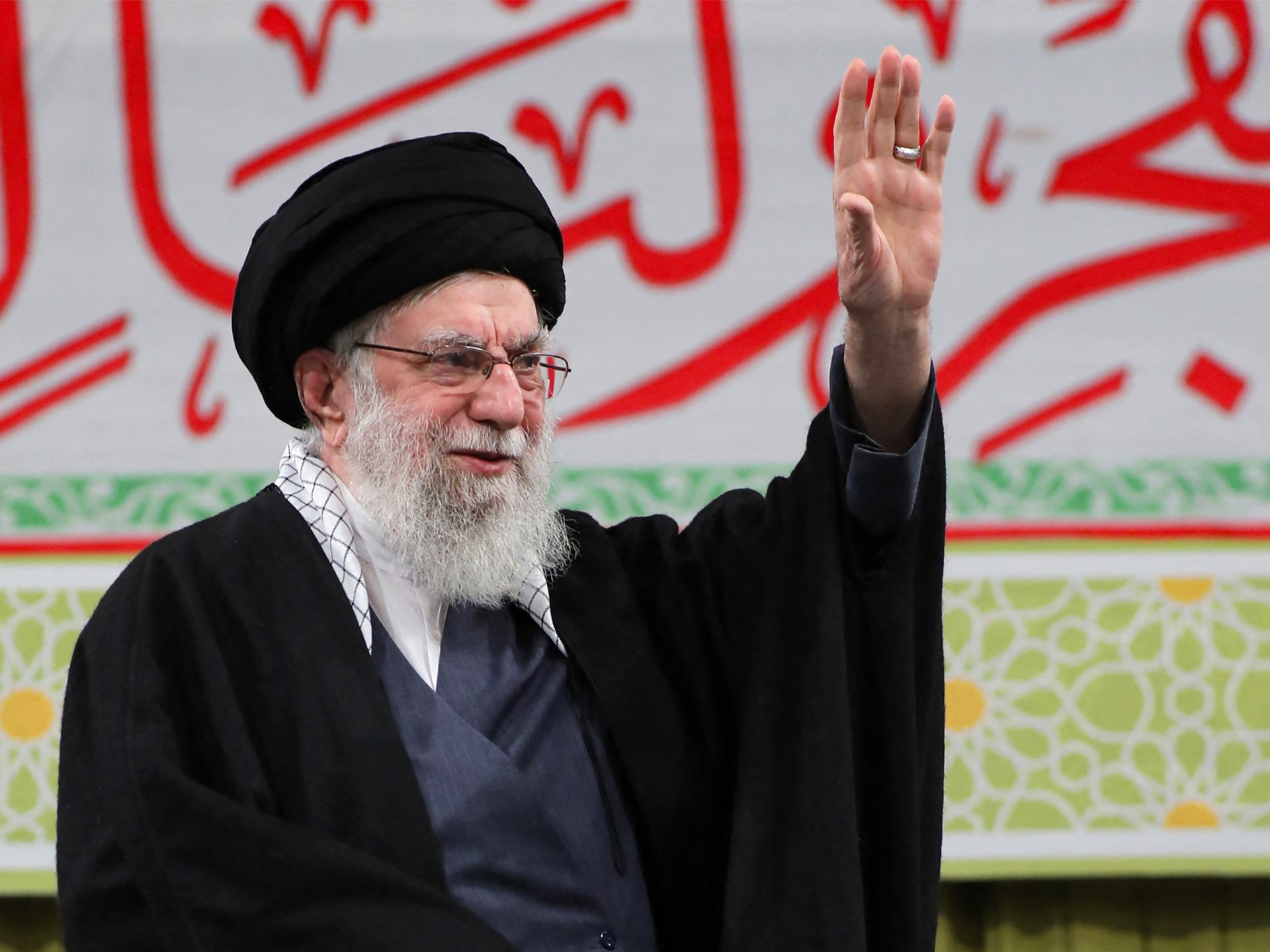
Iranian Supreme Leader Ali Khamenei has warned the United States that any attack on his country would result in a “regional war” as US President Donald Trump amasses military assets in the Middle East.

“They should know that if they start a war this time, it will be a regional war,” the 86-year-old supreme leader, who has held absolute power for about 37 years, said at an event in downtown Tehran on Sunday.

Recommended Stories

list of 4 itemsend of list

He was speaking on the anniversary of Ayatollah Ruhollah Khomeini’s return from exile in France to Iran in 1979, which led to the Iranian Revolution and the fleeing of Mohammad Reza Shah Pahlavi.

Khamenei’s comments came as the USS Abraham Lincoln aircraft carrier, jet fighters and navy destroyers neared the region after nationwide antigovernment protests in Iran, in which thousands of people were killed in January.

The protests, which started in late December over the collapse of the Iranian rial, later morphed into a direct challenge to Khamenei’s rule.

Iranian authorities maintain that the demonstrators were instigated and led by foreign agents.

“The recent sedition was similar to a coup. Of course, the coup was suppressed,” Khamenei said at the commemoration on Sunday.

“Their goal was to destroy sensitive and effective centres involved in running the country, and for this reason, they attacked the police, government centres, [Islamic Revolutionary Guard Corps] facilities, banks and mosques and burned copies of the Quran.”

Iranian state media said the protests killed 3,117 people, including 2,427 civilians and members of the security forces. US-based rights activists said more than 6,000 people were killed. Al Jazeera has not been able to independently verify the figures.

Since the nationwide upheaval, Trump has repeatedly threatened to attack the country.

The US president initially conditioned a US attack on Tehran’s behaviour towards demonstrators, but he later shifted his posture, saying he wanted Iran to agree to a nuclear deal.

In June, Iranian and American officials were engaged in indirect talks in Oman before Israel launched a 12-day war on Iran. The US also joined Israel and struck Iran’s nuclear facilities.

Khamenei maintained a defiant tone on Sunday, accusing the US of wanting to seize Iran’s resources, including oil and natural gas. “This is the main reason for their hostility, and the rest of their talk, like human rights, is empty talk,” he said.

Despite the rhetoric, both Iran and the US have confirmed that they have opened lines of communication to try to work out a deal to avoid a military confrontation.

On Saturday, Trump said Tehran was “seriously talking” with Washington, hours after the head of Iran’s Supreme National Security Council, Ali Larijani, said Tehran was prepared for talks with the US.

Trump, speaking on board Air Force One, said he believed Iran should agree to a deal with “no nuclear weapons”, adding, however, that he did not know whether Tehran would sign up to such an accord.

How Western officials, media coverage pushed to discredit Gaza death toll

In the first 18 days of Israel’s genocidal war on the Gaza Strip, the Israeli military killed more than 7,000 Palestinians, including nearly 3,000 children, despite growing calls from around the world for a ceasefire.

But in the United States, Israel’s top ally, then-President Joe Biden cast doubt over the suffering and death count of Palestinians, as provided by the Ministry of Health in Gaza, to push back against calls for ending the brutal Israeli assault.

Recommended Stories

list of 3 itemsend of list

“What they say to me is I have no notion that the Palestinians are telling the truth about how many people are killed. I’m sure innocents have been killed, and it’s the price of waging a war,” Biden said in October 2023.

“But I have no confidence in the number that the Palestinians are using,” he said.

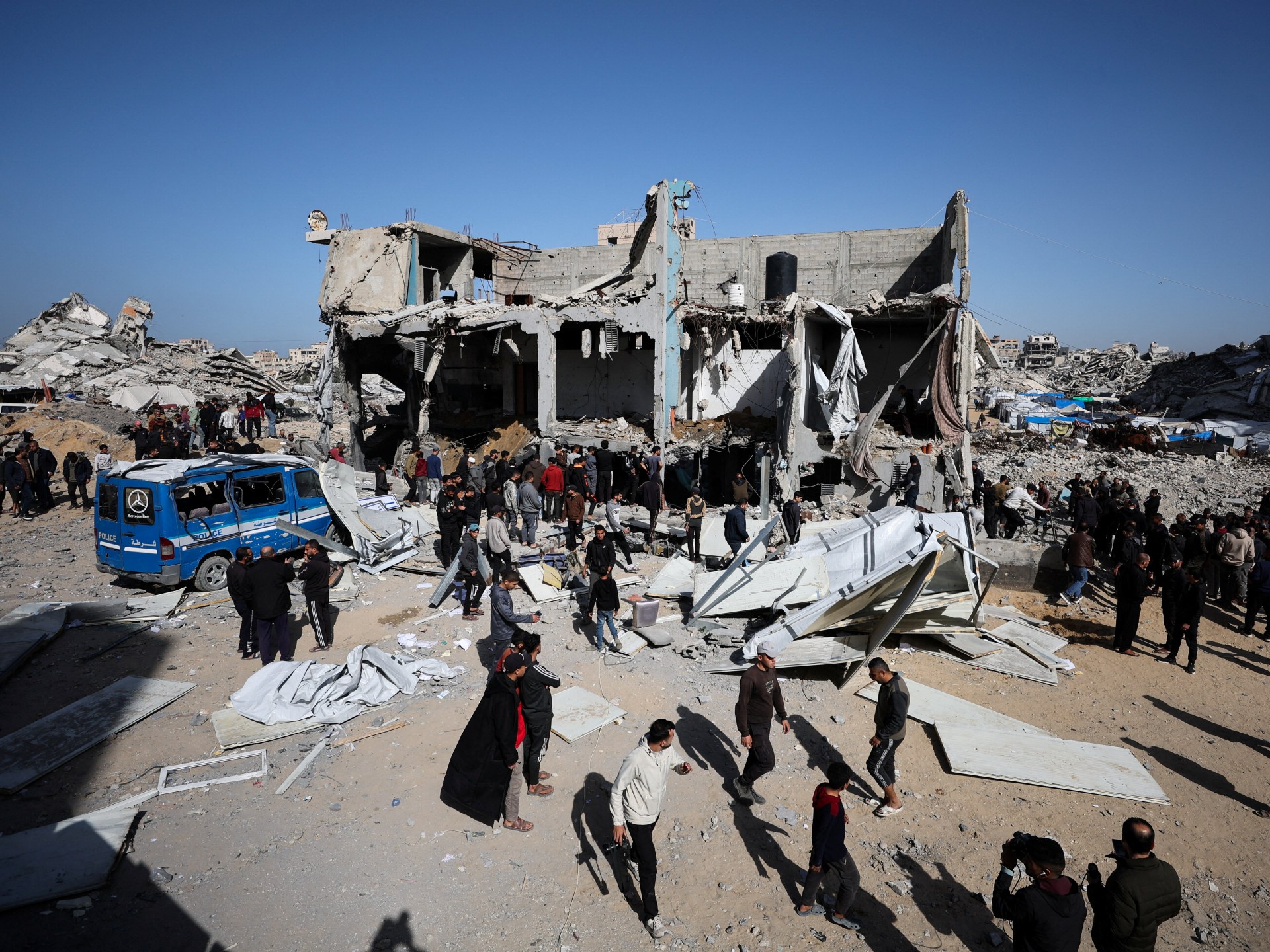
More than two years later, as the Palestinian death toll grew tenfold, the Israeli military acknowledged that it killed more than 70,000 Palestinians, confirming the Health Ministry’s data.

Rights advocates say Western officials and media outlets helped the Israeli denial of the scope of atrocities in Gaza, contributing to the dehumanisation of Palestinians.

Abed Ayoub, executive director at the American-Arab Anti-Discrimination Committee (ADC), said the US government attempted to “gaslight” the world and discredit the Health Ministry numbers.

“This government played a role in that, and the Biden administration played a role in that,” he told Al Jazeera.

“They laid the groundwork for the Israeli officials to do the same thing. But ultimately, at the end, you cannot keep lying about what the world has been watching and witnessing with our own eyes,” Ayoub said.

The death toll

Several Israeli media outlets quoted senior military officials last week as saying they accept that the death toll in Gaza is about 70,000.

The Israeli government later tried to walk back that acknowledgement, saying the “details published do not reflect official [military] data”.

As of Sunday, the Palestinian Health Ministry put the death toll since October 7, 2023, at 71,769, including 506 people who were killed after the United States-brokered “ceasefire” came into effect in October last year.

Humanitarian agencies and United Nations officials have repeatedly said the tally presented by health officials in Gaza is accurate.

But some experts say the true death toll – which includes thousands of missing people, unreported deaths and fatalities linked to the Israeli blockade and destruction of the health system – is far higher than reported.

Last year, a study published in The Lancet medical journal estimated that deaths in Gaza are under-reported by 41 percent.

Still, Israel’s supporters in the US and the West have pushed to portray Palestinians as unreliable sources to report on their own suffering, casting doubt over the death toll in Gaza.

In 2024, the US House of Representatives passed a bipartisan bill to ban the Department of State from citing death statistics from the Health Ministry in Gaza.

Pro-Israel commentators, politicians and advocacy groups have argued for more than two years that the Palestinian data should not be trusted.

Hatem Abudayyeh, chair of the US Palestinian Community Network (USPCN), said the world should believe Palestinians when they expose Israeli atrocities in Gaza and beyond.

“It’s time for US and other Western press to do their jobs, to challenge the US and Israeli Zionist narrative, and to print the truth about the genocide, the continued violations of the ‘ceasefire’, and all of Israel’s and the US’s crimes against humanity,” Abudayyeh told Al Jazeera.

‘Hamas-run’ Health Ministry

Throughout the war, many Western media outlets – including most prominently the BBC, AFP, Fox News and CNN – have prefaced any reference to the Health Ministry in Gaza as “Hamas-run” – an editorial policy that critics say attempted to demean Palestinians and dismiss their deaths.

At times, CNN inserted an additional disclaimer in its stories about Gaza, saying it “cannot independently verify the ministry’s figures”.

The New York Times has also previously referred to the Health Ministry as “Hamas-controlled”.

While the Health Ministry is part of the governing structure in Gaza, which was controlled by Hamas, it has been run by public health professionals, and there is no evidence that the Palestinian group interferes in its operations or statistics.

Ironically, even in reporting the Israeli acknowledgement of the Health Ministry’s data, the BBC’s headline on Friday read: “Israeli media cite official accepting Hamas figure of 70,000 war dead”.

The BBC did not respond to Al Jazeera’s request for comment by the time of publication.

Ayoub said many mainstream media outlets unquestionably published Israeli propaganda over the past two years while raising doubt over Palestinian accounts.

UK PM Starmer urges ex-Prince Andrew to cooperate in Epstein files probe

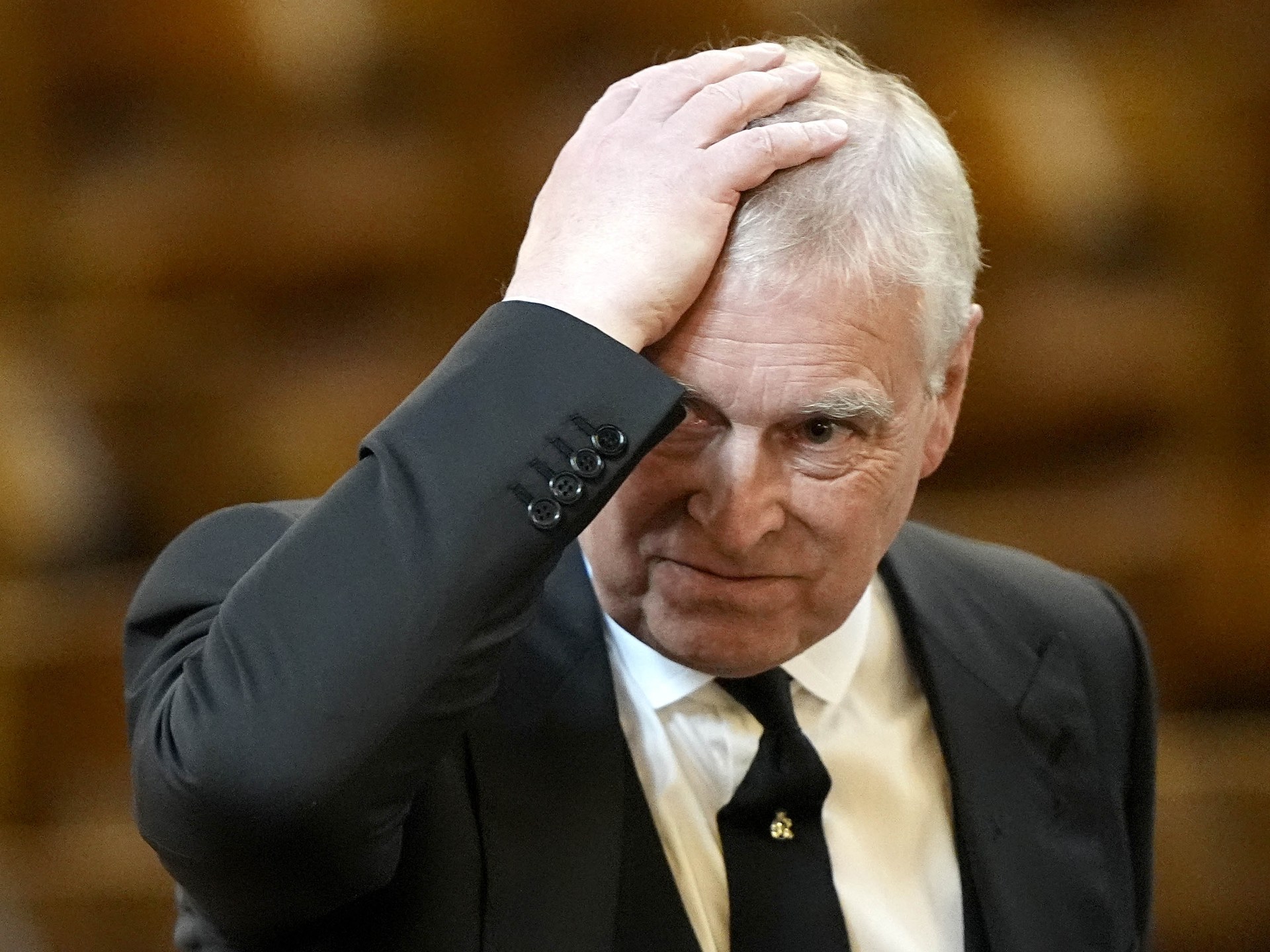
The United Kingdom’s Prime Minister Keir Starmer has suggested that Andrew Mountbatten-Windsor, a former prince, should cooperate with authorities in the United States investigating the Jeffrey Epstein files and activities.

Speaking on Saturday to reporters at the end of a visit to Japan, Starmer said, “Anybody who has got information should be prepared to share that information in whatever form they are asked to do that.”

Recommended Stories

list of 4 itemsend of list

“You can’t be victim-centred if you’re not prepared to do that,” he added, according to remarks carried by Sky News. “Epstein’s victims have to be the first priority.”

Asked whether Mountbatten-Windsor, the younger brother of King Charles III, should issue an apology, Starmer said the matter was “for Andrew” to decide.

His comments came as the US Justice Department said it would be releasing more than three million pages of documents along with more than 2,000 videos and 180,000 images under a law intended to reveal most of the material it had collected during two decades of investigations involving the wealthy financier, who died in a New York jail in 2019 while awaiting trial on sex trafficking charges.

The disclosures have revived questions about whether the former British prince, who was stripped of his title last year over his friendship with Epstein, should cooperate with the US authorities in their investigation.

Mountbatten-Windsor – who has long denied any wrongdoing in relation to Epstein – has so far ignored a request from members of the US House Oversight Committee for a “transcribed interview” about his “longstanding friendship” with the billionaire.

The files have also prompted the resignation of Slovak official Miroslav Lajcak, who once had a yearlong term as president of the United Nations General Assembly.

Lajcak was not accused of wrongdoing but left his position after emails showed that Epstein had invited him to dinner and other meetings in 2018.

The newly released files also show Epstein’s email correspondence with Steve Bannon, one-time adviser to US President Donald Trump; New York Giants co-owner Steve Tisch and other prominent contacts in political, business and philanthropic circles, such as billionaires Bill Gates and Elon Musk.

The files show a March 2018 email from Epstein’s office to former Obama White House general counsel Kathy Ruemmler, inviting her to a get-together with Epstein, Lajcak and Bannon. Lajcak said his contacts with Epstein were part of his diplomatic duties.

Meanwhile, the US Department of Justice is facing criticism over how it handled the latest disclosure.

One group of Epstein accusers said in a statement that the new documents made it too easy to identify those he abused, but not those who might have been involved in Epstein’s criminal activity.

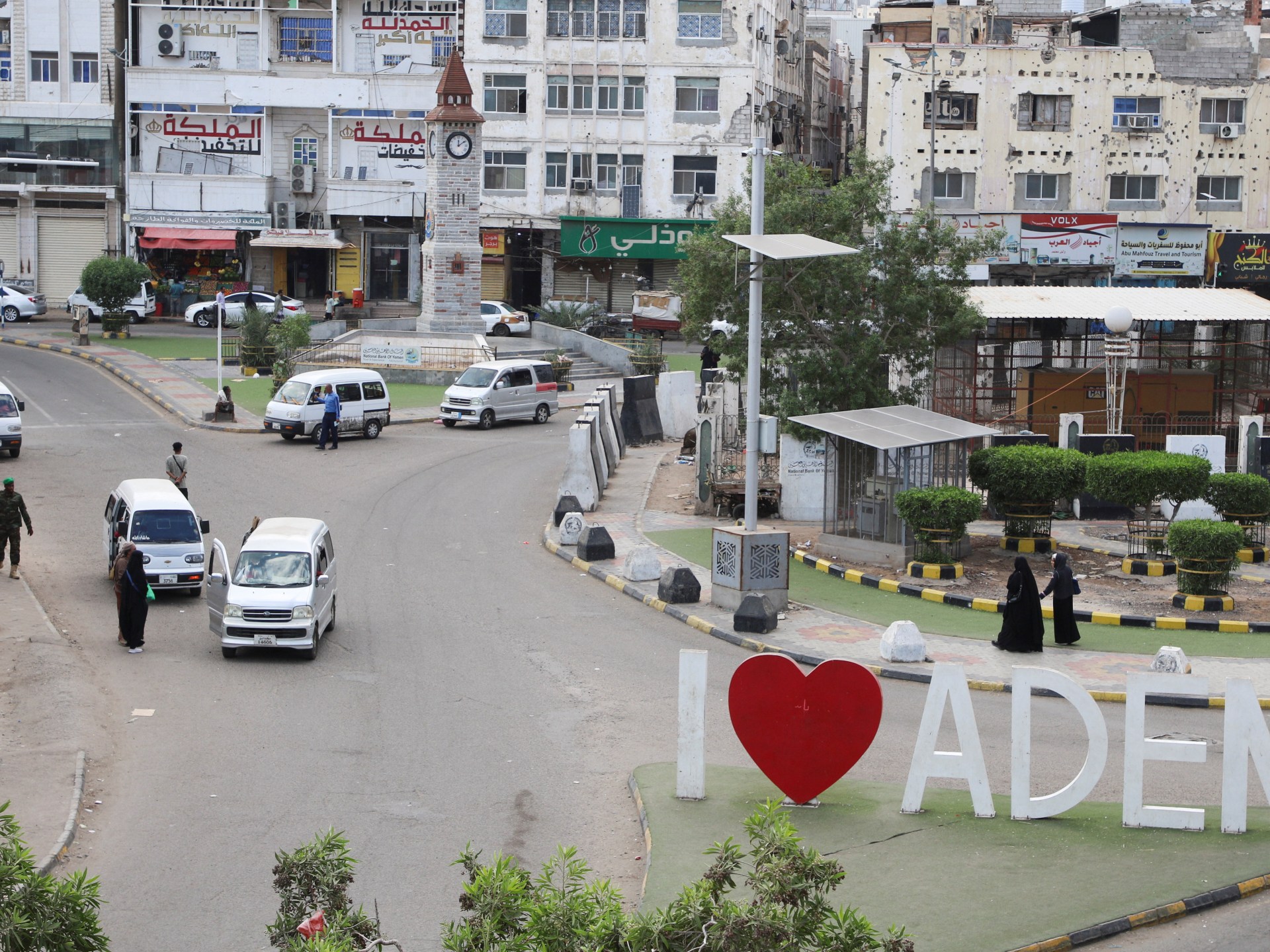
Hope flickers as lights return to war-scarred Aden

The lights are on in Aden – at least for most of the day.

The apparently mundane detail is a huge difference for people in the southern Yemeni port city, which for years has suffered from extensive electricity blackouts, and a sign that something has changed.

It was noticeable enough for Saleh Taher, who lives in the Yemeni capital, Sanaa, to comment on after making a recent visit to Aden.

Taher was unsure of what he would find on his trip to Aden, arriving on January 25, just weeks after Yemen’s government re-established its presence in the city.

The 32-year-old wondered if the streets would be tense so soon after the fall of the secessionist Southern Transitional Council (STC).

The STC controlled the city and much of southern Yemen until a Saudi Arabian-backed government offensive forced them back in early January.

But as time passed, Taher’s anxiety faded. The streets of Aden appeared normal, and people were going about their jobs as usual.

And then there was the electricity. In a country that has now officially been at war for longer than a decade with multiple groups vying for territory, a utility that is taken for granted in much of the world is a sign of hope.

The sudden availability of electricity is partly the result of a multimillion-dollar fuel grant provided by Saudi Arabia to supply power stations. Observers consider it to be an effort to show that the presence of Yemen’s internationally recognised government can improve people’s lives.

Badea Sultan, an Aden-based independent journalist, told Al Jazeera that the “positive change” in services in Aden is palpable for residents and the city has entered a completely new stage.

Citing electricity as a key example, he said, “Power supply has largely stabilised. Today, we enjoy approximately 20 hours of continuous, uninterrupted service per day. This was a distant dream just two months ago.”

Sultan said the ongoing progress in Aden cannot be attributed solely to the United Nations-recognised government. He highlighted the role of Falah al-Shahrani, who arrived in Aden early this year as part of a high-level delegation from the Joint Forces Command of the Coalition to Support Legitimacy in Yemen to follow up on security and military arrangements in the wake of the STC’s military collapse.

An adviser to the commander of the forces, al-Shahrani has worked with local and military leaders to reposition military camps outside Aden and has played a critical role in managing what Sultan described as a sensitive phase in the city.

“Al-Shahrani is effectively the de facto ruler of Aden now,” Sultan added.

Saudi-UAE tensions

In late December, tensions between Saudi Arabia and the United Arab Emirates over Yemen surfaced publicly, prompting Riyadh to adopt a sharper narrative and launch military operations aimed at pushing back the UAE-backed STC, which had crossed a Saudi red line by trying to take control of eastern Yemeni regions that bordered Saudi Arabia.

On December 30, the UAE announced its withdrawal from Yemen “of its own volition” after the Yemeni government demanded it do so. The UAE has been arming and funding the STC since its establishment in 2017.

At a news conference in Warsaw on Monday, Saudi Foreign Minister Faisal bin Farhan said, “The UAE has now decided to leave Yemen, and I think if that indeed is the case and the UAE has completely left the issue of Yemen, the Kingdom of Saudi Arabia will take responsibility.”

Some STC leaders travelled to Riyadh after the Saudi attacks on the STC and announced the dissolution of the group. But other STC leaders have rejected that statement and continue to try to rally support on the ground in southern Yemen.

Mass demoralisation

Saleh Qasim, a 45-year-old resident of Aden’s Sheikh Othman district, told Al Jazeera that “the Saudi era” has begun in Aden.

“Aden is recovering today, and that could be the path to Yemen’s recovery,” he said.

But he added that while the early signs are promising, it is still a bleak time for pro-independence southerners like himself.

The STC and its supporters want the restoration of the former South Yemen, an independent state that existed from 1967 to 1990 before uniting with North Yemen to form the united Republic of Yemen.

Supporters of secession feel that the south was disenfranchised in the united Yemen. They took their opportunity after the Houthi takeover of Sanaa and northwestern Yemen in 2014 and 2015, taking de facto control over Aden and other parts of southern Yemen.

It had finally seemed like the dream of an independent state was on the horizon, particularly with the backing of the UAE. But then came the Saudi-backed counterattack by the Yemeni government, and now, in the space of weeks, the dream of secession has been shattered, in the short term at least.

“This is the most frustrating moment for the secessionists,” Qasim said. “They have lost land, weapons and fighters. I can see the mass demoralisation among the independence seekers in Aden.”

He added: “I also aspire to see the south independent but through dialogue, not force.”

The STC has been trying to showcase its support in Aden with rallies every Friday that are attended by thousands of people in al-Aroudh Square.

There, the protesters raise the southern flag and the image of the STC’s on-the-run leader, Aidarous al-Zubaidi. They also chant for independence, pledge to continue their struggle and voice their anger at the Saudi role. However, Sultan, the journalist, views these mass rallies as an emotional outlet for STC supporters that ultimately will not be able to restore the group’s lost leverage.

Sultan believes that local authorities are turning a blind eye to the demonstrations as a way of allowing STC supporters to blow off some steam.

“In my opinion, there is a deliberate effort to allow separatist demonstrators to vent their frustrations regarding recent developments, which have been quite shocking to them,” Sultan said.

Three challenges

On January 15, President Rashad al-Alimi, the head of the Presidential Leadership Council, Yemen’s UN-recognised authority, appointed Foreign Minister Shaya Mohsin al-Zindani as the ⁠country’s prime minister.

Consultations on the selection of cabinet members have been under way in Riyadh. Once finalised, the cabinet is expected to return to Aden to govern – a major move that would signal that the government is truly in control of the city for the first time in years.

However, challenges lie ahead as “the internal and external architects of chaos” have not abandoned their agenda in the south, Yemeni political analyst Sadam al-Huraibi told Al Jazeera, referring to the UAE and armed separatists.

Al-Huraibi identified three challenges that the new cabinet will potentially face in Aden. “One major threat is the terrorist or politically motivated bombings in Aden, which could quickly turn the city into a place of mourning.”

On January 21, an explosives-laden car detonated as a pro-government military commander’s convoy was moving in Aden. Five soldiers were killed, and three were wounded. No party has claimed responsibility for the attack.

“The other challenge is the risk of planned riots. Protesters may exploit the right to assembly and turn to violence in Aden. Such incidents can erupt sporadically and rob the city’s calm, affecting the government’s ability to function,” al-Huraibi said.

Al-Huraibi added that the third challenge is the UAE’s alleged covert coordination with separatists in southern cities to undermine Saudi Arabia and the Yemeni government. “The UAE said it withdrew from Yemen, but there is no guarantee it will be completely disengaged,” he said.

Shifting the focus to the north

Yemeni officials today believe that a stable Aden and Saudi support are decisive success factors for shifting the focus to the north, where the Houthis have dominated for a decade.

Deputy Foreign Minister Mustafa Noman said in a recent interview that Saudi Arabia “has committed to pay the salaries of all the national army and the brigades, … the salaries of the government staff, including the diplomats”.

“And this is the first step,” he said. “First, we have to secure the capital in Aden, and then when the capital is stable and the services are functioning to a certain extent, the government starts operating from Aden.”

With the unified political and military bloc in the south, he said, the focus must shift to the peace process and confronting the Iran-backed Houthis.

Noman believes the Houthis are not ready for a peace process but they will change their minds when they see the new government operating in Aden and playing a governing role in the south.

For their part, the Houthis have downplayed the importance of the recent Saudi moves in the south, arguing that Saudi Arabia puts its interests first, not Yemen’s.

In a speech broadcast on January 23, Abdul Malik al-Houthi, the head of the Houthi movement, said: “The Saudi – even at this stage – is not concerned with either unity or separation [in Yemen]. What concerns him is complete control, occupation and domination over the Yemeni people.”

The Houthis took control of Sanaa in 2014 and then toppled the Yemeni government in Sanaa in 2015, sparking a conflict that remains unresolved to date. They have been able to continue in power despite years of Saudi-led coalition air strikes, followed by air attacks since 2023 by the United States, the United Kingdom and Israel.

Mohammed, a Houthi field commander, told Al Jazeera that he does not see a difference between the UAE and Saudi Arabia in Aden.