Trump orders federal agents to stay away from protests in Democrat cities

‍United States President Donald Trump has ordered the ‍Department of Homeland ⁠Security (DHS) to avoid getting involved ​in protests in Democrat-run cities unless they ask for federal help.

The announcement on Saturday followed weeks of protests sparked by a large deployment of Border Patrol and US Immigration and Customs Enforcement (ICE) agents ​to the city of Minneapolis, and the killing of two US citizens by federal agents there.

Recommended Stories

list of 4 itemsend of list

Trump, a Republican, said on his Truth Social platform that he has instructed DHS Secretary Kristi Noem that “under no circumstances are we going to participate” in Democrat-run cities with regard to protests “unless, and until, they ask us for help”.

But ICE and Border Patrol will act aggressively to protect federal buildings, he wrote.

“There will be no spitting in the faces of our Officers, there will be no punching or kicking the headlights of our cars, and there will be no rock or brick throwing at our vehicles, or at our Patriot Warriors. If there is, those people will suffer an equal, or more, consequence,” he said.

“We will not allow our Courthouses, Federal Buildings, or anything else under our protection, to be damaged in any way, shape, or form,” he added.

There was no immediate comment from the DHS or the office of Minnesota Mayor Jacob Frey.

Trump launched the immigration crackdowns last year, targeting Democrat-led states and cities, including Chicago, Los Angeles and Portland, saying the militarised operations were necessary to remove criminals from the US.

The crackdown in Minneapolis, the biggest city in the state of Minnesota, is the largest federal immigration enforcement operation ever carried out, according to federal officials, with some 3,000 agents deployed. The operation began in November, with officials tying it in part to allegations of fraud involving residents of Somali origin.

The surge has pitted city and state officials against the federal government, prompted daily clashes between activists and immigration officers, and led to the killings of Alex Pretti on January 14 and Renee Good on January 7 by federal agents, who said they were reacting to threats. Bystander videos and witness accounts contradict those claims, however.

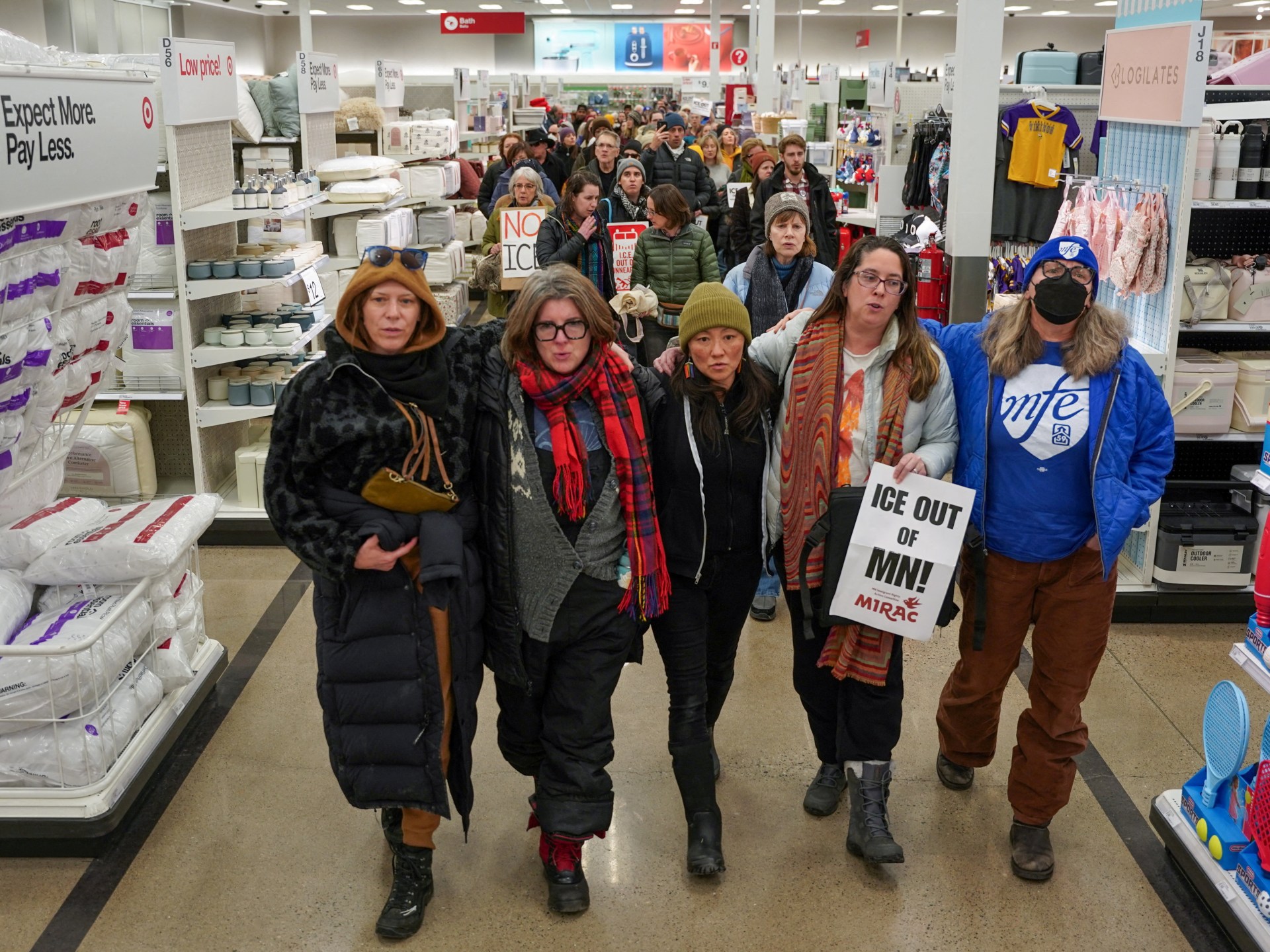
Thousands of people took to the streets of Minneapolis and other US cities on Friday to demand the withdrawal of federal immigration agents from Minnesota.

Minnesota Attorney General Keith Ellison and others also challenged the immigration enforcement surge in the state, arguing that DHS is violating constitutional protections.

But a federal judge has said she will not halt enforcement operations as the lawsuit proceeds. Department of Justice lawyers have called the lawsuit “legally frivolous”.

Al Jazeera’s Manuel Rapalo, reporting from Minnesota, said Trump’s latest announcement signals a softer tone from the White House on the immigration crackdown.

He noted that it followed the Trump administration’s decision to replace the senior Border Patrol commander, Greg Bovino, who had been leading the crackdown in Minneapolis, with border tsar Tom Homan.

The top official said on Thursday that federal agents would focus on targeted operations in Minneapolis, shifting away from broad street sweeps that have drawn outrage, and that he would reduce the number of agents deployed to the city if he received “cooperation” from state and local leaders.

“All of this signals more cooperation between local authorities and federal officials, which has created a little bit of a sense of optimism here in the city that tensions may be beginning to calm down,” said Rapalo.
How much control will the US have over Venezuela’s oil?

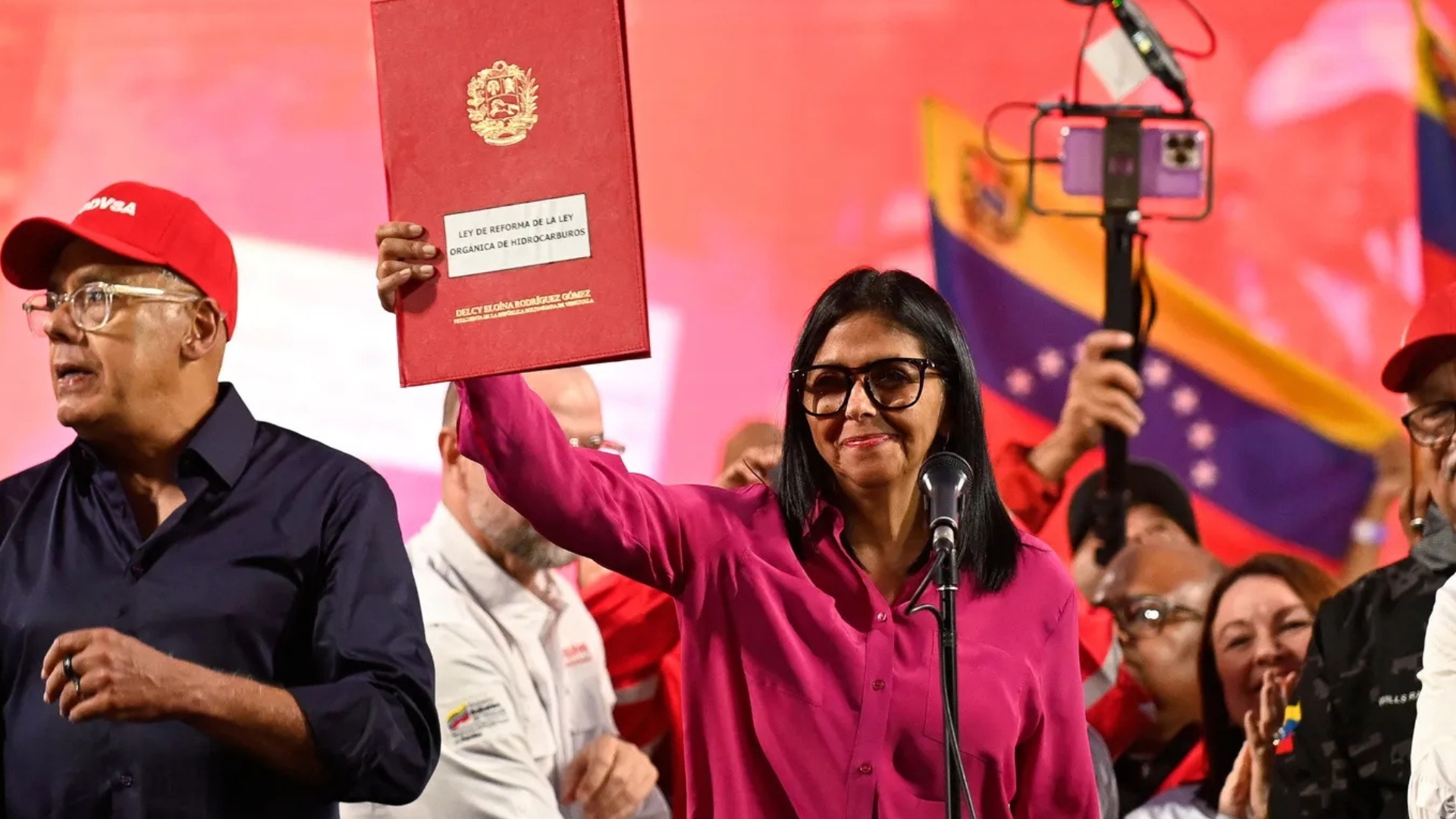
Caracas says it is opening up the sector to private players.

It all started with a direct US attack on Venezuela earlier this month.

Back then, US President Donald Trump made it clear that he was only interested in the country’s substantial oil reserves.

On Thursday, the government in Caracas announced a massive overhaul of the petroleum sector.

Venezuela’s interim president has signed a law easing state control and opening the door for private firms to invest in the country.

For many, it paves the way for US oil giants to return to Venezuela with significant investments.

But who will stand to gain from the changes, Venezuela or the United States? Or both?

Presenter: Adrian Finighan

Guests

Elias Ferrer – founder and director of Orinoco Research

Andrew Lipow – president of Lipow Oil Associates

Iranian official says progress made on talks as US-Iran tensions persist

Iran’s top security official has said progress is being made towards negotiations with the United States, even as the Iranian foreign minister again accused Washington of raising tensions between the two countries.

Ali Larijani, the head of Iran’s Supreme National Security Council, said in a social media post on Saturday that, “unlike the artificial media war atmosphere, the formation of a structure for negotiations is progressing”.

Recommended Stories

list of 3 itemsend of list

Larijani’s post did not provide further details about the purported framework for talks.

Tensions have been rising between Iran and the US for weeks amid US President Donald Trump’s repeated threats to attack the country over a crackdown on recent antigovernment protests, and his push to curtail the Iranian nuclear programme.

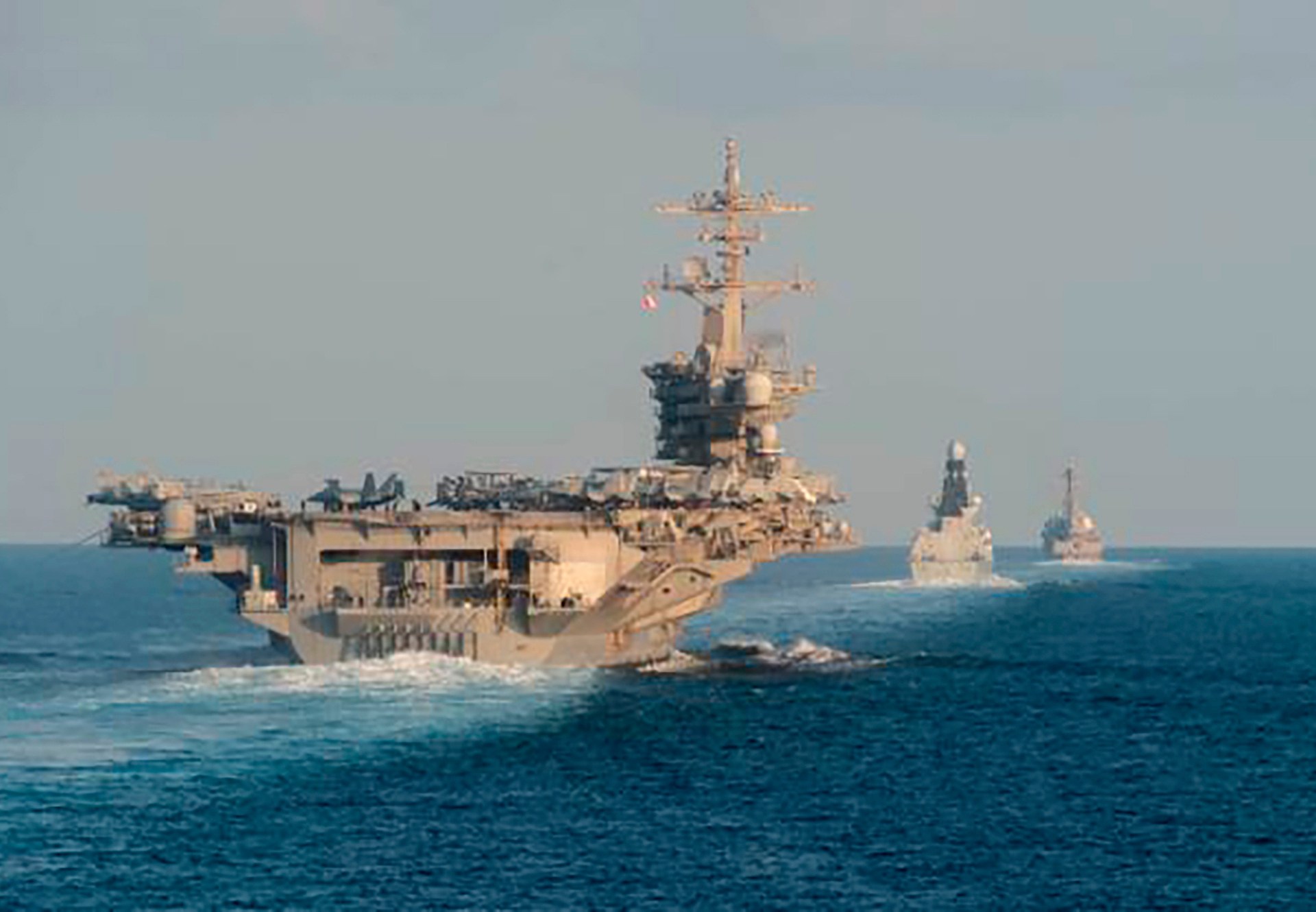
The Trump administration has also deployed a naval “armada” to Iran, led by the USS Abraham Lincoln aircraft carrier, escalating fears of a possible military confrontation.

Senior Iranian leaders have said they are open to negotiations with Washington, but only once Trump stops threatening to attack the country.

Earlier this week, Trump said the US vessels being sent to Iran were ready to use “violence, if necessary” if Iran refused to sit down for talks on its nuclear programme.

US Central Command (CENTCOM) also warned Iran’s Islamic Revolutionary Guard Corps (IRGC) on Friday over its plans to hold a two-day naval exercise in the Strait of Hormuz, a Gulf maritime passage that is critical to global trade.

“Any unsafe and unprofessional behavior near US forces, regional partners or commercial vessels increases risks of collision, escalation, and destabilization,” CENTCOM said in a statement.

Iranian Minister of Foreign Affairs Abbas Araghchi hit back on Saturday, saying in a social media post that the US military, operating off Iran’s shores, “is now attempting to dictate how our Powerful Armed Forces should conduct target practice on their own turf”.

“CENTCOM is also requesting ‘professionalism’ from a national military the U.S. Government has listed as a ‘terrorist organization’, all while recognizing the right of that same ‘terrorist organization’ to conduct military drills!” Araghchi wrote.

The US designated the IRGC, an elite branch of the Iranian military, as a “terrorist” organisation in 2019, during Trump’s first term in office.

Araghchi added, “The presence of outside forces in our region has always caused the exact opposite of what is declared: promoting escalation instead of de-escalation”.

Reporting from the Iranian capital, Tehran, Al Jazeera’s Tohid Asadi said the situation remains “quite fragile and delicate” amid the US military buildup in the region.

Still, he said that Saturday’s statement by Larijani, the Iranian security official, about progress being made on efforts to hold negotiations was a “positive” sign.

“Diplomatic [efforts] are [on]going,” Asadi said, noting that senior Iranian officials have held talks with allies in recent days amid a push to prevent a confrontation between Washington and Tehran.

The Qatari Ministry of Foreign Affairs said Prime Minister Sheikh Mohammed bin Abdulrahman bin Jassim Al Thani met with Larajani in Tehran on Saturday to discuss “efforts to de-escalate tensions in the region”.

Sheikh Mohammed reiterated Qatar’s “support for all efforts aimed at reducing tensions and achieving peaceful solutions that enhance security and stability in the region”, the ministry said of the talks in a statement.

Iraq Shia bloc reiterates support for al-Maliki despite Trump’s threats

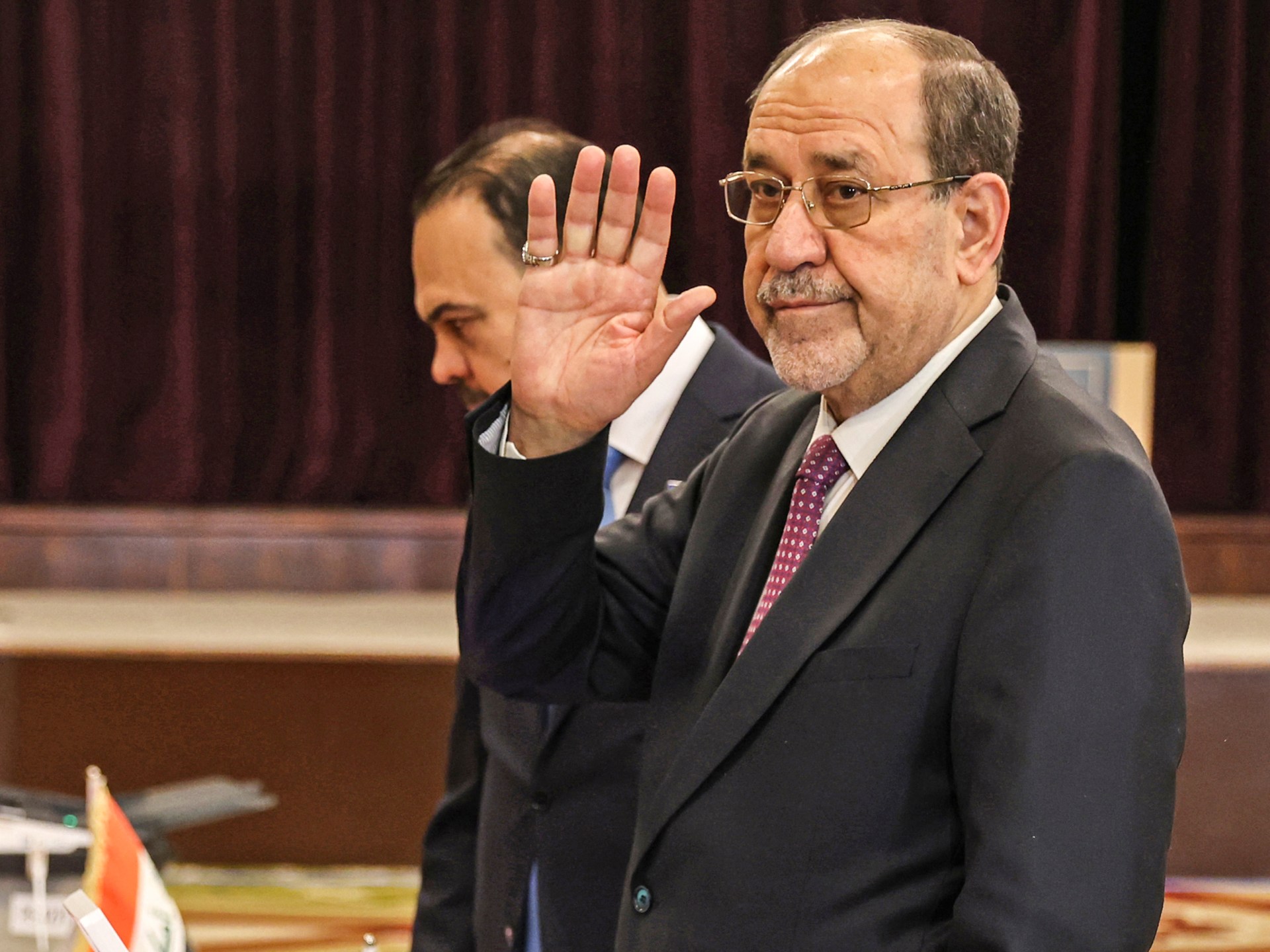
Iraq’s main Shia alliance, which holds a parliamentary majority, has reiterated its support for reinstating Nouri al-Maliki as prime minister, despite United States President Donald Trump threatening to end US support to the country.

The Coordination Framework said in a statement on Saturday that it “reiterates its support for its nominee, Nouri Kamel al-Maliki, for the premiership.”

Recommended Stories

list of 3 itemsend of list

“Choosing the prime minister is an exclusively Iraqi constitutional matter … free from foreign interference.”

Earlier this week, Trump warned Iraq that if al-Maliki were chosen as Iraq’s next prime minister, then Washington would withdraw support, the latest in a growing list of interventions in the politics of other nations made by Trump or members of his administration.

Al-Maliki rejected Trump’s threat on Wednesday in a post on X, condemning the “blatant American interference in Iraq’s internal affairs” and insisting that he would not withdraw his candidacy for the top job.

Trump has been running a campaign to curb the influence of Iran-linked groups in Iraq, which has long walked a tightrope between its two closest allies, Washington and Tehran.

Al-Maliki, 75, is a senior figure in the Shia Islamic Dawa Party. His tenure as prime minister from 2006 to 2014 was a period marked by a power struggle with Sunni and Kurdish rivals, accusations of corruption and growing tension with the US.

He stepped down after ISIL (ISIS) seized large parts of the country in 2014, but has remained an influential political player, leading the State of Law coalition and maintaining close ties with Iran-backed factions.

US judge declines to halt immigration surge in Minnesota amid protests

A judge in the United States has declined to order President Donald Trump’s administration to halt its immigration crackdown in Minnesota, amid mass protests over deadly shootings by federal agents in the US state.

US District Judge Kate Menendez on Saturday denied a preliminary injunction sought in a lawsuit filed this month by state Attorney General Keith Ellison and the mayors of Minneapolis and Saint Paul.

Recommended Stories

list of 3 itemsend of list

She said state authorities made a strong showing that immigration agents’ tactics, including shootings and evidence of racial profiling, were having “profound and even heartbreaking consequences on the State of Minnesota, the Twin Cities, and Minnesotans”.

But Menendez wrote in her ruling that, “ultimately, the Court finds that the balance of harms does not decisively favor an injunction”.

The lawsuit seeks to block or rein in a Department of Homeland Security (DHS) operation that sent thousands of immigration agents to the Minneapolis-Saint Paul area, sparking mass protests and leading to the killings of two US citizens by federal agents.

Tensions have soared since an Immigration and Customs Enforcement agent shot and killed Minneapolis mother Renee Nicole Good in her car on January 7.

Federal border agents also killed 37-year-old nurse Alex Pretti in the city on January 24, stoking more public anger and calls for accountability.

Tom Homan, Trump’s so-called “border czar”, told reporters earlier this week that the administration was working to make the immigration operation “safer, more efficient [and] by the book”.

But that has not stopped the demonstrations, with thousands of protesters taking to the streets of Minneapolis on Friday amid a nationwide strike to denounce the Trump administration’s crackdown.

Speaking to Al Jazeera from a memorial rally in Saint Paul on Saturday, city councillor Cheniqua Johnson said, “It feels more like the federal government is here to [lay] siege [to] Minnesota than to protect us.”

She said residents have said they are afraid to leave their homes to get groceries. “I’m receiving calls … from community members are struggling just to be able to do [everyday] things,” Johnson said.

“That’s why you’re seeing folks being willing to stand in Minnesota, in negative-degree weather, thousands of folks marching … in opposition to the injustice that we are seeing when law and order is not being upheld.”

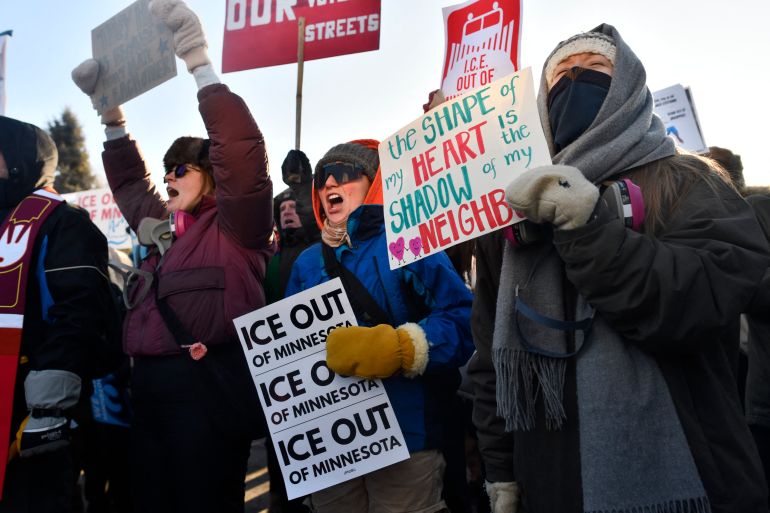
Protesters convene on the Bishop Whipple Federal Building to oppose ICE detentions almost week after Alex Pretti was killed by ICE agents in Minneapolis, Minnesota, on January 30, 2026.
Protesters rally to oppose ICE detentions, in Minneapolis, Minnesota, on January 30, 2026 [AFP]

Racial profiling accusations

In their lawsuit, Minnesota state and local officials have argued that the immigration crackdown amounts to retaliation after Washington’s initial attempts to withhold federal funding to try to force immigration cooperation failed.

They maintain that the surge has amounted to an unconstitutional drain on state and local resources, noting that schools and businesses have been shuttered in the wake of what local officials say are aggressive, poorly trained and armed federal officers.

Ellison, the Minnesota attorney general, also has accused federal agents of racially profiling citizens, unlawfully detaining lawful residents for hours, and stoking fear with their heavy-handed tactics.

The Trump administration has said its operation is aimed at enforcing federal immigration laws as part of the president’s push to carry out the largest deportation operation in US history.

On Saturday, Menendez, the district court judge, said she was not making a final judgement on the state’s overall case in her decision not to issue a temporary restraining order, something that would follow arguments in court.

She also made no determination on whether the immigration crackdown in Minnesota had broken the law.

US Attorney General Pam Bondi called the judge’s decision a “HUGE” win for the Department of Justice.

“Neither sanctuary policies nor meritless litigation will stop the Trump Administration from enforcing federal law in Minnesota,” she wrote on X.

Minneapolis Mayor Jacob Frey said he was disappointed by the ruling.

“This decision doesn’t change what people here have lived through — fear, disruption, and harm caused by a federal operation that never belonged in Minneapolis in the first place,” Frey said in a statement.

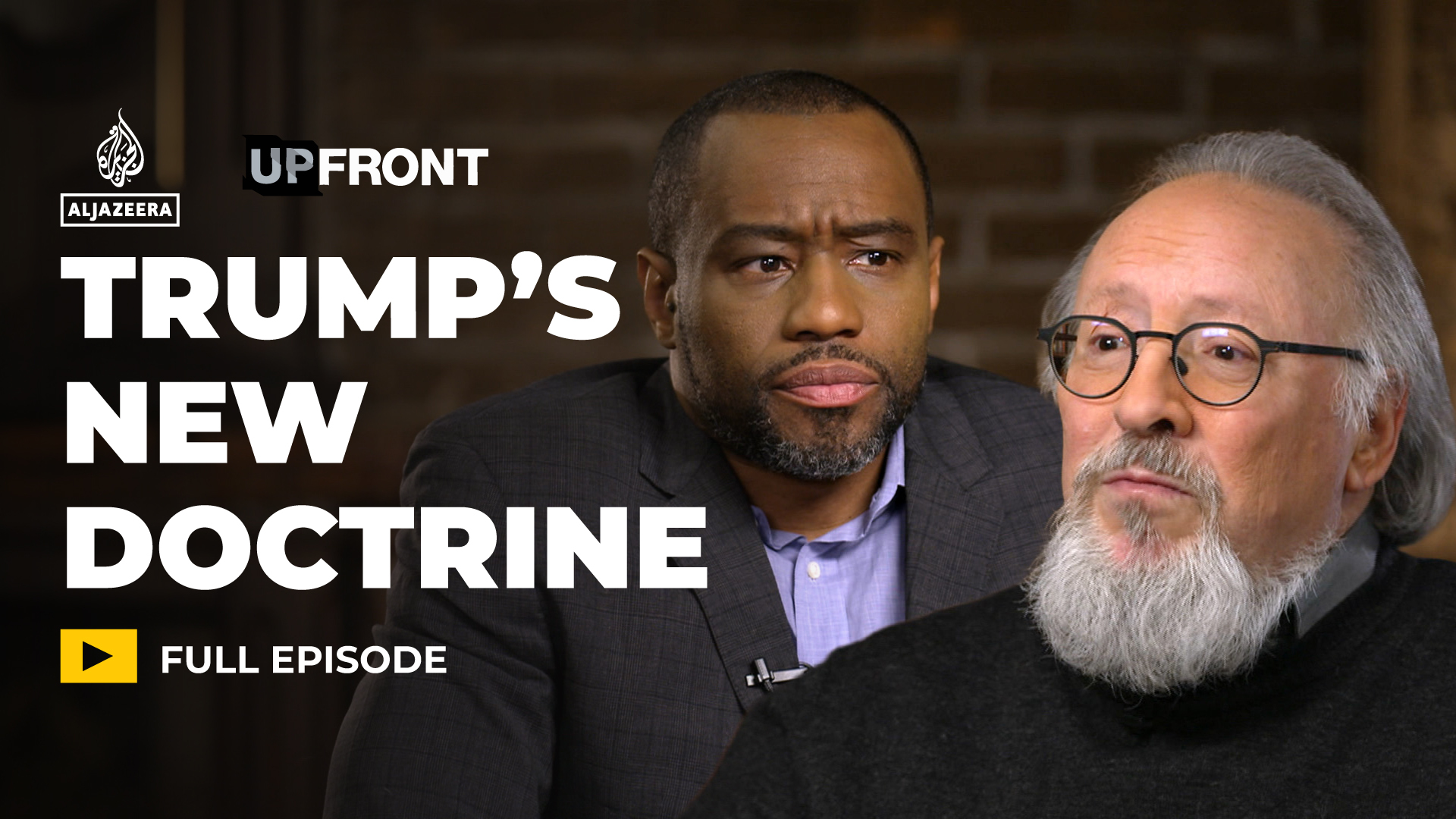
Peter Kornbluh: Is Trump pushing a new imperialism in Latin America?

Peter Kornbluh speaks to Marc Lamont Hill on Trump’s abduction of Venezuela’s president and the fallout for Latin America.

Following United States forces’ abduction of Venezuelan President Nicolas Maduro, a new set of questions is emerging as to how far Donald Trump is prepared to go in pushing US power abroad through direct intervention.

But is this a real break with past policy – or the latest iteration of the US’s longstanding interventionist power play in Latin America?

And with Cuba back in the administration’s sights, will Trump push for further action in the region?