Turkish foreign minister warns against escalation with Iran, explaining how Ankara sees the future of regional security.
Hakan Fidan on Iran and Turkiye’s role in global security

Turkish foreign minister warns against escalation with Iran, explaining how Ankara sees the future of regional security.

The United States could be careening toward another government shutdown, in which federal agencies are forced to close because Congress cannot pass legislation to fund them.
That was not always the case. At first, it seemed like Friday’s deadline to pass a new spending package would pass without much fuss.
list of 3 itemsend of list
But an impasse has emerged in the waning days before the deadline. The shift came amid public outrage at the latest shooting death resulting from President Donald Trump’s immigration enforcement drive.
In the days since immigration agents killed US citizen Alex Pretti in Minneapolis, Minnesota, on Saturday, Democrats have drawn a stark line.
They have pledged to approve no funding increases for the Department of Homeland Security (DHS), which oversees the agencies spearheading Trump’s deportation drive, unless it agrees to place guardrails on its use of force.
On Thursday, Tom Homan, the US border security chief, said immigration agents would shift their approach in Minnesota but vowed to maintain a continued presence in the state.
Lawmakers in the Senate now have until midnight Friday (05:00 GMT on Saturday) to find a solution. Here’s how we got here and what comes next:
Republicans will need to reach a 60-vote threshold in the 100-seat Senate to pass the funding legislation. They currently control 53 seats, meaning they will need the support of at least seven members of the Democratic caucus.
All told, the legislation includes six separate bills to fund the Department of Defense, the Department of Labor, the Department of Health and Human Services, the Department of Education, the Department of Transportation, the Department of Housing and Urban Development, the Department of the Treasury, and most notably, DHS.
The bills are all linked in a sprawling $1.2 trillion package passed by the US House of Representatives last week. Without the funding, non-essential services in those departments would grind to a halt.
Any changes to the House-approved package — including voting separately on DHS funding — would require overcoming lengthy procedural hurdles in the Senate.
Then, the legislation would have to return to the House of Representatives for a new vote.
The House is currently in the middle of a weeklong recess, and House Speaker Mike Johnson, a Republican, is unlikely to call his chamber’s representatives back to Washington for a second vote.
Compared with last year, the new spending package would add $400m more to the detention budget for Immigration and Customs Enforcement (ICE) and $370m more for its enforcement budget.
That is on top of a $170bn windfall for DHS included in last year’s sprawling tax-and-spending law, known as the “One Big Beautiful Bill Act.” It earmarked about $75bn for ICE over the next four years.
Rights advocates have condemned the current funding bill for providing yet more funding to ICE, the agency at the heart of Trump’s deportation drive.
Just this month, ICE has been connected to two high-profile shooting deaths in Minneapolis: Pretti’s killing on Saturday and the shooting of Renee Nicole Good on January 7. Both were US citizens.
Still, a handful of Democrats have broken with their party to vote for the spending package. On January 22, seven Democrats backed the funding legislation, while 206 opposed it.
The vote was ultimately 220 to 207, with Republican Thomas Massie joining the majority of the Democrats in opposition.
This latest budget fight comes less than three months after a record-breaking, 43-day-long government shutdown came to a close on November 12, 2025. Polls show such disruptions are widely unpopular across the political spectrum.
In the run-up to Friday’s shutdown deadline, Democrats in the Senate were bracing for a similar fracture among their party members.
Several had been expected to hold their nose and vote to support the spending bill, in part fearing the political optics of another government shutdown.
On January 20, Democratic Senator Patty Murray argued against shutting down the government yet again, calling it an ineffective tactic to curb ICE.
“ICE must be reined in, and unfortunately, neither a [continuing resolution] nor a shutdown would do anything to restrain it, because, thanks to Republicans, ICE is now sitting on a massive slush fund it can tap whether or not we pass a funding bill,” she wrote in a statement.
Murray called on her party to instead focus its efforts on winning the upcoming midterm elections. “The hard truth is that Democrats must win political power to enact the kind of accountability we need,” she said.
Pretti’s killing on Saturday changed the dynamic for Democrats.
The ICE shooting was followed by a swarm of baseless claims from the Trump administration, accusing Pretti — a nurse who treated US veterans — of being a “domestic terrorist”. That, in turn, fuelled further outrage at his death.
Senator Murray was among those who shifted her stance in the wake of the killing. Her response was unequivocal.
“I will NOT support the DHS bill as it stands,” she wrote in a post on the social media platform X. “Federal agents cannot murder people in broad daylight and face zero consequences.”
Chuck Schumer, the top Democrat in the Senate, also abandoned earlier assurances that a shutdown would be avoided.
Left-wing senators Catherine Cortez Masto, Jacky Rosen and Angus King have also announced they will not vote in favour of the funding bill as is, despite having broken from party ranks to end the last shutdown in November.
In a post on Wednesday on X, Schumer showed little sign of yielding.
“In the wake of ICE’s abuses and the administration’s recklessness, Senate Democrats will NOT pass the DHS budget until it is rewritten,” he wrote.
To date, only one Democrat — Senator John Fetterman of Pennsylvania — has committed to voting in favour of the funding package in the wake of Pretti’s killing.
However, the party has yet to present a list of demands to Republicans, who remain largely united against a shutdown, though some have voiced dismay over the events in Minnesota.
Reforms floated by Democrats include requiring judicial warrants for immigration arrests, doing away with the Trump administration’s detention quotas, and mandating that federal agents unmask themselves and wear identification.
Other proposed measures involve prohibiting border patrol agents from being deployed within the interior of the US and requiring that local and state authorities be involved in use-of-force investigations.
State officials in Minnesota have complained in recent weeks that they have been shut out of the federal investigations into the killings of Good and Pretti.
While Trump has distanced himself from his administration’s comments calling Pretti a “terrorist”, his more conciliatory tone has not extended to Democratic officials.
On Wednesday, he again blamed Democrats for escalating tensions in Minnesota and warned that Minneapolis Mayor Jacob Frey was “playing with fire” for failing to fall in line with his immigration policies.
Top Democrats, in turn, have dismissed any promises for reform not codified in law.
“If the government shuts down yet again, it will be because congressional Republicans refuse to place guardrails on this reckless president and the ICE agency,” Senator Dick Durbin said during a floor speech on Wednesday.
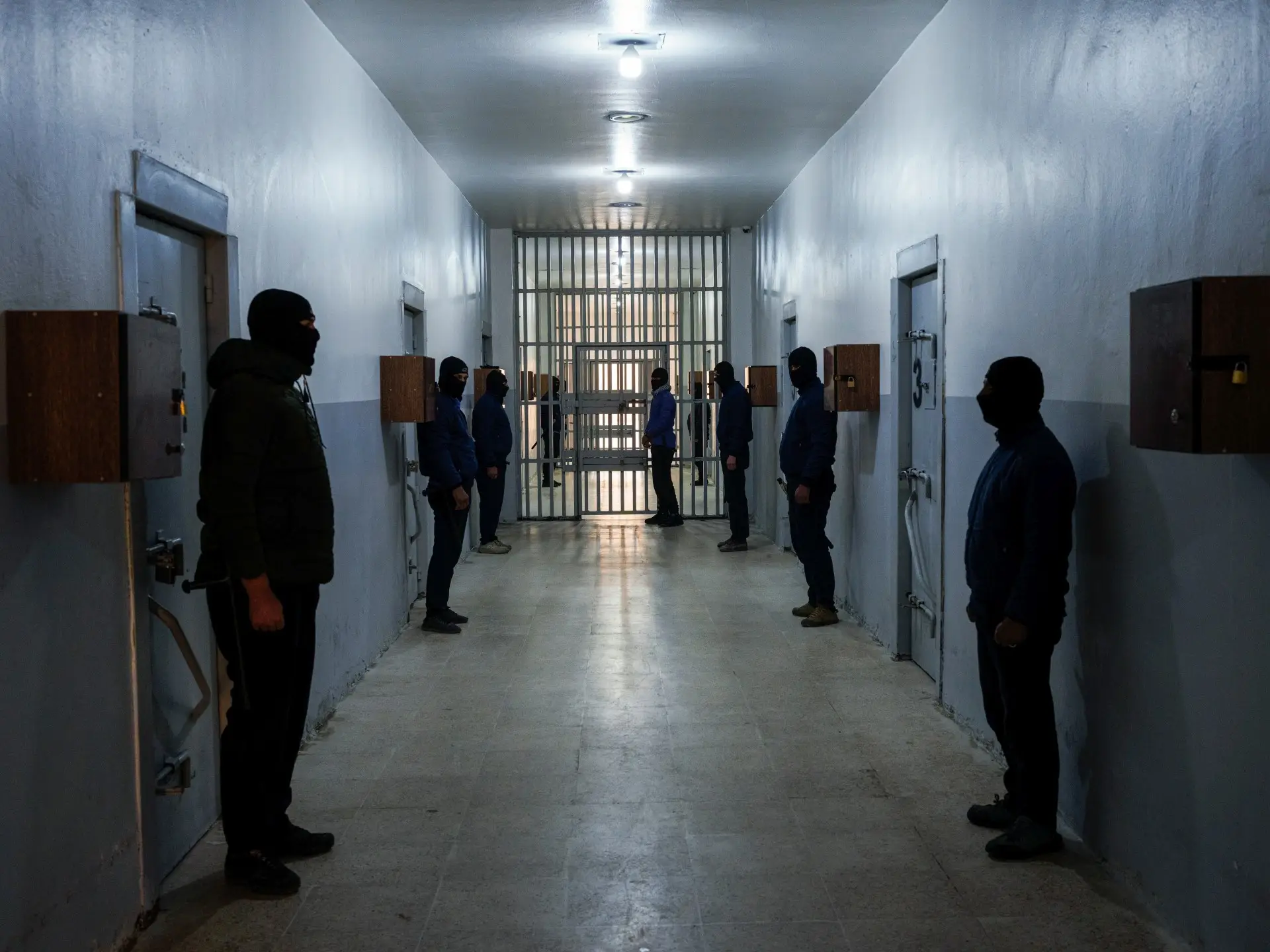
Lawyers for a group of French nationals accused of being part of ISIL (ISIS) and transferred by the United States from Syria to prisons in Iraq say the inmates have been subjected to “torture and inhumane treatment” there.
French media reported on Wednesday that lawyers Marie Dose and Matthieu Bagard visited the accused men in Baghdad during a recent visit and said their clients had been subjected to ill-treatment in detention in Iraq.
list of 4 itemsend of list
The abuse – including being slapped, strangled, handcuffed behind their backs “with a pulley system” and threatened with rape with iron bars – was inflicted to “make them confess to their presence in Iraq” during their alleged time in ISIL, which would give the Iraqi justice system jurisdiction to try them for their alleged crimes, the lawyers said.
The lawyers were quoted as saying the accused ISIL members “assured us that they had not been in Iraq before their arrest in Syria and their transfer to Baghdad”.
During their two-day visit, which began on Sunday, the lawyers, acting on behalf of the families of the prisoners, said they met 13 of the 47 French nationals alleged to be ISIL members who are being held in Iraq.
The 13 men said they were arrested from 2017 to March 23, 2019, the day ISIL lost control of Baghouz, Syria, ending its final hold on territory.
They said they were imprisoned in a jail in northeastern Syria under challenging conditions, in which four French inmates died due to illness and “severe deficiencies”, and they were interrogated on numerous occasions by the FBI, CIA and other agencies believed to represent France and the European Union.
The lawyers made the comments amid the transfer of large numbers of ISIL detainees from prisons and detention camps in Syria to Iraq on US military flights.
The wave of transfers was being carried out after a recent advance by Syrian government forces in the northeast against the Kurdish-led Syrian Democratic Forces (SDF), which the US trained and supported to fight ISIL. The SDF has controlled camps and prisons holding suspected ISIL members for years.
The escape of ISIL detainees during the fighting in cities like al-Shaddadi sparked concerns that they could regroup and pose a renewed security threat, prompting an arrangement for the US military to run flights transferring the prisoners to Iraqi jails.
The Associated Press news agency reported on Sunday that 275 prisoners had been transferred so far while the Anadolu Agency reported that thousands were planned to be transferred under the agreement.
Iraqi Prime Minister Mohammed Shia al-Sudani on Sunday said the transfer of the ISIL detainees was “temporary” and urged countries to repatriate their nationals.

United States batter Aaron Jones has been provisionally suspended after being charged with five breaches of the International Cricket Council (ICC) anticorruption code, the governing body says.
The 31-year-old has 14 days to respond to the charges, which relate mostly to his participation in the 2023-2024 Bim10 tournament in Barbados, while two of the charges relate to international cricket, the ICC said.
list of 4 itemsend of list
USA Cricket did not immediately respond to a request for comment outside normal business hours.
The ICC accused Jones of fixing, trying to fix or influencing Bim10 matches; refusing or failing to cooperate with an investigation; obstructing the inquiry; and failing to disclose attempts to violate the Cricket West Indies anticorruption code.
“These charges are part of a wider investigation which is likely to result in further charges being issued against other participants in due course,” the ICC said in a statement on Wednesday.
Jones was part of an 18-member US squad training in Sri Lanka in preparation for the T20 World Cup, scheduled from February 7 to March 8 in India and Sri Lanka.
The US has yet to announce its squad for the tournament, and Jones is now ineligible for selection.

Jones was a star of the 2024 edition, which was cohosted by the US, which were also debuting at a major cricket tournament.
He was an integral part of the team that beat Pakistan in what is regarded as the greatest cricketing upset of all time, scoring 11 runs in the super-over victory.
Jones also hit an unbeaten 94 in the seven-wicket win against Canada, which included hitting the winning runs to produce one of the iconic images of the tournament.

Ukraine says it has received the bodies of 1,000 soldiers from Russia in the latest exchange of those killed in the war as the nearly four-year-old conflict continues to exact a heavy toll on both sides.
Russia and Ukraine confirmed the exchange on Thursday, describing it as part of ongoing agreements reached earlier in the war to allow families to bury those killed on the battlefield.
list of 4 itemsend of list
Kremlin aide Vladimir Medinsky said that “within the framework of the Istanbul agreements, the bodies of 1,000 dead Ukrainian soldiers have been transferred to Ukraine”, adding that “bodies of 38 dead Russian soldiers have been transferred to Russia”.
Ukraine’s Coordination Headquarters for the Treatment of Prisoners of War confirmed the handover, saying in a statement that “repatriation events took place today, as part of which one thousand bodies were returned to Ukraine”.
The exchange comes as the war, launched by Russia’s full-scale invasion of Ukraine in February 2022, shows little sign of abating, even as winter deepens and conditions worsen for civilians.
Ukraine’s state weather agency warned on Thursday that temperatures could plunge to as low as -30C (-22F) in the coming days, compounding the impact of Russian attacks on energy infrastructure.
The Ukrainian Hydrometeorological Centre said the coldest nights are expected between February 1 and 3, raising concerns about heating and electricity supplies already strained by repeated missile and drone strikes.
Russian attacks on power facilities have previously left millions of Ukrainians facing disruptions to heating, electricity and water, pushing parts of the country closer to a humanitarian crisis.
Ukraine’s President Volodymyr Zelenskyy warned on Wednesday evening that Russia was preparing fresh large-scale strikes on energy targets. Kyiv city officials said 613 buildings in the capital were without heating following recent aerial attacks.
Against this backdrop, diplomatic manoeuvring continues, though prospects for a breakthrough remain uncertain.
The Kremlin said on Thursday that Moscow is the only venue under consideration for a possible face-to-face meeting between Russian President Vladimir Putin and Zelenskyy, dismissing discussions of alternative locations.
The comments follow remarks by Putin’s aide Yuri Ushakov, who said that Zelenskyy had expressed interest in meeting the Russian leader in person and that Moscow had never ruled out such contact.
Ushakov said the idea of a meeting has been raised several times, including during phone conversations between Putin and US President Donald Trump.
Ukraine’s Foreign Minister Andrii Sybiha said Zelenskyy is ready to meet Putin to discuss what he described as the most sensitive issues in Kyiv’s 20-point peace plan, including territorial questions and the future of the Zaporizhzhia Nuclear Power Plant.
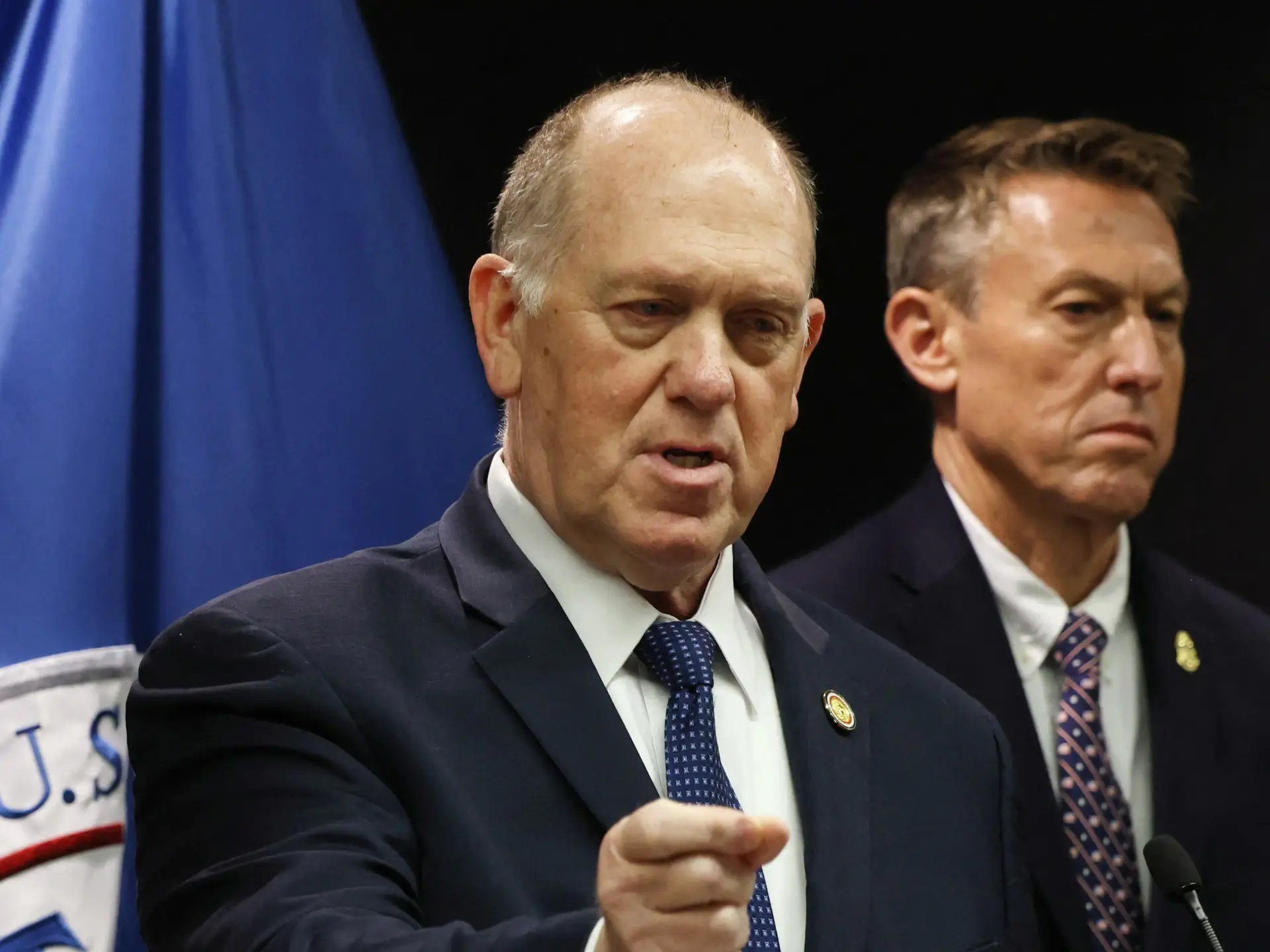
White House “Border Czar” Tom Homan said federal immigration agents will conduct “targeted” rather than sweeping operations in Minnesota going forward. Homan is replacing controversial “commander at large” Gregory Bovino as head of operations in the state.