Global system of human rights in ‘peril’, warns HRW in its annual report

Human Rights Watch (HRW) has released its annual World Report 2026, warning that the global system of human rights is in “peril”, with 72 percent of the world’s population now living under “autocracy”.

In the report (PDF) published on Wednesday, the rights body warned that the United States, China and Russia are “led by leaders who share open disdain for norms”, and “wield considerable economic, military, and diplomatic power”.

Recommended Stories

list of 3 itemsend of list

“Under relentless pressure from US President Donald Trump, and persistently undermined by China and Russia, the rules-based international order is being crushed, threatening to take with it the architecture human rights defenders have come to rely on to advance norms and protect freedoms,” Philippe Bolopion, executive director at HRW, said in a statement.

“To defy this trend, governments that still value human rights, alongside social movements, civil society, and international institutions, need to form a strategic alliance to push back.”

Below are the highlights of the report that paint a bleak picture of the global human rights situation.

United States

The HRW report accuses the Trump administration of a “broad assault on key pillars of US democracy and the global rules-based order”.

“Immigrants and asylum seekers have been subjected to inhumane conditions and degrading treatment; 32 died in US Immigration and Customs Enforcement custody in 2025”, and another four in January 2026, it said.

The “unlawful” abduction of Venezuelan President Nicolas Maduro, along with its withdrawal from the United Nations Human Rights Council and the World Health Organization and its sanctions on Palestinian human rights organisations, the prosecutor of the International Criminal Court and ICC judges, as well as a UN special rapporteur, were highlighted in the report.

“Trump’s second administration has been marked from the start by blatant disregard for human rights and egregious violations,” the report said, adding that the US government is seeking “to weaken international institutions created to enforce human rights standards and hold violators to account”.

Israel

“The Israeli armed forces have committed acts of genocide, ethnic cleansing, and crimes against humanity,” the report said, adding that “These crimes were met with uneven global condemnation and not nearly enough action.”

Trump’s plans for Gaza “would be tantamount to ethnic cleansing”, HRW said, while Israel’s killing of Palestinians in Gaza and its demolitions and unlawful restrictions in the occupied West Bank continue.

The report comes days after the Israel-Palestine director of HRW quit after the rights body “blocked” a report on Israeli atrocities against Palestinians. Omar Shakir, who has worked for the rights group for more than 10 years, told Al Jazeera he has lost faith in the organisation after its new chief, Bolopion, blocked a report accusing Israel of committing “crimes against humanity” in its denial of Palestinian refugees’ right of return.

Shakir said on Tuesday that the report “sought to connect the erasure of camps in Gaza with the emptying of camps in the West Bank, with the full assault led by the Israeli government against UNRWA, the aid agency for Palestinian refugees and underscoring how in the midst of this Nakba 2.0 that we’re seeing unfold beyond us, it’s critical that we learn the lessons from Nakba 1.0”.

The Nakba, which means catastrophe, refers to the forced displacement of 750,000 Palestinians expelled from their homes and land by Zionist militias leading up to the establishment of the State of Israel in 1948.

Ukraine

In Ukraine, Russia’s “indiscriminate bombing, coercing Ukrainians in occupied areas to serve in the Russian military, systematic torture of Ukrainian prisoners of war, the abduction and deportation of Ukrainian children to Russia, and the use of quadcopter drones to hunt and kill civilians” have not been met with meaningful pressure.

Russia

Russia’s intensifying crackdown on dissent and civil society includes authorities using ill-treatment of those in custody as a “tool of repression” and wielding legislation to target “foreign agents” and “undesirable” organisations.

The head of the election monitoring group Golos, Grigory Melkonyants, was sentenced to five years in prison. Three lawyers were sentenced to prison terms for providing legal services to the Anti-Corruption Foundation’s founder, Alexey Navalny, who died in prison in 2024.

“Authorities throughout the country continued to prosecute people for commemorating Navalny’s memory, sharing information about him, using his name, or displaying his portrait,” the report said.

The foundation was also designated a “terrorist organization” by the country’s Supreme Court. International rights groups, including HRW, Amnesty International, Reporters Without Borders and the International Federation for Human Rights, have also been banned in Russia.

China

In China, authorities “systematically deny the rights to freedom of expression, association, assembly, and religion, and persecute government critics”, the report says.

With the state controlling all significant channels of information and some of the world’s “most stringent surveillance and censorship”, critics face imprisonment and forced disappearance. Human rights defenders are frequently harassed and tortured, while those who belong to “illegal” religious groups are harassed and detained by police.

As Tibetans and Uighurs are forced to assimilate, the government released draft legislation, Promoting Ethnic Unity and Progress, which “seeks to justify existing repression of minorities and facilitate intensifying ideological controls both at home and abroad”.

Filling the vacuum

The report stresses there is an “urgent need for a new global alliance to support human rights”.

HRW said it is “critical to look beyond the usual suspects”, pointing to countries such as Costa Rica, Ghana, Malaysia, Mexico, Senegal, Sierra Leone, and Vanuatu, which have “played important roles on specific human rights initiatives in key international forums”.

Chile’s Democracy Forever summit brought together leaders from Brazil, Colombia, Spain and Uruguay, who pledged to engage in “active democratic diplomacy”, while The Hague Group was formed in solidarity with Palestinians and in defence of international law.

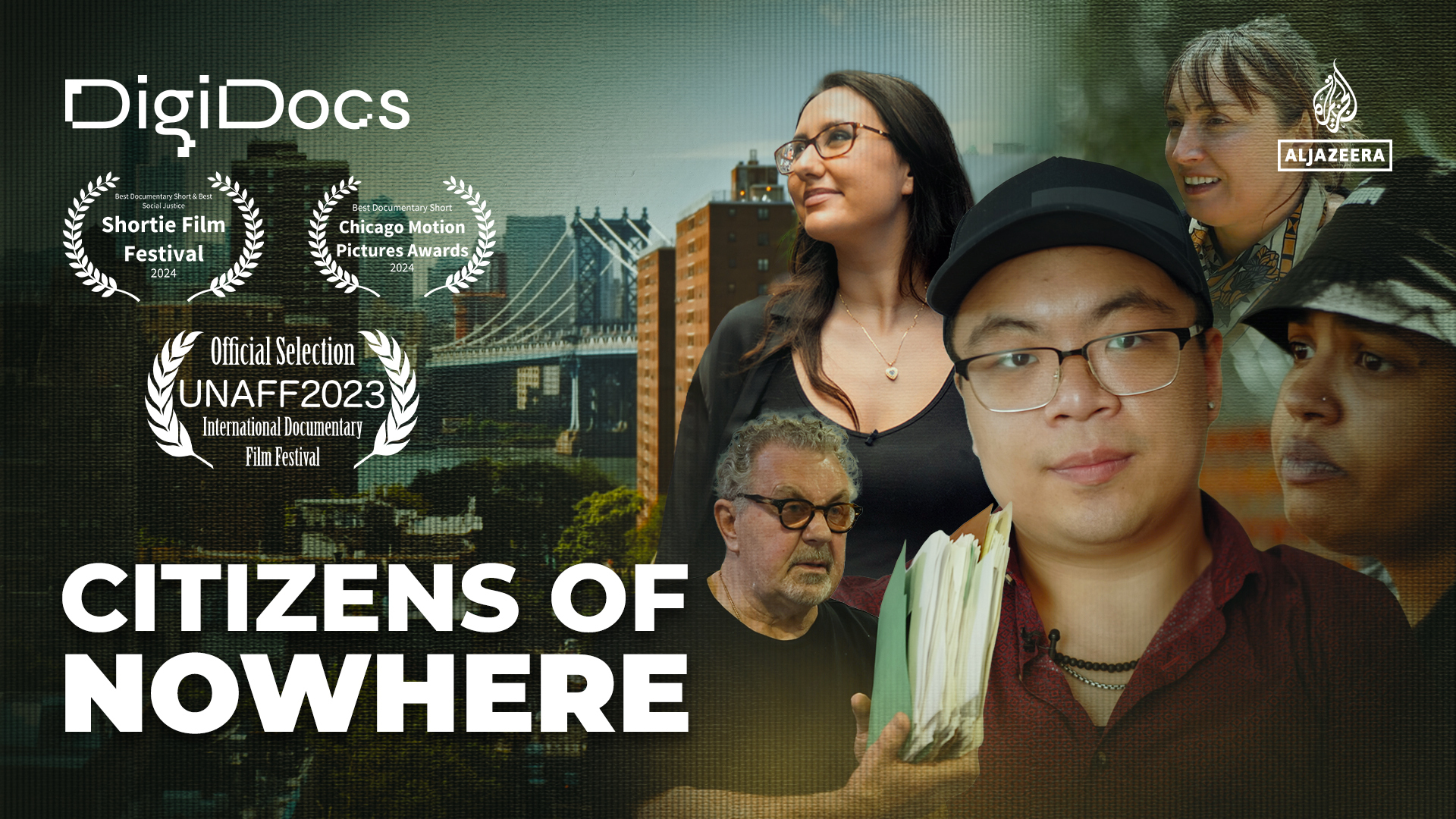
Citizens of Nowhere: What It Means to Be Stateless in the US

What happens when a person has no country?

Citizens of Nowhere is a documentary short about stateless people in the United States – individuals who, through circumstance or legal technicality, belong to no nation. Without passports, citizenship or legal recognition, they live in a state of uncertainty.

From finding work and accessing education, to simply existing within a system that does not officially recognise them, stateless people face endless bureaucratic barriers.

This documentary short by Alicia Sully questions what citizenship really means, and what happens when a person has none.

Trump’s critical minerals meet: Who’s attending, what’s at stake?

The United States is hosting ministers from dozens of countries for a critical minerals conference in Washington, DC, this week.

Officials are seeking to strengthen and diversify their nations’ stockpiles of critical minerals, which are essential for the defence industry and for the development of artificial intelligence.

High on the agenda is the question of setting a minimum price for critical minerals – something many countries are pushing for. However, the US is reported to be backing away from this suggestion.

On Monday, US President Donald Trump announced the launch of a strategic minerals stockpile for the US called Project Vault. It will be funded by $2bn of private capital along with a $10bn loan from the US Export-Import Bank.

What is the Critical Minerals Ministerial?

The meeting is the first of the new Critical Minerals Ministerial, a US initiative to build alliances aimed at countering China’s control over critical mineral supply chains around the world.

The main meeting of representatives takes place on Wednesday.

Currently, China controls most of the world’s rare earth minerals, including metals that are necessary for the manufacture of many technological items, from smartphones to fighter jets. China has 60 percent of these minerals and processes 90 percent of the world’s supply.

According to the US Department of State, the ministerial is being hosted by Secretary of State Marco Rubio and is taking place at the State Department building close to the White House.

Who is attending?

The US will host delegations from more than 50 countries, according to the State Department.

This includes representatives from the Group of Seven countries – Canada, France, Germany, Italy, Japan, the United Kingdom and the US – as well as from the European Union, Australia and New Zealand.

On Tuesday, Rubio met with Cho Hyun, the foreign minister of South Korea on the sidelines of the ministerial. In an X post, Rubio wrote that he and Cho discussed recent commitments by Seoul to increase “investments to rebuild critical US industries and the importance of diversifying and securing critical mineral supply chains to bolster our economic and national security”.

Also on Tuesday, Rubio met Indian External Affairs Minister Subrahmanyam Jaishankar to discuss cooperation over critical minerals.

What are critical minerals and why do they matter?

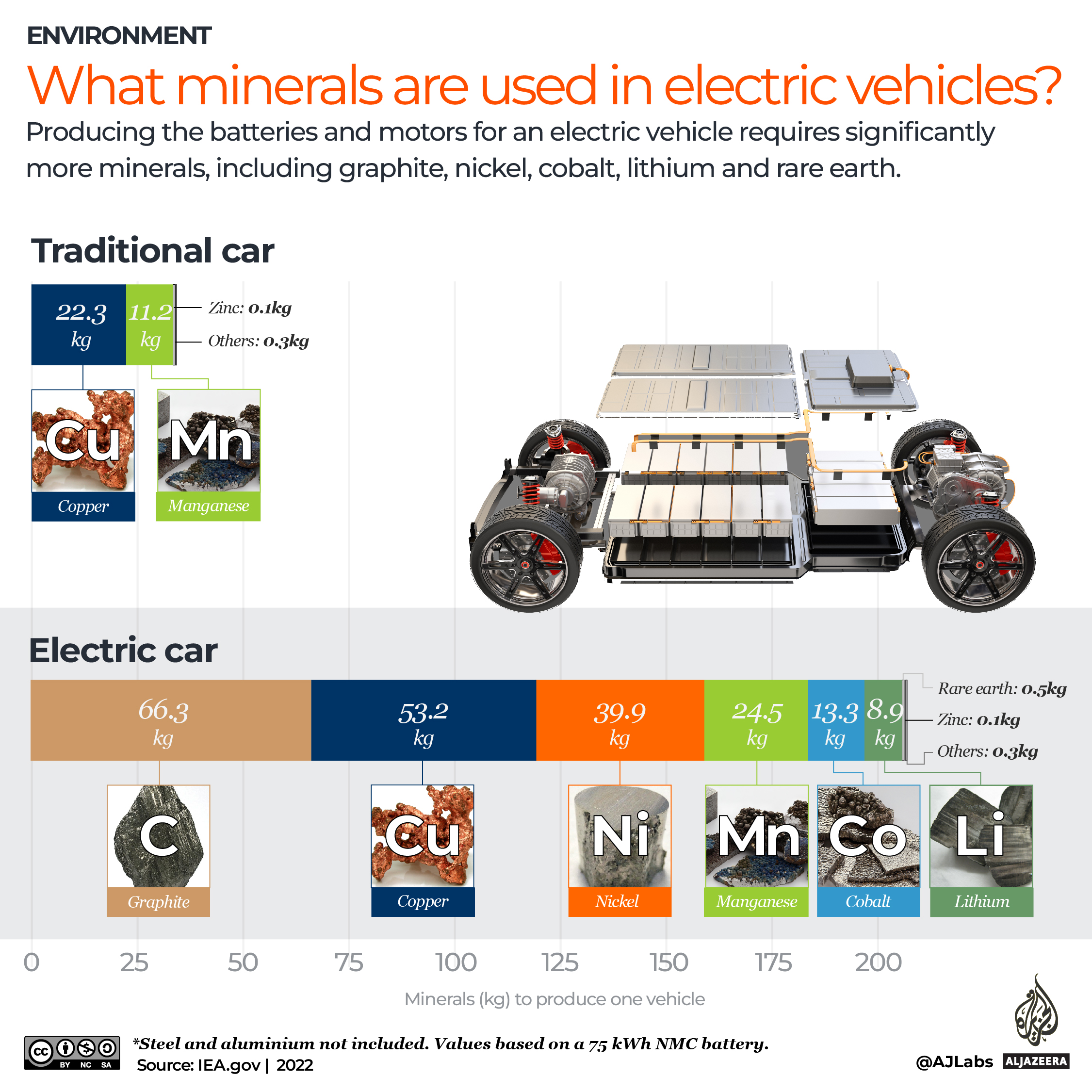
They are nonfuel minerals used to manufacture batteries, clocks, wiring, military hardware and semiconductors among other technological products.

The US describes them as “essential to the economic or national security of the US” and having “a supply chain vulnerable to disruption”.

Nickel, cobalt, lithium, aluminium and zinc are among the best-known critical minerals. For 12 critical minerals, the US relies entirely on imports. For 29 additional critical minerals, the US imports at least half of what it needs.

Critical minerals also include 17 rare earth elements – 15 lanthanides (metallic elements) on the periodic table, scandium and yttrium. China has deposits of 12 of these.

Rare earth metals have special magnetic properties and are necessary for the production of permanent magnets, used for industrial automation, electric vehicle motors, renewable energy generators, electronics and many medical devices.

Because of China’s near-total control of rare earth metals, Western nations have said they worry about their access to these minerals. Currently, Europe’s supply of permanent magnets, for example, comes almost entirely from China.

The processing costs for rare earths are high, and mining them involves heavy use of chemicals that generate toxic waste harmful to the environment.

Which country dominates critical minerals now?

According to the US Geological Survey (USGS), global rare earth reserves were estimated at about 110 million tonnes as of 2024.

China has the most rare earth metals and a “near monopoly”, the Center for Strategic and International Studies reported in 2024.

It has also filed thousands of patents for the processing technologies it has developed.

Last year, China began restricting exports of the 12 rare earth metals it possesses. In April, China imposed restrictions on exports for seven rare earth minerals. Then in October, it added the five remaining metals to the list.

In late October, Trump reached a trade truce with Chinese President Xi Jinping on the sidelines of the Asia-Pacific Economic Cooperation summit in South Korea. China agreed to put the restrictions for the five final metals on hold for one year while the two countries continue trade negotiations. In return, Trump dropped his threat of 100 percent tariffs on Chinese goods.

INTERACTIVE-UKRAINE-RARE MINERALS-GLOBAL DISTRIBUTION-FEB27, 2025-1740694424

What are the key issues on the meeting’s agenda?

On Wednesday, US Vice President JD Vance, Rubio, Senior Director for Global Supply Chains David Copley and Undersecretary of State for Economic Affairs Jacob Helberg will deliver opening remarks.

The countries attending the conference will discuss setting a minerals price floor – a minimum price for a mineral or group of minerals. Those calling for a minimum price to be set said it would reduce risks for investors, keep supplies coming from a larger number of places and prevent large players from leveraging cheap prices to exclude smaller competitors.

The Trump administration, however, is stepping back from plans to guarantee such a minimum price, according to the Reuters news agency, which quoted unnamed sources for its report. Australian mining stocks dropped as a result.

Australia, which also has a large supply of rare earth metals, is among those countries pushing hard for a price floor as it positions itself as an alternative to China by investing heavily in developing its own processing capacity.

The ministerial will also be an opportunity for the US to get other countries to fall into line over its own policies for critical minerals, analysts said.

“The US is likely to push partner countries to sign minerals deals by which US companies get preferential or at least access to mineral deposits,” Raphael Deberdt, a postdoctoral fellow at the Copenhagen Business School, told Al Jazeera.

Deberdt, who researches critical minerals, explained that while the US has access to these deposits, Washington will also want to invest in those countries to expand production of specific minerals, particularly rare earth elements, cobalt, nickel and graphite.

“The US is also likely to work on a reshuffling of critical minerals supply chains to orient processing towards its own territory and the territories of allied nations,” Deberdt said.

“However, this is still prospective as the US has little processing capabilities and remains far from Chinese dominance.”

He said the Washington conference, therefore, is more likely to be about making US policy on critical minerals visible rather than achieving “real advances in the onshoring, reshoring or friend-shoring of critical minerals”.

Which other countries are developing rare earth capacity?

Australia has the world’s fourth largest rare earth reserves, including metals such as neodymium, which is used to make magnets in wind turbines.

In October, Australian Prime Minister Anthony Albanese and Trump signed a critical minerals agreement that will give the US access to Australian rare earth minerals in return for investment.

But while Australia’s rare earth reserves are large, they are still only one-seventh the size of China’s, according to the USGS. That’s why experts said the US will likely try to court other countries for supplies as well.

Greenland, which Trump has said he wants to take over and make part of the US, is also rich in critical minerals, including rare earth metals. Greenland has limited mining, however, as the practice is largely opposed by Indigenous Inuit residents.

Are countries stockpiling their own critical minerals?

Yes, as well as the US Project Vault, other countries are stockpiling critical minerals to protect themselves from supply chain disruptions in response to China’s dominance of the market.

In March 2020, Japan introduced an international resource strategy that reinforced a stockpiling system for its rare earth minerals.

Similarly, South Korea maintains a longstanding stockpile of critical minerals managed by the state-run Korea Mine Rehabilitation and Mineral Resources Corporation.

In December, the European Commission adopted the RESourceEU Action Plan to secure the EU’s critical minerals supply. The commission said it will also establish a European Critical Raw Materials Centre early this year to diversify supply chains, including through stockpiling.

Palestinians face restrictions leaving, entering Gaza through Rafah

NewsFeed

Israel is severely restricting what Palestinians can bring into Gaza through the Rafah crossing, as its forces maintain a tight control over who is allowed in or out. Rafah’s reopening was supposed to alleviate 18 months of Israel’s punishing siege, but aid continues to be limited and thousands are still waiting to cross.