‘It matters’: Can Bangladeshi voters in Britain impact country’s election?

London, United Kingdom — Behind the fluorescent-lit glass counters, silver trays of singhara — also known as samosa — biryani and hash browns sit side by side. Two men in forest-green polo shirts, the cafe’s standard uniform, move briskly between the grill and the till, taking orders as the lunchtime crowd thickens, then thins again.

Inside Casablanca Cafe, the scrape of faux-leather chairs mixed with low conversation competes with traffic and the occasional siren on Whitechapel Road.

Some customers hurry through plates of chicken curry and rice during short breaks from nearby offices; others linger over fried eggs, beans and toast, chatting before heading next door for prayers at East London Mosque.

At a worn wooden table in the centre of the room, Khaled Noor cradles a tall glass of ginger and honey tea. For months now, he says, Bangladesh’s upcoming election has been a constant topic of conversation.

“Since the elections were announced,” Noor, a barrister and political scientist, said, “people haven’t stopped talking about it.”

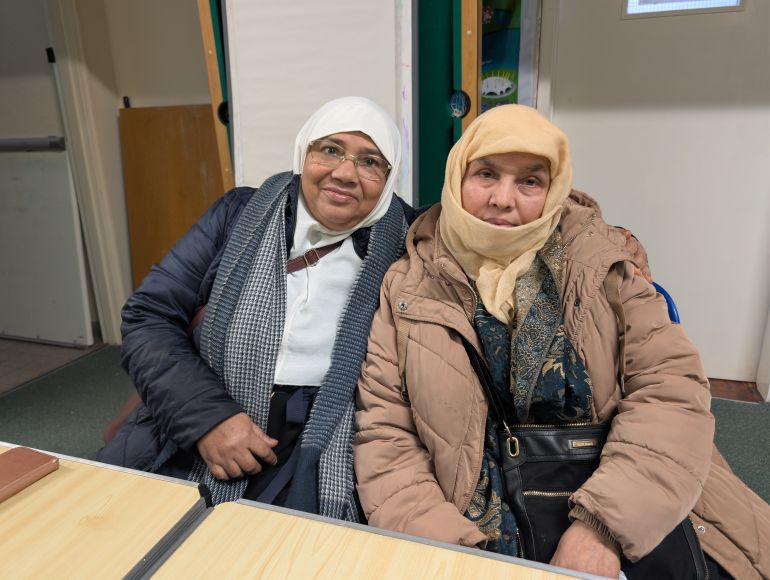
Jahanara Begum (L) and Romina Khatun, Bangladeshi women in London who have voted remotely ahead of the February 12 Bangladesh elections [Indlieb Farazi Saber]
Jahanara Begum, left, and Romina Khatun, Bangladeshi women in London who have voted remotely ahead of the February 12 Bangladesh elections [Indlieb Farazi Saber/Al Jazeera]

A long-awaited vote

The vote, scheduled for February 12, will be Bangladesh’s first national election since the removal of former prime minister Sheikh Hasina, and the first in nearly two decades expected to feature genuine competition. It follows years of tightly managed polls, opposition boycotts and allegations of repression under Hasina that left many voters at home disillusioned and deepened frustration among Bangladeshis overseas who had long been excluded from the ballot.

Bangladesh’s politics has long been shaped by rivalry between the Awami League, led for years by Hasina, and the Bangladesh Nationalist Party (BNP), founded by former military ruler Ziaur Rahman and later led by his widow, Khaleda Zia. Under Hasina, Bangladesh saw rapid economic growth alongside deepening accusations of authoritarianism and repression.

The BNP, sidelined for much of the past decade, is seeking to reassert itself under the leadership of Khaleda Zia’s son, Tarique Rahman. Supporters portray Rahman, who spent 17 years in exile in London, as a symbol of resistance to one-party dominance; critics point to past convictions and accusations of corruption. The election will be the first since Khaleda Zia’s death in December, lending additional emotional and symbolic weight to the contest.

Meanwhile, the interim administration under Nobel laureate Muhammad Yunus, which took charge after Hasina’s ouster, has banned her Awami League from electoral politics.

Amid all of that flux, Bangladeshis living abroad have, for the first time, won the right to vote. “For years we’ve been campaigning for this moment,” Noor said. “People wanted recognition.”

But at neighbouring tables in the cafe, several people decline to speak, wary of sharing political views publicly. Noor, a former local councillor, said some Bangladeshi citizens in the UK who are technically eligible to vote but lack secure immigration status are among the most cautious.

“They’re watching the elections very closely,” he said, “but they don’t want to draw attention to themselves.”

For decades, overseas Bangladeshis, despite sending billions of dollars home in remittances, had no formal say in national elections. Campaigners argued that excluding the diaspora was both undemocratic and politically expedient, particularly as many Bangladeshis abroad had left amid political violence or repression.

Following sustained pressure, electoral authorities expanded overseas voter registration, allowing expatriates to participate remotely for the first time. According to Bangladeshi election authorities, more than seven million expatriates worldwide have registered since overseas voting was introduced — making them a substantial 5 percent of the total electorate of about 127 million.  Bangladesh’s election authorities estimate there are roughly 15 million Bangladeshis living abroad in all.

In the United Kingdom, however, just over 32,000 Bangladeshi citizens are registered to vote, a modest figure given the size of the wider community. According to the 2021 census, about 645,000 people in England and Wales identify as Bangladeshi or British Bangladeshi, with the largest concentration in East London. In Tower Hamlets alone, Bangladeshis make up nearly 35 percent of residents, with significant communities also in Newham, and Barking and Dagenham.

The disparity highlights a central tension running through the diaspora: cultural identity does not always align with citizenship or eligibility. These demographics help explain why events in Bangladesh ripple so strongly through everyday life in East London, but they do not guarantee political engagement.

Some analysts point out that expatriate Bangladeshis could still be significant in close contests. Bangladesh’s election authorities estimate that in some constituencies overseas voters may represent nearly a fifth of registered voters, a share that could influence outcomes in a first-past-the-post system.

In practice, however, eligibility to vote is limited to Bangladeshi citizens holding a national identity card (NID). Many British Bangladeshis, particularly those born in the UK,  identify strongly with Bangladesh but do not hold citizenship documents and are therefore excluded from the ballot.

Bangladeshis have lived in Britain for more than a century, but large-scale migration began only in the mid-20th century. In the 1950s and 1960s, economic hardship in what was then East Pakistan, combined with labour shortages in the UK, drew Bengali men, many from Sylhet, to London and Birmingham.

The 1971 Liberation War prompted another wave, as people fled political instability and sought work abroad. Family reunification followed, reshaping neighbourhoods like Tower Hamlets in the decades that followed.

These layered histories help explain why events in Bangladesh continue to ripple so strongly through everyday life here, but they do not guarantee political engagement.

Casablanca Cafe in East London, a popular haunt among the Bangladeshi diaspora, where chatter about the upcoming election is hard to miss [Indlieb Farazi Saber/ Al Jazeera]
Casablanca Cafe in East London, a popular haunt among the Bangladeshi diaspora, where chatter about the upcoming election is hard to miss [Indlieb Farazi Saber/Al Jazeera]

Between paperwork and disengagement

Earlier in the day, in Whitechapel Road Market, two young women browse a rack of brightly coloured jalabiyas, pausing to check the stitching. Asked about the election, they shrug. They had heard older relatives talking about it, one said, but it felt distant.

“It doesn’t affect us, does it?” she asked. “We live here.” Politics in Britain, she added, felt more pressing, mentioning Labour’s struggles and the rise of Reform.

Noor explained that such apathy was common among younger British Bangladeshis. Years of disputed polls had left many hopeful but cautious, he said, while practical barriers had discouraged wider participation.

“To vote, you need a national identity card, biometrics, and then another digital process through a mobile app,” he said. “For many people, especially older voters, it’s simply too complicated.”

Patterns elsewhere underscore the contrast. Election commission figures show far higher participation in Gulf states, with more than 239,000 registered voters in Saudi Arabia and about 76,000 in Qatar.

Back at his office in Tower Hamlets, Noor said the difference reflected lived realities. Migrants in the Gulf are often single men with families back home and limited political or social rights in their host countries, keeping their ties to Bangladesh immediate and practical. In the UK and United States, by contrast, many Bangladeshis are settled with families, careers and children, their daily concerns anchored firmly where they live.

That divide, between older migrants invested in events back home and younger British Bangladeshis rooted firmly in the UK, runs through conversations across East London.

Several said they had registered to vote. Many arrived in Britain decades ago and still hold Bangladeshi passports. For them, the election carries the weight of memory: of the Liberation War, of years of military rule, of elections that once felt either dangerous or meaningless.

Above a convenience store on a side street close to the mosque, a narrow, worn staircase leads to the small office of Bangla Sanglap, a bilingual weekly newspaper. Its editor, Moshahid Ali, scrolls through messages from readers debating the election, correcting rumours and sharing registration information.

“People are excited about having the right to vote,” he said. “But it hasn’t been clear or straightforward.”

Many complained of limited outreach by authorities, he added. The process itself put others off: the need for an NID card, biometric registration at the High Commission with long waiting lines, followed by a further digital application through a mobile app, a series of bureaucratic thickets that sap enthusiasm.

Some learned about postal voting too late. One man said he rushed to apply for his NID card days before the deadline, only for it to arrive after registration closed.

Others said the technology itself proved daunting, particularly for older voters. “Everything is on apps now,” one older would-be voter said. “If something goes wrong, who do you ask?”

Mizanur Khan, 44, a community volunteer and hijama (cupping therapy) practitioner, said he wanted to vote but missed the registration deadline. He is now considering travelling to Bangladesh to vote in person.

“There wasn’t enough awareness,” he said. “But the main thing is free and fair elections. If they can even manage that, Bangladesh has a chance.”

The Bangladesh High Commission in London was contacted for comment, but did not respond.

Not everyone who could vote chose to. At an electrical goods stall in Whitechapel Market, as February rain began to fall, Radwan Ahmed, 23, a student in London, said he holds an NID card but decided to boycott the election. He described his decision as a protest against what he sees as a compromised political process, saying the ban on the Awami League had undermined the vote’s legitimacy.

Across the borough, the mood remains unsettled.

A man in his forties said the election felt overdue. Bangladesh, he said, had been run by the same two parties, and the same families, for too long. He did not want his name in print, but his eyes lit up when he spoke of change. “If change doesn’t happen now, then when will it happen?” For the first time in Bangladesh’s electoral history, the Jamaat-e-Islami — the country’s largest religious party — is a serious contender to win the vote. It is in an alliance with the National Citizen Party (NCP), a group formed by leaders of the student-led uprising against Hasina.

Britain’s political significance is underscored by the presence of influential figures on both sides of Bangladesh’s political divide. Tarique Rahman’s long exile in London remains a sore point among some who were interviewed in East London. His UK presence did not necessarily translate into trust or recognition. Several people described him as distant from everyday community life, saying he rarely engaged beyond party circles.

“He’s just one man,” said one voter who declined to be named. “Part of the same system.” Another said Rahman’s long stay in the UK passed without meaningful contact with working-class Bangladeshis. “He met elites otherwise; he remained hidden,” he said. “There was no connection with people like us.”

Britain is also home to prominent figures linked to the Awami League. Among them is Tulip Siddiq, a Labour MP and Hasina’s niece. Siddiq was recently sentenced in absentia to two years’ imprisonment and a 100,000 Bangladeshi taka ($818) fine by a Bangladeshi court, a move criticised by UK-based lawyers and rights groups as politically motivated, a claim Bangladeshi authorities reject.

Several UK-based local politicians of Bangladeshi origin, including Tower Hamlets councillors Sabina Khan and Ohid Ahmed, are also standing in the Bangladesh elections, drawing criticism both in Britain and in Bangladesh over questions of accountability and dual political loyalties.

The issue is further complicated by Bangladesh’s approach to dual nationality. While dual citizenship is permitted in practice, constitutional provisions restrict those who acquire foreign citizenship or pledge allegiance to another country from standing for parliament, a distinction that is often poorly understood.

Legal experts note that under UK law, for instance, a declaration of renunciation must be formally registered with the Home Office before it takes effect; until then, the applicant remains a British citizen.

“How much do they really know about politics back in Bangladesh if they’ve been living over here?” one woman asked.

For most of those Al Jazeera spoke to, however, daily concerns, jobs, family, security and life in Britain loomed far larger than the intricacies of elite politics in Bangladesh.

Romina Khatun (R) with her daughter Nargis Akhtar. Unlike her mother, Akhtar isn't enthused about the elections [Indlieb Farazi Saber/Al Jazeera]
Romina Khatun, right, with her daughter, Nargis Akhtar. Unlike her mother, Akhtar isn’t enthused about the elections [Indlieb Farazi Saber/Al Jazeera]

Mixed sentiments

Those priorities become clearer a few miles away, in another part of the borough.

On a quiet, tree-lined street minutes from the glass towers of Canary Wharf, the Isle of Dogs Bangladeshi Association and Cultural Centre sits almost hidden beside the local library. Once a stronghold of far-right politics, the area now reflects a different chapter in East London’s migrant history.

Inside, a small group has gathered for tea and butter biscuits. Conversation drifts between translating documents, navigating an increasingly digital world and plans for afternoon prayers.

Here, too, the election is on people’s minds.

Muhammad Saiful Miah, 44, who works in the emergency services, said he had not voted — because he doesn’t have an NID card. But he is following the election closely.

“The elections matter because that’s where my family comes from,” he said. “I’m British and Bangladeshi, so of course I care.”

Across the room, Jahanara Begum, 58, from Cumilla near Dhaka, speaking in Bangla through a translator, said she was “very happy” to have voted and had already sent her postal ballot.

“I waited years for this,” she says, hands wrapped around her teacup. “This is the first time in a long time it feels like it matters,” said Begum, who arrived in Britain just three years ago.

As a former primary school teacher and election monitor, she recalled travelling long distances, sometimes 30km by rickshaw, to count votes, often missing the chance to cast her own. The last time she voted, she said, was in 1991.

She spoke vividly of the 2008 general election when the Awami League came to power. She claimed the results recorded locally were later altered. “We saw BNP winning in many areas, but the figures announced were different.”

Now living in Britain, she still cares deeply about the outcome. “I have four children there,” she said. “It’s my country. I want peace. I want them to be safe.”

Her friend, Romina Khatun, 69, who has lived in the UK since 1985 and has also voted, nodded in agreement. For her too, the election represents a tentative hope after years of violence and uncertainty.

But Romina’s daughter, Nargis Akhtar, 45, who volunteers as the centre’s manager, remains unconvinced. Born in Sylhet but raised in London, she did not vote and does not have an NID card.

Akhtar grew up in a politically engaged household. She remembers hearing the names Khaleda Zia, Sheikh Hasina and Hussain Muhammad Ershad — a military ruler who led Bangladesh for most of the 1980s — spoken with intensity. “I must have been seven or eight,” she said, laughing, recalling a political cartoon that once enraged her father. “I didn’t even know who Ershad was; I just knew it mattered to my parents.”

But, she said, she does not “have much faith that elections alone will change things”.
Thailand election 2026: What are the main parties? What do polls suggest?

Voters in Thailand will head to the polls on Sunday amid deep political uncertainty, with the country having cycled through three prime ministers in as many years, and amid a tenuous truce with Cambodia following border clashes that killed 149 people.

The snap polls pit Prime Minister Anutin Charnvirakul’s Bhumjaithai party, backed by Thailand’s royalist conservative establishment, against the progressive youth-led People’s Party.

Recommended Stories

list of 4 itemsend of list

The People’s Party is the successor to a group that won the last election but was blocked from power and dissolved by the courts over its proposals to reform the country’s powerful monarchy.

Pheu Thai – which has dominated Thai politics for a quarter century – is also attempting a comeback after a bruising period that saw two prime ministers from the party removed by the courts and its founder Thaksin Shinawatra jailed late last year.

The vote on Sunday is seen as a test of whether Thailand’s long-running cycle of coups, street protests and court interventions can be broken, or whether the paralysis will deepen.

Here’s what you need to know about the pivotal election:

When are the elections?

Voting will take place on Sunday, February 8.

About 53 million people in the kingdom of 71 million are eligible to vote.

The 500-seat House of Representatives will be filled through a mixed system: 400 constituency seats elected by a first-past-the-post system, and 100 seats allocated through proportional representation or on a party-list basis.

The newly elected lower house will then select the next prime minister. Unlike in 2019 and 2023, the appointed Senate, which is dominated by conservative lawmakers, will have no role in choosing the prime minister.

A candidate requires 251 votes in the House to take office as prime minister.

Voters will receive three ballot papers: two for the parliamentary election and one for a referendum on whether to rewrite the constitution.

When will we know the results?

Polling stations open at 8am (01:00 GMT) and close at 5pm (10:00 GMT). Vote counting will begin shortly after, and results will be announced as tallies are completed.

The leading party is likely to become clear by the early hours of Monday.

Turnout is expected to be high. During early voting in the capital Bangkok earlier this week, some 87 percent of registered advance voters turned out to cast their ballots.

Who are the main contenders?

Bhumjaithai

Led by Anutin, Bhumjaithai rose to prominence in 2019 with its support for medical marijuana. It has transformed from a mid-sized kingmaker – winning 51 seats in 2019 and 71 in 2023 – into a conservative force now vying to become one of parliament’s largest parties.

The party formed the current government with the People’s Party’s support, after the country’s top court removed Thaksin’s daughter, Paetongtarn Shinawatra, as prime minister over her handling of Thailand’s border crisis with Cambodia.

Anutin initially promised constitutional reform and elections within four months, but the People’s Party in December accused him of reneging on their deal. Facing the risk of a no-confidence vote, he dissolved the House and called the snap poll.

Bhumjaithai has now rebranded itself as a staunch defender of the monarchy and has been bolstered by defections, attracting 64 of the 91 lawmakers who have switched parties since 2023.

Napon Jatusripitak, director of the Center for Politics and Geopolitics at think tank Thailand Future, said Bhumjaithai is seen as “pragmatic” and has now “claimed the conservative mantle” from political parties run by former generals.

People’s Party

The People’s Party is the third iteration of a reformist movement whose previous incarnations – most recently Move Forward – were dissolved by the courts.

The party campaigns on reducing the political power of unelected institutions such as the military and judiciary.

While it was once outspoken in calling for changes to Thailand’s lese-majeste law – under which defaming or insulting the monarchy is a criminal offence – it has softened its stance during this campaign.

Thitinan Pongsudhirak, a professor of international relations at Chulalongkorn University, described the group as “strange and unprecedented” in Thai politics.

“It was the first party not driven by patronage or money politics, but by reform ideas and policies rather than personalities or provincial bosses,” he said.

Pheu Thai

Pheu Thai and its predecessors dominated Thai politics for 25 years through populist policies that secured working-class support as well as a formidable electoral machinery, particularly in the north and northeast.

Despite Thaksin’s imprisonment and having six of its prime ministers removed by coups and court rulings, the party has prevented mass defections and remains competitive.

It is campaigning on Shinawatra nostalgia, with Thaksin’s nephew Yodchanan Wongsawat as its primary representative.

Thailand Future’s Napon said he expected “a significant decline compared to the previous election”, with Pheu Thai potentially falling to third place. Still, he said the party may regain some seats from the progressive camp in its northern strongholds.

What are the polls suggesting?

A January 30 survey by the National Institute of Development Administration put People’s Party leader Natthaphong Ruengpanyawut in first place for prime minister at 29.1 percent, followed by Anutin at 22.4 percent.

Yodchanan trailed in fourth place.

For party lists, People’s Party led with 34.2 percent, followed by Bhumjaithai at 22.6 percent and Pheu Thai at 16.2 percent.

What are the key issues?

The People’s Party has proposed more than 200 policies, including abolishing military conscription, drafting a new democratic constitution, overhauling the bureaucracy and launching state-backed programmes to support small businesses.

Bhumjaithai has focused on economic stimulus and security, pledging to lift annual growth to 3 percent, expand welfare schemes, build border walls and make military service more attractive through paid volunteer posts.

Anutin has also promised to protect the monarchy, saying at a Bangkok rally that amending lese-majeste laws “will never happen and will never succeed because you have us”.

Pheu Thai has meanwhile centred its campaign on debt relief, as well as income support for low earners and transport subsidies. It has also announced a “millionaire maker” programme that will award nine daily prizes of one million baht ($31,556) each.

How does Cambodia factor in?

The Thai-Cambodian clashes erupted at their contested border in July and ended following a second ceasefire in December. The clashes have stoked nationalist fervour, strengthening Bhumjaithai’s appeal, and highlighted Pheu Thai’s vulnerability.

Paetongtarn of the Pheu Thai was removed as prime minister in September over a leaked phone call with Cambodia’s former leader Hun Sen, in which she was heard pandering to him and criticising a Thai commander.

Punchada Sirivunnabood, associate professor of social sciences and humanities at Mahidol University in Bangkok, said nationalism could boost support for Anutin.

“They use this [nationalism] as a concept for support in these elections, and a lot of legislators from different political parties have moved to Bhumjaithai. This guarantees that they’re going to win a lot of seats from the district level,” she said.

On the other hand, questions over the Shinawatra family’s connections to Hun Sen have dogged Pheu Thai candidates on the campaign trail, she said.

“This border conflict hurt Pheu Thai a lot,” she said.

What about constitutional reform?

Alongside the parliamentary election, voters will also be asked whether to replace the 2017 constitution, which was drafted under military rule following a coup in 2014.

Even if approved, the process would be long and uncertain, requiring parliamentary action, Senate support to amend key clauses, and at least two further referendums.

While polls suggest overwhelming support for the “yes” vote, it will not guarantee a new charter or a democratic one.

“It depends entirely on the post-election balance of power,” said Napon. “A more conservative parliament could still produce a conservative constitution.”

Will this end Thailand’s political turmoil?

With no party expected to win an outright majority, coalition formation will be essential. But any resulting government is “very likely to be unstable”, Napon said, as partnerships between any two of the big three parties would fall short of a majority if one partner withdrew.

Thitinan of Chulalongkorn University, meanwhile, said he was not encouraged by Thailand’s electoral history.

Only once in 25 years have voting results been fully honoured, he said, noting other elections were overturned by military coups or judicial interventions.

“Establishment forces and biases are so entrenched and run so deep that the party of reform and progress would have to win a big, convincing margin of victory to have a chance at governing,” he said.

Norway police investigate former PM Jagland over Epstein ties

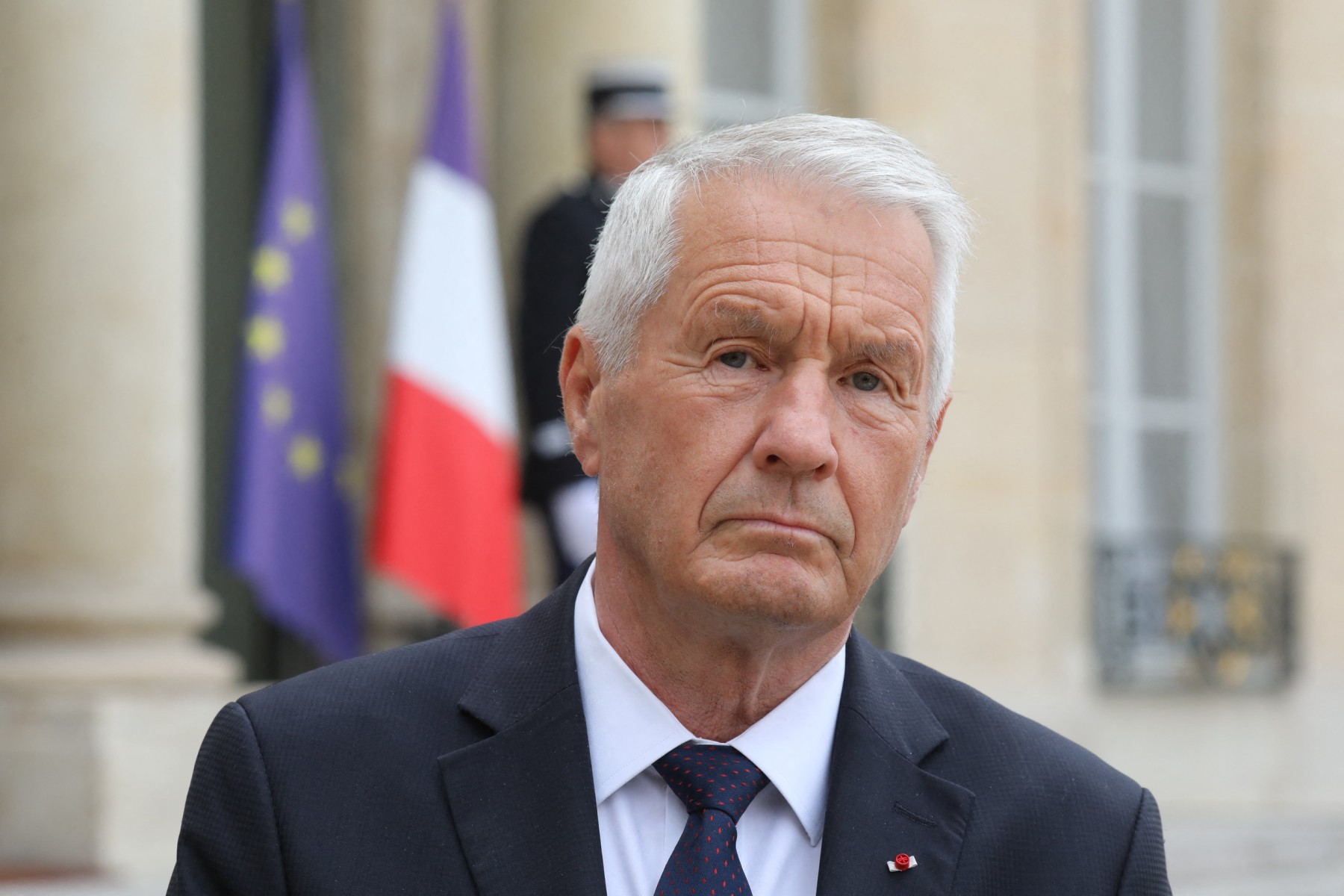
Authorities in Norway are investigating former Prime Minister Thorbjorn Jagland on suspicion of corruption following revelations about his ties to the late financier and sex offender Jeffrey Epstein.

The probe comes after documents released by the United States Department of Justice last week revealed years of communications between Jagland, who served as Norway’s prime minister from 1996 to 1997, and Epstein, including emails suggesting that he stayed at the disgraced financier’s home.

Recommended Stories

list of 4 itemsend of list

Okokrim, Norway’s dedicated police unit for fighting white-collar crime, said on Thursday that it had determined there were “reasonable grounds” to investigate Jagland for aggravated corruption.

The agency said it had also requested the Ministry of Foreign Affairs to revoke the immunity conferred on Jagland, who also served as the head of the Nobel Committee and secretary-general of the Council of Europe, as the former head of an international organisation.

“Among other things, Okokrim will investigate whether gifts, travel and loans were received in connection with his position,” Okokrim director Paal Loeseth said in a statement.

Norwegian Foreign Minister Espen Barth Eide said in a statement that the facts of the case needed to be “brought to light”.

“That means Mr Jagland’s immunity cannot stand in the way of an investigation. I have therefore decided that Norway will put forward a proposal to the Council of Europe’s Committee of Ministers that Jagland’s immunity be revoked,” Eide said.

Jagland’s lawyer, Anders Brosveet, did not immediately respond to a request for comment.

Local media quoted Brosveet as saying that his client welcomed the investigation and was “calm” about the outcome.

Norway has been rocked by revelations of close ties between a slew of prominent elites and Epstein, who died in 2019 while awaiting trial on sex trafficking charges.

Norway’s Crown Princess Mette-Marit earlier this week expressed regret for “poor judgement” and extended sympathy for Epstein’s victims after the latest tranche of files showed that she had extensive contact with the disgraced financier.

On Thursday, the World Economic Forum (WEF), the organiser of the annual business summit in Davos, said it had launched an investigation to clarify the nature of the dealings its CEO, Borge Brende, had with Epstein.

The WEF said it had asked its risk committee to conduct the review in light of revelations that Brende, who served as Norway’s foreign minister from 2013 to 2017, had several business dinners with Epstein and communicated with him via email and text message.

“This decision underscores the Forum’s commitment to transparency and maintaining its integrity. Our aim is to handle this matter thoughtfully and efficiently,” the Geneva-based nongovernmental organisation said in a statement.

“Borge Brende fully supports, and cooperates with, this review, having indeed requested it himself, and will continue to fulfil his responsibilities as President and CEO without involvement in the review process.”

Brende said that he had limited contact with Epstein and that he had been unaware of his past or crimes.

“In 2018, during a visit to New York, I received an invitation from former Norwegian deputy prime minister and UN MENA envoy, Terje Rod-Larsen, who was married to the then Norwegian UN ambassador, to join him for dinner with someone who was presented to me as an American investor, Jeffrey Epstein,” Brende told Al Jazeera.

“This gathering included several other leaders. The following year, I attended two similar dinners with Epstein, alongside other diplomats and business leaders. These dinners, and a few mails and SMS messages, were the extent of my interactions with him,” he said.

Brende said he regretted not doing more to look into Epstein’s history.

“I remain committed to learning from this experience and welcome the upcoming independent review, which I indeed requested,” he said.

Brende also disputed comments made by WEF founder and former CEO Klaus Schwab to Swiss newspaper Blick in which he said he had not been informed of the contact with Epstein.

Elderly Palestinians determined to stay in Gaza despite terrible conditions

The Rafah crossing between Gaza and Egypt has finally partially opened this week after two years of Israeli-mandated closure. The news offers relief for many – particularly those Palestinians in urgent need of treatment abroad.

But for many elderly Palestinians in Gaza, staying in the enclave is an act of survival, resistance, and historical memory. Rafah may be open, but they are not planning to go anywhere.

Recommended Stories

list of 3 itemsend of list

In Kefaya al-Assar’s mind, that decision to stay is an effort to correct what she perceives to have been a historical mistake made by her parents – fleeing their village of Julis, which was depopulated in the 1948 Nakba, and is now within Israel.

“We blamed [our parents] a lot for leaving our home there,” said the 73-year-old Kefaya.

Kefaya has faced displacement during Israel’s genocidal war on Gaza five times. Originally from Jabalia in northern Gaza, she now shelters in a classroom at a school in central Gaza’s Nuseirat.

Widowed in early 2023 and without children, she said displacement revives the trauma she inherited from her parents.

“History repeats itself now,” she said. “My parents lost all their money when they were forced to flee. We also used to have money, but now we are displaced and have lost everything.”

When Kefaya was a child, her family lived in tents in Gaza’s refugee camps, before they became more permanent structures in later decades. Now, she says that she is reliving that same fate.

“I don’t want to repeat history, I want to die in my own country,” she said. “Even here, being in Nuseirat, I feel like a stranger. I wish I could go back to Jabalia.”

Her home in Jabalia was destroyed during the war, meaning that, for now, she is staying in Nuseirat. But she is still adamant that it will not mean her departure from Gaza.

“I will not leave for medical treatment outside … I choose to die on my own land rather than be treated outside,” she said.

That’s despite her own medical issues – Kefaya suffers from high blood pressure, and has not been able to receive adequate medical care because of the war.

Hidden crisis

The Rafah crossing partially opened on Monday after being largely closed by Israel since May 2024.

The opening of the crossing is part of the second phase of the Gaza “ceasefire”, even as Israel continues to violate the agreement by regularly attacking the Palestinian enclave, killing hundreds.

Only a few dozen Palestinians have been allowed to leave so far, all patients needing treatments accompanied by family members.

Other Palestinians have also put their names on the list, some hoping to go abroad for education or simply to escape life in Gaza, where Israel has killed more than 70,000 since the war began, and destroyed the majority of buildings, meaning reconstruction will likely be a years-long process, even if Israel cooperates.

“Israel is creating unlivable conditions in Gaza, denying Palestinians all essentials of life,” said Talal Abu Rukba, a political science professor at al-Azhar University in Gaza. “When people resist and stay in their homeland, they ruin the Israeli project of creating an Israeli state on a land ‘without a people’”.

Members of the Israeli right-wing, including members of the government, have repeatedly called for illegal settlements to be established in Gaza, and for Palestinians to be forced out.

The desire to stay in Gaza on the part of elderly Palestinians is despite a largely overlooked humanitarian crisis facing the demographic.

Research by Amnesty International and HelpAge International found that Israel’s blockade of aid and medicines to Gaza had contributed to a “physical and mental health crisis”.

“During armed conflict, older people’s needs are often overlooked. In Gaza, older people are enduring an unprecedented physical and mental health collapse as a direct result of Israel’s deliberate infliction of conditions of life calculated to bring about the physical destruction of Palestinians in Gaza,” Erika Guevara-Rosas, Amnesty International’s senior director of research, advocacy, policy and campaigns, said after the publication of the report.

The two organisations found that 76 percent of the elderly people interviewed live in tents, with 84 percent saying that their living conditions harmed their health and privacy. In addition, 68 percent of respondents had been forced to stop or reduce medication because of a lack of availability. Nearly half reported skipping meals so that others could eat.

Many are also suffering from mental health problems, with 77 percent reporting that sadness, anxiety, loneliness, or insomnia had reduced their appetite and impacted their wellbeing.

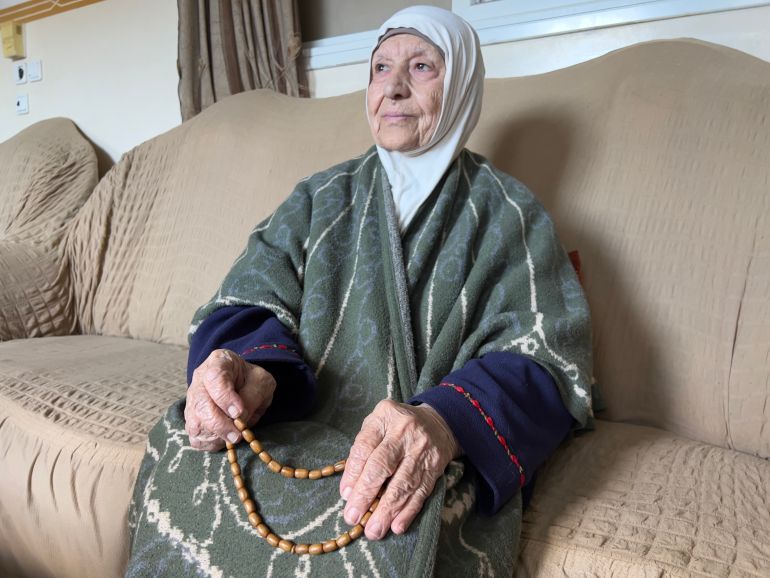
Nazmeya Radwan, 85, refugee since 1948, from the Jerusalem district, displaced in Deir al-Balah [Ola al-Asi/Al Jazeera]
Nazmeya Radwan, 85, is a refugee originally from Jerusalem [Ola al-Asi/Al Jazeera]

Tired and lonely

Nazmeya Radwan, 85, is one of those struggling.

Ill, underweight and unable to access medication, she still refuses to leave Gaza.

Nazmeya has her own previous experience of displacement at the hands of Israel – like Kefaya’s parents, she was forced to flee her home in the 1948 Nakba, along with about 750,000 other Palestinians.

Originally from Jerusalem, her family was displaced to Deir el-Balah, in central Gaza, after 1948.

Trump’s ‘maximalist demands’ for Iran put talks in Oman on uncertain ground

Washington, DC – The administration of United States President Donald Trump is entering the latest round of talks with Iran with a list of maximalist demands, even as their wider strategy remains unclear, analysts have told Al Jazeera.

The talks in Muscat, Oman, on Friday are the first since the US attacked Iran’s nuclear facilities in June. They mark the latest chapter in US-Iran relations during Trump’s second term, which initially saw the president seek a new agreement on Iran’s nuclear programme, before those talks were derailed by Israel’s 12-day war and the subsequent US strikes.

Recommended Stories

list of 3 itemsend of list

Recent months have seen deadly anti-government protests spread across Iran as Trump repeatedly threatened more US military intervention and tightened crippling sanctions.

The US president has since surged a multibillion-dollar “armada” of US military assets off the coast of Iran, following a playbook that preceded both the previous strikes on Iran as well as the US abduction of Venezuelan leader Nicolas Maduro on January 3.

“I think that the US thinks that Iran is weakened, so this is the opportune time for going in with maximalist demands to get the most concessions that they can get,” Sina Azodi, the director of Middle East Studies at George Washington University in Washington, DC, told Al Jazeera.

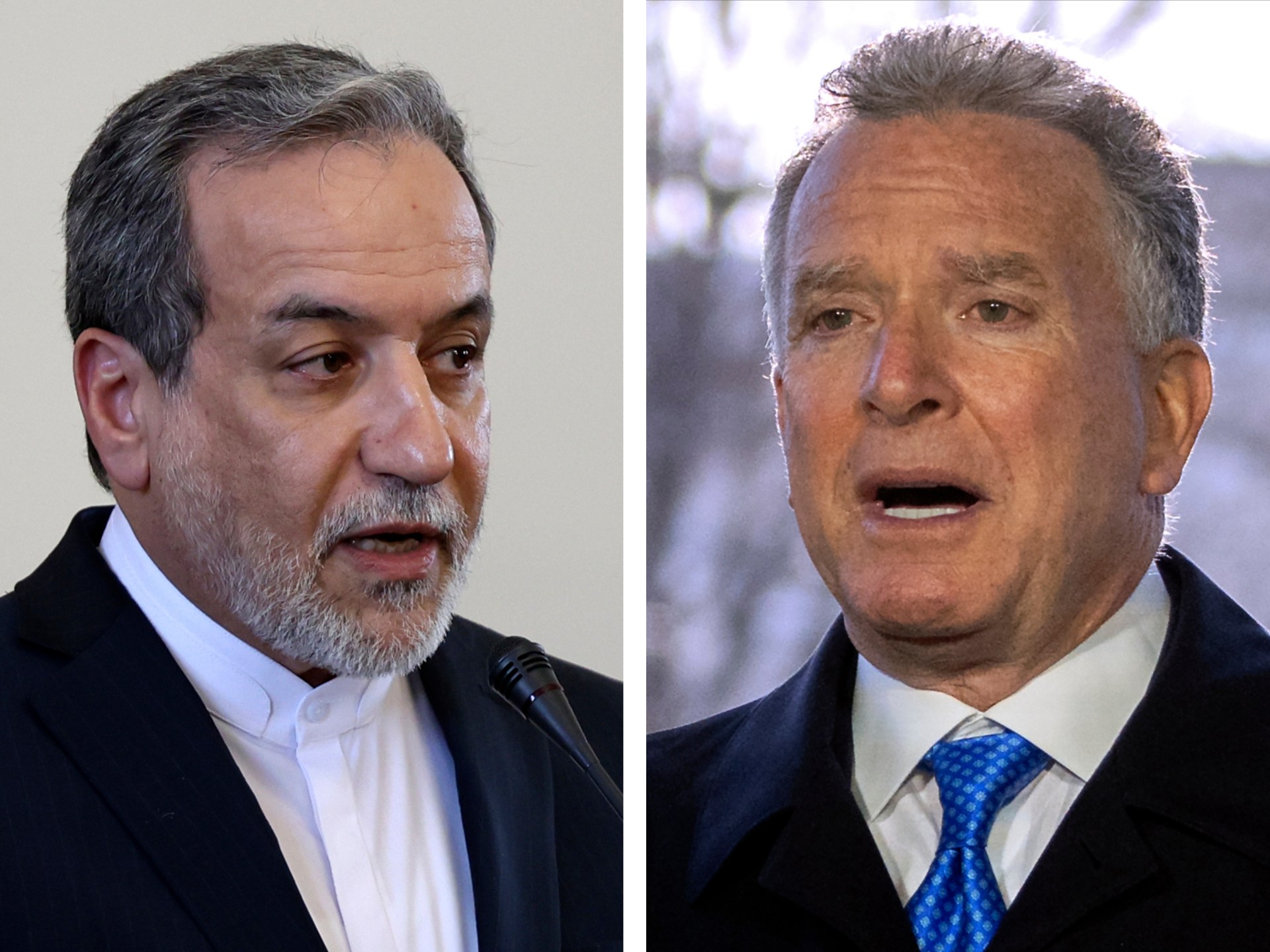
Those demands include not only staunching Iran’s nuclear programme, but seeking limits on its ballistic missile programme and ending support for so-called regional “proxies”. Reports have indicated the expanded agenda pushed by the Trump administration repeatedly threatened to derail the talks, which are set to include Trump’s special envoy Steve Witkoff, Trump’s son-in-law Jared Kushner, and Iranian Foreign Minister Abbas Araghchi.

US Secretary of State Marco Rubio on Wednesday said the US was “ready for talks”.

“In order for talks to actually lead to something meaningful, they will have to include the range of their ballistic missiles, their sponsorship of terror organisations, and the treatment of their own people,” Rubio told reporters.

Trump, meanwhile, again threatened Iran in an NBC News interview on Wednesday, saying Iranian Supreme Leader Ali Khamenei should be “very worried”. However, he also recently appeared to present more narrow objectives for the talks.

Last week, Trump told reporters he wanted “two things” from Iran: “Number one, no nuclear. And number two, stop killing protesters.”

On Thursday, White House spokesperson Karoline Leavitt again renewed the threat.

“While these negotiations are taking place, ‌I would remind the Iranian regime that the president has many ‌options at his disposal, aside ‌from diplomacy, ⁠as the commander-in-chief of the most powerful military in the ‌history of the world,” she told reporters.

What is the US strategy?

Throughout Trump’s second term, his administration has pursued a mercurial foreign policy strategy, described by some analysts as a “madman theory” and others as mad-dash. That unpredictability has hung over Friday’s talks.

The administration struck Iran on June 22 after five rounds of talks in Oman, during which Witkoff held an in-person meeting with Araghchi. The attacks came after a two-month deadline imposed by Trump for Iran to halt nuclear enrichment passed, even as more talks were scheduled.

Tehran has for decades insisted its nuclear programme is for civilian purposes and had previously agreed to curtail enrichment in exchange for sanctions relief under the 2015 Joint Comprehensive Plan of Action (JCPOA), from which Trump withdrew in 2018.

“It’s unclear whether [US goals] are going to be limited to the nuclear issue, as the president says, or much more comprehensive demand for full capitulation, as Secretary Rubio suggests,” Ali Vaez, the Iran Project director at the International Crisis Group, told Al Jazeera.

“If past is prelude, the US is going to walk into these talks without a negotiating strategy…and it would be a set of moving goalposts depending on what the Iranians are willing to put on the table,” he said.

In one scenario, Vaez said, Trump could use the talks to find an “off-ramp” to his current military posturing and threats to intervene in support of protesters in Iran. Demonstrations have since been stifled by the Iranian authorities, he noted, and any military escalation could spark not just a regional security crisis, but a global economic crisis felt in the US.

But Trump continues to be surrounded by several officials, including Rubio, likely to push back against anything seen as a concession at a time when the administration sees Iran’s strength as being diminished.

“I think any deal that will benefit the Islamic Republic could be perceived in Washington as saving a regime that is on the ropes,” Vaez said.  “That is unattractive.”

If the administration does hold onto its hard line – particularly on its ballistic missile – it is likely to find little cooperation, despite Iran’s desire to avoid further military action, George Washington University’s Azodi explained.

While Tehran may be open to codifying some range limits on its ballistic missile programme, further restrictions, including a stockpile reduction, would likely be a non-starter, he said.

“The strongest deterrent, and the only deterrent that Iran has right now is its missile programme,” he said. “Once that one is taken care of, Iran will be vulnerable to future Israeli attacks. Basically, it will lose its sovereignty.”

“That is the brightest red line.”

Regional influence

Friday’s meeting comes amid calls for diplomatic de-escalation from Gulf countries, which have repeatedly warned of the regional impact of a renewed conflict.

There are currently eight permanent US military bases located across Bahrain, Egypt, Iraq, Israel, Jordan, Kuwait, Qatar, Saudi Arabia, Syria and the United Arab Emirates. Following the US strike on Iran last year, Iran attacked Al Udeid airbase in Qatar, a major non-NATO US ally.

Khamenei has warned Washington that any attack on his country would result in a “regional war”. Earlier this week, the US military shot down an Iranian drone in the Persian Gulf and subsequently claimed Iranian boats “threatened” a US-flagged merchant ship in the Strait of Hormuz, further raising the prospect of military entanglement.

Meanwhile, US envoy Witkoff met earlier this week with Israeli Prime Minister Benjamin Netanyahu, who has repeatedly pressed for military action against Iran while subverting diplomatic efforts. Netanyahu warned Witkoff to remain sceptical of any Iranian commitments, Reuters news agency reported.

Khalil Jahshan, the executive director of the Arab Center Washington, DC, told Al Jazeera that the US posture going into the talks shows a “synchronisation of positions” with the Israeli government, which has long viewed Iran’s ballistic programme as one of its most significant regional targets.

Jahshan said the talks may be “superficial argumentation” on the part of the US “to diffuse the objections from Arab allies”, but he did not see them as likely to divert another US or Israeli attack. In turn, he saw little hope of Iran acquiescing.

“There is no doubt [Iran] is exhausted because of the sanctions. It’s exhausted because of the domestic unrest,” he said.

“It’s exhausted because of several regional setbacks and would like to avert a US-Israeli attack on Iran. But at the same time, I don’t think it is necessarily responsive to these spurts of chaotic semi-diplomatic threats.”

Negar Mortazavi, a senior fellow at the Center for International Policy, also acknowledged there is a camp inside of Iran that “believes the negotiations are a ruse and that the Trump administration’s ultimate goal is military attacks and regime change”.

Still, she assessed that both sides were entering the talks seeking de-escalation, even if dangerous gaps in their positions remained.

“A senior Iranian official told me they’re going into negotiations with seriousness, but also with a finger on the trigger,” Mortazavi told Al Jazeera. “They want to give diplomacy a chance, but they want to be clear-eyed about the threats of attacks.”

“It’s a dichotomy that’s very dangerous, because when the two sides are facing off, locked and loaded with very credible and serious threats, things can get out of hand, even by mistake,” Mortazavi added.

Crisis Group’s Vaez, meanwhile, said that the US may be overestimating its position, noting that despite being battered in recent months, Iran’s leaders continue to believe in their own resilience.