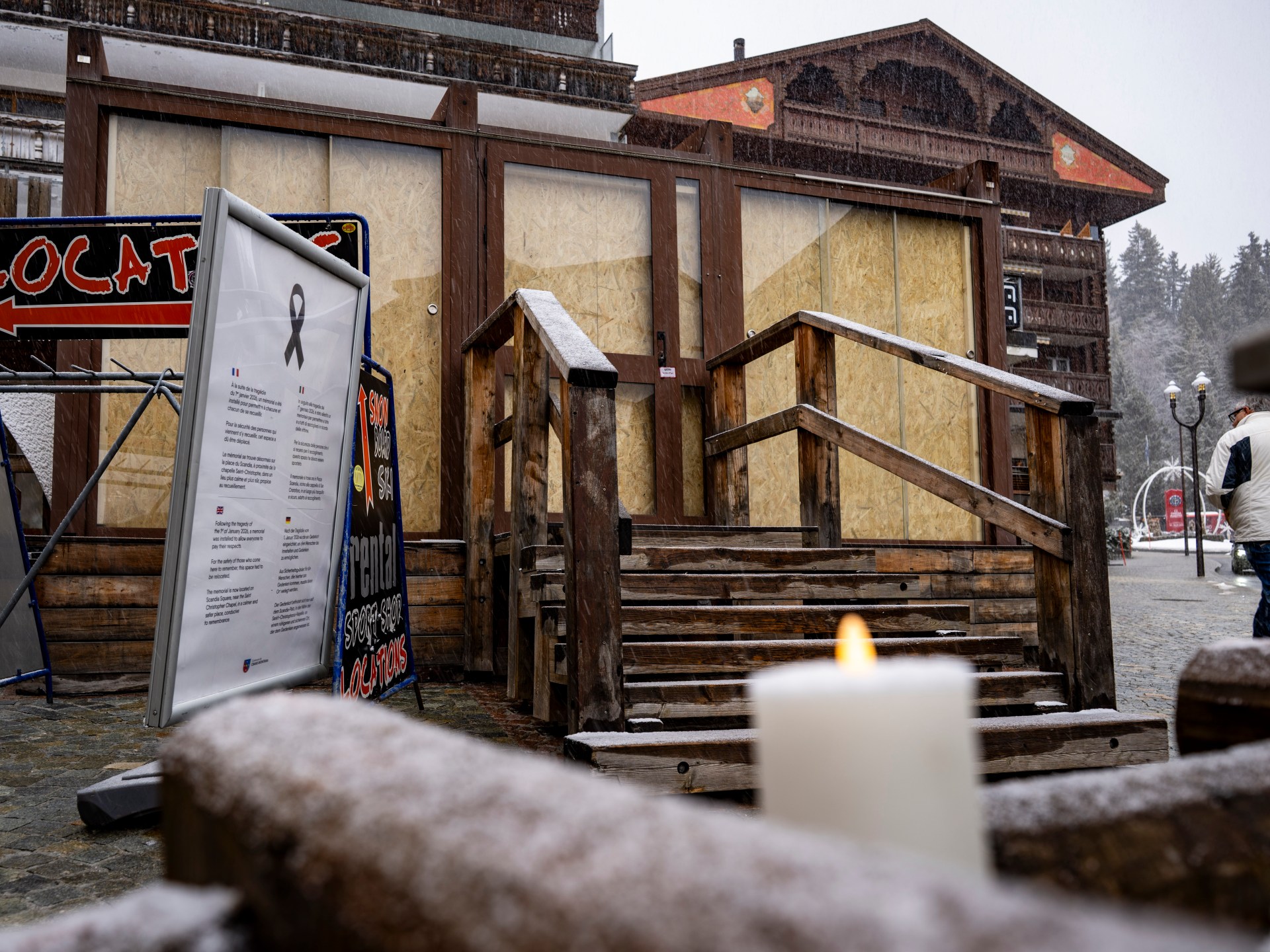
A five-year-old boy and his father, who were detained as part of United States President Donald Trump’s aggressive immigration raids and held at a detention facility in Texas, have returned to their home in Minnesota.
Liam Conejo Ramos and his father, Adrian, who are asylum seekers from Ecuador, spent 10 days in the Dilley detention centre until US District Judge Fred Biery ordered their release on Saturday.
Recommended Stories
list of 3 itemsend of list
US Representative Joaquin Castro, a Texas Democrat, wrote in a social media post that he picked them up on Saturday night at the detention facility and escorted them home on Sunday.
“Liam is now home. With his hat and his backpack,” Castro wrote, including photos of the child. “We won’t stop until all children and families are home.”
Immigration and Customs Enforcement (ICE) agents arrested Liam and his father on January 20 as the boy arrived home from preschool.
Images of the boy with a blue bunny hat and backpack being held by officers spread around the world and added fire to public outrage at the federal immigration crackdown, during which agents have shot dead two US citizens.
Liam was one of four students detained by immigration officials in a Minneapolis suburb, according to the Columbia Heights Public School District.
In a statement, Department of Homeland Security (DHS) Assistant Secretary Tricia McLaughlin said ICE did not target or arrest Liam, and that his mother refused to take him after his father’s apprehension. His father told officers he wanted Liam to be with him, she said.
“The Trump administration is committed to restoring the rule of law and common sense to our immigration system, and will continue to fight for the arrest, detention, and removal of aliens who have no right to be in this country,” McLaughlin said.
Neighbours and school officials say that federal immigration officers used the preschooler as “bait” by telling him to knock on the door to his house so that his mother would answer.
DHS called the description of events an “abject lie”. It said the father fled on foot and left the boy in a running vehicle in their driveway.
Biery said in a scathing opinion that “the case has its genesis in the ill-conceived and incompetently-implemented government pursuit of daily deportation quotas, apparently even if it requires traumatizing children”.
He criticised what he called the government’s apparent “ignorance” of the US Declaration of Independence, which “enumerated grievances against a would-be authoritarian king over our nascent nation”.
Biery also cited the Fourth Amendment of the US Constitution, which protects the right against “unreasonable searches and seizures”.
US Representative Ilhan Omar, a Democrat from Minnesota, posted a photo to social media of her with Liam, his father and Castro, with her holding Liam’s Spider-Man backpack.
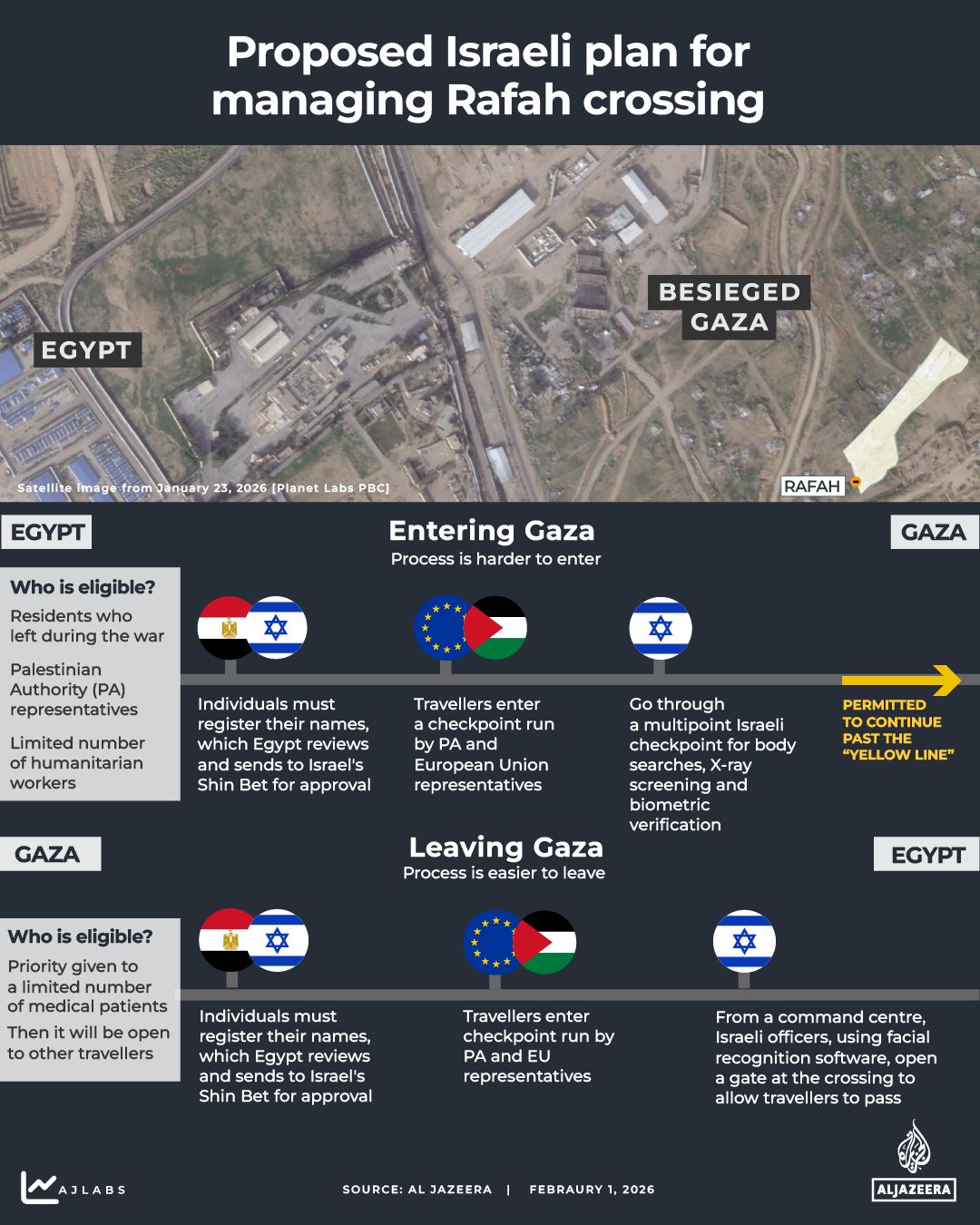
Israel says it has partially reopened the critical Rafah border crossing between Gaza and Egypt in a limited capacity.
Israel announced on Sunday that the crossing had reopened in a trial. Meanwhile, COGAT, the Israeli military agency that controls aid to Gaza, said in a statement that the crossing was actively being prepared for fuller operation, adding that residents of Gaza would begin to pass through it on Monday.
Recommended Stories
list of 3 itemsend of list
“In accordance with the ceasefire agreement and a directive of the political echelon, the Rafah Crossing was opened today for the limited passage of residents only,” COGAT said.
The Israeli army said it has completed a complex that will serve as a screening facility for Palestinians passing in and out of Gaza through the Rafah crossing, which will be open for the movement of some people on Monday.
Rafah has been largely shut since it was seized by Israel in May 2024, amid the country’s two-year genocidal war on Gaza.
Al Jazeera’s Hani Mahmoud, reporting from Khan Younis in southern Gaza, said the crossing’s reopening was an “uncomfortable dynamic”.
“Palestinians want to leave, but at the same time, they’re worried they won’t be able to come back,” he said. “People said the purpose for them departing would strictly be for medical evacuation or continuing their education, and they want to come back later on.”
Ismail al-Thawabta, the director of Gaza’s Government Media Office, told Al Jazeera that about 80,000 Palestinians who left Gaza during Israel’s war are seeking to return.
An estimated 22,000 wounded and sick people are also “in dire need” to leave Gaza for treatment abroad, he added.
Israeli attacks continue
An Israeli drone attack on Sunday killed one person in the northwest of Rafah city in southern Gaza, according to a source at the Nasser Medical Complex.
Palestinian media outlets confirmed the death of Khaled Hammad Ahmed Dahleez, 63, in the Al-Shakoush area.
Meanwhile, in central Gaza, an Israeli drone attack killed a Palestinian in the Wadi Gaza area.
The attacks came after at least 31 people were killed on Saturday in multiple Israeli air raids on northern and southern Gaza.
Israeli forces have killed at least 511 Palestinians, and wounded 1,405, since the start of the US-backed “ceasefire” on October 10.
Israel to ban MSF
The Israeli government dealt another blow to the dire humanitarian situation in Gaza, announcing on Sunday that it will terminate the humanitarian operations of Doctors Without Borders, known by its French acronym MSF, in the besieged Palestinian territory after it failed to provide a list of its Palestinian staff.
The decision followed “MSF’s failure to submit lists of local employees, a requirement applicable to all humanitarian organisations operating in the region”, Israel’s Ministry of Diaspora Affairs and Combating Antisemitism said.
In December, Israel announced it would prevent 37 aid organisations, including MSF, from working in Gaza from March 1 for failing to submit detailed information about their Palestinian employees, drawing widespread condemnation from NGOs and the United Nations.
Israel’s decision to terminate MSF’s operations in Gaza “is an extension of Israel’s systematic weaponisation and instrumentalisation of aid”, James Smith, an emergency doctor based in London, told Al Jazeera.
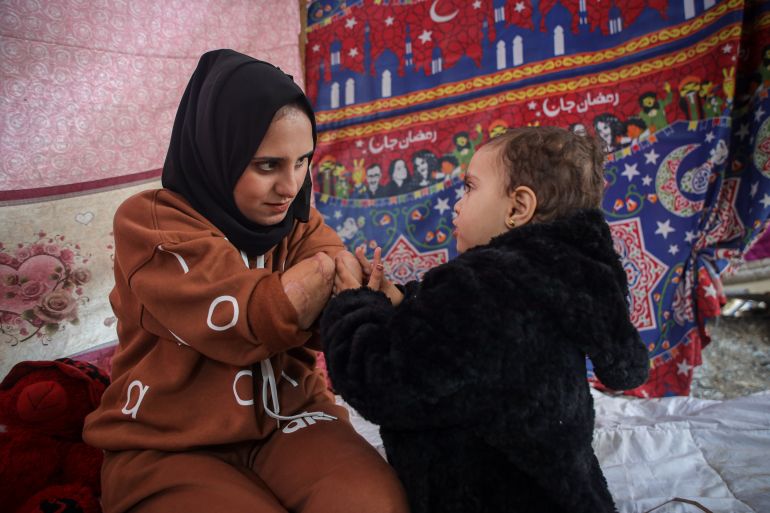
Gaza City – With what remains of her wounded forearms, Nebal al-Hessi scrolls on her phone to follow news updates on the reopening of the Rafah land crossing from her family’s tent in an-Nazla, Jabalia in the northern Gaza Strip.
Nebal’s hands were amputated in an Israeli artillery attack on the home where she had taken shelter with her husband and her daughter in the Bureij refugee camp in central Gaza, on October 7, 2024.
Recommended Stories
list of 3 itemsend of list
More than a year later, the 25-year-old mother is one of thousands of wounded people placing their hopes on the reopening of the Rafah crossing between Gaza and Egypt as they seek access to adequate medical treatment outside the besieged Palestinian territory.
“It’s been a year and five months since I got injured … Every day, I think about tomorrow, that I might travel, but I don’t know,” Nebal tells Al Jazeera in a quiet voice.
Recalling the attack, Nebal says she was sitting on her bed holding her baby daughter Rita, trying to communicate with her family in northern Gaza, when the shell hit suddenly.
“I was trying to catch an internet signal to call my family … my daughter was in my lap… suddenly the shell hit. Then there was dust; I don’t remember anything else,” Nebal says.
“It was the shell fragments that amputated my hands,” she recounts.
‘Life is completely paralysed’
Nebal was taken to the hospital with severe injuries, including complete amputation of both upper limbs up to the elbows, internal bleeding, and a leg injury. She underwent two abdominal surgeries.
She spent about 40 days in the hospital before beginning a new stage of suffering in displacement tents, without the most basic long-term care.
Today, Nebal, an English translation graduate and mother to two-year-old Rita, relies almost entirely on her family for the simplest daily tasks.
“I can’t eat or drink on my own … even getting dressed, my mother, sister, and sister-in-law mainly help me,” she says sorrowfully.
“Even going to the bathroom requires help. I need things in front of me because I cannot bring them myself.”
Nebal talks about the pain of motherhood left suspended, as her daughter grows up before her eyes without her being able to hold her or care for her.
“My little daughter wants me to change her, feed her, give her milk, hold her in my arms like other mothers… she asks me, and I can’t,” Nebal says with sorrow.
“My life is completely paralysed.”
Doctors tell Nebal that she urgently needs to travel to continue treatment and have prosthetic limbs fitted, emphasising that she needs advanced prosthetics to regain a degree of independence, not just cosmetic appearance.
“Doctors tell me that I need a state or an institution to adopt my case so I can gradually return to living my normal life,” she adds.
Nebal with her two-year-old daughter, Rita [Abdelhakim Abu Riash/Al Jazeera]
With Palestinian authorities announcing arrangements to open the Rafah crossing today for batches of wounded people and medical patients, Nebal, like many others, lives in a state of anticipation mixed with fear.
According to Gaza’s Ministry of Health, thousands of wounded still require specialised treatment unavailable inside the Strip, while the scheduling of names depends on medical lists and complex approvals, amid the absence of a clear timetable or publicly announced priority criteria.
Nebal says she received repeated calls over the past months from medical organisations informing her that she would be among the first on the travel lists.
“They contacted me more than once, told me to prepare… they gave me hope,” she adds. “But this time, no one has contacted me yet.”
Today, Nebal fears her case might be overlooked again, or that the crossing’s opening could be merely a formality, disregarding the urgent needs of patients like her.
“I die a little every day because of my current situation … not figuratively. I’ve been like this for a year and four months, and my daughter is growing up in front of me while I am helpless,” she says.
Nebal with her two-year-old daughter, Rita [Abdelhakim Abu Riash/Al Jazeera]
Uncertain future
Nada Arhouma, a 16-year-old girl whose life has been completely altered by a single injury, is also hoping the crossing opens as soon as possible.
Nada, who was displaced with her family from Jabalia refugee camp in northern Gaza amid Israel’s two-year genocidal war on Gaza, was hit in the face by shrapnel while inside a displacement tent in Sheikh Radwan, Gaza City.
The incident caused the complete loss of one eye, in addition to fractures in her facial bones, orbital damage, and severe tissue tearing.
Her father, Abdul Rahman Arhouma, 49, says that her health deteriorated over time despite treatment attempts in Gaza.
“She entered the ICU at al-Shifa Hospital, then was transferred to Nasser Hospital. She stayed there for about two and a half months. They tried multiple times to graft her eye, but each operation failed, and the disfigurement worsened,” he says.
According to her father, Nada underwent three surgical attempts using tissue from her hand and other facial areas, but all failed, further complicating her medical and psychological condition.
“My daughter bleeds from her eye every day, and she has pus and discharge,” he says. “I am standing helpless, unable to do anything.”
Today, Nada needs constant assistance to walk and suffers from persistent dizziness and balance weakness. Her vision in the healthy eye is also affected.
“Even going to the bathroom, my sisters help me. I can’t walk alone,” Nada tells Al Jazeera in a soft voice.
A photo showing Nada’s condition before and after the injury [Courtesy of Abdul Rahman Arhouma]
Nada has an official medical referral and urgently needs to travel for reconstructive surgery and the implantation of a prosthetic eye. But her ability to get the treatments remains uncertain pending the reopening of Rafah – as is the case for other patients and wounded individuals.
“Since I’ve been in the hospital, I hear every week: next week the crossing will open. Honestly, I feel they are lying. I’m not optimistic,” Nada says.
Her father told Al Jazeera that the continuing wait for the Rafah crossing to reopen was “disappointing”.
“Unfortunately, we didn’t understand anything. All the reports came from Israeli sources, and it seemed Rafah looked like a gate for prisoners, not for travel,” he says.
“Our situation is difficult, and it’s clear we face a long wait to secure my daughter’s right to treatment.”
Pilot reopening
Sunday was the first pilot reopening day at Rafah, amid ambiguity and a lack of clarity about the mechanism, particularly regarding the number of patients and wounded who would be allowed to travel.
According to Gaza’s Ministry of Health, thousands of patients and wounded people require urgent medical transfers outside the Strip, amid the collapse of the healthcare system and lack of resources.
The World Health Organization has repeatedly confirmed that Gaza’s health system is “on the brink of collapse”, and that delays in travelling for critical cases threaten their lives.
Meanwhile, Israel has said it will only allow those whose names it has approved in advance to cross, without any clear announcement on daily numbers or approved criteria, leaving families of patients in constant anticipation and frustration.
For Nada’s family, this “experimental opening” means little so far.
“We can’t plan, neither to stay nor to leave,” her father says. “The decision is not in our hands. One lives in a whirlpool, unable to decide what happens. Even the Ministry of Health has not disclosed anything.”
‘Devastating’ struggle to access treatment
Raed Hamad, 52 and a father of four, is also desperate to leave Gaza in order to seek treatments and medication that are not available in the war-ravaged territory.
Hamad was undergoing kidney cancer treatment a year before the war started. He underwent kidney removal after tumour detection to prevent its spread. But the outbreak of the war in October 2023 halted his treatment protocol, significantly affecting his health.
Hamad lives in the remains of his destroyed home in Khan Younis, amid the devastation left by the war, under deteriorating humanitarian conditions.
He describes his current struggle to access treatment during the war, alongside other cancer patients he meets in the hospital’s oncology department, as “devastating.”
“The war has made it almost impossible to obtain medicines and medical supplies. Cancer treatments and known treatment protocols are unavailable,” he says.
“Food, its nature, and the harsh crises we’ve endured during the war—all of this has greatly affected my health.”
Raed’s weight dropped from 92kg (203lb) to 65kg (143lb) due to complications from the disease, lack of treatment, and malnutrition.
“I continue my treatment whenever I can at my own expense,” he says. “Every time I go to the hospital, I cannot find my treatment and see that capabilities in Gaza are extremely limited. My immunity is low, and every day I face new hardships.
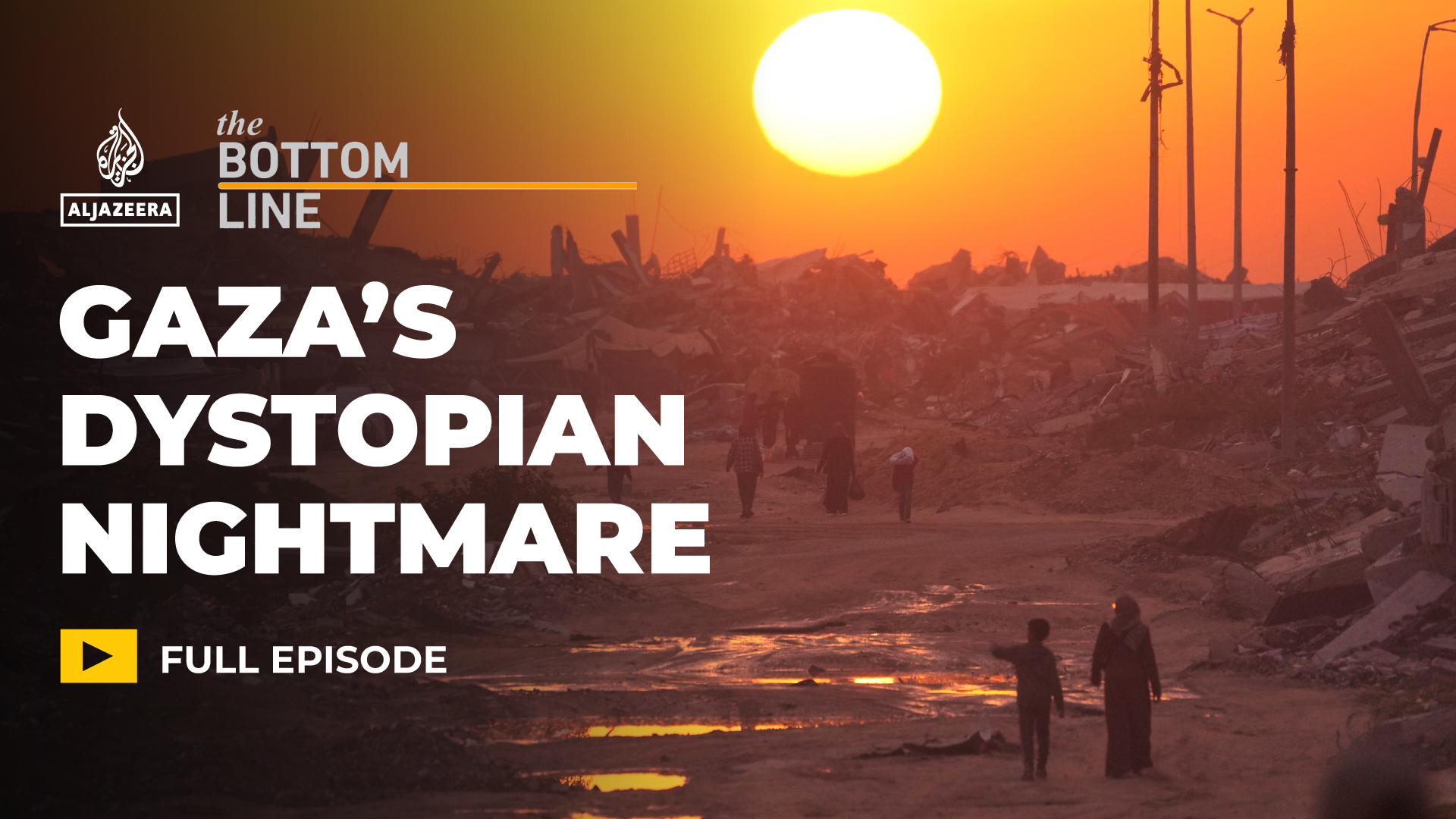
Why are Gazans living in misery, with daily Israeli bombings, as the US promises ‘peace, stability and opportunity’?
United States plans for Gaza amount to a “theme park of dispossession” for Palestinians, argues Drop Site News Middle East Editor Sharif Abdel Kouddous.
Abdel Kouddous tells host Steve Clemons the draconian measures planned for the two million shell-shocked Palestinians in Gaza are an Orwellian labyrinth of biometrics, bureaucracy and “a lab for government surveillance” – all meant to drive them out.
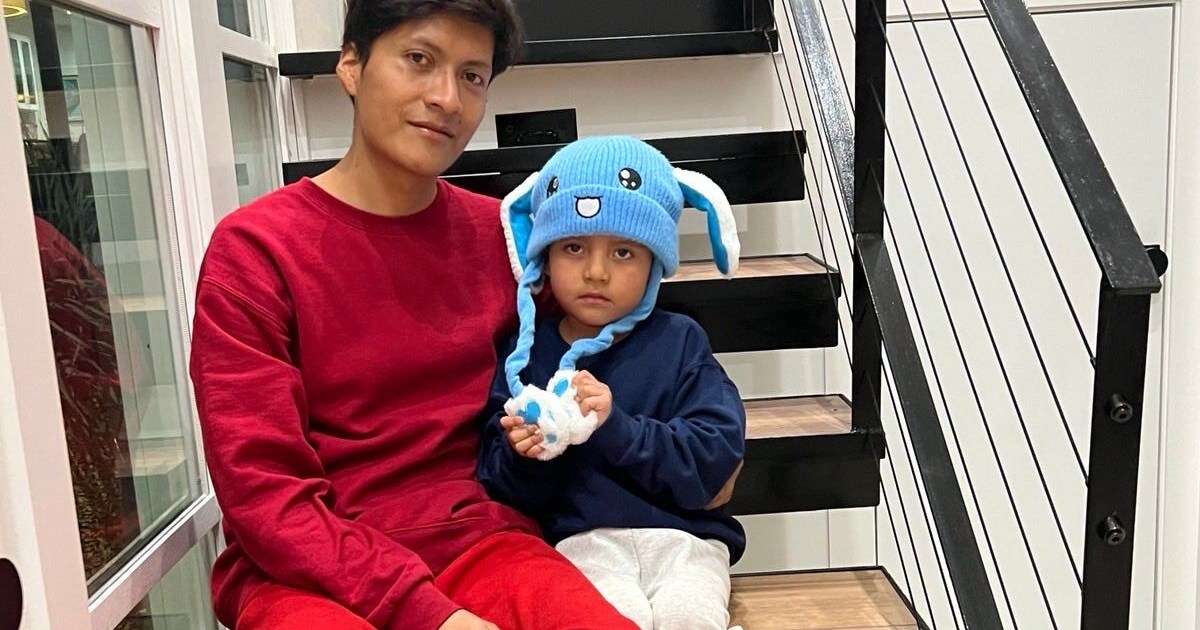
A teenager injured in the fire that engulfed a Swiss Alpine bar during New Year celebrations has died in hospital, according to Swiss authorities, increasing the death toll of one of the worst disasters in the country’s modern history to 41.
Saturday’s death was announced a month after the inferno at the ski resort of Crans-Montana. Another 115 were injured, most of whom remain in various hospitals.
Recommended Stories
list of 3 itemsend of list
“An 18-year-old Swiss national died at a hospital in Zurich on January 31,” the Wallis canton’s public prosecutor Beatrice Pilloud said in a brief statement.
“The death toll from the fire at Le Constellation bar on January 1, 2026 has now risen to 41.”
Pilloud said no further information would be released at this stage by her office, which is investigating the incident.
Those killed in the disaster were aged 14 to 39, but the majority were teenagers. Only four were aged over 24.
Among the dead are 23 Swiss nationals, including one French-Swiss dual national, and 18 foreigners.
Public prosecutors believe the fire started when revellers raised champagne bottles with sparklers attached too close to sound insulation foam on the ceiling of the bar’s basement.
Authorities are looking into whether the foam conformed to regulations and whether the candles were permitted for use in the bar. They say fire safety inspections had not been carried out since 2019.
Swiss prosecutors have opened a criminal investigation into the owners – French couple Jacques and Jessica Moretti – on suspicion of negligent homicide, negligent bodily harm and causing a fire by negligence.
The court of compulsory measures in the southwestern Valais region on January 12 ordered three months of pretrial detention for Jacques Moretti, but on January 23 ordered his release on bail.
The Crans-Montana municipality’s current head of public safety and a former Crans-Montana fire safety officer are also under criminal investigation.
Following the fire, seriously wounded patients were airlifted to various hospitals and specialist burns units throughout Switzerland and four other European countries.
Switzerland’s Federal Office for Civil Protection told the AFP news agency on Friday that at its last count, as of Monday, 44 patients were being treated abroad.
The Wallis health ministry told AFP that 37 patients were still in Swiss hospitals, as of Monday.
The picture is constantly changing, with patients moving between hospitals for different stages of their treatment, and some patients being readmitted. Some remain in intensive care.
The fire has tested relations with neighbouring Italy, which lost nationals in the blaze and has protested the release on bail of the bar’s owner.
![Nebal with her two-year-old daughter, Rita [Abdelhakim Abu Riash/ Al Jazeera]](https://i0.wp.com/www.aljazeera.com/wp-content/uploads/2026/02/873A5938-1769968070.jpg?w=696&ssl=1)
![Nebal with her two-year-old daughter, Rita [Abdelhakim Abu Riash/ Al Jazeera]](https://i0.wp.com/www.aljazeera.com/wp-content/uploads/2026/02/873A6167-1769968142.jpg?w=696&ssl=1)