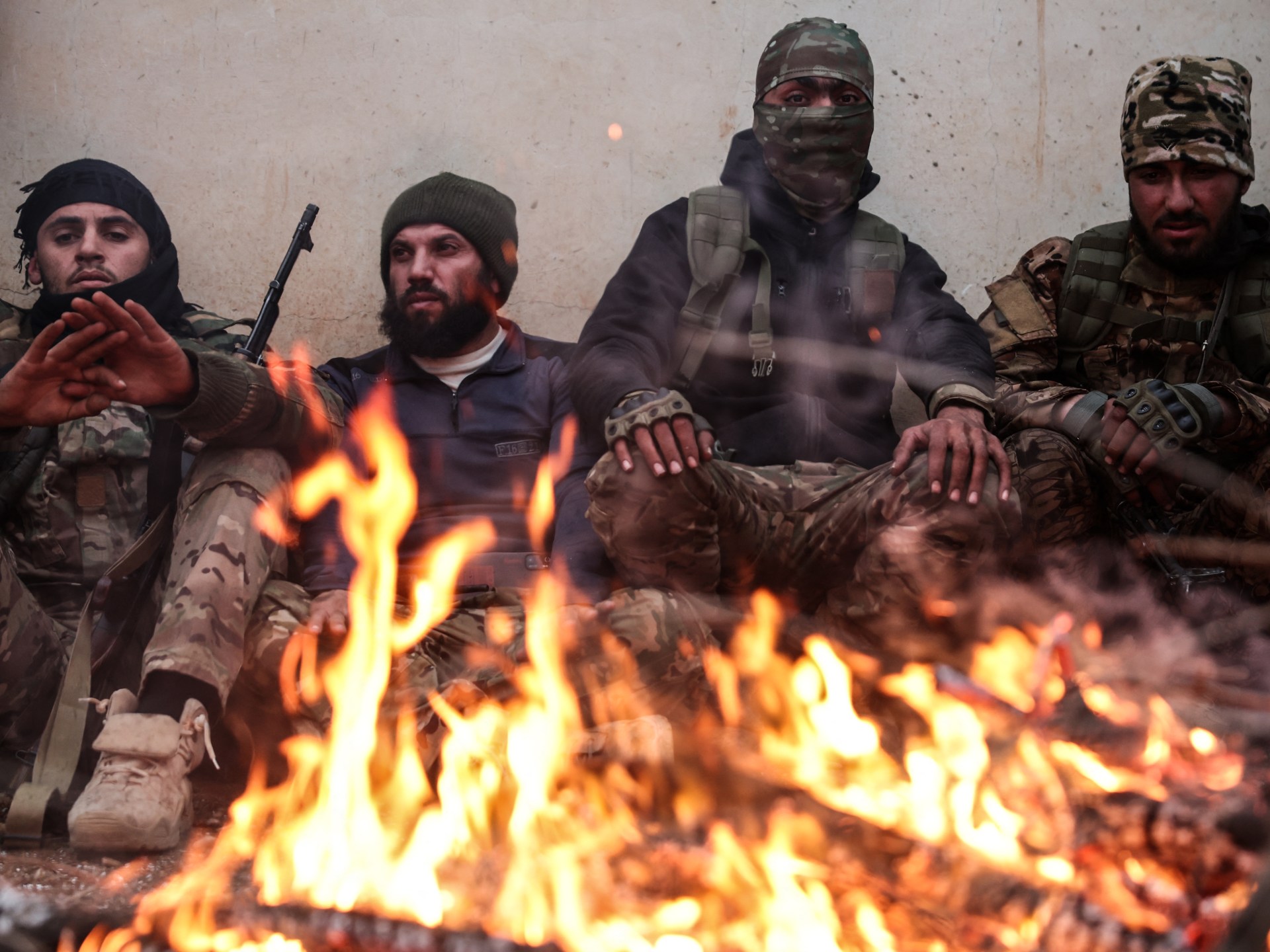
Syria’s Kurdish forces have reached a comprehensive agreement with the government to integrate with the Syrian army.
The interim government in Damascus has been fighting an offensive in the north of the country against the Kurdish-led Syrian Democratic Forces (SDF) over recent weeks as it seeks to consolidate control of the country following the overthrow of longtime leader Bashir al-Assad in December 2024.
However, a ceasefire over the past week or so has now resulted in an agreement for a phased integration of the Kurdish military forces into the army, according to an SDF statement issued on Friday.
Shortly afterwards, Syrian state TV confirmed the agreement, reporting that government officials said it would be implemented immediately.
The army has seized swaths of northern and northeastern territory in the last three weeks from the SDF in a rapid turn of events that has consolidated the leadership of President Ahmed al-Sharaa, after months-long talks between the sides failed to merge the fighters and Kurdish political entities into central institutions.
Under the new agreement, forces will withdraw from the front lines, government units will deploy to the centres of the cities of Hasakah and Qamishli, and local security forces will be merged.
The ceasefire between the sides was largely holding, even as they accused each other of violating its terms, as the government pressed its demand for the integration of the remaining Kurdish-run enclaves with the state, while the SDF sought to cling on in the northeastern enclave it held.
When Sajid Javid remarked that he would not allow people like his own parents to enter the United Kingdom today, he was not making an offhand comment. He was articulating a view that has become increasingly central to British immigration politics. The UK’s first ethnic minority home secretary said he opposed admitting unskilled workers and those who do not speak English. By his own criteria, neither his father, who arrived as an unskilled worker, nor his mother, who did not speak English, would have been permitted to settle in the country. Promoting his memoir, The Colour of Time, Javid was unambiguous: immigration must fall, English-language requirements should be tougher, and entry should be limited to skilled workers.
Far from being exceptional, Javid’s position points to a broader and increasingly visible pattern in British politics. Some of the most prominent anti-immigration positions of recent years have been articulated by ethnic minority politicians.
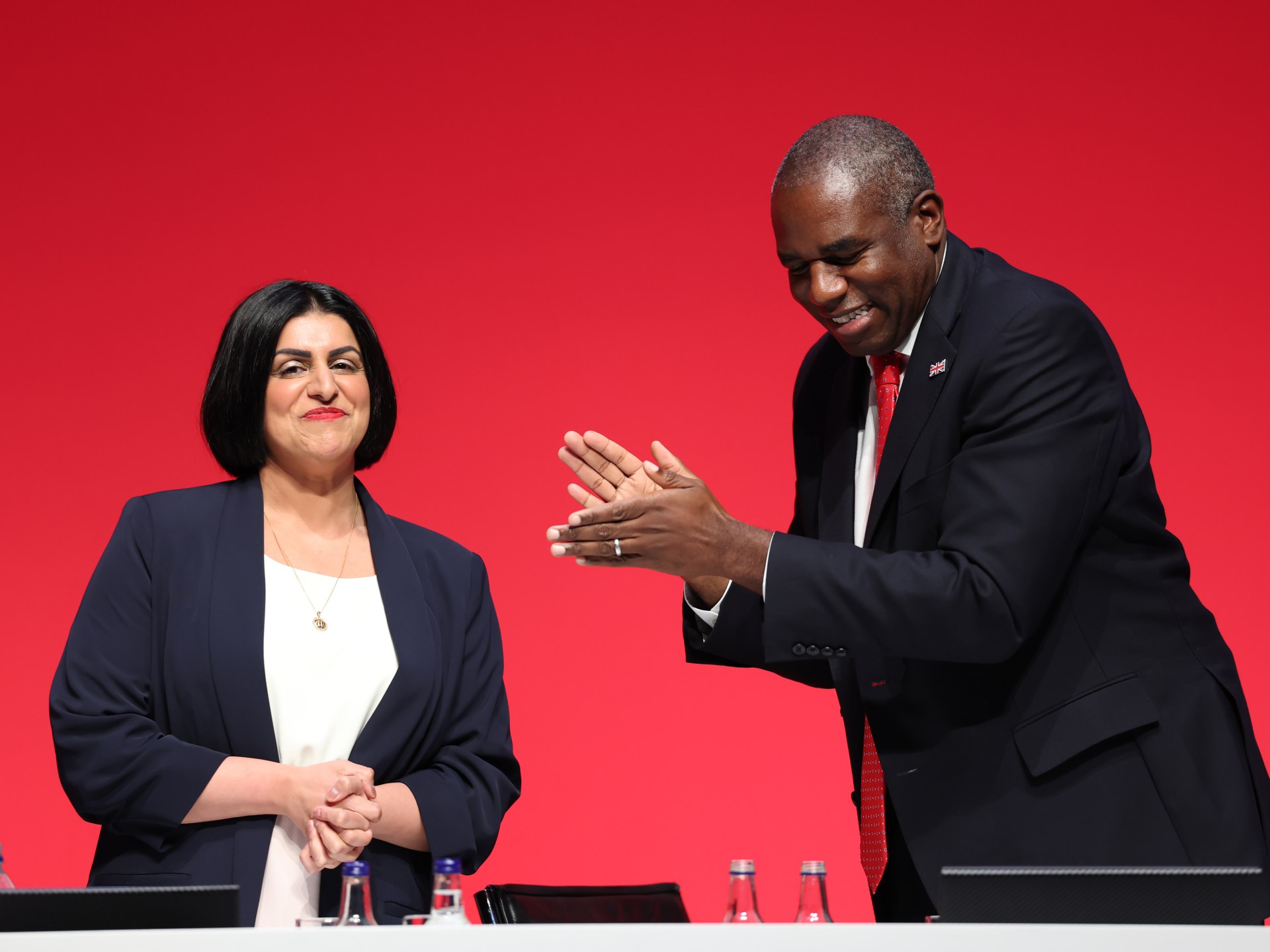
This pattern is most visible at the Home Office, the government department responsible for borders, asylum, detention and deportation. Since 2018, the role of home secretary has repeatedly been held by ethnic minority politicians, including Javid himself, Priti Patel, Suella Braverman and James Cleverly under Conservative governments, followed by Shabana Mahmood under Labour. Each, in turn, has advanced a tougher approach to immigration control.
Under Priti Patel, a points-based immigration system was introduced and the controversial plan to send asylum seekers to Rwanda was developed. Braverman went further still, declaring that seeing deportation flights take off would be her “dream” and her “obsession”. Yet despite the increasingly punitive tone, overall immigration numbers rose during this period. Rhetoric and outcomes diverged. Even so, the political signal from the Home Office was unmistakable: firmness on borders above all else.
The explanation for this phenomenon lies not simply in personal biography or individual conviction. Drawing on my research on ethnic minority representation in Britain, I argue that these appointments reflect a clear political logic. When political parties harden their stance on immigration, they often rely on minority politicians to act as reputational shields, figures who can front restrictive policies while insulating parties from accusations of racism.
Reputational shields matter because immigration control in the UK has long been racialised. From post-war restrictions on Commonwealth migration to the “hostile environment” policies associated with former Prime Minister Theresa May, border control has frequently intersected with race and belonging. When such policies are championed by ethnic minority politicians, criticism can more readily be reframed as ideological disagreement rather than racial exclusion.
Nowhere is this dynamic clearer than at the Home Office. The department effectively demands a hard line on immigration from its secretary, and appointing minority politicians to the role has repeatedly proven politically expedient. This does not mean white politicians are more liberal, as Theresa May’s record makes clear, but it does help explain why parties have been willing to place minority figures at the forefront of border enforcement. Four consecutive Conservative home secretaries were non-white.
This logic now extends beyond the Conservative Party. Labour’s appointment of Shabana Mahmood as home secretary marks a notable shift for a party that has historically sought to signal greater nuance on immigration. Since taking office, Mahmood has announced and is implementing sweeping asylum reforms, which she has described as “the most substantial reform to the UK’s asylum system in a generation”.
That Keir Starmer has placed a minority politician at the forefront of Labour’s tougher turn on immigration suggests an implicit recognition of this reputational logic. Mahmood’s identity does not determine her policy positions, but it does shape how those positions are received, particularly in a media and political environment where immigration debates are routinely filtered through accusations of racism. In this sense, Labour appears to have absorbed a lesson from Conservative governments about how ethnic minority representation can function as political cover when tightening border policy.
Immigration is now cited by about four in 10 Britons as the most important issue facing the country. For Labour, long uneasy talking about borders and enforcement, Mahmood’s stance represents a recalibration. Her measures include tightening the route from asylum to permanent settlement, reforming human rights legislation to facilitate removals, and suspending visas for countries that refuse to accept returned nationals. She has been unapologetic, arguing that the pace and scale of immigration has destabilised communities and fuelled perceptions of unfairness. While Labour backbenchers and the Green Party have accused her of scapegoating migrants, figures on the political right have welcomed her approach.
It would, however, be a mistake to portray minority politicians as mere symbols or cynical mouthpieces. Many articulate their positions through narratives of fairness, legality and contribution. Javid has spoken of his family’s experiences of racism while emphasising that they entered the UK legally and worked hard. Mahmood has similarly argued that constituents who “did things the right way” feel aggrieved by irregular arrivals crossing the Channel in small boats.
These arguments reflect a broader shift in how immigration is discussed: less overtly in racial terms and more through the language of fairness, order and control. Yet this reframing does not escape the UK’s longer history of racialised immigration policy. Instead, ethnic minority politicians increasingly play a visible legitimising role within it.
The prominence of politicians of colour at the forefront of the UK’s immigration crackdown is therefore not a paradox. It is a window into how representation is operationalised in practice. When Sajid Javid says his parents would not be admitted today, he is not disavowing his background but signalling his political credibility. The deeper question is what happens when such credibility is no longer enough to contain the moral and social consequences of a system built on exclusion. Race, borders and political legitimacy, and enduring questions about belonging and citizenship, remain tightly bound together in contemporary British politics.
Ukrainian President Volodymyr Zelenskyy says he plans to increase his armed forces’ lethality as part of a strategy to disarm Moscow and turn a deadlocked negotiating table.
“The task of Ukrainian units is to ensure a level of destruction of the occupier at which Russian losses exceed the number of reinforcements they can send to their forces each month,” he told military personnel on Monday.
Recommended Stories
list of 4 itemsend of list
“We are talking about 50,000 Russian losses per month, this is the optimal level,” he said.
Video analysis, Zelenskyy recently said, showed 35,000 confirmed kills in December 2025, up from 30,000 in November and 26,000 in October. But on Monday, he clarified that the 35,000 were “killed and badly wounded occupiers”, who would not be returning to the battlefield.
His commander in chief, Oleksandr Syrskii, conservatively estimated “more than 33,000” confirmed kills in December.
Ukraine believes it has killed or maimed 1.2 million Russians since Russia’s full-scale invasion in 2022.
The Center for Strategic and International Studies recently estimated that Russia had suffered 1.2mn casualties, including at least 325,000 deaths, and Ukraine up to 600,000 casualties, with as many as 140,000 deaths.
Al Jazeera cannot confirm casualty estimates from either side.
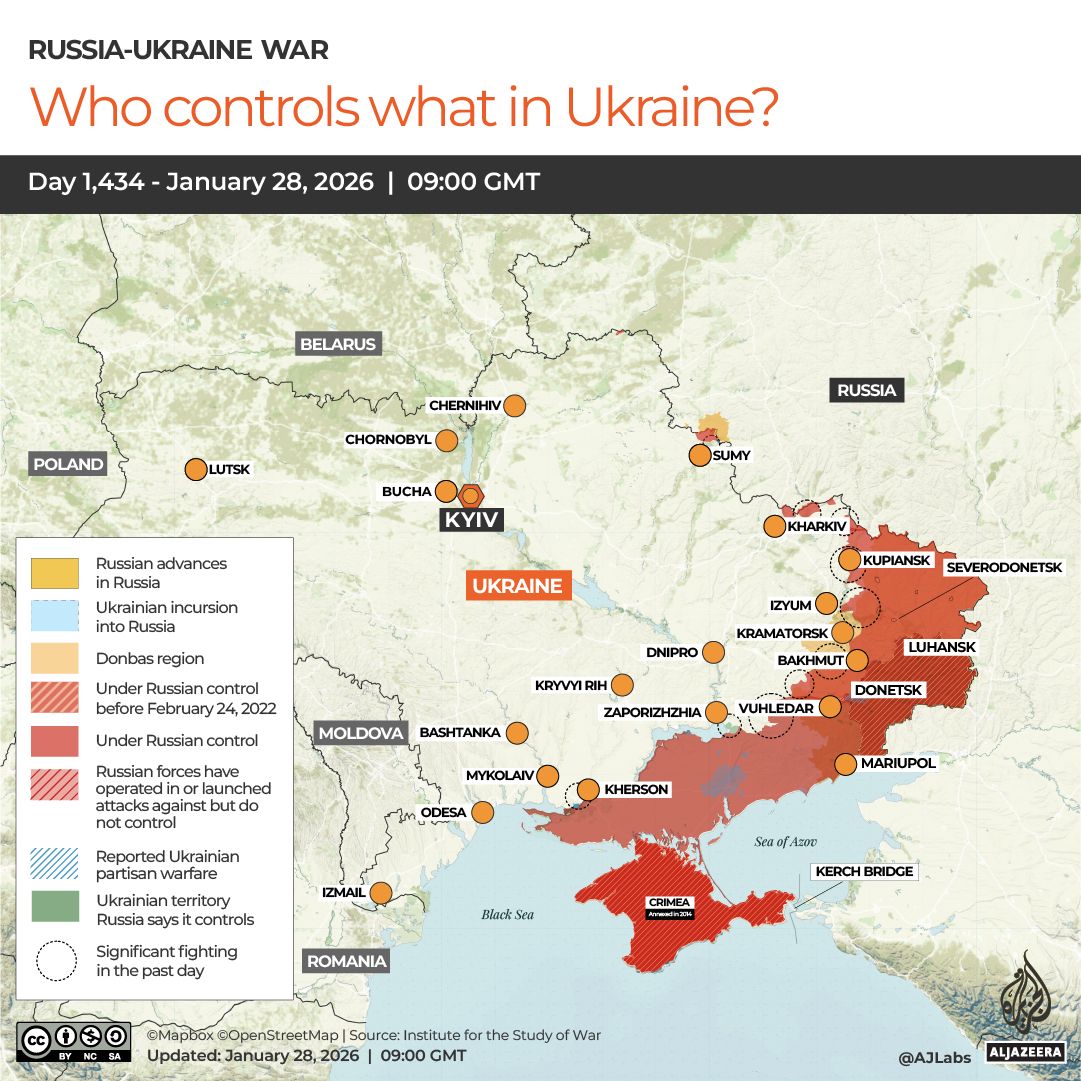
The war is currently stalemated, with Russia struggling to make meaningful territorial gains.
Russia held just more than a quarter of Ukraine a month into its full-scale war, in March 2022, according to geolocated footage.
The following month, Ukraine pushed Russian forces back from a string of northern cities – Kyiv, Kharkiv, Sumy and Chernihiv – leaving Russia in possession of one-fifth of the country.
In August and September 2022, then-ground forces commander Syrskii masterminded a campaign to push Russian forces east of the Oskil River in the northern Kharkiv region, and Russia itself withdrew east of the Dnipro River in the southern region of Kherson, leaving it with 17.8 percent of the country.
In the last three years, Russia increased that number to 19.3 percent.
For almost six months, Russia has struggled to seize two towns it has almost surrounded with 150,000 troops in Ukraine’s eastern Donetsk region.
“In Pokrovsk and Myrnohrad, the Ukrainian Defence Forces continue to contain the enemy, which is trying to infiltrate the northern districts of both cities in small groups,” Syrskii said last week.
Russia claimed it had captured the northern city of Kupiansk last month, but Russian military reporters say Ukrainian forces have retaken control of the town and surrounded the Russian assault force within it.
The engine of war
Zelenskyy’s strategy involves increasing domestic drone production and honing the skills of drone operators, because drones now hit 80 percent of targets on the battlefield.
“In just the past year alone, 819,737 targets were hit – hit by drones. And we clearly record every single hit,” he said on Monday.
The military has instituted a point system, rewarding drone operators for the number and precision of their hits.
That reflects a system put in place in April 2024, offering financial rewards to ground troops for destroying Russian battlefield equipment, culminating in $23,000 for capturing a battle tank.
Zelenskyy appointed Mykhailo Fedorov as defence minister this month, who previously served as digital transformation minister and deputy prime minister for innovation, education, science and technology.
Last week, Fedorov began to appoint his advisers. They include Serhiy Sternenko, who last year created Ukraine’s largest non-state supplier of military drones, to step up drone production. Fedorov’s former deputy at the digital transformation ministry, Valeriya Ionan, was put in charge of international collaborations, thanks to her experience with Silicon Valley giants like Google and Cisco. Fedorov also appointed Serhiy Beskrestnov as technological adviser. Beskrestnov is an expert on Russian drone and electronic warfare innovation.
Russian assaults pound Ukraine
Zelenskyy’s war aims stem in part from the fact that Russia refuses to give up its campaign to seize more of Ukraine.
Despite US President Donald Trump’s efforts to bring about a ceasefire, talks remain deadlocked over the future of Donetsk.
Russia’s worst attack against Ukrainian cities and energy facilities last week came on Saturday, involving 375 drones and 21 missiles, as Russian, US and Ukrainian delegations were negotiating a ceasefire in Abu Dhabi.
The strike left 1.2 million homes without power nationwide, including 6,000 in Kyiv.
Energy Minister Denys Shmyhal said 800,000 homes in Kyiv were still without power following three previous strikes this month. “Constant enemy attacks unfortunately keep the situation from being stabilised,” he wrote on social media.
Zelenskyy told Ukrainians in an evening video address that electricity supply problems were still widespread in Kyiv, Kryvyi Rih, Dnipro and in the Chernihiv and Sumy regions.
“We are scaling up assistance points and warming centers,” he said, adding that 174 [crews] were working to fix the damage in Kyiv alone. Shmyal said 710,000 people were still without power in Kyiv.
A Czech grassroots initiative fundraised $6m to buy hundreds of electric generators for Ukrainian households. On Friday, the European Commission said it was sending 447 generators to Ukraine.
On Wednesday, Russian drones killed three people. Two of them were a young couple in Kyiv killed when a drone struck their apartment building. Rescuers found only their four-year-old daughter alive.
“When I carried her out, the girl started crying very hard, and then she began to shake violently,” said Marian Kushnir, a journalist who was a neighbour of the couple.
At least five more people died when a drone struck a passenger train in the northern Kharkiv region, and two children and a pregnant woman were wounded when 50 drones rained down on the southern port of Odesa.
Talks in Abu Dhabi ended without a ceasefire. Kremlin spokesman Dmitry Peskov had said before they began that Russia was not willing to compromise on any of its territorial demands.
US Secretary of State Marco Rubio said talks were focusing on the nub of disagreement between the two sides, which is Ukraine’s refusal to hand over the remaining one-fifth of Donetsk that Moscow does not control.
Talks are scheduled to continue in Abu Dhabi on Sunday, officials said.
Unvarnished truth from Zelenskyy
In a scathing speech to the World Economic Forum in Davos, Zelenskyy accused his European allies of “wait-hoping” the Russian threat would disappear after almost four years of war in Ukraine.
“Europe relies only on the belief that if danger comes, NATO will act. But no one has really seen the Alliance in action. If Putin decides to take Lithuania or strike Poland, who will respond?” Zelenskyy asked.
US President Donald Trump’s threat to take Greenland by force on January 17, he said, revealed Europe’s lack of readiness when seven Nordic countries sent 40 soldiers to the island.
“If you send 30 or 40 soldiers to Greenland – what is that for? What message does it send? What’s the message to [Russian President Vladimir] Putin? To China? And even more importantly, what message does it send to Denmark – the most important – your close ally?”
In contrast, said Zelenskyy, Trump was willing to seize Russian tankers selling sanctioned oil, and put Venezuelan President Nicolas Maduro on drug charges, while Putin, an indicted war criminal, remained free. “No security guarantees work without the US,” he said.
NATO Secretary-General Mark Rutte echoed those sentiments in a speech to the European Parliament on Monday [January 26].
Panama’s Supreme Court has ruled that the contracts under which a Chinese company operates ports on the Panama Canal are unconstitutional.
The decision regarding the facilities run by Hong Kong-based CK Hutchison was announced late on Thursday. It comes one year after United States President Donald Trump threatened to seize control of the crucial passageway, claiming it was effectively under Chinese control and therefore a security threat.
Recommended Stories
list of 3 itemsend of list
The court ruled that the laws and acts underpinning the concession contracts between the state and the Panama Ports Company (PPC) for the development, construction, operation and management of the two port terminals violated the country’s constitution.
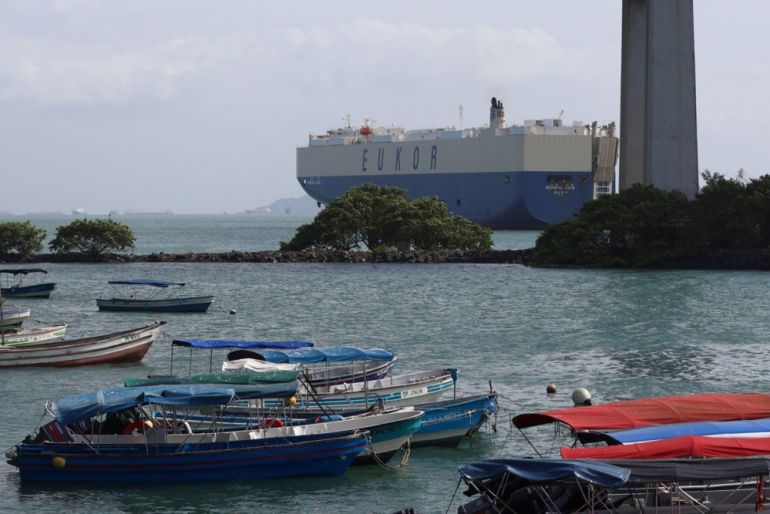
The CK Hutchison subsidiary has held the contracts, which allow it to operate the container ports of Balboa on the Pacific side of the Panama Canal and Cristobal on the Atlantic side, since the 1990s.
The arrangement was automatically renewed in 2021, handing PPC a licence for another 25 years.
The Panama Canal was the first target of Trump’s aggressive push for US dominance over the Western Hemisphere when he returned to the White House [File: EPA]
However, as he returned to the White House at the start of 2025, Trump was quick to push Panama to curb Chinese influence and boost US control of the strategic canal, which the US built but handed to Panama in 1999. The waterway carries an estimated 5 percent of global maritime trade.
The lawsuit to cancel PPC’s contracts was brought before the Panamanian court last year, based on allegations that the contracts were based on unconstitutional laws and that the Hong Kong company was not paying proper taxes.
An audit of the firm was also launched and found accounting errors and other irregularities that have reportedly cost Panama about $300m since the concession was extended, and an estimated $1.2bn during the original 25-year contract.
The ruling could force Panama to restructure the legal framework needed to hold port operations contracts and potentially require new tenders to operate the terminals.
PPC has denied all allegations and was also swift to reject the court’s decision.
“The new ruling … lacks legal basis and jeopardizes not only PPC and its contract, but also the well-being and stability of thousands of Panamanian families who depend directly and indirectly on port activity,” the company said in a statement.
China was also quick to comment. A foreign ministry spokesman said: “The Chinese side will take all necessary measures to resolutely safeguard the legitimate rights and interests of Chinese companies.”
After Trump issued his threat last year to take control of the canal, CK Hutchison announced a proposed sale of dozens of ports worldwide, including the Panamanian terminals, to a consortium led by US investment company BlackRock, a deal valued at nearly $23bn.
However, the deal appeared to stall due to objections from the Chinese government.
Trump’s bullish approach to Panama has been repeated regarding several other nations, including Venezuela and Greenland.
Threats of economic and military action have been issued, and the Trump administration has openly declared that it demands hegemony over the Americas.
President Donald Trump says he is speaking to Iran’s leadership amid a significant US military build-up in the Middle East, as regional leaders push for diplomacy to avoid a new conflict.
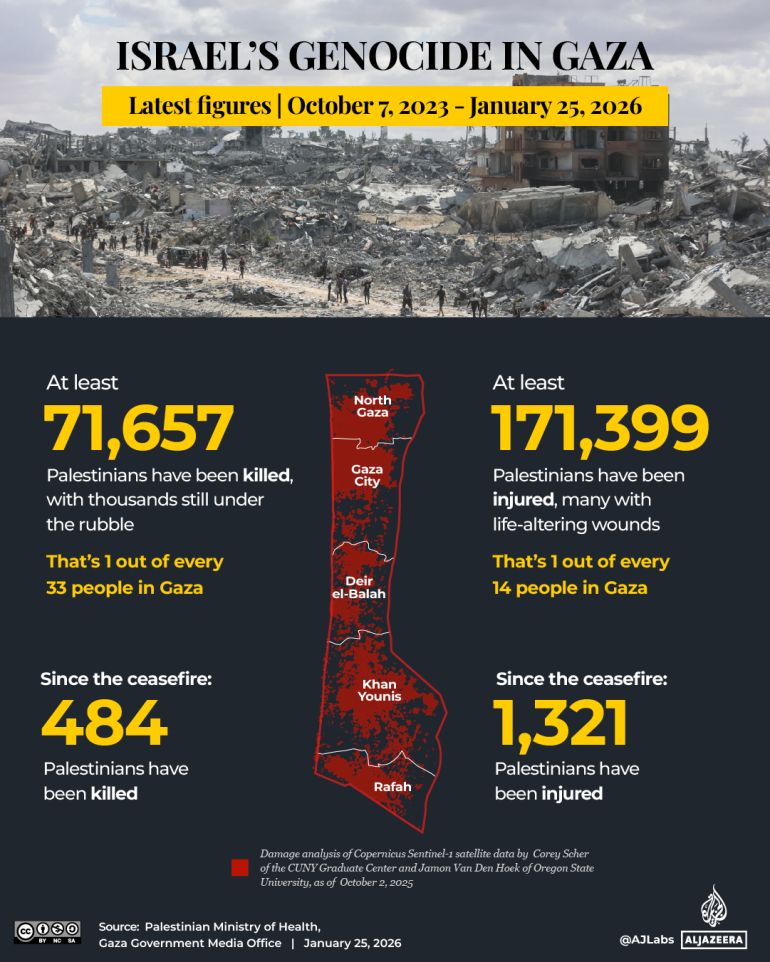
Gaza City — After 18 years as a teacher with an UNRWA-run school, Maryam Shaaban (name changed for safety reasons) fainted upon learning she was among 600 employees dismissed from their posts, the latest in a barrage of devastating blows borne out of Israel’s genocidal war on the besieged enclave.
Earlier in January, the United Nations agency for Palestinian refugees (UNRWA) announced a series of harsh austerity measures, including a 20 percent salary cut for local staff in Gaza, reduced working hours, and the termination of contracts for employees based outside Gaza who had been previously placed on “exceptional leave”.
Recommended Stories
list of 3 itemsend of list
According to a letter sent to affected staff by UNRWA Commissioner-General Philippe Lazzarini, the agency said it was forced to take steps due to a severe financial shortfall in its 2026 budget of some $220m.
The deficit threatens the agency’s ability to meet core operational obligations, including staff salaries and the continuation of essential humanitarian programmes.
Shaaban, 52, who is currently displaced in Egypt with her injured husband, began working with the UN agency in 2007 as a teacher at one of the agency’s schools in Jabalia, northern Gaza.
Like most residents of Gaza, she suffered a heavy price during Israel’s genocidal war.
She was displaced with her family from Jabalia to Nuseirat, in central Gaza, where they took refuge in her brother’s home. In December 2023, they were hit by a direct Israeli air attack that killed 15 people and injured dozens.
Among the victims were Maryam’s 22-year-old daughter, her brother, and his entire family.
Israeli targeting of UNRWA
Sustained Israeli campaigns to decimate and denigrate the agency have escalated to unprecedented levels.
Israel has repeatedly accused the agency of being lenient or complicit with Palestinian armed groups, without providing verifiable evidence. These are allegations UNRWA has vehemently denied, stressing that it takes disciplinary action against any employee proven to be involved in wrongdoing.
In 2025, the Israeli Knesset passed legislation effectively banning the agency’s operations in areas it considers part of “Israeli sovereignty”, including occupied East Jerusalem, claiming the agency poses a security threat.
The agency rejected the law as illegal and said it places it in direct confrontation with Israeli authorities.
As of this month, the UN agency has recorded deaths in Israeli attacks of more than 380 of its staff members in Gaza since October 2023.
Earlier this month, Israel sent in bulldozers, partially destroying UNRWA’s headquarters in East Jerusalem. Israeli lawmakers and members of the far-right government were also present, according to Lazzarini, who said the attack came “in the wake of other steps taken by Israeli authorities to erase the Palestine Refugee identity”.
As a UN agency, it enjoys international legal status. UN Secretary-General Antonio Guterres warned Prime Minister Benjamin Netanyahu earlier in January that he could take Israel to the International Court of Justice (ICJ) if it does not repeal laws targeting UNRWA and return its seized assets and property.
‘By what law does this happen?’
Maryam herself sustained minor injuries in the Israeli attack, while five of her children also suffered injuries. Her husband was critically wounded in the neck.
In April 2024, she left Gaza as a medical companion to her spouse, who was referred for treatment at an Egyptian hospital. She was forced to leave behind the rest of her children in Gaza, including those who were wounded.
“It feels like leaving for treatment and escaping death has become a crime we are being punished for,” Maryam told Al Jazeera by phone, her voice breaking with tears.
“Wasn’t it enough that I spent all this time grieving for my injured children, being away from them and constantly worried about them while accompanying my husband in treatment? They added to our wounds by dismissing us from our jobs. By what law does this happen?”
For Maryam and many others who were displaced outside Gaza during the war, the blow was especially severe, as it followed a February 2025 decision to place them on “exceptional leave” despite the fact that many of them continued teaching remotely.
“All my children are injured and have metal plates in their limbs. They suffered immensely after my salary stopped,” said the mother of eight.
In the past two weeks, the crisis has extended to employees who remain in the Strip, after the agency decided to cut their salaries by 20 percent, a move that has further deepened their humanitarian suffering amid Gaza’s catastrophic conditions.
The financial shortfall comes amid a decline in international donations, which had long formed the backbone of UNRWA’s budget, particularly after several donor states froze their contributions following Israeli allegations against some of its employees.
UNRWA provides essential services to millions of Palestinian refugees, who make up about 70 percent of the Gaza population, including education, healthcare, and social assistance, playing a central role in maintaining a minimum level of stability amid repeated Israeli wars and restrictions on crossings.
Dr Mustafa al-Ghoul, a dentist with UNRWA for 29 years, who heads the agency’s staff union, is currently leading protests against its recent decisions [Abdelhakim Abu Riash/Al Jazeera]
Why Gaza first?
There has been widespread anger and protests among UNRWA staff in Gaza, both inside and outside the Strip, who argue that the measures disproportionately target Gaza compared with the agency’s other five areas of operation: the occupied West Bank, Jerusalem, Jordan, Lebanon, and Syria.
Mustafa al-Ghoul, head of the UNRWA staff union in Gaza and a dentist who has worked with the agency for 29 years, questioned why Gaza — the most devastated and afflicted area — was chosen as the first sacrifice.
“All the measures started in Gaza, as if Gaza is not already overwhelmed by death, destruction, and hunger,” he told Al Jazeera, standing in front of their partially destroyed headquarters in Gaza City.
Of some of the 600 dismissed Palestinian employees who were outside Gaza, the cutting off of their salaries and savings without prior notice, al-Ghoul said, “Some are sick. Some have cancer. Some were on official leave. Some lost their entire families. Some left to treat a grandchild, and then they are punished with dismissal and deprivation of their rights.”
“Gaza needs someone to heal its wounds. Gaza is dying. You see tents, death, and destruction everywhere. Gaza needs compassion, not dismissals and the drying up of its lifelines,” al-Ghoul appealed to UNRWA’s leadership.
Jihan al-Harazin with her husband and their three children in their tent west of Gaza City, where they were displaced after their home was destroyed [Abdelhakim Abu Riash/Al Jazeera]
‘UNRWA was the backbone of our survival’
Union warnings about the consequences of UNRWA cuts are already visible in the scarred daily lives of displaced Palestinians in Gaza, particularly in education, healthcare and food security.
This decline is reflected in the testimony of Jihan al-Harazin, 28, a mother of three, displaced in Gaza City, whose family relied almost entirely on the agency’s services.
“UNRWA was the backbone of our survival, in health, education, and food. It provided everything,” she told Al Jazeera.
That reality, however, has changed dramatically since the war began.
“Now, there is nothing,” Jihan said, referring to the food aid that UNRWA has not been able to distribute for months.
Since October 2023, all humanitarian agencies, particularly the UN egency, have faced persistent obstacles in delivering aid to Gaza.
On multiple occasions, Lazzarini accused Israel of using humanitarian aid as a political tool. He said Israel is using aid to Gaza “as a weapon” to deepen civilian suffering.
‘A war waged on humanitarian work’ in Gaza
Amjad Shawa, director of the Palestinian NGOs Network (PNGO) in Gaza, told Al Jazeera that UNRWA represents “the backbone of humanitarian work in the Palestinian territory”, stressing that its role extends beyond services to the political core of the refugee issue as one of the last pillars of humanitarian and social stability in Gaza.
“UNRWA carries a central cause for our people, the refugee cause itself. It was established by a UN General Assembly resolution and has operated for decades,” he said.
Al-Shawa said the agency is facing “continuous Israeli incitement” alongside Israeli bans on its operations in the occupied Palestinian territory, particularly Gaza, and the obstruction of humanitarian aid.
He warned that weakening UNRWA serves Israel’s agenda to erase the Palestinians’ right of return and compensation. That has been a key goal of the successive Israeli governments.
Linking the agency’s cuts to a broader campaign against humanitarian work in Gaza, al-Shawa noted Israel has faced global condemnation after a ban on dozens of international aid organisations working to provide life-saving assistance to Palestinians in the war-ravaged Gaza Strip came into effect.