Iranian official says progress made on talks as US-Iran tensions persist

Iran’s top security official has said progress is being made towards negotiations with the United States, even as the Iranian foreign minister again accused Washington of raising tensions between the two countries.

Ali Larijani, the head of Iran’s Supreme National Security Council, said in a social media post on Saturday that, “unlike the artificial media war atmosphere, the formation of a structure for negotiations is progressing”.

Recommended Stories

list of 3 itemsend of list

Larijani’s post did not provide further details about the purported framework for talks.

Tensions have been rising between Iran and the US for weeks amid US President Donald Trump’s repeated threats to attack the country over a crackdown on recent antigovernment protests, and his push to curtail the Iranian nuclear programme.

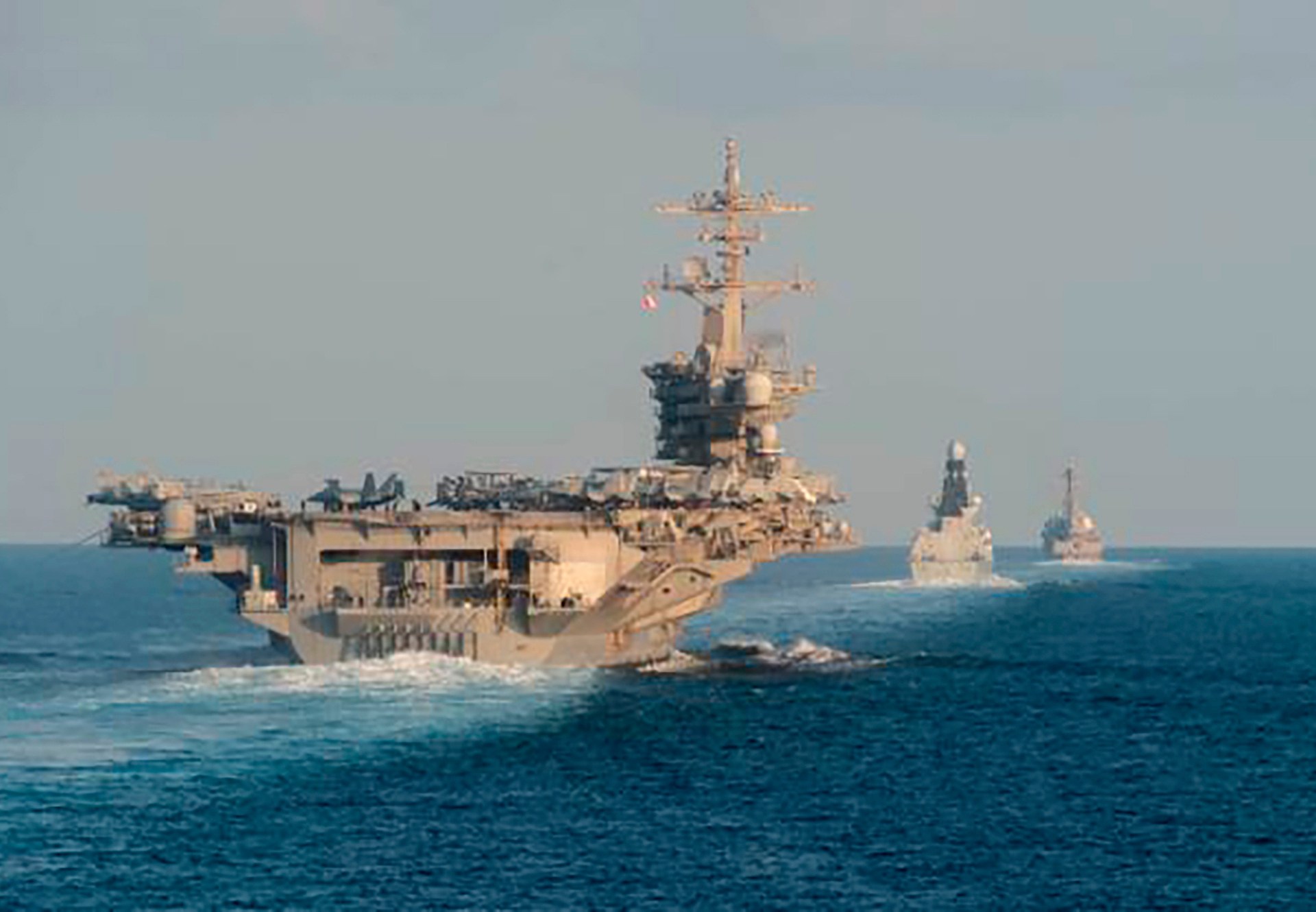
The Trump administration has also deployed a naval “armada” to Iran, led by the USS Abraham Lincoln aircraft carrier, escalating fears of a possible military confrontation.

Senior Iranian leaders have said they are open to negotiations with Washington, but only once Trump stops threatening to attack the country.

Earlier this week, Trump said the US vessels being sent to Iran were ready to use “violence, if necessary” if Iran refused to sit down for talks on its nuclear programme.

US Central Command (CENTCOM) also warned Iran’s Islamic Revolutionary Guard Corps (IRGC) on Friday over its plans to hold a two-day naval exercise in the Strait of Hormuz, a Gulf maritime passage that is critical to global trade.

“Any unsafe and unprofessional behavior near US forces, regional partners or commercial vessels increases risks of collision, escalation, and destabilization,” CENTCOM said in a statement.

Iranian Minister of Foreign Affairs Abbas Araghchi hit back on Saturday, saying in a social media post that the US military, operating off Iran’s shores, “is now attempting to dictate how our Powerful Armed Forces should conduct target practice on their own turf”.

“CENTCOM is also requesting ‘professionalism’ from a national military the U.S. Government has listed as a ‘terrorist organization’, all while recognizing the right of that same ‘terrorist organization’ to conduct military drills!” Araghchi wrote.

The US designated the IRGC, an elite branch of the Iranian military, as a “terrorist” organisation in 2019, during Trump’s first term in office.

Araghchi added, “The presence of outside forces in our region has always caused the exact opposite of what is declared: promoting escalation instead of de-escalation”.

Reporting from the Iranian capital, Tehran, Al Jazeera’s Tohid Asadi said the situation remains “quite fragile and delicate” amid the US military buildup in the region.

Still, he said that Saturday’s statement by Larijani, the Iranian security official, about progress being made on efforts to hold negotiations was a “positive” sign.

“Diplomatic [efforts] are [on]going,” Asadi said, noting that senior Iranian officials have held talks with allies in recent days amid a push to prevent a confrontation between Washington and Tehran.

The Qatari Ministry of Foreign Affairs said Prime Minister Sheikh Mohammed bin Abdulrahman bin Jassim Al Thani met with Larajani in Tehran on Saturday to discuss “efforts to de-escalate tensions in the region”.

Sheikh Mohammed reiterated Qatar’s “support for all efforts aimed at reducing tensions and achieving peaceful solutions that enhance security and stability in the region”, the ministry said of the talks in a statement.
Iraq Shia bloc reiterates support for al-Maliki despite Trump’s threats

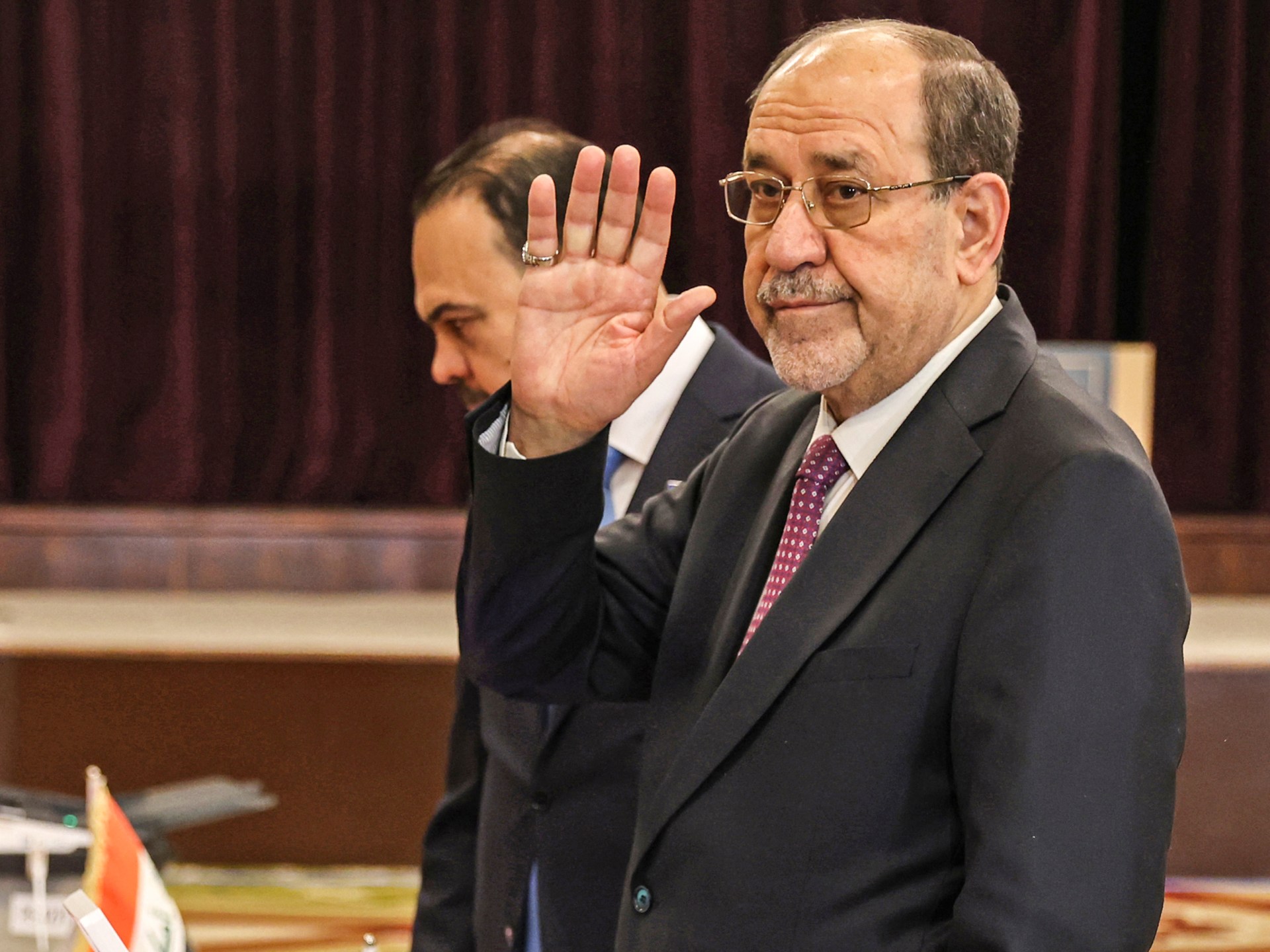
Iraq’s main Shia alliance, which holds a parliamentary majority, has reiterated its support for reinstating Nouri al-Maliki as prime minister, despite United States President Donald Trump threatening to end US support to the country.

The Coordination Framework said in a statement on Saturday that it “reiterates its support for its nominee, Nouri Kamel al-Maliki, for the premiership.”

Recommended Stories

list of 3 itemsend of list

“Choosing the prime minister is an exclusively Iraqi constitutional matter … free from foreign interference.”

Earlier this week, Trump warned Iraq that if al-Maliki were chosen as Iraq’s next prime minister, then Washington would withdraw support, the latest in a growing list of interventions in the politics of other nations made by Trump or members of his administration.

Al-Maliki rejected Trump’s threat on Wednesday in a post on X, condemning the “blatant American interference in Iraq’s internal affairs” and insisting that he would not withdraw his candidacy for the top job.

Trump has been running a campaign to curb the influence of Iran-linked groups in Iraq, which has long walked a tightrope between its two closest allies, Washington and Tehran.

Al-Maliki, 75, is a senior figure in the Shia Islamic Dawa Party. His tenure as prime minister from 2006 to 2014 was a period marked by a power struggle with Sunni and Kurdish rivals, accusations of corruption and growing tension with the US.

He stepped down after ISIL (ISIS) seized large parts of the country in 2014, but has remained an influential political player, leading the State of Law coalition and maintaining close ties with Iran-backed factions.

US judge declines to halt immigration surge in Minnesota amid protests

A judge in the United States has declined to order President Donald Trump’s administration to halt its immigration crackdown in Minnesota, amid mass protests over deadly shootings by federal agents in the US state.

US District Judge Kate Menendez on Saturday denied a preliminary injunction sought in a lawsuit filed this month by state Attorney General Keith Ellison and the mayors of Minneapolis and Saint Paul.

Recommended Stories

list of 3 itemsend of list

She said state authorities made a strong showing that immigration agents’ tactics, including shootings and evidence of racial profiling, were having “profound and even heartbreaking consequences on the State of Minnesota, the Twin Cities, and Minnesotans”.

But Menendez wrote in her ruling that, “ultimately, the Court finds that the balance of harms does not decisively favor an injunction”.

The lawsuit seeks to block or rein in a Department of Homeland Security (DHS) operation that sent thousands of immigration agents to the Minneapolis-Saint Paul area, sparking mass protests and leading to the killings of two US citizens by federal agents.

Tensions have soared since an Immigration and Customs Enforcement agent shot and killed Minneapolis mother Renee Nicole Good in her car on January 7.

Federal border agents also killed 37-year-old nurse Alex Pretti in the city on January 24, stoking more public anger and calls for accountability.

Tom Homan, Trump’s so-called “border czar”, told reporters earlier this week that the administration was working to make the immigration operation “safer, more efficient [and] by the book”.

But that has not stopped the demonstrations, with thousands of protesters taking to the streets of Minneapolis on Friday amid a nationwide strike to denounce the Trump administration’s crackdown.

Speaking to Al Jazeera from a memorial rally in Saint Paul on Saturday, city councillor Cheniqua Johnson said, “It feels more like the federal government is here to [lay] siege [to] Minnesota than to protect us.”

She said residents have said they are afraid to leave their homes to get groceries. “I’m receiving calls … from community members are struggling just to be able to do [everyday] things,” Johnson said.

“That’s why you’re seeing folks being willing to stand in Minnesota, in negative-degree weather, thousands of folks marching … in opposition to the injustice that we are seeing when law and order is not being upheld.”

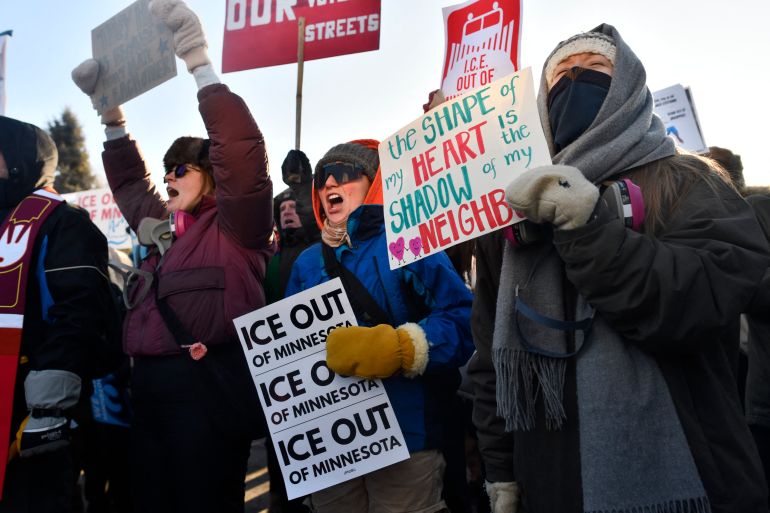
Protesters convene on the Bishop Whipple Federal Building to oppose ICE detentions almost week after Alex Pretti was killed by ICE agents in Minneapolis, Minnesota, on January 30, 2026.
Protesters rally to oppose ICE detentions, in Minneapolis, Minnesota, on January 30, 2026 [AFP]

Racial profiling accusations

In their lawsuit, Minnesota state and local officials have argued that the immigration crackdown amounts to retaliation after Washington’s initial attempts to withhold federal funding to try to force immigration cooperation failed.

They maintain that the surge has amounted to an unconstitutional drain on state and local resources, noting that schools and businesses have been shuttered in the wake of what local officials say are aggressive, poorly trained and armed federal officers.

Ellison, the Minnesota attorney general, also has accused federal agents of racially profiling citizens, unlawfully detaining lawful residents for hours, and stoking fear with their heavy-handed tactics.

The Trump administration has said its operation is aimed at enforcing federal immigration laws as part of the president’s push to carry out the largest deportation operation in US history.

On Saturday, Menendez, the district court judge, said she was not making a final judgement on the state’s overall case in her decision not to issue a temporary restraining order, something that would follow arguments in court.

She also made no determination on whether the immigration crackdown in Minnesota had broken the law.

US Attorney General Pam Bondi called the judge’s decision a “HUGE” win for the Department of Justice.

“Neither sanctuary policies nor meritless litigation will stop the Trump Administration from enforcing federal law in Minnesota,” she wrote on X.

Minneapolis Mayor Jacob Frey said he was disappointed by the ruling.

“This decision doesn’t change what people here have lived through — fear, disruption, and harm caused by a federal operation that never belonged in Minneapolis in the first place,” Frey said in a statement.

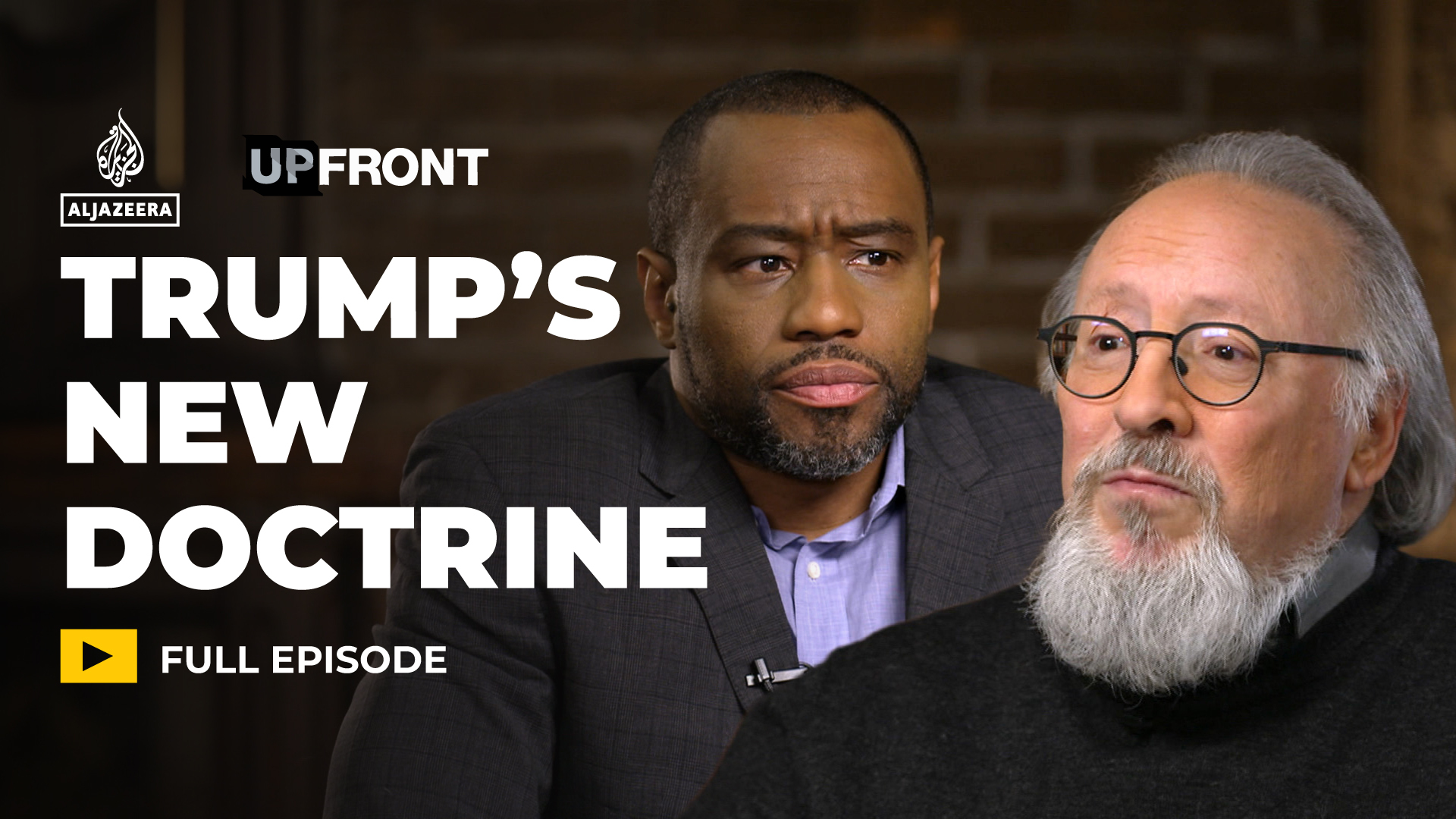
Peter Kornbluh: Is Trump pushing a new imperialism in Latin America?

Peter Kornbluh speaks to Marc Lamont Hill on Trump’s abduction of Venezuela’s president and the fallout for Latin America.

Following United States forces’ abduction of Venezuelan President Nicolas Maduro, a new set of questions is emerging as to how far Donald Trump is prepared to go in pushing US power abroad through direct intervention.

But is this a real break with past policy – or the latest iteration of the US’s longstanding interventionist power play in Latin America?

And with Cuba back in the administration’s sights, will Trump push for further action in the region?

Tributes pour in for beloved actress Catherine O’Hara

Tributes have poured in for beloved Canadian actress Catherine O’Hara, the Home Alone and Schitt’s Creek star who died this week at age 71.

US media outlets reported on Friday that O’Hara died at her Los Angeles home after a brief illness.

Recommended Stories

list of 3 itemsend of list

Born and raised in Toronto, O’Hara began her acting career in the 1970s at The Second City improvisational theatre and later performed on iconic Canadian comedy show SCTV.

Her break into movies came in 1980 with Double Negative, alongside her longtime collaborator Eugene Levy, as well as John Candy.

But she became widely known to a global audience when she played Macaulay Culkin’s mother in 1990’s Home Alone.

“It’s a perfect movie, isn’t it?” she told People magazine in 2024. “You want to be part of something good, and that’s how you go.”

More recently, younger audiences embraced O’Hara for her role as the matriarch of a rich family that loses its wealth in Schitt’s Creek, where she again starred alongside Levy, as well as his son, Dan.

Her turn as Moira Rose won her an Emmy award for best actress in a comedy series in 2020.

Here’s a look at how actors, politicians and others are remembering O’Hara:

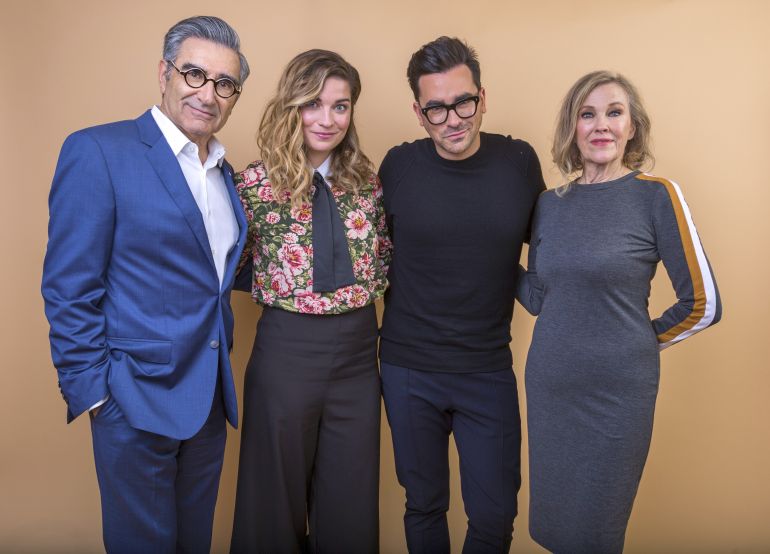
FILE - Eugene Levy, from left, Annie Murphy, Daniel Levy and Catherine O'Hara cast members in the series "Schitt's Creek" pose for a portrait during the 2018 Television Critics Association Winter Press Tour in Pasadena, Calif., on Jan. 14, 2018. (Photo by Willy Sanjuan/Invision/AP, File)
From left, Schitt’s Creek stars Eugene Levy, Annie Murphy, Dan Levy and Catherine O’Hara pose for a portrait in 2018 [Willy Sanjuan/Invision/AP Photo]

Macaulay Culkin

“Mama. I thought we had time. I wanted more. I wanted to sit in a chair next to you. I heard you. But I had so much more to say. I love you. I’ll see you later,” Culkin wrote on Instagram.

Eugene Levy

Levy got his start alongside O’Hara at Second City and on SCTV, and he later starred with her in several projects, including Christopher Guest’s Best in Show, A Mighty Wind and Waiting for Guffman.

In a statement, Levy said “words seem inadequate to express the loss” he felt after her death. “I had the honor of knowing and working with the great Catherine O’Hara for over fifty years,” he said.

“From our beginnings on the Second City stage, to SCTV, to the movies we did with Chris Guest, to our six glorious years on Schitt’s Creek, I cherished our working relationship, but most of all our friendship. And I will miss her.

“My heart goes out to Bo, Matthew, Luke, and the entire O’Hara family.”

Dan Levy

“What a gift to have gotten to dance in the warm glow of Catherine O’Hara’s brilliance for all those years,” Levy, who played O’Hara’s character’s son David Rose on Schitt’s Creek, wrote on Instagram.

“Having spent over fifty years collaborating with my Dad, Catherine was extended family before she ever played my family. It’s hard to imagine a world without her in it. I will cherish every funny memory I was fortunate enough to make with her.”

Catherine O'Hara embraces Macaulay Culkin
O’Hara and Macaulay Culkin at a ceremony honouring Culkin with a star on the Hollywood Walk of Fame in 2023 [File: Jordan Strauss/Invision/AP Photo]

Canadian Prime Minister Mark Carney

“Over 5 decades of work, Catherine earned her place in the canon of Canadian comedy — from SCTV to Schitt’s Creek,” Carney wrote on X.

“Canada has lost a legend. My thoughts are with her family, friends, and all those who loved her work on screen. She will be dearly missed.”

Former Canadian Prime Minister Justin Trudeau

Trudeau hailed O’Hara as “a beloved Canadian icon with a rare gift for comedy and heart”.

“She made people laugh across generations and helped bring Canadian storytelling to the world in a way only she could. My thoughts are with her family, friends, and everyone who found joy in her work,” Trudeau wrote on X.

Seth Rogen

Rogen, who starred alongside O’Hara in the series The Studio, said he told O’Hara when he first met her that he thought “she was the funniest person [he’d] ever had the pleasure of watching on screen”.

“Home Alone was the movie that made me want to make movies. Getting to work with her was a true honour,” Rogen wrote in an Instagram post.

“She was hysterical, kind, intuitive, generous … she made me want to make our show good enough to be worthy of her presence in it. This is just devastating. We’re all lucky we got to live in a world with her in it.”

Catherine O'Hara and her husband Bo
O’Hara and her husband, Bo Welch, at a film premiere at the 2013 Sundance Film Festival [Chris Pizzello/Invision/AP Photo]

Appropriating the death count: Manufacturing consent for an attack on Iran

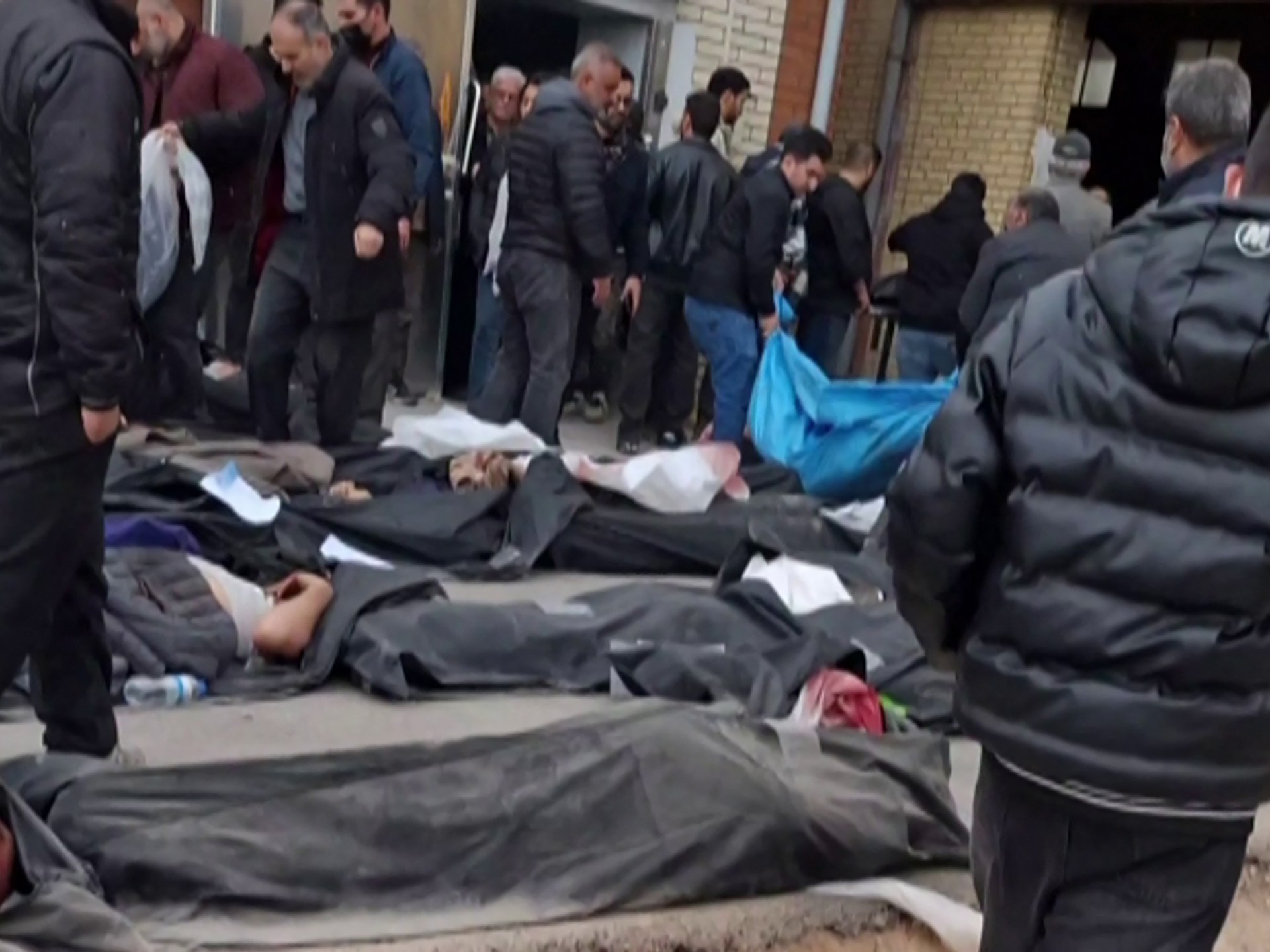
Ever since the crackdown on protests in Iran between January 8 and 10, there has been contention on what the true death toll of those bloody events is. According to figures provided by the Iranian government, 3,117 people were killed, including civilians and security forces. Yet estimates from outside the country have put the number at anywhere between 5,000 and a staggering 36,500.

This wide range not only reflects the fact that it has been extremely difficult to verify these reports, but also that there has been a concerted effort to use the death count to manufacture global consent for an attack on Iran and, in a deceitful rhetoric, downplay the official death toll of the genocide in Gaza.

Since the outbreak of the protests, there has been a race to estimate and report on the casualties – something I call a “Death Toll Olympics”.

Iran-focused human rights organisations led by dissident activists have been going through all sorts of evidence and testimonies to verify the number of the dead. As of writing this piece, the US-based organisation HRANA (Human Rights Activists News Agency) has cited more than 6,000 deaths and a further 17,000-plus cases under examination.

However, there are valid doubts about the speed of the activist-led verification process.

For every reported death, multiple accounts have to be examined, possible duplications must be identified and eliminated; and dates, locations and specific circumstances must be cross-checked against the timeline of events.

Furthermore, any visual evidence has to be localised and authenticated based on open-source data or corroborated by the accounts of multiple witnesses. From an investigative standpoint, the reliability and quality of activist-led counts that increase rapidly on a daily basis, therefore warrants caution.

The UN Special Rapporteur on Iran, Mai Sato, has cited a conservative estimate of around 5,000 deaths. At the same time, she has mentioned that unverified numbers of up to 20,000 have been reported to her by medical sources.

The described obstacles, and difficulties of verification over the past weeks, have been further exacerbated by Iran’s severely restricted internet access. Despite this, major media outlets have begun distributing much higher figures, solely based on vague anonymous sources who claim privileged access within Iran’s government or health sector.

On January 25, for example, UK-based TV network Iran International published a report claiming 36,500 were killed, citing “extensive reports” allegedly obtained from the Iranian security apparatus – reports it has neither published nor otherwise made transparent.

The same day, United States news magazine Time published an article titled “Iran Protest Death Toll Could Top 30,000, According to Local Health Officials”. It claimed that “as many as 30,000 people could have been killed in the streets of Iran on Jan. 8 and 9 alone” based on the accounts of two senior officials of the country’s Ministry of Health, whose identities were not revealed for security reasons. Notably, the magazine admitted in the text that it did not possess any means to independently confirm that number.

Two days later, British newspaper The Guardian followed the same trend with an article titled “Disappeared bodies, mass burials and ‘30,000 dead’: what is the truth of Iran’s death toll?” The piece introduced the figure of 30,000 based on estimates of an anonymous doctor, who spoke to the newspaper. He and his colleagues in Iran, the outlet admitted, were actually hesitant to provide a concrete figure.

Other media – from the Sunday Times to the Pierce Morgan Uncensored show – have cited papers circulated by Germany-based ophthalmologist Amir Parasta claiming death toll numbers between 16,500 and 33,000. However, the latest available version of the paper, dating back to January 23 uses disputable extrapolation methods to reach its figures. Strikingly, Parasta does not make any secret of his affiliation with Reza Pahlavi, the son of Iran’s ousted Shah

The exiled crown prince and his team, whose extensive social media manipulation and disinformation efforts have been exposed by recent investigations by the Israeli newspaper Haaretz and University of Toronto’s The Citizen Lab, have been key actors in inciting and escalating the recent protests towards confrontation. Accordingly, the fatality numbers disseminated by Mr Parasta cannot be perceived as neutral and constitute partisan estimates at best.

Despite acknowledging their own inability to verify these estimates, the media in question nevertheless put these extreme figures in titles and subheadings. It didn’t take long for other outlets to report on these inflated numbers, referring to these major publications as primary sources. Activists and Western politicians have also used them to push their respective agendas, thereby further fuelling a spiral of disinformation campaigns on social media. – In other words, a “death toll olympics” was born.

All of this has served two ends.

First, it has supported efforts to manufacture consent for foreign military intervention and malicious political action. While the protests were still ongoing, US President Donald Trump repeatedly threatened military action against Iran in the event of a deadly crackdown. As of writing these lines, there has been a significant US military build-up around Iran, effectively thickening the war cloud.

Second, the speculation about the Iranian death toll has helped pro-Israel politicians and commentators in the West to downplay the casualties of the Israeli war on Gaza. In this way, it has become a utilitarian tool for relativising the genocide of the Palestinian people.

Confronted with mounting pressure regarding the death toll, Iran’s President Masoud Pezeshkian ordered the authorities to “publicly publish the names and personal data of those deceased during the recent bitter incidents”. His director of communication has even promised that a procedure has been set up to examine and verify any conflicting claims.

It remains to be seen how effective and transparent the promised procedure will turn out. It is undeniable that thousands have been killed in Iran, mostly by Iranian security forces, amid a multi-day brutal crowd and riot control effort.

Structural obscurity and the restricted access to Iran for independent experts will likely mean that the exact death toll will never be determined. However, the more transparency can be established regarding the scale of the killings, the more likely it is that the perpetrators can be held accountable.

An arduous verification process of the recent deaths is crucial not only for the sake of accountability, but also to expose the media manipulation that is once again preparing the ground for a unilateral US-led act of aggression in the Middle East. In light of this, the “Death Toll Olympics” remains an ignominious disservice to the wretched of the Earth from Palestine to Iran.