Tactics, transfers and turmoil – inside the fall of Amorim


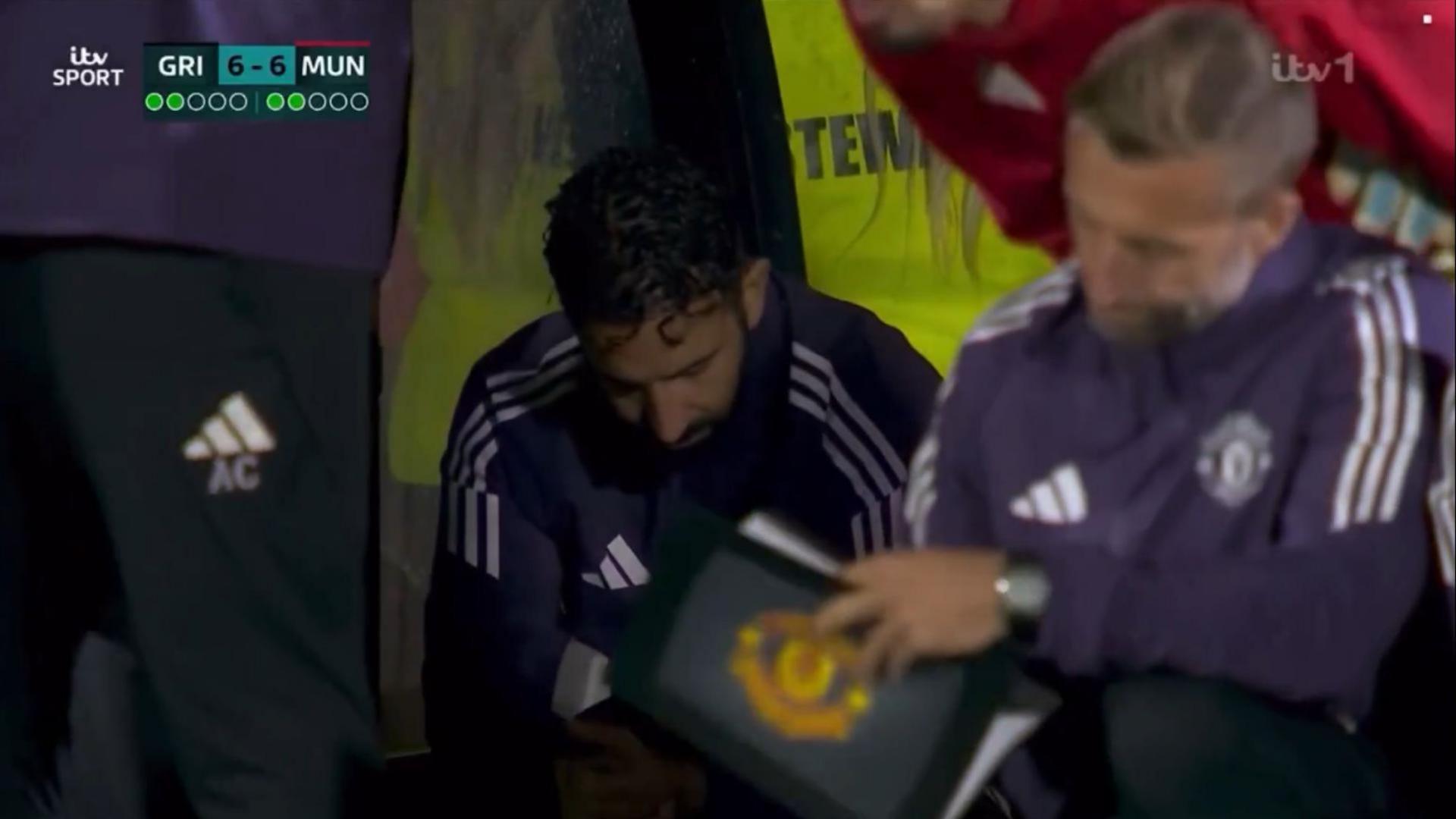
The enduring image of Ruben Amorim’s 14-month tenure at Manchester United may well be the one of him cowering in the dugout at Grimsby.

It came during an August trip to the seaside for a Carabao Cup match that went horribly wrong for United – an embarrassing 12-11 defeat on penalties the first time in the club’s history they had been beaten by a team in the fourth tier.

Amorim’s post-match comments smacked of someone who was about to admit the job was too much for him, only to climb down a couple of days later when he said emotions frequently get the better of him and had led him to saying unwise things in public.

He wasn’t going to stop, though. As with many aspects of his personality, once Amorim is on a set course, he will not change. It is something that would contribute to his downfall.

One critic close to the dressing room said privately that while Amorim was enthralling when he spoke to the media, it was all he was actually good at. A damning assessment, but harsh too.

Amorim’s last match was a 1-1 draw with Leeds – a result that leaves them a creditable sixth in the Premier League, but one sandwiched by headline-grabbing comments made to journalists.

His first interaction with the media on Friday included a thinly disguised admission there were splits behind the scenes. After the game, he launched his final broadside in his last answer, which included the statement he “would not quit”.

That, effectively, meant United had to either back Amorim or sack him.

With his tactics an ongoing concern and the hierarchy already distinctly unimpressed by his brutal dismissal of academy players – as well as criticism of senior members of the squad – they were always likely to choose the second option.

The Pope, the formation and the beginning of the end

Amorim’s appointment was viewed as a progressive move – the club bringing in someone who would work in a modern structure and develop as he went along.

But with the 40-year-old came a specific style of play – and 3-4-3 formation – he had used at Sporting.

The more Amorim was asked about it, the more he doubled down on his belief that to change would undermine him in the eyes of his players, and make them think he was not committed to his own messaging.

While he was certain of his methods – once suggesting even the Pope couldn’t persuade him to change – he admitted in October he had to tell his players to ignore external voices repeatedly saying the system had to be scrapped.

“Is the media going to dictate what I’m going to do?” he told journalists. “It cannot be. It’s not possible to sustain that.

“But my players, I guarantee you, they are listening to you and they are putting that inside because we are not winning games.

“They have to believe in me because I watch more games than you guys combined.”

This was all brought into sharp focus on 30 December when – four days after eventually reverting to a back four for the first time in the 1-0 win over Newcastle – he immediately went back to a three-man defence against Wolves.

It meant moving Patrick Dorgu from a right-sided attacking role, where he had been so effective on 26 December, to left wing-back.

By that point, United had already tried to persuade long-term target Antoine Semenyo to join them from Bournemouth by telling him he would play on the left wing.

That was a clear sign the club viewed the future as being something different to 3-4-3, given they had already spent in excess of £200m on attacking players.

It is no surprise, therefore, the formation against Wolves and subsequent result – a 1-1 draw against a side that had collected just two points all season and led to the team being booed off – was viewed extremely negatively internally at the club.

Technical director Jason Wilcox spoke to Amorim privately afterwards, encouraging greater tactical flexibility.

United continued with their back three at Leeds.

It was another massive backward step in Amorim’s relationship with his bosses, and his continued criticism just heightened that situation.

Amorim wanted to be left alone to do his job, free from the unwanted influence of Wilcox.

But what Amorim felt was interference, United believed was normal feedback, which had been repeatedly resisted.

The situation had become untenable. Yes, United are sixth – in line with pre-season expectations – but they have a squad many believe could, with a few simple tactical tweaks, deliver much better results.

    • 5 January
    • 5 January
    • 5 January
    • 5 January

The preparation – and the quirks

While results were not always good, players remained onside – at least those who were not in the ‘bomb squad’ exiled at the start of pre-season training.

Speaking to players publicly and privately during United’s summer trip to the United States, there was genuine enthusiasm for the season that lay ahead.

Amorim had a few quirks, but most coaches do.

When United opened their doors for the first 15 minutes of training the day before European games, it was strange to see Amorim watch the sprints and rondos on a different pitch – sometimes 50 yards away, and far removed from his coaching staff.

He was far more involved – whistle in hand – when the sessions began, though he wasn’t keen to let the media into those.

There was a full open session in Malaysia on United’s post-season trip in May, but that whole expedition was not run on fully professional lines given the amount of downtime that was allowed.

Once United arrived at their training base in Chicago in July, access was limited. The candour of Amorim’s media conferences was not matched by his openness with training.

He was meticulous in his preparation, though.

Footage of his first training session at United showed him explaining to midfielder Kobbie Mainoo exactly how many strides he needed to move after laying off a pass, then where to open out his body to create maximum passing angles.

In the summer, he had two players taking up the same positions in training, then ran through different scenarios to ensure they moved into the right area of the pitch.

While this may seem peculiar – and would have looked so had anyone witnessed it -it does make sense given individuals were allocated positions and a hierarchy installed.

The theory and practice is good. But events in actual matches take their course.

    • 5 January
    • 5 January

How it all started for Amorim

We tend not to find out about discussions that have taken place around the appointment of a manager until long after the event.

But we know this time.

We know because five months after United hired Dan Ashworth as a “best in class” sporting director in July 2024, he left after his suggestions for potential replacements for Erik ten Hag were deemed to not be imaginative enough.

Instead, Berrada lured Amorim from Sporting, telling the Portuguese it was ‘now or never’ when he asked if his appointment could be delayed from November until the end of the season.

At the time, in addition to Berrada, United had Wilcox as technical director, Christopher Vivell as an interim director of recruitment and Ratcliffe’s right-hand man Sir Dave Brailsford as a football club director.

The first three remain integral figures in United’s recruitment team, Wilcox has more responsibility, and Vivell has been installed on a permanent basis. Brailsford has backed away, though, and is concentrating on his wider role as Ineos’ head of sport.

Picking through the wreckage of another failed managerial appointment, the spotlight is on them as much as Amorim.

They knew he was wedded to a certain formation, which he was not willing to change no matter how much external criticism he received.

The players exiled and the players signed

Under Amorim, United have plumbed depths that should not be possible the way football’s finances are arranged these days.

The fourth richest club in the world, according to Deloitte’s 2025 rankings, have struggled – for the most part – to compete with well-run smaller rivals like Brentford, Bournemouth and Brighton, finished last season behind West Ham, and were level on points with Wolves.

Amorim went into the summer promising this season would be better. It has been – to an extent – but is it right to measure a United manager against a 15th-place finish?

The spotlight, though, cannot just be on the coach.

United knew what they were getting into. Does Ratcliffe’s “best in class” apply to Berrada? Or Wilcox, whose experience as a technical director was limited to 15 months at Southampton before he accepted the United job?

In going for Amorim and delivering their ‘now or never’ ultimatum, United’s hierarchy must have known the squad being inherited did not fit the coach’s style. They backed him to the tune of more than £200m in the summer and also signed off his decision to exile Marcus Rashford, Jadon Sancho, Antony and Alejandro Garnacho.

Maybe there was unease at Amorim’s method of dismissing Garnacho, which effectively reduced his value in a market the player himself cut to one by sticking to his desire to join Chelsea.

Where they drew a line was Emiliano Martinez.

Amorim wanted Aston Villa’s World Cup-winning goalkeeper. United’s powerbrokers refused to sanction that, preferring to invest in the youth of Senne Lammens – on a much lower salary. Data analysis concurs with objective judgement Lammens has the capability to become of one Europe’s best goalkeepers at some point – and United officials say they remain comfortable with their choice.

Instead, United prioritised their hefty investment towards the forward positions with a view to greater return on investment.

But heads are still scratched over the wisdom of selling McTominay, then spending far more on Uruguay international Manuel Ugarte, who played no role in the Europa League final Casemiro started.

Recruitment is a collective failing – and predates Amorim by a long way. The failed pursuit of Semenyo is proof United are no longer the draw they once were.

Amorim is yesterday’s man now, just as David Moyes, Louis van Gaal, Jose Mourinho, Ole Gunnar Solskjaer, Ralf Rangnick and Ten Hag were before him.

Related topics

  • Manchester United
  • Insight: In-depth stories from the world of sport
  • Football

More on this story

  • Manchester United bench
  • Ask Me Anything logo

Booze, beach, beaten – how England lost the Ashes


It’s been a shocker, hasn’t it?

England’s latest humiliation down under will be remembered as their worst in recent times not only for its rapid nature, but also because this was supposed to be an opportunity to regain the Ashes from a weakened Australia.

Seeds sown long ago

Hindsight makes experts of us all, but the failings of this tour began long ago.

It was a missed opportunity not to trial a genuine opener when Zak Crawley got injured in the summer of 2024, instead asking Dan Lawrence to do a job for which he is not suited. Lawrence has not been seen since.

If Jordan Cox’s broken thumb in New Zealand 12 months ago was unfortunate – Cox could have been a badly needed reserve keeper in Australia – then the decision to send Mark Wood to the Champions Trophy proved immeasurably costly.

England so badly wanted pace on this tour, then managed to injure their fastest bowler in a tournament they were never going to win.

Assistant coach Paul Collingwood disappeared at the beginning of the home summer and has not been replaced, and there was no clarity on the identity of England’s fast-bowling coach for this tour right up to the last minute.

Chris Woakes’ dislocated shoulder effectively ruled him out of the Ashes, but there were still two other players in England’s squad for the last Test against India that did not make it to Australia: Jamie Overton and Liam Dawson.

Overton took a break from red-ball cricket after using up a spot at The Oval which could have gone to Matthew Potts, Matthew Fisher or Sam Cook. Dawson – or any other frontline spinner – would have been pragmatic cover in Australia for Shoaib Bashir, whose form was an accident waiting to happen.

Even the announcement of the Ashes squad was an anticlimactic foreshadowing of things to come.

Whereas the British & Irish Lions unveiled their Australian tour squad in front of 2,000 fans at the O2 in London, England hustled out their team on a press release with no notice a couple of hours after the death of legendary umpire Dickie Bird was announced.

When it came, the 12-month hokey-cokey over Ollie Pope’s place continued as he was replaced as vice-captain, adding further fuel to a Jacob Bethell debate that is still to be settled.

Fail to prepare, prepare to fail

Joe Root signs an autograph on the boundaryGetty Images

For all the criticism of England’s pre-series plans in Australia, the immovable obstacle to more warm-up matches was a white-ball tour of New Zealand that had been in the diary for years.

Despite England and Wales Cricket Board chairman Richard Thompson claiming the series against the Black Caps was strong Ashes preparation, England lost three of four completed matches, effectively played at the end of the New Zealand winter.

England ultimately got the Ashes warm-up they wanted – an intra-squad match against the England Lions. However, there is evidence of buyer’s remorse through their opening of negotiations with Cricket Australia over an agreement to guarantee better preparation on future Ashes tours.

If there was an offer of a match against a state team or Australia A, it was too close to the tour of New Zealand for England to make it work. England insist they asked for time at the Waca, only to be told the ground was not available. When England made the request is not clear. The Barmy Army managed to book a game there.

The Lilac Hill conditions for the warm-up match were slow and low, far removed from the pace and bounce of Perth Stadium.

The overall attitude was laid back. England team analyst Rupert Lewis donned whites to run the drinks and music played from the dressing rooms throughout the three days. Harry Brook’s shots demonstrated his disdain for the exercise.

As the Lions players not involved were sent on laps of the park as part of a tough fitness programme, Bashir’s bowling was hammered by his own team-mates and Wood had to go for a scan on his hamstring eight overs into his comeback.

A hint of farce came when the scorecard malfunctioned, showing Wood to be batting despite being in hospital at the time.

Two down in six days

Ben Stokes looks glumGetty Images

England dealt well with the build-up to the first Test. Josh Tongue and Jamie Smith swatted away questions about golf, stumpings and moral victories.

Dominant at lunch on day two in Perth, England lost before stumps on the same day.

Stokes said he was shell-shocked in some tetchy post-match media interactions, comments that were used against the captain as England lost the PR battle in the days after the Test.

England were followed by photographers to golf courses and even an aquarium, while housing the squad in a hotel attached to a casino was probably a mistake. Some of the group developed a penchant for an Australian brand of takeaway frozen yoghurt.

The decision not to send more players to the Lions’ day-night game against a Prime Minister’s XI in Canberra was put down to the difference in conditions between the capital and Brisbane.

However, a week’s worth of radio silence did not help the tourists. Former Australia pace bowler Mitchell Johnson accused them of being “arrogant”.

England instead opted for five days of training in Brisbane, a workload that head coach Brendon McCullum would later claim left his team “overprepared” for the second Test.

When Stokes finally broke the media blackout, he clarified the “has-beens” comment and responded to Johnson by saying England could be called “rubbish”, rather than arrogant.

As the build-up to the Test continued, Stokes and Pope had to respond to pictures of the captain, Wood and Smith riding e-scooters without helmets – an offence punishable by a fine under Queensland law.

On the field, Root’s long-awaited first hundred in Australia was rendered useless by some awful shots by his team-mates and England missed five catches.

On the beach

Ben Stokes with MixFM radio hosts Archie and BretzMixFM

England said their four nights in the beach resort of Noosa had been scheduled for more than a year, which possibly leaves it as one of the best-planned parts of the tour.

Some used it in the spirit it was intended. Root, for example, had accommodation with his family away from the main drag and was never spotted near a bar. It was curious that more family members were not present for what was billed as a break from the Ashes.

For others, it was a glorified stag do. Some members of the team followed two days of drinking in Brisbane with four more in Noosa – six in total, as many days as there had been of Test cricket at this point in the tour.

The England party was hardly inconspicuous, drinking by the side of the road, with plenty wearing traditional Akubra hats that became the uniform of the holiday.

There was a three-line whip issued to attend a kick-about on the beach, where England were sledged by local radio DJs and mingled with other holidaymakers.

Stokes was seen out running, while on another occasion strength and conditioning coach Pete Sim invited the entire group for a run along the coast at 07:45am. Smith, Bashir and Tongue were the only players to turn out.

At the end of the trip, a member of the England security staff was accused of a physical confrontation with a cameraman from TV network Seven following a back-and-forth in Brisbane airport.

All over in Adelaide

The scene at Adelaide Oval after Australia completed victoryGetty Images

By the third Test, England’s messaging had become mixed. Stokes talked of “enjoying the pressure”, despite actively looking to remove pressure from his team over the previous three years.

Brook said England had not spoken about cricket in Noosa, whereas Stokes admitted there had been “raw” conversations. Crawley would later claim not to know about the “weak men” comments.

Perhaps aware fielding had let them down, England engaged in some rare fielding drills.

At an Adelaide ground renowned for helping spinners, England left out Bashir, a decision explained by the need for Will Jacks’ batting at number eight. Assistant coach Jeetan Patel insisted Bashir had not become “unselectable”.

After putting so much emphasis on high pace, England were left with part-time spinner Jacks bowling more overs than anyone else in the match.

Outwardly, England remained relaxed. McCullum’s walk to the Adelaide Oval twice passed through BBC Radio 5 live shows being broadcast from outside the team hotel. Patel left a news conference with the words: “Enjoy your evening. Have a pint, because I will be.”

Related topics

  • England Men’s Cricket Team
  • Insight: In-depth stories from the world of sport
  • Australia
  • The Ashes
  • Cricket

More on this story

    • 21 December 2025
    Brendon McCullum
    • 21 December 2025
    Englan captain Ben Stokes consoles Will Jacks after their Ashes defeat by Australia
    • 21 December 2025
    Mitchell Starc celebrates a wicket
    • 21 December 2025
    Ollie Pope looks dejected as he is dismissed
    • 16 August 2025
    BBC Sport microphone and phone

Booze, beach, beaten – how England lost the Ashes


It’s been a shocker, hasn’t it?

England’s latest humiliation down under will be remembered as their worst in recent times not only for its rapid nature, but also because this was supposed to be an opportunity to regain the Ashes from a weakened Australia.

Seeds sown long ago

Hindsight makes experts of us all, but the failings of this tour began long ago.

It was a missed opportunity not to trial a genuine opener when Zak Crawley got injured in the summer of 2024, instead asking Dan Lawrence to do a job for which he is not suited. Lawrence has not been seen since.

If Jordan Cox’s broken thumb in New Zealand 12 months ago was unfortunate – Cox could have been a badly needed reserve keeper in Australia – then the decision to send Mark Wood to the Champions Trophy proved immeasurably costly.

England so badly wanted pace on this tour, then managed to injure their fastest bowler in a tournament they were never going to win.

Assistant coach Paul Collingwood disappeared at the beginning of the home summer and has not been replaced, and there was no clarity on the identity of England’s fast-bowling coach for this tour right up to the last minute.

Chris Woakes’ dislocated shoulder effectively ruled him out of the Ashes, but there were still two other players in England’s squad for the last Test against India that did not make it to Australia: Jamie Overton and Liam Dawson.

Overton took a break from red-ball cricket after using up a spot at The Oval which could have gone to Matthew Potts, Matthew Fisher or Sam Cook. Dawson – or any other frontline spinner – would have been pragmatic cover in Australia for Shoaib Bashir, whose form was an accident waiting to happen.

Even the announcement of the Ashes squad was an anticlimactic foreshadowing of things to come.

Whereas the British & Irish Lions unveiled their Australian tour squad in front of 2,000 fans at the O2 in London, England hustled out their team on a press release with no notice a couple of hours after the death of legendary umpire Dickie Bird was announced.

When it came, the 12-month hokey-cokey over Ollie Pope’s place continued as he was replaced as vice-captain, adding further fuel to a Jacob Bethell debate that is still to be settled.

Fail to prepare, prepare to fail

Joe Root signs an autograph on the boundaryGetty Images

For all the criticism of England’s pre-series plans in Australia, the immovable obstacle to more warm-up matches was a white-ball tour of New Zealand that had been in the diary for years.

Despite England and Wales Cricket Board chairman Richard Thompson claiming the series against the Black Caps was strong Ashes preparation, England lost three of four completed matches, effectively played at the end of the New Zealand winter.

England ultimately got the Ashes warm-up they wanted – an intra-squad match against the England Lions. However, there is evidence of buyer’s remorse through their opening of negotiations with Cricket Australia over an agreement to guarantee better preparation on future Ashes tours.

If there was an offer of a match against a state team or Australia A, it was too close to the tour of New Zealand for England to make it work. England insist they asked for time at the Waca, only to be told the ground was not available. When England made the request is not clear. The Barmy Army managed to book a game there.

The Lilac Hill conditions for the warm-up match were slow and low, far removed from the pace and bounce of Perth Stadium.

The overall attitude was laid back. England team analyst Rupert Lewis donned whites to run the drinks and music played from the dressing rooms throughout the three days. Harry Brook’s shots demonstrated his disdain for the exercise.

As the Lions players not involved were sent on laps of the park as part of a tough fitness programme, Bashir’s bowling was hammered by his own team-mates and Wood had to go for a scan on his hamstring eight overs into his comeback.

A hint of farce came when the scorecard malfunctioned, showing Wood to be batting despite being in hospital at the time.

Two down in six days

Ben Stokes looks glumGetty Images

England dealt well with the build-up to the first Test. Josh Tongue and Jamie Smith swatted away questions about golf, stumpings and moral victories.

Dominant at lunch on day two in Perth, England lost before stumps on the same day.

Stokes said he was shell-shocked in some tetchy post-match media interactions, comments that were used against the captain as England lost the PR battle in the days after the Test.

England were followed by photographers to golf courses and even an aquarium, while housing the squad in a hotel attached to a casino was probably a mistake. Some of the group developed a penchant for an Australian brand of takeaway frozen yoghurt.

The decision not to send more players to the Lions’ day-night game against a Prime Minister’s XI in Canberra was put down to the difference in conditions between the capital and Brisbane.

However, a week’s worth of radio silence did not help the tourists. Former Australia pace bowler Mitchell Johnson accused them of being “arrogant”.

England instead opted for five days of training in Brisbane, a workload that head coach Brendon McCullum would later claim left his team “overprepared” for the second Test.

When Stokes finally broke the media blackout, he clarified the “has-beens” comment and responded to Johnson by saying England could be called “rubbish”, rather than arrogant.

As the build-up to the Test continued, Stokes and Pope had to respond to pictures of the captain, Wood and Smith riding e-scooters without helmets – an offence punishable by a fine under Queensland law.

On the field, Root’s long-awaited first hundred in Australia was rendered useless by some awful shots by his team-mates and England missed five catches.

On the beach

Ben Stokes with MixFM radio hosts Archie and BretzMixFM

England said their four nights in the beach resort of Noosa had been scheduled for more than a year, which possibly leaves it as one of the best-planned parts of the tour.

Some used it in the spirit it was intended. Root, for example, had accommodation with his family away from the main drag and was never spotted near a bar. It was curious that more family members were not present for what was billed as a break from the Ashes.

For others, it was a glorified stag do. Some members of the team followed two days of drinking in Brisbane with four more in Noosa – six in total, as many days as there had been of Test cricket at this point in the tour.

The England party was hardly inconspicuous, drinking by the side of the road, with plenty wearing traditional Akubra hats that became the uniform of the holiday.

There was a three-line whip issued to attend a kick-about on the beach, where England were sledged by local radio DJs and mingled with other holidaymakers.

Stokes was seen out running, while on another occasion strength and conditioning coach Pete Sim invited the entire group for a run along the coast at 07:45am. Smith, Bashir and Tongue were the only players to turn out.

At the end of the trip, a member of the England security staff was accused of a physical confrontation with a cameraman from TV network Seven following a back-and-forth in Brisbane airport.

All over in Adelaide

The scene at Adelaide Oval after Australia completed victoryGetty Images

By the third Test, England’s messaging had become mixed. Stokes talked of “enjoying the pressure”, despite actively looking to remove pressure from his team over the previous three years.

Brook said England had not spoken about cricket in Noosa, whereas Stokes admitted there had been “raw” conversations. Crawley would later claim not to know about the “weak men” comments.

Perhaps aware fielding had let them down, England engaged in some rare fielding drills.

At an Adelaide ground renowned for helping spinners, England left out Bashir, a decision explained by the need for Will Jacks’ batting at number eight. Assistant coach Jeetan Patel insisted Bashir had not become “unselectable”.

After putting so much emphasis on high pace, England were left with part-time spinner Jacks bowling more overs than anyone else in the match.

Outwardly, England remained relaxed. McCullum’s walk to the Adelaide Oval twice passed through BBC Radio 5 live shows being broadcast from outside the team hotel. Patel left a news conference with the words: “Enjoy your evening. Have a pint, because I will be.”

Related topics

  • England Men’s Cricket Team
  • Insight: In-depth stories from the world of sport
  • Australia
  • The Ashes
  • Cricket

More on this story

    • 21 December 2025
    Brendon McCullum
    • 21 December 2025
    Englan captain Ben Stokes consoles Will Jacks after their Ashes defeat by Australia
    • 21 December 2025
    Mitchell Starc celebrates a wicket
    • 21 December 2025
    Ollie Pope looks dejected as he is dismissed
    • 16 August 2025
    BBC Sport microphone and phone

Booze, beach, beaten – how England lost the Ashes


It’s been a shocker, hasn’t it?

England’s latest humiliation down under will be remembered as their worst in recent times not only for its rapid nature, but also because this was supposed to be an opportunity to regain the Ashes from a weakened Australia.

Seeds sown long ago

Hindsight makes experts of us all, but the failings of this tour began long ago.

It was a missed opportunity not to trial a genuine opener when Zak Crawley got injured in the summer of 2024, instead asking Dan Lawrence to do a job for which he is not suited. Lawrence has not been seen since.

If Jordan Cox’s broken thumb in New Zealand 12 months ago was unfortunate – Cox could have been a badly needed reserve keeper in Australia – then the decision to send Mark Wood to the Champions Trophy proved immeasurably costly.

England so badly wanted pace on this tour, then managed to injure their fastest bowler in a tournament they were never going to win.

Assistant coach Paul Collingwood disappeared at the beginning of the home summer and has not been replaced, and there was no clarity on the identity of England’s fast-bowling coach for this tour right up to the last minute.

Chris Woakes’ dislocated shoulder effectively ruled him out of the Ashes, but there were still two other players in England’s squad for the last Test against India that did not make it to Australia: Jamie Overton and Liam Dawson.

Overton took a break from red-ball cricket after using up a spot at The Oval which could have gone to Matthew Potts, Matthew Fisher or Sam Cook. Dawson – or any other frontline spinner – would have been pragmatic cover in Australia for Shoaib Bashir, whose form was an accident waiting to happen.

Even the announcement of the Ashes squad was an anticlimactic foreshadowing of things to come.

Whereas the British & Irish Lions unveiled their Australian tour squad in front of 2,000 fans at the O2 in London, England hustled out their team on a press release with no notice a couple of hours after the death of legendary umpire Dickie Bird was announced.

When it came, the 12-month hokey-cokey over Ollie Pope’s place continued as he was replaced as vice-captain, adding further fuel to a Jacob Bethell debate that is still to be settled.

Fail to prepare, prepare to fail

Joe Root signs an autograph on the boundaryGetty Images

For all the criticism of England’s pre-series plans in Australia, the immovable obstacle to more warm-up matches was a white-ball tour of New Zealand that had been in the diary for years.

Despite England and Wales Cricket Board chairman Richard Thompson claiming the series against the Black Caps was strong Ashes preparation, England lost three of four completed matches, effectively played at the end of the New Zealand winter.

England ultimately got the Ashes warm-up they wanted – an intra-squad match against the England Lions. However, there is evidence of buyer’s remorse through their opening of negotiations with Cricket Australia over an agreement to guarantee better preparation on future Ashes tours.

If there was an offer of a match against a state team or Australia A, it was too close to the tour of New Zealand for England to make it work. England insist they asked for time at the Waca, only to be told the ground was not available. When England made the request is not clear. The Barmy Army managed to book a game there.

The Lilac Hill conditions for the warm-up match were slow and low, far removed from the pace and bounce of Perth Stadium.

The overall attitude was laid back. England team analyst Rupert Lewis donned whites to run the drinks and music played from the dressing rooms throughout the three days. Harry Brook’s shots demonstrated his disdain for the exercise.

As the Lions players not involved were sent on laps of the park as part of a tough fitness programme, Bashir’s bowling was hammered by his own team-mates and Wood had to go for a scan on his hamstring eight overs into his comeback.

A hint of farce came when the scorecard malfunctioned, showing Wood to be batting despite being in hospital at the time.

Two down in six days

Ben Stokes looks glumGetty Images

England dealt well with the build-up to the first Test. Josh Tongue and Jamie Smith swatted away questions about golf, stumpings and moral victories.

Dominant at lunch on day two in Perth, England lost before stumps on the same day.

Stokes said he was shell-shocked in some tetchy post-match media interactions, comments that were used against the captain as England lost the PR battle in the days after the Test.

England were followed by photographers to golf courses and even an aquarium, while housing the squad in a hotel attached to a casino was probably a mistake. Some of the group developed a penchant for an Australian brand of takeaway frozen yoghurt.

The decision not to send more players to the Lions’ day-night game against a Prime Minister’s XI in Canberra was put down to the difference in conditions between the capital and Brisbane.

However, a week’s worth of radio silence did not help the tourists. Former Australia pace bowler Mitchell Johnson accused them of being “arrogant”.

England instead opted for five days of training in Brisbane, a workload that head coach Brendon McCullum would later claim left his team “overprepared” for the second Test.

When Stokes finally broke the media blackout, he clarified the “has-beens” comment and responded to Johnson by saying England could be called “rubbish”, rather than arrogant.

As the build-up to the Test continued, Stokes and Pope had to respond to pictures of the captain, Wood and Smith riding e-scooters without helmets – an offence punishable by a fine under Queensland law.

On the field, Root’s long-awaited first hundred in Australia was rendered useless by some awful shots by his team-mates and England missed five catches.

On the beach

Ben Stokes with MixFM radio hosts Archie and BretzMixFM

England said their four nights in the beach resort of Noosa had been scheduled for more than a year, which possibly leaves it as one of the best-planned parts of the tour.

Some used it in the spirit it was intended. Root, for example, had accommodation with his family away from the main drag and was never spotted near a bar. It was curious that more family members were not present for what was billed as a break from the Ashes.

For others, it was a glorified stag do. Some members of the team followed two days of drinking in Brisbane with four more in Noosa – six in total, as many days as there had been of Test cricket at this point in the tour.

The England party was hardly inconspicuous, drinking by the side of the road, with plenty wearing traditional Akubra hats that became the uniform of the holiday.

There was a three-line whip issued to attend a kick-about on the beach, where England were sledged by local radio DJs and mingled with other holidaymakers.

Stokes was seen out running, while on another occasion strength and conditioning coach Pete Sim invited the entire group for a run along the coast at 07:45am. Smith, Bashir and Tongue were the only players to turn out.

At the end of the trip, a member of the England security staff was accused of a physical confrontation with a cameraman from TV network Seven following a back-and-forth in Brisbane airport.

All over in Adelaide

The scene at Adelaide Oval after Australia completed victoryGetty Images

By the third Test, England’s messaging had become mixed. Stokes talked of “enjoying the pressure”, despite actively looking to remove pressure from his team over the previous three years.

Brook said England had not spoken about cricket in Noosa, whereas Stokes admitted there had been “raw” conversations. Crawley would later claim not to know about the “weak men” comments.

Perhaps aware fielding had let them down, England engaged in some rare fielding drills.

At an Adelaide ground renowned for helping spinners, England left out Bashir, a decision explained by the need for Will Jacks’ batting at number eight. Assistant coach Jeetan Patel insisted Bashir had not become “unselectable”.

After putting so much emphasis on high pace, England were left with part-time spinner Jacks bowling more overs than anyone else in the match.

Outwardly, England remained relaxed. McCullum’s walk to the Adelaide Oval twice passed through BBC Radio 5 live shows being broadcast from outside the team hotel. Patel left a news conference with the words: “Enjoy your evening. Have a pint, because I will be.”

Related topics

  • England Men’s Cricket Team
  • Insight: In-depth stories from the world of sport
  • Australia
  • The Ashes
  • Cricket

More on this story

    • 21 December 2025
    Brendon McCullum
    • 21 December 2025
    Englan captain Ben Stokes consoles Will Jacks after their Ashes defeat by Australia
    • 21 December 2025
    Mitchell Starc celebrates a wicket
    • 21 December 2025
    Ollie Pope looks dejected as he is dismissed
    • 16 August 2025
    BBC Sport microphone and phone

I’ve realised I can make a difference – Hoy


Sir Chris Hoy is in his kitchen, chatting about early-morning coffee and fry-ups.

And mindsets.

An Olympic champion’s mindset to be exact.

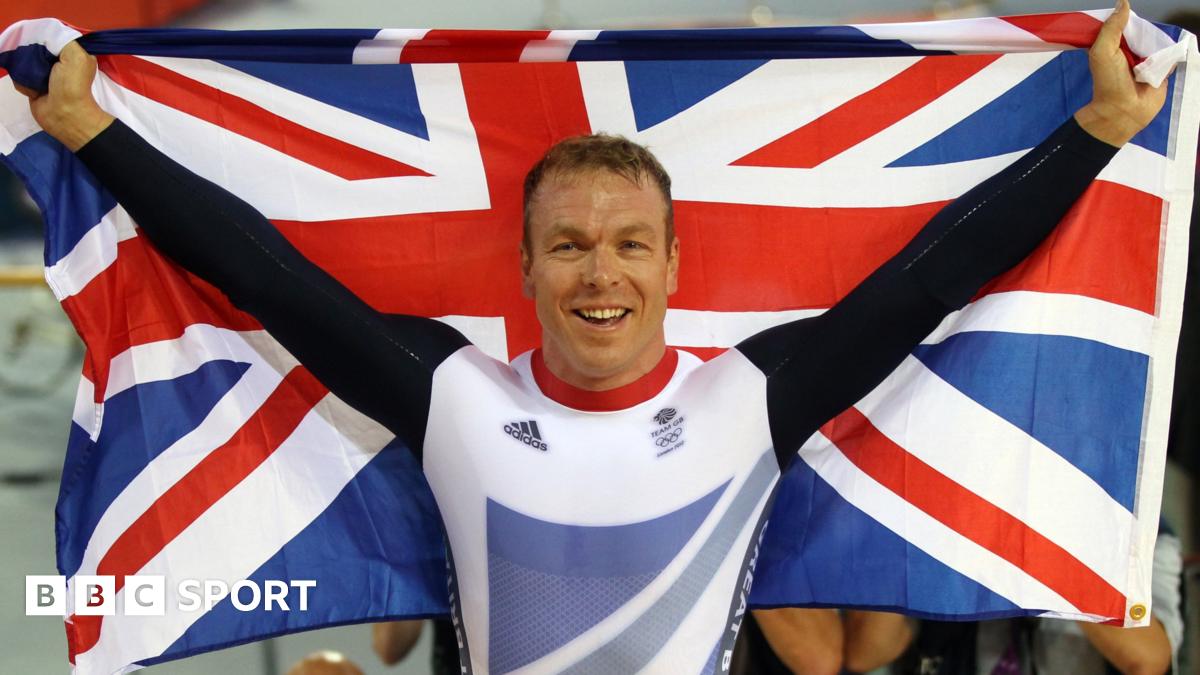
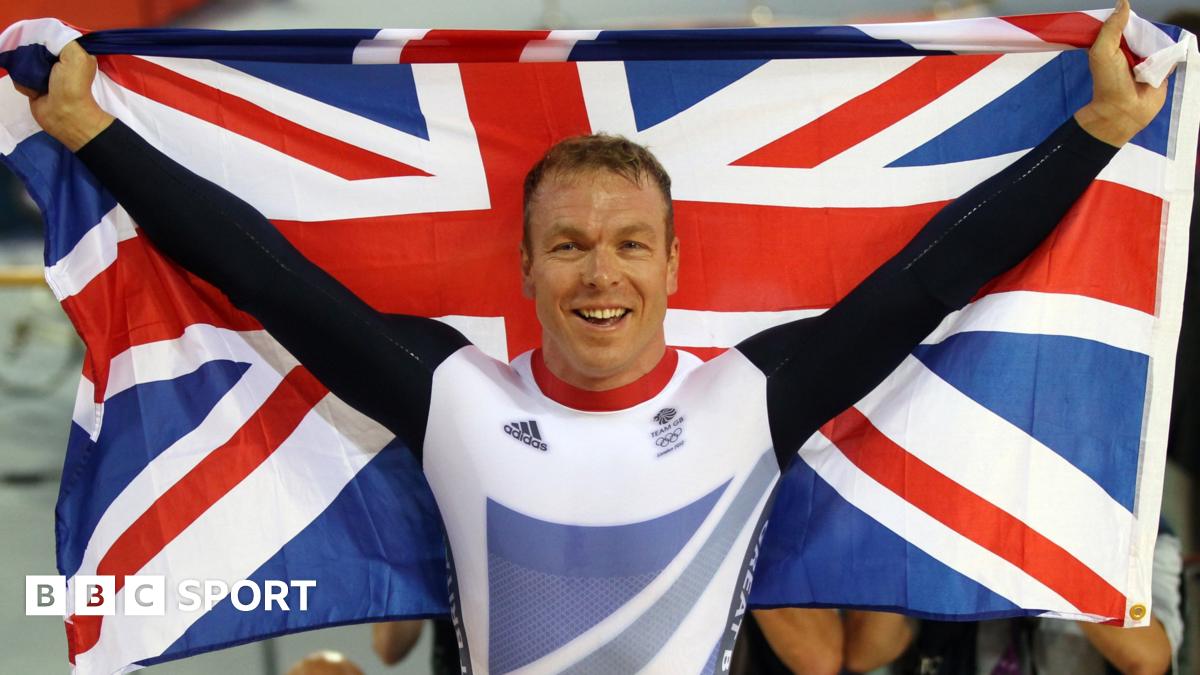
An exacting, leave-no-stone-unturned, meticulous mindset that defined a career in which he won six gold medals and one silver across four Olympic Games.

This is the same mindset he is relying on more than ever to reframe his entire existence and purpose following a terminal cancer diagnosis.

“We normally have a fry-up for breakfast but, when you guys are here, we need to make an effort,” he jokes.

The “you” in this instance are the BBC cameras that have been following Hoy and his family and friends for the past 12 months for the documentary Sir Chris Hoy: Cancer, Courage and Me.

The programme will be broadcast for the first time at 21:00 GMT on Thursday, 18 December on BBC One and available from 22:00 GMT on BBC iPlayer and the BBC Sport website and app.

Sir Chris Hoy: Cancer, Courage and Me

Watch on iPlayer

As he weighs his coffee – perhaps the number one area where Hoy’s obsessive eye for detail manifests itself – the Scot is in an upbeat mood, laughing and joking with wife Sarra about their imagined usual morning scenario of a full English breakfast compared to the omelette and green homemade smoothie they are actually tucking into.

It has not been anywhere near this rosy for much of the past two years, however, as Hoy explains a few minutes later when the cameras are rolling properly.

“It’s about five miles from the hospital back home,” he says, describing his return journey from seeing doctors after learning of his cancer diagnosis in September 2023. “I just walked back in a daze. I don’t remember the walk. I was just thinking, how am I going to tell Sarra? What am I going to say?

“As soon as I said the words, I broke down.”

What Hoy had to articulate was a terminal cancer diagnosis. Incurable secondary bone cancer. Between two and four years to live.

“In my sporting career it used to be about process, not outcome,” he says. “Focus on what you have control over. But if you win or lose, it’s not life and death.

Hoy has shrewdly taken on support for this difficult time in his life.

Steve Peters is a man that Hoy knew could make a difference.

The list of sportspeople that Peters has worked with – the public list he is happy to talk about on the record – is a high-profile ‘who’s who’ ranging from Steven Gerrard to Ronnie O’Sullivan.

The donkeys in the front paddock of the psychiatrist’s countryside home bely that glitzy, glamourous list.

But their tranquil nature make complete sense when you spend a few hours in the company of Peters and Hoy.

Peters was Hoy’s first port of call throughout his career when it came to training and calming his mind to be at its peak in and around Olympic competition.

He was also one of the first people Hoy called when he got his terminal diagnosis last year.

At first Peters was part of the firefighting phase of what Hoy’s wife Sarra describes as a “deep grief” in the first few days post-diagnosis.

But in time, with Peters’ help, Hoy set about finding a new purpose.

Firstly, it is to raise awareness of the limitations of the current provision for prostate cancer in the UK. Both Hoy’s father and grandfather have had prostate cancer.

Understandably, given an earlier diagnosis could have shifted his diagnosis from terminal to manageable, the 49-year-old Scot argues eloquently that a national screening programme should be made a priority for men from their 45th birthday onwards.

But, crucially, his approach is also to show other people living with cancer that sport and exercise can still be a positive part of their lives, even through their treatment.

Peters explains: “What Chris did when he was presented with this illness is he said: ‘Right, what’s the plan?’ After we worked through the initial stages of the shock and grief of it, then he came out the other side and he picked up on the purpose.

To play this video you need to enable JavaScript in your browser.

Peters knows all too well how unstoppable Hoy can be when a mission takes him over.

The pair have now worked together for more than 20 years, with perhaps their crowning moment coming at the Athens 2004 Games.

It was in the Greek capital that Peters’ “pink elephant” technique helped Hoy win his first Olympic gold. In the run-up to Athens, Peters had encouraged Hoy to pre-empt a scenario in which his rivals broke the world record in the men’s kilometre time trial before the Scot had his chance to ride. The scenario became reality on three occasions, but rather than falter, Hoy, the last to ride, responded with a world record of his own to take gold.

The mindset of that moment is one he is tapping into again with his approach to cancer. Control the controllables, but don’t waste time worrying about the end result.

Just like in Athens.

“As I went to the start line, a personal best would have got me third,” Hoy remembers.

“Recognising what you have control over is such an important part of life. Focus on what you have control over – but the outcome itself, you don’t have control over.

“Steve helped me to access the best of myself, and get the best out of myself.”

The BBC Breakfast and BBC Sport cameras witnessed Hoy, with the help of Lady Sarra – who herself is dealing with her own diagnosis of multiple sclerosis – making the best of his cancer diagnosis in the last 12 months.

They have followed Hoy and his family to doctor and physio appointments and out on mountain bike rides in Wales with a GB Olympic cycling A-list group of riders and friends.

‘Overwhelming’ response to Hoy mission

To play this video you need to enable JavaScript in your browser.

It is just after 9am in a back room of the Sir Chris Hoy Velodrome in Glasgow – a few minutes before Hoy’s charity mass participation cycling event, the Tour de Four, is due to get under way.

The ride was set up, and given its title, in an effort to change perceptions around stage four cancer.

Every time the door opens, a member of British Olympic and Paralympic royalty walks through it.

Sir Mark Cavendish, Sir Jason Kenny, Becky James, Dani King, Sir Ben Ainslie, Sir Steve Redgrave, Dame Sarah Storey…

In and among the clip-clop of cycling cleats comes another sporting knight.

This one is wearing tennis shoes.

Hoy goes over to check in with Sir Andy Murray about his readiness and is met with a typical sardonic quip from his fellow Scot.

Hoy asks: “Are you feeling ready mate?”

    • 3 December 2025
    • 3 December 2025

As it turns out, the two-time Wimbledon champion was woefully ill-prepared – completing the ride in tennis shoes and boxer shorts. Not typical road cycling gear, but typical of the response of Hoy’s friends to his diagnosis.

“The response of friends has been quite overwhelming at times,” Hoy says.

The friend response has been mirrored by that of the public.

September’s Tour de Four raised more than £3m for cancer charities across the UK.

However, the highs of that success were followed in November by the UK National Screening Committee’s recommendation that a prostate screening cancer programme for all men in the UK was not justified.

For Hoy, the fight to raise money and raise awareness is his new Olympic-sized mission and his response therefore was dignified, yet resolutely determined.

“I was quite astonished,” he said. “I can’t believe that the answer to this situation is to sit on your hands and do nothing. There are 10,000 men a year in the UK who find out they have prostate cancer too late – it’s incurable.

“We’re failing these men if we don’t do something proactive. Regardless, I’m going to keep pushing.”

Again, we meet his Olympic-honed mindset, targeted on a bigger mission.

“The Olympics was something that was my life for so many years and drove me on,” Hoy says.

“I’m still incredibly proud of it now and I look back with great fondness, but this is something on an entirely different level.

To play this video you need to enable JavaScript in your browser.

Related topics

  • Insight: In-depth stories from the world of sport
  • Cycling

I’ve realised I can make a difference – Hoy


Sir Chris Hoy is in his kitchen, chatting about early-morning coffee and fry-ups.

And mindsets.

An Olympic champion’s mindset to be exact.

An exacting, leave-no-stone-unturned, meticulous mindset that defined a career in which he won six gold medals and one silver across four Olympic Games.

This is the same mindset he is relying on more than ever to reframe his entire existence and purpose following a terminal cancer diagnosis.

“We normally have a fry-up for breakfast but, when you guys are here, we need to make an effort,” he jokes.

The “you” in this instance are the BBC cameras that have been following Hoy and his family and friends for the past 12 months for the documentary Sir Chris Hoy: Cancer, Courage and Me.

The programme will be broadcast for the first time at 21:00 GMT on Thursday, 18 December on BBC One and available from 22:00 GMT on BBC iPlayer and the BBC Sport website and app.

Sir Chris Hoy: Cancer, Courage and Me

Watch on iPlayer

As he weighs his coffee – perhaps the number one area where Hoy’s obsessive eye for detail manifests itself – the Scot is in an upbeat mood, laughing and joking with wife Sarra about their imagined usual morning scenario of a full English breakfast compared to the omelette and green homemade smoothie they are actually tucking into.

It has not been anywhere near this rosy for much of the past two years, however, as Hoy explains a few minutes later when the cameras are rolling properly.

“It’s about five miles from the hospital back home,” he says, describing his return journey from seeing doctors after learning of his cancer diagnosis in September 2023. “I just walked back in a daze. I don’t remember the walk. I was just thinking, how am I going to tell Sarra? What am I going to say?

“As soon as I said the words, I broke down.”

What Hoy had to articulate was a terminal cancer diagnosis. Incurable secondary bone cancer. Between two and four years to live.

“In my sporting career it used to be about process, not outcome,” he says. “Focus on what you have control over. But if you win or lose, it’s not life and death.

Hoy has shrewdly taken on support for this difficult time in his life.

Steve Peters is a man that Hoy knew could make a difference.

The list of sportspeople that Peters has worked with – the public list he is happy to talk about on the record – is a high-profile ‘who’s who’ ranging from Steven Gerrard to Ronnie O’Sullivan.

The donkeys in the front paddock of the psychiatrist’s countryside home bely that glitzy, glamourous list.

But their tranquil nature make complete sense when you spend a few hours in the company of Peters and Hoy.

Peters was Hoy’s first port of call throughout his career when it came to training and calming his mind to be at its peak in and around Olympic competition.

He was also one of the first people Hoy called when he got his terminal diagnosis last year.

At first Peters was part of the firefighting phase of what Hoy’s wife Sarra describes as a “deep grief” in the first few days post-diagnosis.

But in time, with Peters’ help, Hoy set about finding a new purpose.

Firstly, it is to raise awareness of the limitations of the current provision for prostate cancer in the UK. Both Hoy’s father and grandfather have had prostate cancer.

Understandably, given an earlier diagnosis could have shifted his diagnosis from terminal to manageable, the 49-year-old Scot argues eloquently that a national screening programme should be made a priority for men from their 45th birthday onwards.

But, crucially, his approach is also to show other people living with cancer that sport and exercise can still be a positive part of their lives, even through their treatment.

Peters explains: “What Chris did when he was presented with this illness is he said: ‘Right, what’s the plan?’ After we worked through the initial stages of the shock and grief of it, then he came out the other side and he picked up on the purpose.

To play this video you need to enable JavaScript in your browser.

Peters knows all too well how unstoppable Hoy can be when a mission takes him over.

The pair have now worked together for more than 20 years, with perhaps their crowning moment coming at the Athens 2004 Games.

It was in the Greek capital that Peters’ “pink elephant” technique helped Hoy win his first Olympic gold. In the run-up to Athens, Peters had encouraged Hoy to pre-empt a scenario in which his rivals broke the world record in the men’s kilometre time trial before the Scot had his chance to ride. The scenario became reality on three occasions, but rather than falter, Hoy, the last to ride, responded with a world record of his own to take gold.

The mindset of that moment is one he is tapping into again with his approach to cancer. Control the controllables, but don’t waste time worrying about the end result.

Just like in Athens.

“As I went to the start line, a personal best would have got me third,” Hoy remembers.

“Recognising what you have control over is such an important part of life. Focus on what you have control over – but the outcome itself, you don’t have control over.

“Steve helped me to access the best of myself, and get the best out of myself.”

The BBC Breakfast and BBC Sport cameras witnessed Hoy, with the help of Lady Sarra – who herself is dealing with her own diagnosis of multiple sclerosis – making the best of his cancer diagnosis in the last 12 months.

They have followed Hoy and his family to doctor and physio appointments and out on mountain bike rides in Wales with a GB Olympic cycling A-list group of riders and friends.

‘Overwhelming’ response to Hoy mission

To play this video you need to enable JavaScript in your browser.

It is just after 9am in a back room of the Sir Chris Hoy Velodrome in Glasgow – a few minutes before Hoy’s charity mass participation cycling event, the Tour de Four, is due to get under way.

The ride was set up, and given its title, in an effort to change perceptions around stage four cancer.

Every time the door opens, a member of British Olympic and Paralympic royalty walks through it.

Sir Mark Cavendish, Sir Jason Kenny, Becky James, Dani King, Sir Ben Ainslie, Sir Steve Redgrave, Dame Sarah Storey…

In and among the clip-clop of cycling cleats comes another sporting knight.

This one is wearing tennis shoes.

Hoy goes over to check in with Sir Andy Murray about his readiness and is met with a typical sardonic quip from his fellow Scot.

Hoy asks: “Are you feeling ready mate?”

    • 3 December 2025
    • 3 December 2025

As it turns out, the two-time Wimbledon champion was woefully ill-prepared – completing the ride in tennis shoes and boxer shorts. Not typical road cycling gear, but typical of the response of Hoy’s friends to his diagnosis.

“The response of friends has been quite overwhelming at times,” Hoy says.

The friend response has been mirrored by that of the public.

September’s Tour de Four raised more than £3m for cancer charities across the UK.

However, the highs of that success were followed in November by the UK National Screening Committee’s recommendation that a prostate screening cancer programme for all men in the UK was not justified.

For Hoy, the fight to raise money and raise awareness is his new Olympic-sized mission and his response therefore was dignified, yet resolutely determined.

“I was quite astonished,” he said. “I can’t believe that the answer to this situation is to sit on your hands and do nothing. There are 10,000 men a year in the UK who find out they have prostate cancer too late – it’s incurable.

“We’re failing these men if we don’t do something proactive. Regardless, I’m going to keep pushing.”

Again, we meet his Olympic-honed mindset, targeted on a bigger mission.

“The Olympics was something that was my life for so many years and drove me on,” Hoy says.

“I’m still incredibly proud of it now and I look back with great fondness, but this is something on an entirely different level.

To play this video you need to enable JavaScript in your browser.

Related topics

  • Insight: In-depth stories from the world of sport
  • Cycling