Booze, beach, beaten – how England lost the Ashes


It’s been a shocker, hasn’t it?

England’s latest humiliation down under will be remembered as their worst in recent times not only for its rapid nature, but also because this was supposed to be an opportunity to regain the Ashes from a weakened Australia.

Seeds sown long ago

Hindsight makes experts of us all, but the failings of this tour began long ago.

It was a missed opportunity not to trial a genuine opener when Zak Crawley got injured in the summer of 2024, instead asking Dan Lawrence to do a job for which he is not suited. Lawrence has not been seen since.

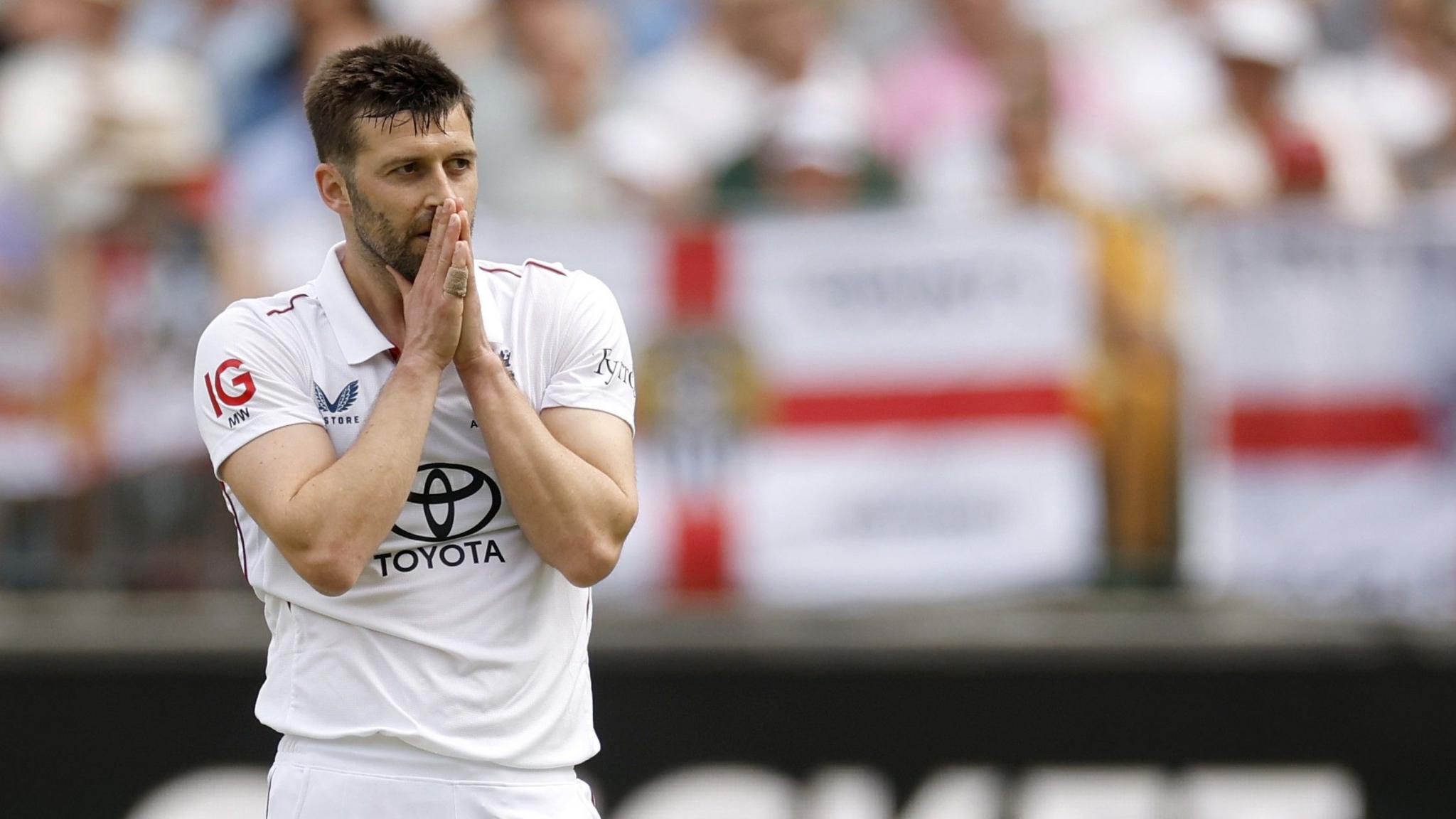
If Jordan Cox’s broken thumb in New Zealand 12 months ago was unfortunate – Cox could have been a badly needed reserve keeper in Australia – then the decision to send Mark Wood to the Champions Trophy proved immeasurably costly.

England so badly wanted pace on this tour, then managed to injure their fastest bowler in a tournament they were never going to win.

Assistant coach Paul Collingwood disappeared at the beginning of the home summer and has not been replaced, and there was no clarity on the identity of England’s fast-bowling coach for this tour right up to the last minute.

Chris Woakes’ dislocated shoulder effectively ruled him out of the Ashes, but there were still two other players in England’s squad for the last Test against India that did not make it to Australia: Jamie Overton and Liam Dawson.

Overton took a break from red-ball cricket after using up a spot at The Oval which could have gone to Matthew Potts, Matthew Fisher or Sam Cook. Dawson – or any other frontline spinner – would have been pragmatic cover in Australia for Shoaib Bashir, whose form was an accident waiting to happen.

Even the announcement of the Ashes squad was an anticlimactic foreshadowing of things to come.

Whereas the British & Irish Lions unveiled their Australian tour squad in front of 2,000 fans at the O2 in London, England hustled out their team on a press release with no notice a couple of hours after the death of legendary umpire Dickie Bird was announced.

When it came, the 12-month hokey-cokey over Ollie Pope’s place continued as he was replaced as vice-captain, adding further fuel to a Jacob Bethell debate that is still to be settled.

Fail to prepare, prepare to fail

Joe Root signs an autograph on the boundaryGetty Images

For all the criticism of England’s pre-series plans in Australia, the immovable obstacle to more warm-up matches was a white-ball tour of New Zealand that had been in the diary for years.

Despite England and Wales Cricket Board chairman Richard Thompson claiming the series against the Black Caps was strong Ashes preparation, England lost three of four completed matches, effectively played at the end of the New Zealand winter.

England ultimately got the Ashes warm-up they wanted – an intra-squad match against the England Lions. However, there is evidence of buyer’s remorse through their opening of negotiations with Cricket Australia over an agreement to guarantee better preparation on future Ashes tours.

If there was an offer of a match against a state team or Australia A, it was too close to the tour of New Zealand for England to make it work. England insist they asked for time at the Waca, only to be told the ground was not available. When England made the request is not clear. The Barmy Army managed to book a game there.

The Lilac Hill conditions for the warm-up match were slow and low, far removed from the pace and bounce of Perth Stadium.

The overall attitude was laid back. England team analyst Rupert Lewis donned whites to run the drinks and music played from the dressing rooms throughout the three days. Harry Brook’s shots demonstrated his disdain for the exercise.

As the Lions players not involved were sent on laps of the park as part of a tough fitness programme, Bashir’s bowling was hammered by his own team-mates and Wood had to go for a scan on his hamstring eight overs into his comeback.

A hint of farce came when the scorecard malfunctioned, showing Wood to be batting despite being in hospital at the time.

Two down in six days

Ben Stokes looks glumGetty Images

England dealt well with the build-up to the first Test. Josh Tongue and Jamie Smith swatted away questions about golf, stumpings and moral victories.

Dominant at lunch on day two in Perth, England lost before stumps on the same day.

Stokes said he was shell-shocked in some tetchy post-match media interactions, comments that were used against the captain as England lost the PR battle in the days after the Test.

England were followed by photographers to golf courses and even an aquarium, while housing the squad in a hotel attached to a casino was probably a mistake. Some of the group developed a penchant for an Australian brand of takeaway frozen yoghurt.

The decision not to send more players to the Lions’ day-night game against a Prime Minister’s XI in Canberra was put down to the difference in conditions between the capital and Brisbane.

However, a week’s worth of radio silence did not help the tourists. Former Australia pace bowler Mitchell Johnson accused them of being “arrogant”.

England instead opted for five days of training in Brisbane, a workload that head coach Brendon McCullum would later claim left his team “overprepared” for the second Test.

When Stokes finally broke the media blackout, he clarified the “has-beens” comment and responded to Johnson by saying England could be called “rubbish”, rather than arrogant.

As the build-up to the Test continued, Stokes and Pope had to respond to pictures of the captain, Wood and Smith riding e-scooters without helmets – an offence punishable by a fine under Queensland law.

On the field, Root’s long-awaited first hundred in Australia was rendered useless by some awful shots by his team-mates and England missed five catches.

On the beach

Ben Stokes with MixFM radio hosts Archie and BretzMixFM

England said their four nights in the beach resort of Noosa had been scheduled for more than a year, which possibly leaves it as one of the best-planned parts of the tour.

Some used it in the spirit it was intended. Root, for example, had accommodation with his family away from the main drag and was never spotted near a bar. It was curious that more family members were not present for what was billed as a break from the Ashes.

For others, it was a glorified stag do. Some members of the team followed two days of drinking in Brisbane with four more in Noosa – six in total, as many days as there had been of Test cricket at this point in the tour.

The England party was hardly inconspicuous, drinking by the side of the road, with plenty wearing traditional Akubra hats that became the uniform of the holiday.

There was a three-line whip issued to attend a kick-about on the beach, where England were sledged by local radio DJs and mingled with other holidaymakers.

Stokes was seen out running, while on another occasion strength and conditioning coach Pete Sim invited the entire group for a run along the coast at 07:45am. Smith, Bashir and Tongue were the only players to turn out.

At the end of the trip, a member of the England security staff was accused of a physical confrontation with a cameraman from TV network Seven following a back-and-forth in Brisbane airport.

All over in Adelaide

The scene at Adelaide Oval after Australia completed victoryGetty Images

By the third Test, England’s messaging had become mixed. Stokes talked of “enjoying the pressure”, despite actively looking to remove pressure from his team over the previous three years.

Brook said England had not spoken about cricket in Noosa, whereas Stokes admitted there had been “raw” conversations. Crawley would later claim not to know about the “weak men” comments.

Perhaps aware fielding had let them down, England engaged in some rare fielding drills.

At an Adelaide ground renowned for helping spinners, England left out Bashir, a decision explained by the need for Will Jacks’ batting at number eight. Assistant coach Jeetan Patel insisted Bashir had not become “unselectable”.

After putting so much emphasis on high pace, England were left with part-time spinner Jacks bowling more overs than anyone else in the match.

Outwardly, England remained relaxed. McCullum’s walk to the Adelaide Oval twice passed through BBC Radio 5 live shows being broadcast from outside the team hotel. Patel left a news conference with the words: “Enjoy your evening. Have a pint, because I will be.”

Related topics

  • England Men’s Cricket Team
  • Insight: In-depth stories from the world of sport
  • Australia
  • The Ashes
  • Cricket

More on this story

    • 21 December 2025
    Brendon McCullum
    • 21 December 2025
    Englan captain Ben Stokes consoles Will Jacks after their Ashes defeat by Australia
    • 21 December 2025
    Mitchell Starc celebrates a wicket
    • 21 December 2025
    Ollie Pope looks dejected as he is dismissed
    • 16 August 2025
    BBC Sport microphone and phone

I’ve realised I can make a difference – Hoy


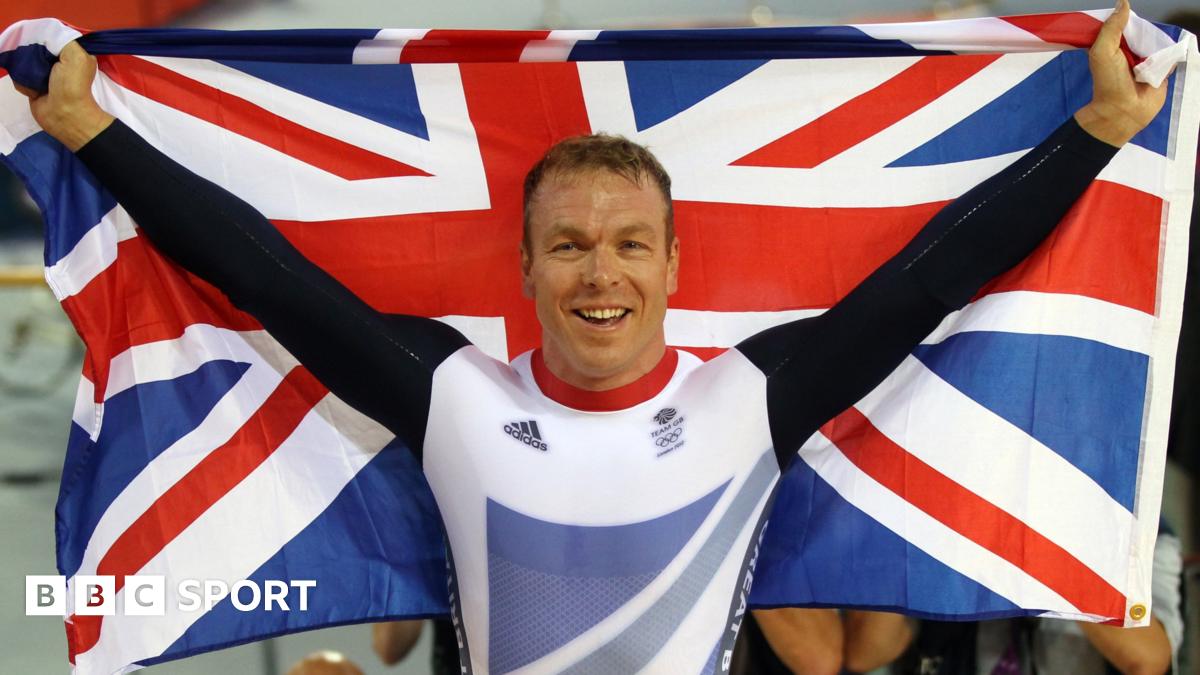
Sir Chris Hoy is in his kitchen, chatting about early-morning coffee and fry-ups.

And mindsets.

An Olympic champion’s mindset to be exact.

An exacting, leave-no-stone-unturned, meticulous mindset that defined a career in which he won six gold medals and one silver across four Olympic Games.

This is the same mindset he is relying on more than ever to reframe his entire existence and purpose following a terminal cancer diagnosis.

“We normally have a fry-up for breakfast but, when you guys are here, we need to make an effort,” he jokes.

The “you” in this instance are the BBC cameras that have been following Hoy and his family and friends for the past 12 months for the documentary Sir Chris Hoy: Cancer, Courage and Me.

The programme will be broadcast for the first time at 21:00 GMT on Thursday, 18 December on BBC One and available from 22:00 GMT on BBC iPlayer and the BBC Sport website and app.

Sir Chris Hoy: Cancer, Courage and Me

Watch on iPlayer

As he weighs his coffee – perhaps the number one area where Hoy’s obsessive eye for detail manifests itself – the Scot is in an upbeat mood, laughing and joking with wife Sarra about their imagined usual morning scenario of a full English breakfast compared to the omelette and green homemade smoothie they are actually tucking into.

It has not been anywhere near this rosy for much of the past two years, however, as Hoy explains a few minutes later when the cameras are rolling properly.

“It’s about five miles from the hospital back home,” he says, describing his return journey from seeing doctors after learning of his cancer diagnosis in September 2023. “I just walked back in a daze. I don’t remember the walk. I was just thinking, how am I going to tell Sarra? What am I going to say?

“As soon as I said the words, I broke down.”

What Hoy had to articulate was a terminal cancer diagnosis. Incurable secondary bone cancer. Between two and four years to live.

“In my sporting career it used to be about process, not outcome,” he says. “Focus on what you have control over. But if you win or lose, it’s not life and death.

Hoy has shrewdly taken on support for this difficult time in his life.

Steve Peters is a man that Hoy knew could make a difference.

The list of sportspeople that Peters has worked with – the public list he is happy to talk about on the record – is a high-profile ‘who’s who’ ranging from Steven Gerrard to Ronnie O’Sullivan.

The donkeys in the front paddock of the psychiatrist’s countryside home bely that glitzy, glamourous list.

But their tranquil nature make complete sense when you spend a few hours in the company of Peters and Hoy.

Peters was Hoy’s first port of call throughout his career when it came to training and calming his mind to be at its peak in and around Olympic competition.

He was also one of the first people Hoy called when he got his terminal diagnosis last year.

At first Peters was part of the firefighting phase of what Hoy’s wife Sarra describes as a “deep grief” in the first few days post-diagnosis.

But in time, with Peters’ help, Hoy set about finding a new purpose.

Firstly, it is to raise awareness of the limitations of the current provision for prostate cancer in the UK. Both Hoy’s father and grandfather have had prostate cancer.

Understandably, given an earlier diagnosis could have shifted his diagnosis from terminal to manageable, the 49-year-old Scot argues eloquently that a national screening programme should be made a priority for men from their 45th birthday onwards.

But, crucially, his approach is also to show other people living with cancer that sport and exercise can still be a positive part of their lives, even through their treatment.

Peters explains: “What Chris did when he was presented with this illness is he said: ‘Right, what’s the plan?’ After we worked through the initial stages of the shock and grief of it, then he came out the other side and he picked up on the purpose.

To play this video you need to enable JavaScript in your browser.

Peters knows all too well how unstoppable Hoy can be when a mission takes him over.

The pair have now worked together for more than 20 years, with perhaps their crowning moment coming at the Athens 2004 Games.

It was in the Greek capital that Peters’ “pink elephant” technique helped Hoy win his first Olympic gold. In the run-up to Athens, Peters had encouraged Hoy to pre-empt a scenario in which his rivals broke the world record in the men’s kilometre time trial before the Scot had his chance to ride. The scenario became reality on three occasions, but rather than falter, Hoy, the last to ride, responded with a world record of his own to take gold.

The mindset of that moment is one he is tapping into again with his approach to cancer. Control the controllables, but don’t waste time worrying about the end result.

Just like in Athens.

“As I went to the start line, a personal best would have got me third,” Hoy remembers.

“Recognising what you have control over is such an important part of life. Focus on what you have control over – but the outcome itself, you don’t have control over.

“Steve helped me to access the best of myself, and get the best out of myself.”

The BBC Breakfast and BBC Sport cameras witnessed Hoy, with the help of Lady Sarra – who herself is dealing with her own diagnosis of multiple sclerosis – making the best of his cancer diagnosis in the last 12 months.

They have followed Hoy and his family to doctor and physio appointments and out on mountain bike rides in Wales with a GB Olympic cycling A-list group of riders and friends.

‘Overwhelming’ response to Hoy mission

To play this video you need to enable JavaScript in your browser.

It is just after 9am in a back room of the Sir Chris Hoy Velodrome in Glasgow – a few minutes before Hoy’s charity mass participation cycling event, the Tour de Four, is due to get under way.

The ride was set up, and given its title, in an effort to change perceptions around stage four cancer.

Every time the door opens, a member of British Olympic and Paralympic royalty walks through it.

Sir Mark Cavendish, Sir Jason Kenny, Becky James, Dani King, Sir Ben Ainslie, Sir Steve Redgrave, Dame Sarah Storey…

In and among the clip-clop of cycling cleats comes another sporting knight.

This one is wearing tennis shoes.

Hoy goes over to check in with Sir Andy Murray about his readiness and is met with a typical sardonic quip from his fellow Scot.

Hoy asks: “Are you feeling ready mate?”

    • 3 December 2025
    • 3 December 2025

As it turns out, the two-time Wimbledon champion was woefully ill-prepared – completing the ride in tennis shoes and boxer shorts. Not typical road cycling gear, but typical of the response of Hoy’s friends to his diagnosis.

“The response of friends has been quite overwhelming at times,” Hoy says.

The friend response has been mirrored by that of the public.

September’s Tour de Four raised more than £3m for cancer charities across the UK.

However, the highs of that success were followed in November by the UK National Screening Committee’s recommendation that a prostate screening cancer programme for all men in the UK was not justified.

For Hoy, the fight to raise money and raise awareness is his new Olympic-sized mission and his response therefore was dignified, yet resolutely determined.

“I was quite astonished,” he said. “I can’t believe that the answer to this situation is to sit on your hands and do nothing. There are 10,000 men a year in the UK who find out they have prostate cancer too late – it’s incurable.

“We’re failing these men if we don’t do something proactive. Regardless, I’m going to keep pushing.”

Again, we meet his Olympic-honed mindset, targeted on a bigger mission.

“The Olympics was something that was my life for so many years and drove me on,” Hoy says.

“I’m still incredibly proud of it now and I look back with great fondness, but this is something on an entirely different level.

To play this video you need to enable JavaScript in your browser.

Related topics

  • Insight: In-depth stories from the world of sport
  • Cycling

I’ve realised I can make a difference – Hoy


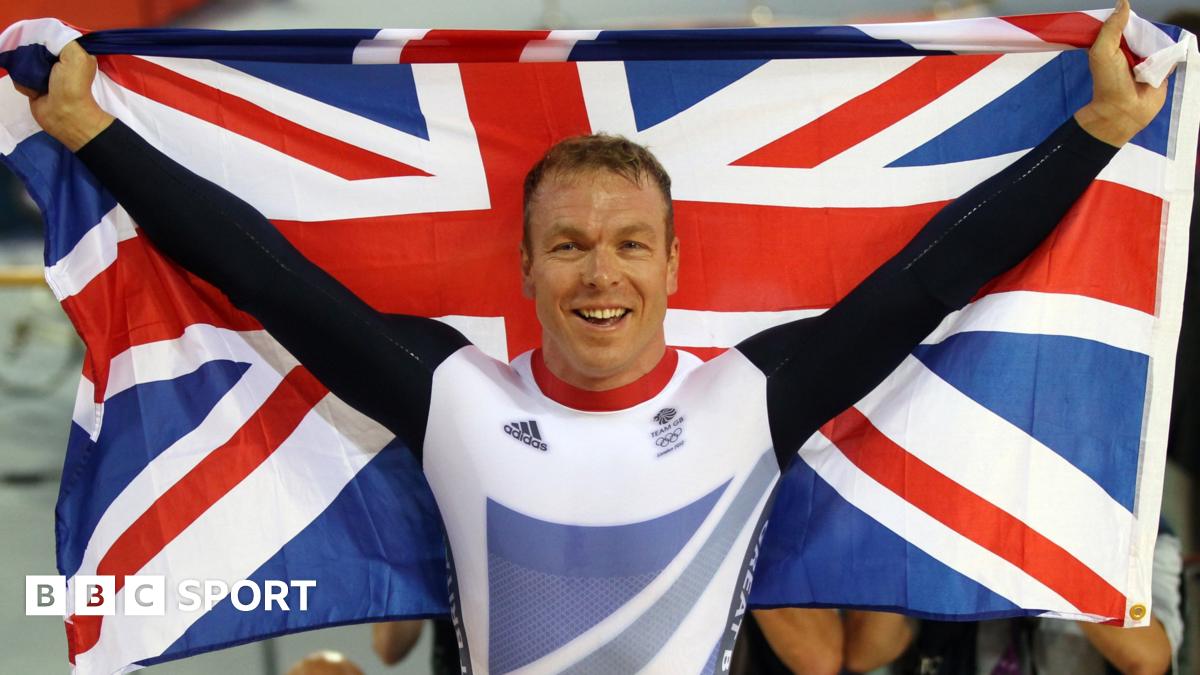
Sir Chris Hoy is in his kitchen, chatting about early-morning coffee and fry-ups.

And mindsets.

An Olympic champion’s mindset to be exact.

An exacting, leave-no-stone-unturned, meticulous mindset that defined a career in which he won six gold medals and one silver across four Olympic Games.

This is the same mindset he is relying on more than ever to reframe his entire existence and purpose following a terminal cancer diagnosis.

“We normally have a fry-up for breakfast but, when you guys are here, we need to make an effort,” he jokes.

The “you” in this instance are the BBC cameras that have been following Hoy and his family and friends for the past 12 months for the documentary Sir Chris Hoy: Cancer, Courage and Me.

The programme will be broadcast for the first time at 21:00 GMT on Thursday, 18 December on BBC One and available from 22:00 GMT on BBC iPlayer and the BBC Sport website and app.

Sir Chris Hoy: Cancer, Courage and Me

Watch on iPlayer

As he weighs his coffee – perhaps the number one area where Hoy’s obsessive eye for detail manifests itself – the Scot is in an upbeat mood, laughing and joking with wife Sarra about their imagined usual morning scenario of a full English breakfast compared to the omelette and green homemade smoothie they are actually tucking into.

It has not been anywhere near this rosy for much of the past two years, however, as Hoy explains a few minutes later when the cameras are rolling properly.

“It’s about five miles from the hospital back home,” he says, describing his return journey from seeing doctors after learning of his cancer diagnosis in September 2023. “I just walked back in a daze. I don’t remember the walk. I was just thinking, how am I going to tell Sarra? What am I going to say?

“As soon as I said the words, I broke down.”

What Hoy had to articulate was a terminal cancer diagnosis. Incurable secondary bone cancer. Between two and four years to live.

“In my sporting career it used to be about process, not outcome,” he says. “Focus on what you have control over. But if you win or lose, it’s not life and death.

Hoy has shrewdly taken on support for this difficult time in his life.

Steve Peters is a man that Hoy knew could make a difference.

The list of sportspeople that Peters has worked with – the public list he is happy to talk about on the record – is a high-profile ‘who’s who’ ranging from Steven Gerrard to Ronnie O’Sullivan.

The donkeys in the front paddock of the psychiatrist’s countryside home bely that glitzy, glamourous list.

But their tranquil nature make complete sense when you spend a few hours in the company of Peters and Hoy.

Peters was Hoy’s first port of call throughout his career when it came to training and calming his mind to be at its peak in and around Olympic competition.

He was also one of the first people Hoy called when he got his terminal diagnosis last year.

At first Peters was part of the firefighting phase of what Hoy’s wife Sarra describes as a “deep grief” in the first few days post-diagnosis.

But in time, with Peters’ help, Hoy set about finding a new purpose.

Firstly, it is to raise awareness of the limitations of the current provision for prostate cancer in the UK. Both Hoy’s father and grandfather have had prostate cancer.

Understandably, given an earlier diagnosis could have shifted his diagnosis from terminal to manageable, the 49-year-old Scot argues eloquently that a national screening programme should be made a priority for men from their 45th birthday onwards.

But, crucially, his approach is also to show other people living with cancer that sport and exercise can still be a positive part of their lives, even through their treatment.

Peters explains: “What Chris did when he was presented with this illness is he said: ‘Right, what’s the plan?’ After we worked through the initial stages of the shock and grief of it, then he came out the other side and he picked up on the purpose.

To play this video you need to enable JavaScript in your browser.

Peters knows all too well how unstoppable Hoy can be when a mission takes him over.

The pair have now worked together for more than 20 years, with perhaps their crowning moment coming at the Athens 2004 Games.

It was in the Greek capital that Peters’ “pink elephant” technique helped Hoy win his first Olympic gold. In the run-up to Athens, Peters had encouraged Hoy to pre-empt a scenario in which his rivals broke the world record in the men’s kilometre time trial before the Scot had his chance to ride. The scenario became reality on three occasions, but rather than falter, Hoy, the last to ride, responded with a world record of his own to take gold.

The mindset of that moment is one he is tapping into again with his approach to cancer. Control the controllables, but don’t waste time worrying about the end result.

Just like in Athens.

“As I went to the start line, a personal best would have got me third,” Hoy remembers.

“Recognising what you have control over is such an important part of life. Focus on what you have control over – but the outcome itself, you don’t have control over.

“Steve helped me to access the best of myself, and get the best out of myself.”

The BBC Breakfast and BBC Sport cameras witnessed Hoy, with the help of Lady Sarra – who herself is dealing with her own diagnosis of multiple sclerosis – making the best of his cancer diagnosis in the last 12 months.

They have followed Hoy and his family to doctor and physio appointments and out on mountain bike rides in Wales with a GB Olympic cycling A-list group of riders and friends.

‘Overwhelming’ response to Hoy mission

To play this video you need to enable JavaScript in your browser.

It is just after 9am in a back room of the Sir Chris Hoy Velodrome in Glasgow – a few minutes before Hoy’s charity mass participation cycling event, the Tour de Four, is due to get under way.

The ride was set up, and given its title, in an effort to change perceptions around stage four cancer.

Every time the door opens, a member of British Olympic and Paralympic royalty walks through it.

Sir Mark Cavendish, Sir Jason Kenny, Becky James, Dani King, Sir Ben Ainslie, Sir Steve Redgrave, Dame Sarah Storey…

In and among the clip-clop of cycling cleats comes another sporting knight.

This one is wearing tennis shoes.

Hoy goes over to check in with Sir Andy Murray about his readiness and is met with a typical sardonic quip from his fellow Scot.

Hoy asks: “Are you feeling ready mate?”

    • 3 December 2025
    • 3 December 2025

As it turns out, the two-time Wimbledon champion was woefully ill-prepared – completing the ride in tennis shoes and boxer shorts. Not typical road cycling gear, but typical of the response of Hoy’s friends to his diagnosis.

“The response of friends has been quite overwhelming at times,” Hoy says.

The friend response has been mirrored by that of the public.

September’s Tour de Four raised more than £3m for cancer charities across the UK.

However, the highs of that success were followed in November by the UK National Screening Committee’s recommendation that a prostate screening cancer programme for all men in the UK was not justified.

For Hoy, the fight to raise money and raise awareness is his new Olympic-sized mission and his response therefore was dignified, yet resolutely determined.

“I was quite astonished,” he said. “I can’t believe that the answer to this situation is to sit on your hands and do nothing. There are 10,000 men a year in the UK who find out they have prostate cancer too late – it’s incurable.

“We’re failing these men if we don’t do something proactive. Regardless, I’m going to keep pushing.”

Again, we meet his Olympic-honed mindset, targeted on a bigger mission.

“The Olympics was something that was my life for so many years and drove me on,” Hoy says.

“I’m still incredibly proud of it now and I look back with great fondness, but this is something on an entirely different level.

To play this video you need to enable JavaScript in your browser.

Related topics

  • Insight: In-depth stories from the world of sport
  • Cycling

I’ve realised I can make a difference – Hoy


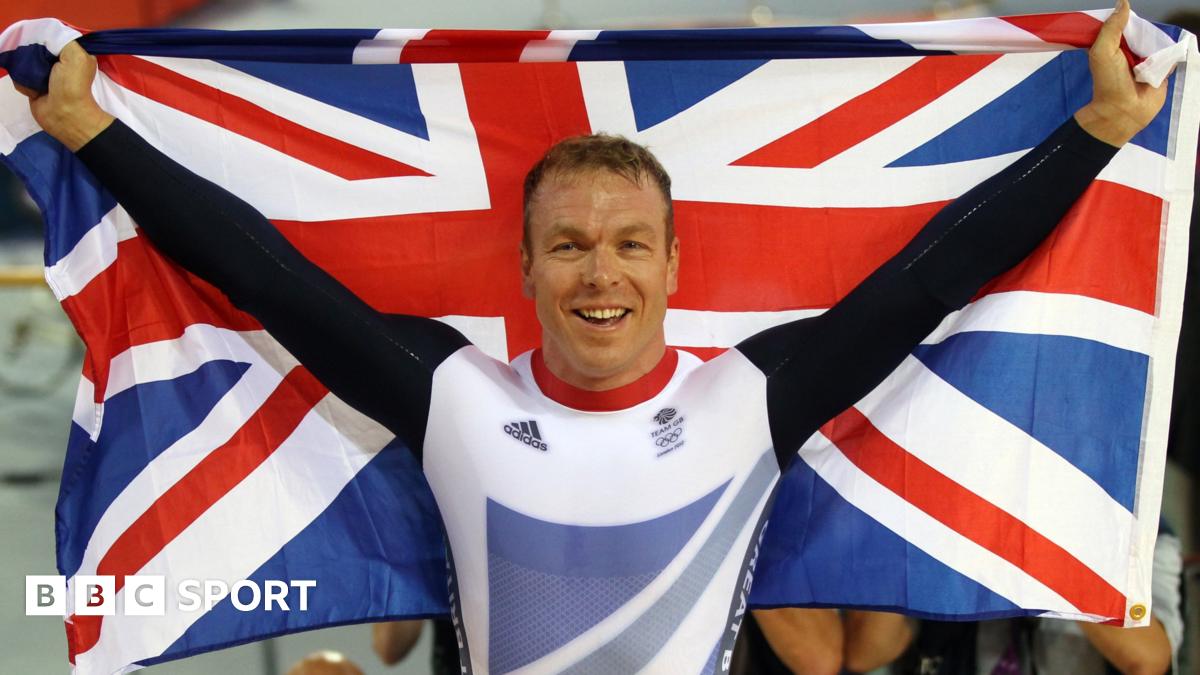
Sir Chris Hoy is in his kitchen, chatting about early-morning coffee and fry-ups.

And mindsets.

An Olympic champion’s mindset to be exact.

An exacting, leave-no-stone-unturned, meticulous mindset that defined a career in which he won six gold medals and one silver across four Olympic Games.

This is the same mindset he is relying on more than ever to reframe his entire existence and purpose following a terminal cancer diagnosis.

“We normally have a fry-up for breakfast but, when you guys are here, we need to make an effort,” he jokes.

The “you” in this instance are the BBC cameras that have been following Hoy and his family and friends for the past 12 months for the documentary Sir Chris Hoy: Cancer, Courage and Me.

The programme will be broadcast for the first time at 21:00 GMT on Thursday, 18 December on BBC One and available from 22:00 GMT on BBC iPlayer and the BBC Sport website and app.

Sir Chris Hoy: Cancer, Courage and Me

Watch on iPlayer

As he weighs his coffee – perhaps the number one area where Hoy’s obsessive eye for detail manifests itself – the Scot is in an upbeat mood, laughing and joking with wife Sarra about their imagined usual morning scenario of a full English breakfast compared to the omelette and green homemade smoothie they are actually tucking into.

It has not been anywhere near this rosy for much of the past two years, however, as Hoy explains a few minutes later when the cameras are rolling properly.

“It’s about five miles from the hospital back home,” he says, describing his return journey from seeing doctors after learning of his cancer diagnosis in September 2023. “I just walked back in a daze. I don’t remember the walk. I was just thinking, how am I going to tell Sarra? What am I going to say?

“As soon as I said the words, I broke down.”

What Hoy had to articulate was a terminal cancer diagnosis. Incurable secondary bone cancer. Between two and four years to live.

“In my sporting career it used to be about process, not outcome,” he says. “Focus on what you have control over. But if you win or lose, it’s not life and death.

Hoy has shrewdly taken on support for this difficult time in his life.

Steve Peters is a man that Hoy knew could make a difference.

The list of sportspeople that Peters has worked with – the public list he is happy to talk about on the record – is a high-profile ‘who’s who’ ranging from Steven Gerrard to Ronnie O’Sullivan.

The donkeys in the front paddock of the psychiatrist’s countryside home bely that glitzy, glamourous list.

But their tranquil nature make complete sense when you spend a few hours in the company of Peters and Hoy.

Peters was Hoy’s first port of call throughout his career when it came to training and calming his mind to be at its peak in and around Olympic competition.

He was also one of the first people Hoy called when he got his terminal diagnosis last year.

At first Peters was part of the firefighting phase of what Hoy’s wife Sarra describes as a “deep grief” in the first few days post-diagnosis.

But in time, with Peters’ help, Hoy set about finding a new purpose.

Firstly, it is to raise awareness of the limitations of the current provision for prostate cancer in the UK. Both Hoy’s father and grandfather have had prostate cancer.

Understandably, given an earlier diagnosis could have shifted his diagnosis from terminal to manageable, the 49-year-old Scot argues eloquently that a national screening programme should be made a priority for men from their 45th birthday onwards.

But, crucially, his approach is also to show other people living with cancer that sport and exercise can still be a positive part of their lives, even through their treatment.

Peters explains: “What Chris did when he was presented with this illness is he said: ‘Right, what’s the plan?’ After we worked through the initial stages of the shock and grief of it, then he came out the other side and he picked up on the purpose.

To play this video you need to enable JavaScript in your browser.

Peters knows all too well how unstoppable Hoy can be when a mission takes him over.

The pair have now worked together for more than 20 years, with perhaps their crowning moment coming at the Athens 2004 Games.

It was in the Greek capital that Peters’ “pink elephant” technique helped Hoy win his first Olympic gold. In the run-up to Athens, Peters had encouraged Hoy to pre-empt a scenario in which his rivals broke the world record in the men’s kilometre time trial before the Scot had his chance to ride. The scenario became reality on three occasions, but rather than falter, Hoy, the last to ride, responded with a world record of his own to take gold.

The mindset of that moment is one he is tapping into again with his approach to cancer. Control the controllables, but don’t waste time worrying about the end result.

Just like in Athens.

“As I went to the start line, a personal best would have got me third,” Hoy remembers.

“Recognising what you have control over is such an important part of life. Focus on what you have control over – but the outcome itself, you don’t have control over.

“Steve helped me to access the best of myself, and get the best out of myself.”

The BBC Breakfast and BBC Sport cameras witnessed Hoy, with the help of Lady Sarra – who herself is dealing with her own diagnosis of multiple sclerosis – making the best of his cancer diagnosis in the last 12 months.

They have followed Hoy and his family to doctor and physio appointments and out on mountain bike rides in Wales with a GB Olympic cycling A-list group of riders and friends.

‘Overwhelming’ response to Hoy mission

To play this video you need to enable JavaScript in your browser.

It is just after 9am in a back room of the Sir Chris Hoy Velodrome in Glasgow – a few minutes before Hoy’s charity mass participation cycling event, the Tour de Four, is due to get under way.

The ride was set up, and given its title, in an effort to change perceptions around stage four cancer.

Every time the door opens, a member of British Olympic and Paralympic royalty walks through it.

Sir Mark Cavendish, Sir Jason Kenny, Becky James, Dani King, Sir Ben Ainslie, Sir Steve Redgrave, Dame Sarah Storey…

In and among the clip-clop of cycling cleats comes another sporting knight.

This one is wearing tennis shoes.

Hoy goes over to check in with Sir Andy Murray about his readiness and is met with a typical sardonic quip from his fellow Scot.

Hoy asks: “Are you feeling ready mate?”

    • 3 December 2025
    • 3 December 2025

As it turns out, the two-time Wimbledon champion was woefully ill-prepared – completing the ride in tennis shoes and boxer shorts. Not typical road cycling gear, but typical of the response of Hoy’s friends to his diagnosis.

“The response of friends has been quite overwhelming at times,” Hoy says.

The friend response has been mirrored by that of the public.

September’s Tour de Four raised more than £3m for cancer charities across the UK.

However, the highs of that success were followed in November by the UK National Screening Committee’s recommendation that a prostate screening cancer programme for all men in the UK was not justified.

For Hoy, the fight to raise money and raise awareness is his new Olympic-sized mission and his response therefore was dignified, yet resolutely determined.

“I was quite astonished,” he said. “I can’t believe that the answer to this situation is to sit on your hands and do nothing. There are 10,000 men a year in the UK who find out they have prostate cancer too late – it’s incurable.

“We’re failing these men if we don’t do something proactive. Regardless, I’m going to keep pushing.”

Again, we meet his Olympic-honed mindset, targeted on a bigger mission.

“The Olympics was something that was my life for so many years and drove me on,” Hoy says.

“I’m still incredibly proud of it now and I look back with great fondness, but this is something on an entirely different level.

To play this video you need to enable JavaScript in your browser.

Related topics

  • Insight: In-depth stories from the world of sport
  • Cycling

The man behind the headlines – Salah, by Klopp, Diaz and more


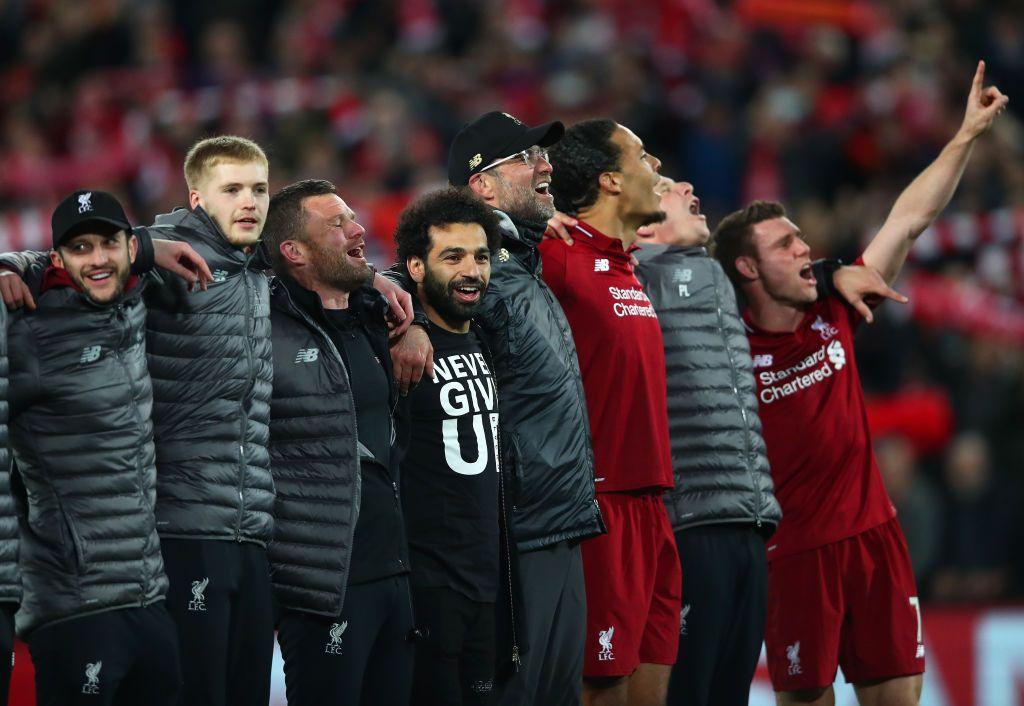
During the eight and a half years he has spent at Liverpool, Mohamed Salah has been beloved by supporters, who rank the ‘Egyptian King’ among the club’s greatest ever players.

But since his unexpected declaration that he feels scapegoated by Liverpool for the club’s poor run, having been picked as a substitute for three consecutive matches by manager Arne Slot, Salah’s character has been called into question by fans, former players and beyond.

So who is Salah the man – away from the latest headlines?

Mo Salah: Never Give Up

Watch on iPlayer

‘You only have problems with Mo if he is not playing’

Salah’s relentless intensity and refusal to accept lower standards from himself or those around him have underpinned Liverpool’s success, and perhaps also explain why he has found criticism of his diminished role tough to handle.

“We are all massively influenced by our past – how we were raised, where we grew up,” says Jurgen Klopp, who won eight trophies while managing Salah at Anfield. “Mo knew early on [in his life] that he had to do more than others.

“He always developed. He never stops. That is his mindset.

“After each summer break he came back and had a new skill. It was like he had spent the whole time just practising one particular type of pass.

“We pushed each other, just to make sure that we would never stop. And we never did stop. That moment lifting the Premier League bonded us for life. He will be remembered as one of the greatest of all time.

“I wouldn’t say he is easy to manage, but he is also not difficult to manage. You [only] have problems with Mo Salah if he is not playing or you take him off.”

Salah has been criticised by some for not giving more frequent media interviews before his intervention in the mixed zone at Leeds’ Elland Road, particularly after defeats and poor performances.

He has been accused of demonstrating a lack of leadership. But he has often delivered calls to arms to fans on social media in difficult moments, and those who have played alongside him describe Salah as a man who refuses to give up and is capable of inspiring others.

“He will always be trying to prove someone wrong,” says former Liverpool team-mate Adam Lallana.

“He is not macho. I would often tell my children about how he behaves, how he doesn’t get too high in good moments, doesn’t beat himself up too much in low moments. He would always remain completely focused on the job in hand.

“I would look at him and it would make me feel calm because of how in control he would be all the time.

‘He wants to be the best at everything’

Salah defended his record when speaking at Elland Road, and compared himself to England captain Harry Kane – delivering what he felt was a reminder to those inside and outside of Liverpool who have forgotten what he is capable of.

A level of arrogance is perhaps to be expected in all elite athletes, and some believe it has powered Salah to the heights he and Liverpool have reached.

“He is a really nice guy, considering the success he has had – being a superstar around the globe,” says James Milner – Liverpool’s vice-captain during most of Salah’s time at the club.

“He plays as if he has a chip on his shoulder. He wants to be the best at everything – he even got a chess teacher to improve his game, and gave me a thumping a good few times.

“You need different types of leaders, and Mo is a big leader in that group, in terms of the standards he set every day. When you have young players come and sign, they see him and it’s ‘this is what it takes to be a top player, this is what it is to be a Liverpool player’.”

That desire to always be the best became competition – fraught at times – with team-mate Sadio Mane, Liverpool’s other flying forward who played on the opposite wing to Salah for five seasons.

Mohamed Salah plays table tennis during a pre-season training camp with his Liverpool team-mates in 2021Getty Images

‘Mo has lifted the heads of all of us’

Salah is more than just a footballer – he is a global sociocultural icon, being named one of the world’s most influential people, steering conversations on human rights, and changing attitudes towards Muslims through demonstrations of faith.

He was born in a rural village – Nagrig – about 100 miles from Cairo, where most of the roughly 15,000 inhabitants work as farmers and more than half live in poverty.

That such a region could produce one of the world’s greatest athletes borders on impossible.

“What already set him apart as a kid was his discipline,” says Maher Anwar Shtiyeh – mayor of Nagrig. “He remains deeply tied to his roots, despite fame and global recognition.

“He only finds real happiness in his village spending time with his family and friends. He is a role model for the youth of Egypt, the Arab youth, and the youth of the whole Islamic world. He has lifted the heads of all of us.”

As a child, Salah would travel up to five hours by minibus from his village to the capital, where he played youth football for top-flight club Arab Contractors.

That helped instil a resilience that has guided him throughout his professional career, alongside support from loved ones.

“You have to be mentally so strong as a young kid following your dream like that,” says former international team-mate Ahmed Elmohamady.

“His wife is from the same village. They grew up together, which is great because she knows everything about him and has supported him all the way.

“Now anyone in the village who asks him for support, he supports them. It shows what a great human being he is.”

Since leaving Egypt, Salah has maintained close ties with Nagrig and financed an ambulance station, a charitable foundation and a religious institute in the area.

Salah has proudly made his faith visible throughout his career – he prays both when walking onto the pitch and after scoring goals.

“When I first met Mo, he was coming here quite regularly,” says Shafique Rahman – Imam at Liverpool Mosque and Islamic Institute. “He would arrive a little bit late after finishing training. We had people waiting outside who wanted to see him, but nobody would bother him during prayer.

To play this video you need to enable JavaScript in your browser.

‘To get up and want to be the best every day – that’s a different mindset’

When Salah first moved to England – signed by Jose Mourinho’s Chelsea after impressing for Basel in Switzerland – he struggled to impose his personality in a squad full of established stars, and lacked self-belief.

“When I first met him, he was 21 – very innocent,” says former team-mate Mark Schwarzer. “He was coming to London – a big city, different culture – and I think he was a bit timid.

“When he signed, he was coming into a changing room packed full of international stars – players that were used to winning, and a manager that was a legend of the club. For new players, it was sink or swim.

“The more he didn’t score, the more frustrated he became. There was a moment in the changing room when Jose actually kicked a table, and was directing a lot of his frustration towards Mo, and he took him off. Mo was visibly upset.

“It’s credit to him, his determination, his dedication, everything, to go on and deliver what he has done.”

Salah rebuilt his career in Italy’s Serie A – first in a loan spell with Fiorentina then at Roma, developing a reputation as an on-field leader and ultimate professional.

“He was just different,” explains BBC pundit and former England and Manchester City defender Micah Richards, who played alongside Salah at Fiorentina. “You get those characters that just do everything by the book – he was that guy.

“He would always be in bed early, always be eating healthily. He clearly thought, ‘I’m going to show everyone exactly what I can do. All those who have doubted me are going to eat their words.’ That’s exactly what he did.”

For a young African man to set standards for European colleagues to follow was a challenge in itself.

“To succeed in Europe you have to understand the culture of where you are playing, where you are living, without losing any of your principles,” says former Egypt striker Mido, who played for Tottenham, Roma and Ajax among others. “This is the balance that he has achieved.

Football fans in Nagrig, Egypt celebrate after Liverpool forward Salah scores the opening goal in the 2019 Champions League final victory against Tottenham Hotspur at the Wanda Metropolitano Stadium in Madrid, SpainGetty Images

‘Mo has left a profound mark on me’

Even before Salah’s comments following the 3-3 draw with Leeds, doubts about his future were arising.

Inside Liverpool, concerns had already been raised about his performances, before transfer rumours were given further encouragement this week, with sources telling the BBC the Reds are open-minded about selling the 33-year-old.

Salah is not the only Liverpool hero whose time at the club – which he and Slot have said could be up in the January transfer window – has (potentially) ended with public denigration.

In different contexts, Javier Mascherano, Fernando Torres and Trent Alexander-Arnold have met similar fates, while shirts bearing the legendary Steven Gerrard’s name were set alight in the street when he was on the verge of joining Chelsea in 2005.

If this is the end of Salah and Liverpool’s love affair, the human impact he has had on those around him will not be forgotten any time soon.

“He was one of the first people to welcome me, and did so in such an incredible way,” says Luis Diaz, who played alongside Salah in Liverpool’s forward line for three and a half years before joining Bayern Munich earlier this year.

“He came over to me and said: ‘if you ever need my help, I’m here for you.’ I remember him telling me on the pitch: ‘Let’s try this… let’s make this move so that it works.’ And then it would work in the match.

“To share the moment lifting the Premier League with him, to see how happy he was, how much he was enjoying it, was an incredible feeling.

Related topics

  • Egypt
  • Liverpool
  • Insight: In-depth stories from the world of sport
  • Premier League
  • UEFA Champions League
  • Football

Inside McLaren’s season – the rules, values, incidents & relationships


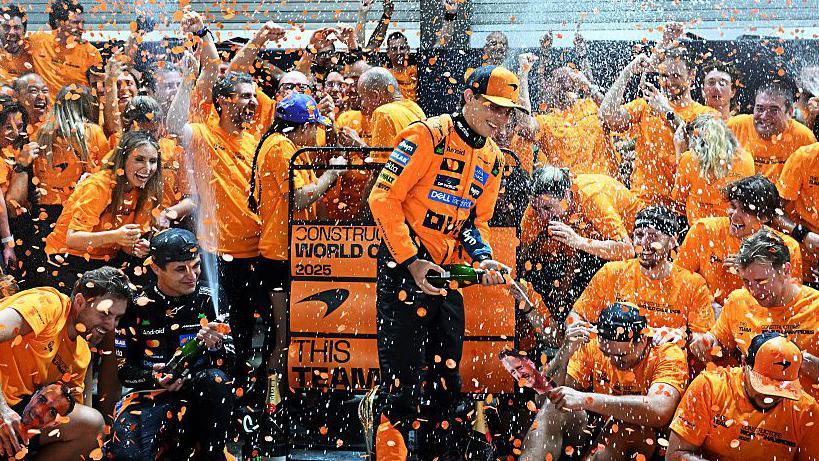
McLaren’s greatest achievement this year is arguably not what they have accomplished on track. It’s something they have managed off it.

The team won the constructors’ championship with six races remaining, with Lando Norris eventually pipping Red Bull’s Max Verstappen and his McLaren team-mate Oscar Piastri to the drivers’ title in a three-way showdown at the season finale in Abu Dhabi.

Norris and Piastri got there while remaining friendly.

McLaren’s ability to keep two evenly matched drivers, of a similar age and career development, competing for their first title in the same team without falling out with each other is almost unprecedented in modern F1.

This sort of situation turns toxic far more often than not.

Not just, most infamously, Ayrton Senna and Alain Prost at McLaren in 1989. But also Nigel Mansell and Nelson Piquet at Williams in 1986-7, Lewis Hamilton and Fernando Alonso at McLaren in 2007, Sebastian Vettel and Mark Webber at Red Bull in 2010, and Hamilton and Nico Rosberg at Mercedes in 2014-16.

It’s hard enough to stop things getting noxious even when two title rivals are in different teams, such as in the tense relationship between Hamilton and Max Verstappen in 2021.

But add in the claustrophobia of the rivals being in the same engineering meetings and team briefings, balancing race strategies, and the intensity only increases.

Heading into this season, McLaren Racing chief executive officer Zak Brown and team principal Andrea Stella were well aware of the jeopardy, and consciously created a culture aimed at preventing the relationship between Norris and Piastri descending into disruptive conflict.

They have a carefully thought out internal philosophy, applied with intelligence and empathy to two drivers who have been convinced that keeping things harmonious is the best solution for all.

McLaren operate on a principle of fairness, trust and transparency, rooted in a basic principle that the drivers are allowed to race each other with equal treatment, with the proviso that they don’t crash into each other.

“We are McLaren Racing,” Stella says. “We are here to race.

“We want to give our two drivers the possibility to express their talent, achieve their aspirations, but this needs to be done within the principles and the approach that we have contributed to build together with our drivers. Fairness, sportsmanship, and respect for one another.”

The underlying philosophy

The starting point was that the only place the team cannot be fully united is in the quest for the drivers’ championship. So don’t ignore that. Put it first, and work from there.

“The way we operate now is the result of having learned so many lessons,” Stella says. “We talk to the driver – straight talking.

“And if we get something wrong now, it needs to be, ‘We didn’t think about it.’ But it can’t be because we haven’t talked openly and straight and honestly enough. Because that’s the recipe to have a problem.”

Why this approach? Because if issues are not discussed when they arise, they are likely to pop up the next time there is a moment of stress, when they are more likely to be expressed in a negative way, and so become harder to control.

Stella’s achievement has been to get Norris and Piastri to buy into the idea that trusting the team to operate fairly is in their best interests, as well as those of the team, and consequently that the drivers should behave accordingly.

He has probably been aided in this by the fact that both have spent their entire careers at McLaren, are growing up with the team and, thanks to their relationships with the management, trust what the team are trying to create and achieve.

The drivers have reflected the culture Stella has constructed in repeatedly making two key points this year.

First, that open, fair competition between two evenly matched team-mates drives McLaren forward by consistently raising the bar of performance, and gives them a collective advantage over rivals who don’t have that; and second, that they both wanted this to be their first title campaign with McLaren, not their only one.

Norris, who eventually prevailed thanks to his third-place finish in Abu Dhabi, says having “two drivers who respect the team and are not selfish” is fundamental in this.

“We work very well as team-mates,” he says. “We’ve helped the team in a very good way. There’s been plenty of examples [in the past] of things not going as smoothly as they have done. And the team’s then gone in a downward spiral. That’s what we want to avoid as a team – that’s our priority.”

He adds: “I’ve always got on well with my team-mates since karting. I’ve always wanted to because it just makes my life more fun, more enjoyable, and that’s also why I’m here – because I love what I do. So, the more I can do that, the better.

“But we still very much understand that we work for McLaren, we want the best for the team, we work very hard.

“As drivers always do, you try and maximise your own performance more than anything. But when we step out of the car, we can still have a joke, we still have laughs in our debriefs, and we still enjoy everything away from the track.”

Off track, there is no tension between Norris and Piastri. They are friendly but not best friends.

What does that mean? Well, for example, if they are at an event, they will chat and eat with each other, quite happy in each other’s company. But they probably won’t be messaging when they’ve left.

Both have been firm in their conviction that they would rather race this way and risk being beaten to the title by a rival – as so nearly happened with Verstappen this season – than have one prioritised by the team to the detriment of the other.

Piastri says: “On both sides of the garage, we want to win because we’ve been the best driver, the best team, including against the other car in the team.

“You always want to earn things on merit and you want to be able to beat everyone, including your team-mate.

How it works in practice

The McLarens of Oscar Piastri and Lando Norris collide at the start of the US Grand Prix sprint, putting both drivers out of the raceGetty Images

A small group of senior figures at McLaren discuss with the drivers how they are going to approach their racing. They review what happened after each grand prix, and apply the lessons for the following race.

This happens in formal meetings, more informal conversations and ad hoc.

And they keep building on that process, over and over again.

This is all well and good in theory, but it’s only sustainable in practice if everyone sticks to the principles when problems arise, as they inevitably do through an F1 season.

In 2025, there have been a number of races where equality and harmony have been tested – particularly Hungary, Italy, Singapore and Austin.

In Hungary, Norris was allowed to switch to a one-stop strategy after a bad start left him fifth, and ended up beating Piastri, whose two-stop from an early second place saw him spend the final laps trying and failing to pass Norris for the win.

In Italy, a decision to invert the natural pit-stop choreography after they had spent the race running in the order Norris-Piastri behind Verstappen was followed by a slow pit stop for Norris, and Piastri being asked to hand back the second place he had inherited.

In Singapore, Norris scrambled past Piastri into third place at the first series of corners, banging wheels in the process, leading to the Australian saying over the radio: “Are we cool with Lando just barging me out of the way?”

In Austin, an attempted cut-back move by Piastri on Norris at the first corner of the sprint race ended up in a collision that took both of them out.

Externally, these situations have either led to accusations that Norris was being favoured, or that McLaren were meddling too much, or both.

Internally, they were dealt with quietly, behind closed doors, and with the apparent result that everyone came away satisfied it had been resolved in the best possible way.

McLaren insiders have told BBC Sport that the driver meetings really are conducted in the way they are externally presented – issues are discussed openly, constructively and calmly, and a resolution is arrived at from which everyone can move on with equanimity, even if they had issues with what happened at the time.

If there has been any deviation from that in the drivers’ minds privately, they have certainly not given any hint of it in public.

Piastri has rejected any suggestions that the team was not being fair, saying he’s “very happy that there’s no favouritism or bias”.

And Norris says: “We still always have the right to question it. We’re never going to just go around – because I think it’s just a racing driver’s mind – and be happy to accept whatever the team wants to do or what they think is correct.

“I understand that a lot of people have different opinions and think maybe other things are correct. But I still stand by the fact that Andrea and Oscar and all of us together are confident that our approach is better than what other people’s are.”

Brown says that any idea the team were siding with Norris is “nonsense”.

He explains that when they let Norris switch to a one-stop in Hungary, “Andrea and I were like, ‘This ain’t gonna work.’ But it was a free punt, and Lando drove brilliantly.”

Monza, he says, was “just like what happened in Hungary the year before”, when Norris let Piastri by for the win after a similar pit-lane arrangement.

“If the lead car is prepared to sacrifice their rights to the first call to help his team-mate, who’s actually his number one competitor in the championship, that’s great teamwork,” Brown says.

“So I understand what it looks like from the outside, but it’s not what’s going on on the inside, and we’re trying so hard to give them equal opportunity and let them race hard. I wish everyone recognised more of that.

Can this be sustained into 2026? That’s impossible to know.

Norris and Piastri seem level-headed and humble. They are also both intensely ambitious.

Becoming world champion can change drivers. The more successful they become, the more demanding they get, especially in their requirements off-track.

McLaren have managed Norris and Piastri with sensitivity and effectiveness, but the challenges do not lessen just because that has been the case so far.

If anyone has an understanding of how hard it is to pull this off, it is Fernando Alonso.

The two-time champion has lived this dynamic in a title fight, and he’s worked with both Stella and Brown – Stella at Ferrari then McLaren from 2010-18, and Brown when the American came on board at McLaren in 2016.

“The credit has to go for Andrea and Zak that they created a winning structure and car, but they were also able to manage the drivers for the benefit of the team,” Alonso says.

“It is less exciting to watch and for media because there is no controversy in some of the wins, not yet.

Related topics

  • Formula 1
  • Insight: In-depth stories from the world of sport

More on this story

    • 8 December 2025
    A smiling Lando Norris is interviewed with the background of a night sky in Abu Dhabi the day after winning the Formula 1 drivers' championship
    • 7 December 2025
    Lando Norris celebrating with McLaren after winning his first world championship
    • 8 December 2025
    Lando Norris makes the thumbs-up gesture on the podium after the Abu Dhabi Grand Prix
    • 7 December 2025
    Norris celebrates by holding both index fingers in the air at Knockhill in 2014
    • 7 December 2025
    Lando Norris holds the British Grand Prix winner's trophy at Silverstone