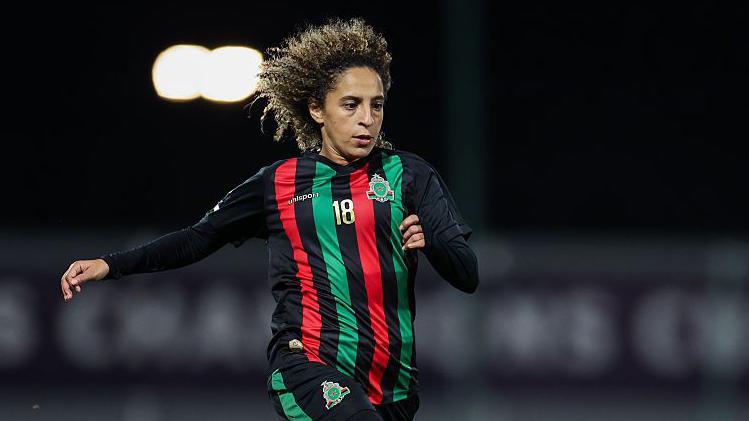
The African champions facing Arsenal after a football revolution


  • 188 Comments

On Wednesday evening, intrigued fans will venture to cafes across Morocco’s capital city Rabat to cheer on their side against Arsenal.

But they will not be sitting in the smoke-filled coffee houses, watching Mikel Arteta’s men at Emirates Stadium.

Instead, Renee Slegers’ women will be on the television, playing AS FAR at Brentford’s Gtech Community Stadium (18:00 GMT).

Brazilian side Corinthians will already have played New York-based Gotham FC in the other semi-final of the inaugural Women’s Champions Cup (12:30).

The finalists will meet at Arsenal’s Emirates Stadium on Sunday, 1 February (18:00) with $2.3m (£1.7m) – the biggest single award in women’s club football – going to the champions.

A military club founded by the king

Association Sportive des Forces Armees Royales (AS FAR) was founded in 1958 by the late Moulay El Hassan II, the former king of Morocco, and they are the club of the nation’s military.

This relationship has allowed the women’s team to become trailblazers in Africa.

Not constrained by the same financial incentives faced by private clubs, AS FAR, which came into being in 2001 and was the country’s first professional outfit, has invested in its women’s team like no other in Africa over the past decade.

They have dominated domestically, winning all but one league title since 2013.

Also known as The Soldiers, they have also won two continental titles since the African Women’s Champions League’s founding in 2021, the most recent being in November which qualified them for this inaugural edition of Fifa’s Champions Cup.

AS FAR celebrateGetty Images

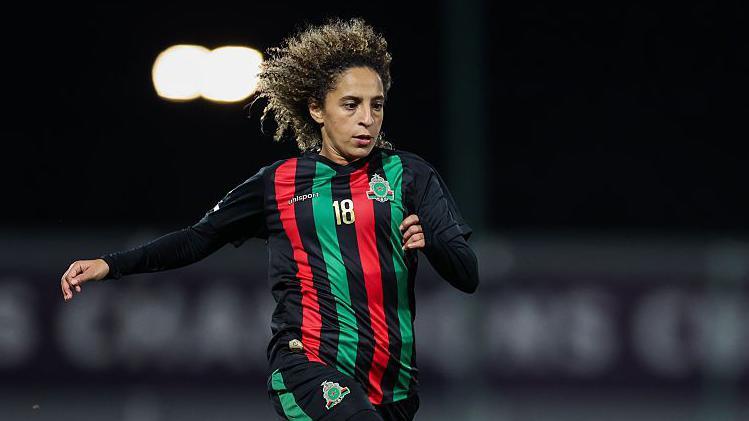
While they will be huge underdogs in this semi-final, they should not be taken lightly. The team boasts a number of Morocco internationals with seven having played for the Atlas Lionesses side that reached the knockout stages of the World Cup in 2023.

Annisa Lahmari, who came through Paris St-Germain’s academy before spending a year on loan at Reading and signed for AS FAR last year, scored the goal that sent Morocco through to the last 16 at the World Cup at the expense of Germany.

Out wide, Arsenal will have to watch out for talented wingers Sanaa Mssoudy and Fatima Tagnaout who are regulars for Morocco.

It is the first time an African team has played against a European side in a competitive fixture.

“AS FAR playing against Arsenal is a very special moment,” former captain and current star of the Morocco national team Ghizlane Chebbak tells BBC Sport.

Morocco leads African women’s football revolution

Remarkable is the word.

Over the past decade, Morocco has gone from a women’s footballing backwater to one of the most dominant nations in Africa. That transformation has come off the back of huge investment from the Royal Moroccan Football Federation (FRMF) and Moroccan government.

In 2020, the government took the decision to fund every team in the top two divisions of women’s football, paying the wages of players, coaches and medical staff. Overnight, those two divisions went from practically amateur to professional.

Each of the 14 teams in the top division have 13 designated players who are paid $500 (£369) a month directly by the Federation. Another seven players receive $350 (£259) while the head coaches receive $500. It is modest but that money is just a baseline, effectively a universal basic income.

Clubs then pay salaries on top of that, with better players in the league making in excess of $2,000 (£1,475) a month.

“I’m just sorry for myself because I wanted to live in this moment when I was a player,” says Khadija Illa, former player and president of the Moroccan league. “But when I see the girls now living the dream, I feel like I’m living it.”

King Mohammed VI Training Complex

Investment is not restricted to club level. The national side train at the King Mohammed VI Training Complex along with the men and all the country’s age-grade teams.

The $65m centre boasts among its amenities eight full-size pitches, futsal and beach pitches, gym and medical facilities, an Olympic-sized swimming pool, classrooms and a five-star hotel.

Leicester City forward Rosella Ayane, who played for England youth teams before making the switch to represent Morocco, once described the complex as “St George’s Park with palm trees”.

Having failed to qualify for the Women’s Africa Cup of Nations (Wafcon) since 2000, Morocco hosted successive tournaments in 2022 and 2025, reaching the final on both occasions, and will also stage the 2026 edition.

They also reached their maiden World Cup in 2023, losing 4-0 to France in the last 16.

Former Spain manager, Jorge Vilda was appointed head coach of the Morocco women’s team in 2023.

They are not the only African nation to have seen great improvements over the past decade as the entire continent begins to professionalise the women’s game.

Next stop, world champions?

Fatima Tagnaout and Aziza Rabbah celebrateGetty Images

The introduction of the African Women’s Champions League in 2021 has raised the level of club football on the continent. Held as a one-off tournament with just eight teams who qualify regionally, it pits the best of the continent against each other.

AS FAR and South Africa’s Mamelodi Sundowns have won the competition twice, with Congolese side TP Mazembe winning the only other edition.

In last year’s competition, held in November, AS FAR saw off Ivorian side ASEC Mimosas in the final to qualify for this Champions Cup and pave the way for their tie with Arsenal.

“It really is a dream,” Illa concludes.

Ellen White, Jen Beattie and Ben Haines

Related topics

  • Africa Sport
  • Football
  • Women’s Football

More on this story

The African champions facing Arsenal after a football revolution


  • 188 Comments

On Wednesday evening, intrigued fans will venture to cafes across Morocco’s capital city Rabat to cheer on their side against Arsenal.

But they will not be sitting in the smoke-filled coffee houses, watching Mikel Arteta’s men at Emirates Stadium.

Instead, Renee Slegers’ women will be on the television, playing AS FAR at Brentford’s Gtech Community Stadium (18:00 GMT).

Brazilian side Corinthians will already have played New York-based Gotham FC in the other semi-final of the inaugural Women’s Champions Cup (12:30).

The finalists will meet at Arsenal’s Emirates Stadium on Sunday, 1 February (18:00) with $2.3m (£1.7m) – the biggest single award in women’s club football – going to the champions.

A military club founded by the king

Association Sportive des Forces Armees Royales (AS FAR) was founded in 1958 by the late Moulay El Hassan II, the former king of Morocco, and they are the club of the nation’s military.

This relationship has allowed the women’s team to become trailblazers in Africa.

Not constrained by the same financial incentives faced by private clubs, AS FAR, which came into being in 2001 and was the country’s first professional outfit, has invested in its women’s team like no other in Africa over the past decade.

They have dominated domestically, winning all but one league title since 2013.

Also known as The Soldiers, they have also won two continental titles since the African Women’s Champions League’s founding in 2021, the most recent being in November which qualified them for this inaugural edition of Fifa’s Champions Cup.

AS FAR celebrateGetty Images

While they will be huge underdogs in this semi-final, they should not be taken lightly. The team boasts a number of Morocco internationals with seven having played for the Atlas Lionesses side that reached the knockout stages of the World Cup in 2023.

Annisa Lahmari, who came through Paris St-Germain’s academy before spending a year on loan at Reading and signed for AS FAR last year, scored the goal that sent Morocco through to the last 16 at the World Cup at the expense of Germany.

Out wide, Arsenal will have to watch out for talented wingers Sanaa Mssoudy and Fatima Tagnaout who are regulars for Morocco.

It is the first time an African team has played against a European side in a competitive fixture.

“AS FAR playing against Arsenal is a very special moment,” former captain and current star of the Morocco national team Ghizlane Chebbak tells BBC Sport.

Morocco leads African women’s football revolution

Remarkable is the word.

Over the past decade, Morocco has gone from a women’s footballing backwater to one of the most dominant nations in Africa. That transformation has come off the back of huge investment from the Royal Moroccan Football Federation (FRMF) and Moroccan government.

In 2020, the government took the decision to fund every team in the top two divisions of women’s football, paying the wages of players, coaches and medical staff. Overnight, those two divisions went from practically amateur to professional.

Each of the 14 teams in the top division have 13 designated players who are paid $500 (£369) a month directly by the Federation. Another seven players receive $350 (£259) while the head coaches receive $500. It is modest but that money is just a baseline, effectively a universal basic income.

Clubs then pay salaries on top of that, with better players in the league making in excess of $2,000 (£1,475) a month.

“I’m just sorry for myself because I wanted to live in this moment when I was a player,” says Khadija Illa, former player and president of the Moroccan league. “But when I see the girls now living the dream, I feel like I’m living it.”

King Mohammed VI Training Complex

Investment is not restricted to club level. The national side train at the King Mohammed VI Training Complex along with the men and all the country’s age-grade teams.

The $65m centre boasts among its amenities eight full-size pitches, futsal and beach pitches, gym and medical facilities, an Olympic-sized swimming pool, classrooms and a five-star hotel.

Leicester City forward Rosella Ayane, who played for England youth teams before making the switch to represent Morocco, once described the complex as “St George’s Park with palm trees”.

Having failed to qualify for the Women’s Africa Cup of Nations (Wafcon) since 2000, Morocco hosted successive tournaments in 2022 and 2025, reaching the final on both occasions, and will also stage the 2026 edition.

They also reached their maiden World Cup in 2023, losing 4-0 to France in the last 16.

Former Spain manager, Jorge Vilda was appointed head coach of the Morocco women’s team in 2023.

They are not the only African nation to have seen great improvements over the past decade as the entire continent begins to professionalise the women’s game.

Next stop, world champions?

Fatima Tagnaout and Aziza Rabbah celebrateGetty Images

The introduction of the African Women’s Champions League in 2021 has raised the level of club football on the continent. Held as a one-off tournament with just eight teams who qualify regionally, it pits the best of the continent against each other.

AS FAR and South Africa’s Mamelodi Sundowns have won the competition twice, with Congolese side TP Mazembe winning the only other edition.

In last year’s competition, held in November, AS FAR saw off Ivorian side ASEC Mimosas in the final to qualify for this Champions Cup and pave the way for their tie with Arsenal.

“It really is a dream,” Illa concludes.

Ellen White, Jen Beattie and Ben Haines

Related topics

  • Africa Sport
  • Football
  • Women’s Football

More on this story

The African champions facing Arsenal after a football revolution


  • 188 Comments

On Wednesday evening, intrigued fans will venture to cafes across Morocco’s capital city Rabat to cheer on their side against Arsenal.

But they will not be sitting in the smoke-filled coffee houses, watching Mikel Arteta’s men at Emirates Stadium.

Instead, Renee Slegers’ women will be on the television, playing AS FAR at Brentford’s Gtech Community Stadium (18:00 GMT).

Brazilian side Corinthians will already have played New York-based Gotham FC in the other semi-final of the inaugural Women’s Champions Cup (12:30).

The finalists will meet at Arsenal’s Emirates Stadium on Sunday, 1 February (18:00) with $2.3m (£1.7m) – the biggest single award in women’s club football – going to the champions.

A military club founded by the king

Association Sportive des Forces Armees Royales (AS FAR) was founded in 1958 by the late Moulay El Hassan II, the former king of Morocco, and they are the club of the nation’s military.

This relationship has allowed the women’s team to become trailblazers in Africa.

Not constrained by the same financial incentives faced by private clubs, AS FAR, which came into being in 2001 and was the country’s first professional outfit, has invested in its women’s team like no other in Africa over the past decade.

They have dominated domestically, winning all but one league title since 2013.

Also known as The Soldiers, they have also won two continental titles since the African Women’s Champions League’s founding in 2021, the most recent being in November which qualified them for this inaugural edition of Fifa’s Champions Cup.

AS FAR celebrateGetty Images

While they will be huge underdogs in this semi-final, they should not be taken lightly. The team boasts a number of Morocco internationals with seven having played for the Atlas Lionesses side that reached the knockout stages of the World Cup in 2023.

Annisa Lahmari, who came through Paris St-Germain’s academy before spending a year on loan at Reading and signed for AS FAR last year, scored the goal that sent Morocco through to the last 16 at the World Cup at the expense of Germany.

Out wide, Arsenal will have to watch out for talented wingers Sanaa Mssoudy and Fatima Tagnaout who are regulars for Morocco.

It is the first time an African team has played against a European side in a competitive fixture.

“AS FAR playing against Arsenal is a very special moment,” former captain and current star of the Morocco national team Ghizlane Chebbak tells BBC Sport.

Morocco leads African women’s football revolution

Remarkable is the word.

Over the past decade, Morocco has gone from a women’s footballing backwater to one of the most dominant nations in Africa. That transformation has come off the back of huge investment from the Royal Moroccan Football Federation (FRMF) and Moroccan government.

In 2020, the government took the decision to fund every team in the top two divisions of women’s football, paying the wages of players, coaches and medical staff. Overnight, those two divisions went from practically amateur to professional.

Each of the 14 teams in the top division have 13 designated players who are paid $500 (£369) a month directly by the Federation. Another seven players receive $350 (£259) while the head coaches receive $500. It is modest but that money is just a baseline, effectively a universal basic income.

Clubs then pay salaries on top of that, with better players in the league making in excess of $2,000 (£1,475) a month.

“I’m just sorry for myself because I wanted to live in this moment when I was a player,” says Khadija Illa, former player and president of the Moroccan league. “But when I see the girls now living the dream, I feel like I’m living it.”

King Mohammed VI Training Complex

Investment is not restricted to club level. The national side train at the King Mohammed VI Training Complex along with the men and all the country’s age-grade teams.

The $65m centre boasts among its amenities eight full-size pitches, futsal and beach pitches, gym and medical facilities, an Olympic-sized swimming pool, classrooms and a five-star hotel.

Leicester City forward Rosella Ayane, who played for England youth teams before making the switch to represent Morocco, once described the complex as “St George’s Park with palm trees”.

Having failed to qualify for the Women’s Africa Cup of Nations (Wafcon) since 2000, Morocco hosted successive tournaments in 2022 and 2025, reaching the final on both occasions, and will also stage the 2026 edition.

They also reached their maiden World Cup in 2023, losing 4-0 to France in the last 16.

Former Spain manager, Jorge Vilda was appointed head coach of the Morocco women’s team in 2023.

They are not the only African nation to have seen great improvements over the past decade as the entire continent begins to professionalise the women’s game.

Next stop, world champions?

Fatima Tagnaout and Aziza Rabbah celebrateGetty Images

The introduction of the African Women’s Champions League in 2021 has raised the level of club football on the continent. Held as a one-off tournament with just eight teams who qualify regionally, it pits the best of the continent against each other.

AS FAR and South Africa’s Mamelodi Sundowns have won the competition twice, with Congolese side TP Mazembe winning the only other edition.

In last year’s competition, held in November, AS FAR saw off Ivorian side ASEC Mimosas in the final to qualify for this Champions Cup and pave the way for their tie with Arsenal.

“It really is a dream,” Illa concludes.

Ellen White, Jen Beattie and Ben Haines

Related topics

  • Africa Sport
  • Football
  • Women’s Football

More on this story

Injuries, Everton & overseas friendly – Scotland’s World Cup preparations


It has been 70 days since Kenny McLean had a pop from the halfway line. That means it is 137 days until Scotland kick a ball at a men’s World Cup for the first time in 28 years.

Plans are currently being put in place as head coach Steve Clarke prepares to lead the nation back to football’s grandest stage.

But with almost four months to go until the Scots’ group opener against Haiti in Boston on 14 June, what do those preparations look like?

    • 1 day ago
    • 1 day ago
    • 19 January

What are Scotland’s warm-up plans?

That 4-2 win over Denmark in November means Scotland have the luxury of not needing to worry about the World Cup play-offs in March. Bliss.

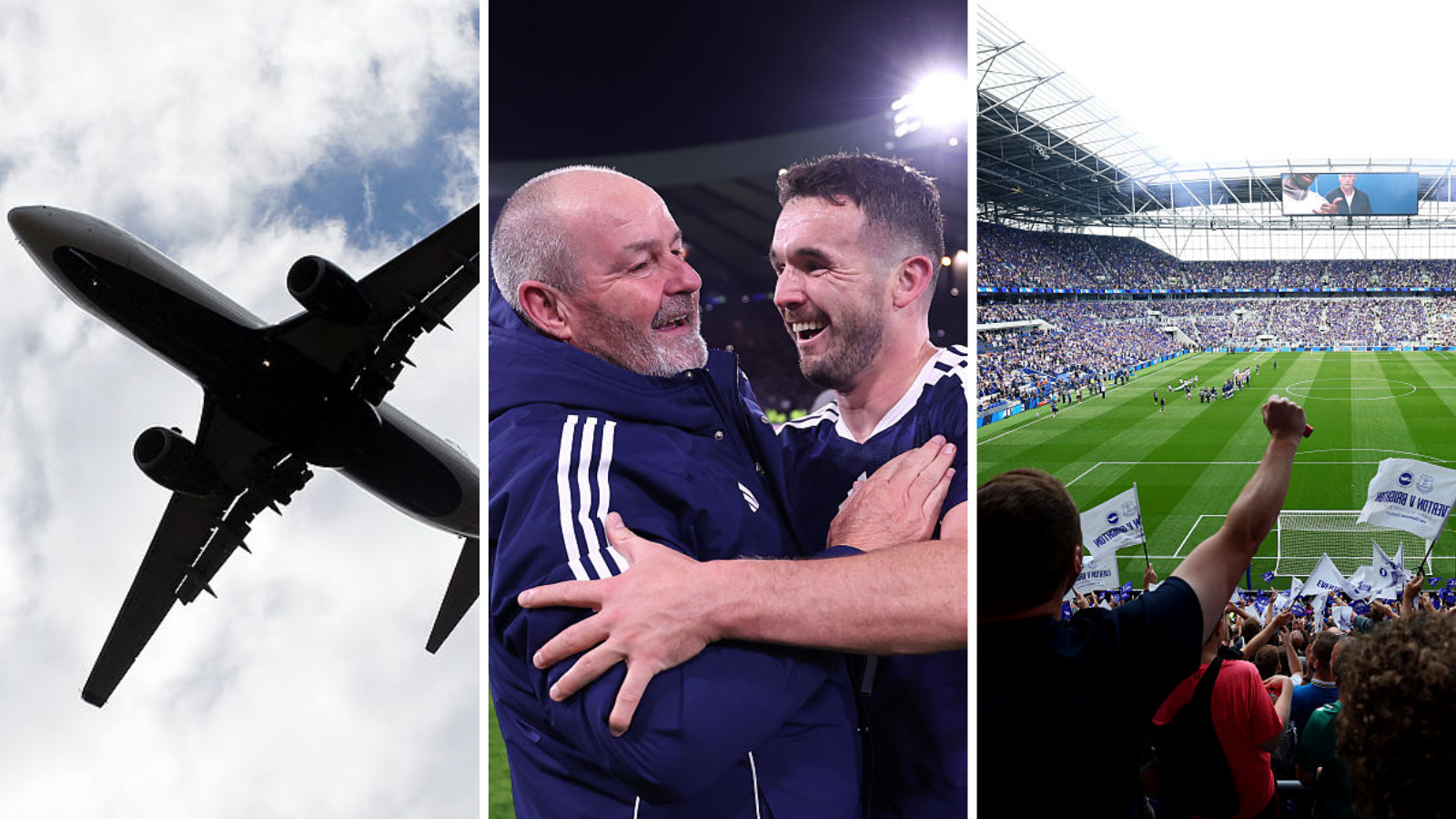
Instead, Japan will visit on Hampden on Saturday, 28 March, before the Scots travel south to Everton’s shiny new Hill Dickinson Stadium to face the Ivory Coast.

That is the last the Tartan Army will see from their side until they return to action against Curacao on 30 May, a match dubbed “the final send-off” by the Scottish FA.

The SFA also say an additional “overseas friendly” is close to being finalised.

Japan, Curacao and the Ivory Coast, who recently made the last eight of the Africa Cup of Nations, will all feature at the World Cup with Scotland.

Clarke says the Scots will benefit from experiencing facing African and Concacaf nations as part of the their preparations, with Morocco and Haiti included in their four-team group this summer.

What’s the injury situation?

John McGinnGetty Images

Clarke has been watching from stands across the country with his fingers, arms, legs and toes crossed in the hope his players remain fit for the summer.

However, it has not been a great week for the Scotland boss following injuries to some key players.

A knee injury is expected to keep Aston Villa captain John McGinn out for up to two months, with Hearts striker Lawrence Shankland facing a similar recovery timescale after suffering a hamstring strain.

During Sunday’s thrilling 2-2 draw between Shankland’s club side and Celtic, defender Kieran Tierney also limped off, with interim boss Martin O’Neill unsure about his condition post-match.

Bournemouth winger Ben Gannon-Doak underwent surgery in November, as did Napoli midfielder Billy Gilmour. Both are yet to return.

That may open the door to some fresh faces being brought into the squad in March.

Clarke says “there’s always room for an outsider”, and Harvey Barnes’ name will not go away. A call-up for the Newcastle forward is not closed off.

While not injury-related, Scotland captain Andy Robertson was attracting interest from Tottenham Hotspur, a move that would have likely presented the Liverpool left-back with the opportunity to get more minutes before the summer.

What shape are Scotland’s opponents in?

Haiti and Brazil have not kicked a ball since the World Cup draw was made, but Scotland’s other group opponents Morocco have very much been in action.

Hosts of the recent Afcon tournament, Morocco suffered heartbreak in a final defeat by Senegal, a game so dramatic it made this season’s Scottish Premiership look normal.

Eventual winners Senegal walked off and refused to play when Morocco were given a stoppage-time penalty, which was then missed by Real Madrid’s Brahim Diaz when he attempted a Panenka.

There was also trouble after the game, and even a ruckus in the media room. Now Morocco, who reached the last eight of the 2022 World Cup, will look to heal their bruises this summer in the Americas.

Despite the chaos, the quality of their football again shone through, according to former Scotland winger Pat Nevin.

“They are a joy to watch,” he told BBC Radio Scotland. “They are very open, but they have adapted a bit since then.

What’s happening with tickets?

Fifa president Gianni InfantinoGetty Images

The buzz of World Cup qualification was soured for some fans when ticket prices for matches were revealed.

With travel and accommodation prices then rocketing, Clarke urged Scotland supporters not to put themselves into debt to follow their team.

After the ticket application window opened in December, it emerged prices for the group games will range from £134 to £523.

Scotland fans and politicians criticised Fifa for the pricing, while a Scotland fans’ representative described the ticket allocation for disabled supporters as “simply not good enough”.

Fifa have since introduced a small number of “more affordable” $60 (£45) tickets for all 104 matches at the tournament following intense criticism.

From 11 December to 13 January, fans were able to apply for tickets on Fifa’s website for the matches of their choice.

Related topics

  • Scottish Football
  • Football
  • FIFA World Cup
  • Scotland Men’s Football Team

Doncic’s scoring streak continues as Lakers beat Bulls


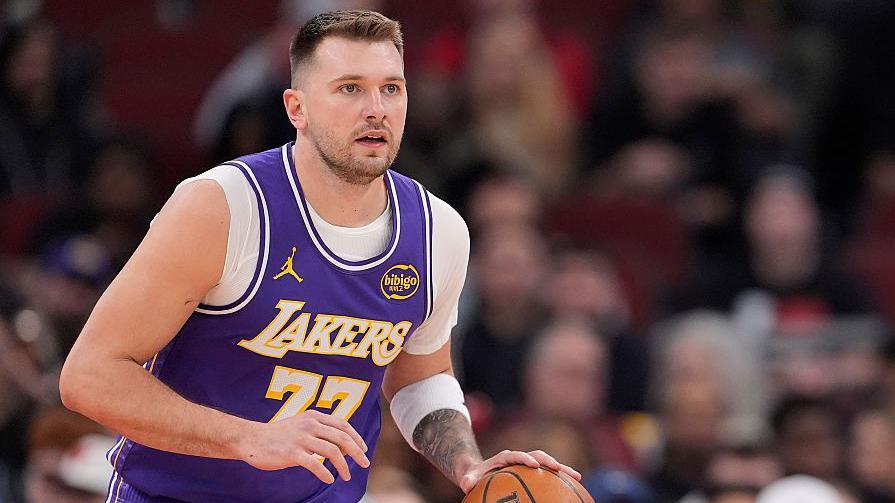
Luka Doncic put on another scoring masterclass with 46 points as the Los Angeles Lakers claimed a 129-118 victory at the Chicago Bulls.

The Slovenia guard’s haul included eight three-pointers, and he also registered seven rebounds and 12 assists at the United Center to end the Bulls’ four-game unbeaten run.

Doncic becomes the quickest Laker to reach 2,000 points – achieving the feat in his 65th game since he was traded by the Dallas Mavericks last February.

It was the fourth match in a row that the 26-year-old has finished with more than 30 points and he tops the NBA scoring charts with an average of 33.8 points per game.

He joins Kobe Bryant as the only players in Lakers history with at least 45 points, 10 assists and five three-pointers in a single game.

LeBron James added 24 points, five rebounds and three assists for the Lakers with Rui Hachimura hitting 23 points off the bench.

Despite Doncic’s achievements, Lakers coach JJ Redick admitted after the game that the superstar still gives him some anxious moments on the sidelines.

“He’s an engine that’s fully on and he likes to create out there and that’s part of what makes him a great player,” he said.

“Because I played with him, I have a pretty good understanding of that – not to say it doesn’t test your patience at times.

Related topics

  • Basketball

Barca president unhappy at teen’s ‘unpleasant’ PSG move


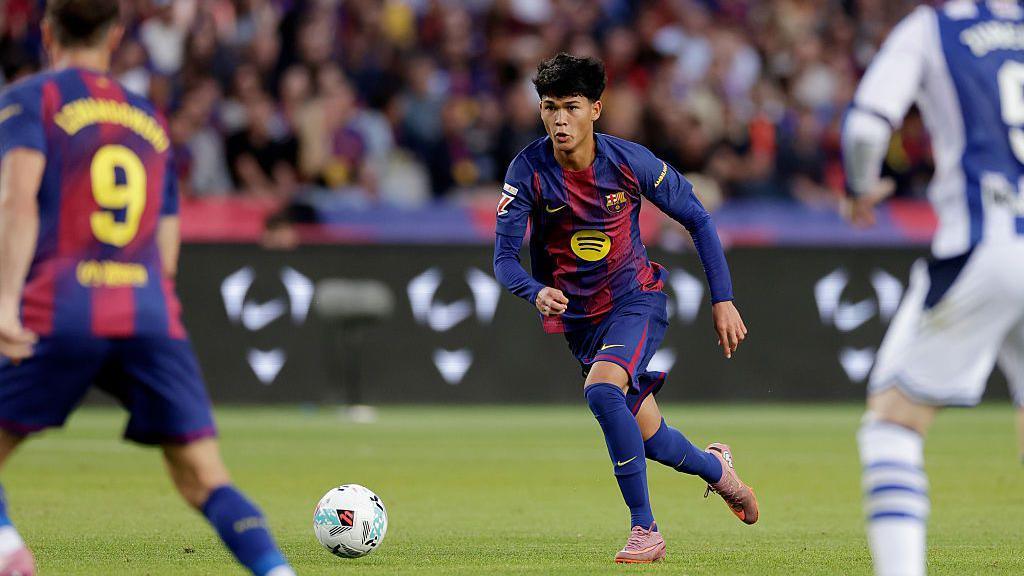
Paris St-Germain have signed 18-year-old Barcelona midfielder Dro Fernandez, with the Spanish side’s president calling the situation around the transfer “unpleasant”.

According to Spanish media, PSG have paid 8.2m euros (£7.1m) for Fernandez – a fee that is higher than his 6m euros (£5.2m) release clause – in a bid to keep good relations between the clubs.

The Spanish midfielder’s departure has been controversial as he had been expected to sign a new contract at Barcelona.

But he has now completed a move to PSG on a deal until 2030.

“It has been an unpleasant situation,” Barca president Joan Laporta told Catalunya Radio.

“It came as a surprise because we had agreed on a different solution for when he turned 18.

“Surprisingly, his representative told us he couldn’t follow through on what we’d agreed to.”

PSG said the signing was “fully in line with the club’s sporting strategy, which is heavily focused on youth and talent”.

Fernandez said his move was a “moment of huge pride” and PSG was “a massive club that I’ve followed since I was a child and where some great legends have made history”.

In a separate post on Instagram, he wrote: “After nearly four unforgettable seasons, today I have to make one of the most difficult decisions of my life: saying goodbye to the club that has been my home in recent years.”

Asked about Fernandez’s future earlier this month, Barca coach Hansi Flick said young players needed to “live for” the club and suggested the teenager would be making a mistake if he moved to France.

“We give them the opportunity to train with us, to grow, every day, with the best players in the world. We give them the opportunity, we give them the support, believe in them, the confidence,” he said.

“If you want to play for Barca, then [do it] 100% with your whole heart.

“This is what I want to say to everyone who is now with us, or in the future with us, this must be 100%.

“These colours, you have to live for them, this is what I want to see. All the others I don’t want, this is what I can say.

Related topics

  • Barcelona
  • Paris St-Germain
  • European Football
  • Football

More on this story