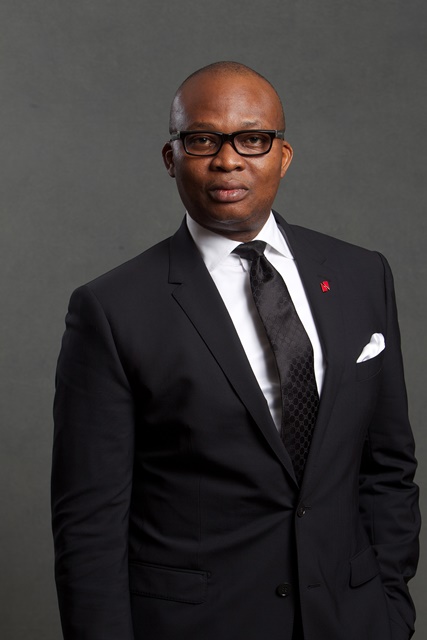
2027: Elections Are Won When Voters Trust In Outcome – Uzodimma

Imo State Governor, Hope Uzodimma, on Wednesday, said elections are won when voters trust the outcome of the exercise.

He stated this at the 2025 All Nigerian Editors Conference, which held in Abuja, the nation’s capital.

“The reality heading into 2027 is that elections are won and lost not only on policies or candidates but on whether voters believe the outcome will be legitimate.

“That belief is shaped by whether they have been hearing fragmented, tribal narratives or cohesive, nation-building ones. And that is an editorial choice you make daily,” he stated.

Uzodimma, who is also the Chairman of the All Progressives Governors’ Forum, charged journalists, especially editors, to always abide by the code of ethics of the profession.

He saluted the efforts of Nigerian editors over time, saying they have accomplished much that deserves recognition.

READ ALSO: Criticise Government Policies With Knowledge, Fairness, Tinubu Tells Editors

Role Of Media

The governor cited instances where media practitioners had used their newsrooms to produce investigative journalists who exposed corruption.

“You have published reports that held power accountable. Through your coverage, you have amplified marginalised voices.

“These contributions matter, and they are essential to democracy. But what is often missing is journalism that actively builds cohesion, not just reports on its absence.

“There is a difference between neutrally documenting division and actively choosing narratives that remind Nigerians of shared values, shared stakes, and a shared future,” the Imo governor said.

“You report on ethnic tension, regional disparities, and religious conflict; as you should. But how often do your editorial choices highlight what binds us rather than what divides us?

“None of this requires abandoning your watchdog function. You can hold the government accountable and avoid framing every accountability story as evidence of irredeemable dysfunction. You can report electoral irregularities and avoid suggesting that the entire system is corrupt. You can cover political competition and remind citizens that competitors will govern the same country afterwards,” Uzodimma added.

NEXIM Bank Backs Bill To Raise Share Capital To ₦1trn

The Nigerian Export-Import Bank (NEXIM) on Wednesday expressed strong support for a proposed bill seeking to increase its share capital from ₦50 billion to ₦1 trillion, while also advocating for the removal of the Central Bank of Nigeria from its governing board.

Speaking at a one-day public hearing organized by the Senate Committee on Banking, Insurance and Other Financial Institutions, the Managing Director/Chief Executive Officer of NEXIM Bank, Abba Bello, said the current share capital of ₦50 billion, equivalent to about $33 million is grossly inadequate to support the bank’s mandate and align it with modern banking realities.

According to him, “The current capitalization limits the bank’s operational capacity and competitiveness. Raising it to 1 trillion naira will strengthen NEXIM’s ability to finance exports and support Nigeria’s participation in global trade.”

On the proposed reconstitution of the bank’s board, Bello backed the amendment seeking to exclude the CBN, noting that the apex bank already performs regulatory functions and should not serve as both a regulator and board member of a financial institution.

READ ALSO: Poverty Not Our Milestone, We’ll Come Out Of It — Tinubu

Several other stakeholders in the financial sector also supported the ₦1 trillion recapitalization plan including representatives from the National Insurance Commission (NAICOM), the President of the Capital Market Academics of Nigeria, Professor Uche Uwaleke and the Bank Directors Association of Nigeria (BDAN), who called for stronger collaboration within the banking and insurance sectors.

The Nigeria Deposit Insurance Corporation (NDIC), however, proposed that it should be represented on NEXIM’s board to ensure adequate oversight and protection of stakeholders’ interests.

Stakeholders also made presentations on a separate bill seeking to repeal the National Insurance Commission Act and replace it with the proposed Insurance Regulatory Commission Bill, 2025, aimed at strengthening the regulatory framework for the insurance industry.

Mutfwang Presents ₦914.8bn 2026 Budget, Seeks Lawmakers’ Support To Deepen Peace In Plateau

Governor Caleb Mutfwang of Plateau State has presented a total budget estimate of ₦914,863,422,871 for the 2026 fiscal year to the Plateau State House of Assembly.

While presenting the appropriation bill before the House on Wednesday, he urged the lawmakers to support the government’s drive toward sustained peace, unity, and inclusive development.

READ ALSO: Mutfwang Reaffirms Support For State Police, To Recruit 1,450 Security Personnel

Mutfwang expressed appreciation to the Speaker,Gabriel Dewan, and other members of the assembly for their cooperation and legislative backing in delivering impactful governance across the state.

“In service to our people, I salute your courage, forthrightness, and resilience. It is my earnest hope that the unity and collaboration demonstrated by the executive, legislature, and judiciary in building a peaceful and prosperous Plateau will continue to bear lasting fruit,” the governor stated.

He explained that the 2026 budget, tagged “Budget of Consolidation and Shared Prosperity,” was designed to consolidate ongoing reforms, strengthen peacebuilding initiatives, and drive economic transformation through prudent resource management and infrastructure expansion.

Governor Caleb Mutfwang urged the lawmakers to support the government’s drive toward sustained peace, unity, and inclusive development.

According to him, the proposed budget comprises ₦384,521,877,420 for recurrent expenditure and ₦530,341,545,451 for capital expenditure, representing the administration’s commitment to prioritising development projects that directly impact the lives of citizens.

He added that the focus areas for 2026 include security stabilisation, agricultural revitalisation, education, healthcare improvement, youth empowerment, infrastructure rehabilitation, and economic diversification.

Governor Mutfwang reaffirmed his administration’s resolve to ensure fiscal discipline, transparency, and accountability in the implementation of the budget to achieve tangible results.

“Our administration remains committed to using every kobo of public funds to improve the welfare of our people. We will continue to work with all arms of government to restore Plateau’s glory as the Home of Peace and Tourism,” he said.

The governor further noted that the presentation fulfills the provisions of Section 121 (1) of the 1999 Constitution of the Federal Republic of Nigeria (as amended), which mandates state governors to lay the annual budget before their respective legislatures.

Lawmakers Disagree Over Warri Delineation Exercise As Senate Launches Investigation

The Senate has resolved to investigate the ongoing delineation exercise conducted by the Independent National Electoral Commission (INEC) in Warri Federal Constituency, Delta State, following concerns of alleged marginalisation and irregularities raised in a petition before the upper chamber on Wednesday.

The resolution followed a motion sponsored by Senator Simon Lalong (Plateau South), titled ‘Urgent Need for Intervention to Prevent Imminent Political Crisis Over the INEC Delineation Exercise in Warri Federal Constituency, Delta State.’

In his lead debate, Lalong said the motion was informed by a petition from the Itsekiri ethnic nationality, forwarded to the Senate committee on electoral matters, alleging unjust treatment and marginalisation of the Itsekiri people in the recent INEC ward delineation exercise.

According to him, the petitioners claimed that while two communities, Gbaramatu and Oporoza, which previously had one ward each, were increased to eight out of the nineteen wards created in Warri South-West Local Government Area, the Itsekiri community, which earlier had six wards, was reduced to five.

The development, he stated, had triggered tension and accusations of bias.

Lalong added that the petitioners further alleged that the INEC report of April 4, 2025, did not accurately reflect the realities on the ground across the three local government areas that make up Warri Federal Constituency.

He noted that the report had also drawn objections from sections of the Ijaw community of Ogbe-Ijo and some Urhobo groups, who cited inconsistencies and errors in the delineation exercise.

He underscored that INEC’s constitutional mandate, as outlined in the 1999 Constitution (as amended), focuses on ensuring credible elections and does not extend to engaging in ethnic profiling or altering local demographic balances.

READ ALSO: Warri Constituency Leaders Protest At INEC HQ, Seek Stoppage Of Voter Registration

The petitioners also claimed that some of the geographical coordinates used in INEC’s delineation mapped communities outside Delta State, allegedly placing them within Edo and Ondo states, prompting the Ijaw groups to describe the entire process as fraudulent.

However, tension flared during the debate when Senator Joel Onowakpo-Thomas (Delta South) objected to the discussion, arguing that the matter was already before a court and therefore subjudice.

He maintained that the Senate should not deliberate on an issue pending judicial determination.

In response, Lalong retorted that the motion stemmed from a referral from the Presidential Villa, sparking a heated exchange between both lawmakers.

The Senate President also intervened, concurring that the matter could be subjudice, proposing that it be referred to relevant committees for careful examination.

The Senate subsequently resolved to refer the motion to the committees on judiciary, human rights and legal matters, as well as electoral matters.

Neurologists Link Dementia To Heart Health, Physical Inactivity, Others

A study by neurologists at the Institute of Advanced Medical Research and Training, College of Medicine, University of Ibadan, has linked heart health, lack of physical activity, diabetes, and hypertension to dementia in elderly people. 

The study sought to contribute to the knowledge and understanding of neurobiology and mechanisms of vascular brain disorders in a population of African ancestry.

Over the last three years, the project enrolled and followed 1,000 adults aged 50 and above living in the Ibadan North Local Government Area of Oyo State.

It found high levels of hypertension, elevated cholesterol, diabetes, physical inactivity, and widespread use of non-prescription medicines among participants, with about 14 per cent of the individuals showing signs of memory decline.

READ ALSO: Alcohol, Junk Food Increase Risk of Breast Cancer — Oncologist

A professor of Geriatric Neurology, Rufus Akinyemi, who led the study, noted that memory function was worse in women than in men, affecting the older population more than the young.

“Physically fit People have better memory functions. We also found that people who had diabetes, hypertension, and people who are socially isolated had poorer memory functions, as well as those on non-prescription medicines,” Akinyemi said.

“Traditional findings also revealed that memory function was worse in women than in men and in older individuals than in younger individuals,” he added.
Dementia is a syndrome characterised by a general decline in cognitive abilities, such as memory, thinking, and reasoning, to the point that it interferes with daily life.

Watch video below:

NEMA Receives 180 Nigerian Returnees From Libya

The National Emergency Management Agency (NEMA) has received 180 Nigerians who voluntarily returned from Libya.

The returnees, who arrived aboard an Air Libya flight with registration number 5A-BAE, landed at the Cargo Terminal of the Murtala Muhammed International Airport, Lagos, at about 7:00 p.m. on Tuesday, November 11, 2025.

In a joint operation coordinated by NEMA’s Lagos Operations Office in collaboration with the International Organization for Migration (IOM), the National Commission for Refugees, Migrants and Internally Displaced Persons (NCFRMI), the Federal Airports Authority of Nigeria (FAAN), and Port Health Services, the returnees were received and profiled on arrival.

READ ALSO: Two N’Assembly Staff Convicted For ₦4.8m Employment Scam — ICPC

A breakdown of the returnees shows 147 adults, comprising 45 males and 102 females; 19 children, including 6 males and 13 females; and 14 infants, 7 males and 7 females. Forty-six of the returnees were identified with medical conditions and were immediately attended to by health officials at the airport.

Officers of the Nigeria Immigration Service (NIS) carried out biometric registration and documentation to ensure proper profiling and facilitate the reintegration process.

In line with the Federal Government’s commitment to the safe and dignified return of its citizens, the returnees were provided with food, potable water, medical care, ambulance services, counselling, and logistics support.