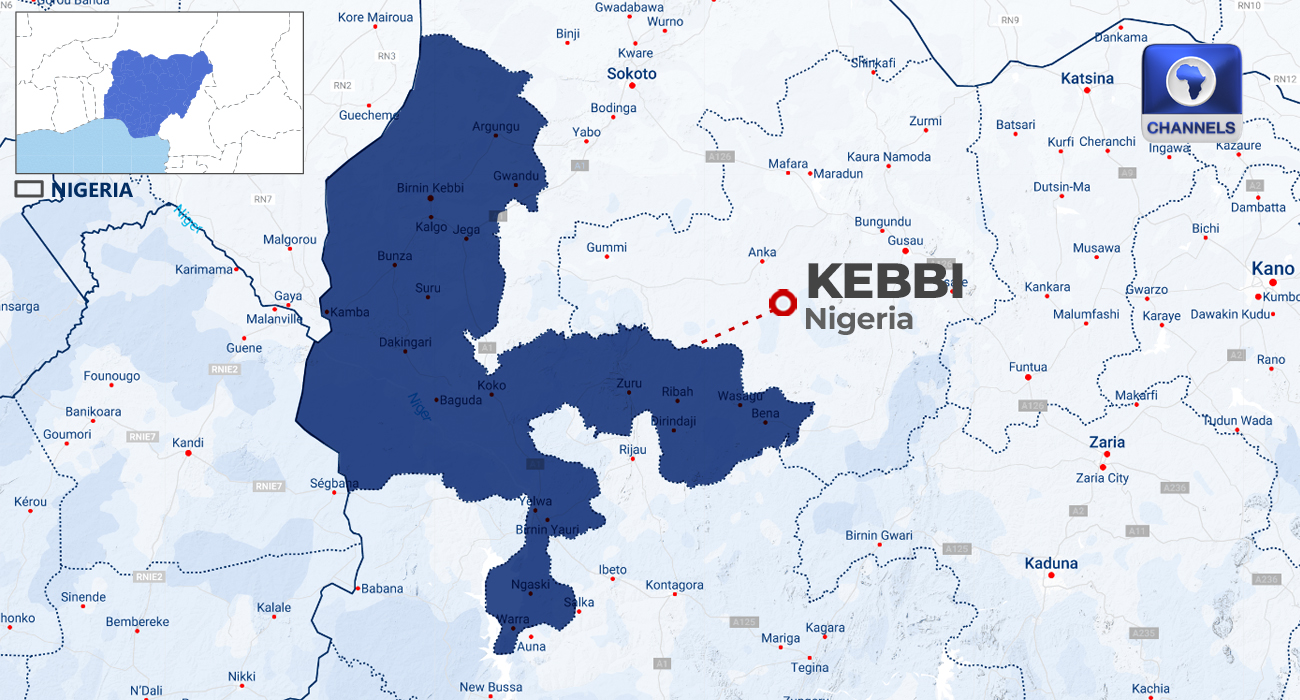
A communal clash between Hausa and Fulani residents in the Alwasa community of the Argungu Local Government Area of Kebbi State has left three people dead and several others displaced.
The violence began following a disagreement between Hausa and Fulani youths over reckless motorcycle riding, which escalated into a confrontation.
During the clash, a Fulani youth allegedly stabbed a Hausa youth, triggering further violence.
Speaking during a visit by the Kebbi State Governor, Nasir Idris, to assess the situation, the chairman of the Argungu Local Government, Sani Gulma, said the incident worsened after the suspect fled the scene.
READ ALSO: One Killed, Five Arrested In Bauchi Herders-Farmers Clash
[embedded content]
“After the suspect ran away, some Hausa youths launched a reprisal attack on a Fulani settlement, leading to the death of two persons and the displacement of many,” he said.
“Most of those killed were innocent and not directly involved in the conflict, yet they paid the ultimate price,” he added.
Governor Idris, while condoling with the affected community, condemned the violence and warned against further reprisals.
“I have directed security agencies to track down the individual who initiated this crisis. I assure you that justice will be served,” the governor stated.
He emphasised the long-standing peaceful coexistence between the two communities.
“Alwasa has enjoyed over 100 years of peaceful coexistence between the Hausa and the Fulani. We will not allow a few individuals to disrupt this harmony,” he said.
US President Donald Trump said on Tuesday that talks with Iran to end the Middle East war were underway “right now”, even as the Islamic Republic and Israel traded fresh strikes.
Uncertainty, however, swirled around Trump’s claims, with Tehran not confirming any negotiations and Israel insisting its military campaign would go on “unchanged”.
“We’re in negotiations right now,” Trump told reporters in the Oval Office, saying Vice President JD Vance, Secretary of State Marco Rubio, and envoys Steve Witkoff and Jared Kushner were involved.
Trump added that Iran gave him a “very big present” related to oil and gas, offering no details but saying he had new faith in Tehran’s leaders.
The war that started on February 28 with US-Israeli attacks that killed Iran’s supreme leader has since spread across the Middle East, sending energy prices soaring and roiling the world economy.
Speculation has mounted that Pakistan could emerge as a mediator following an offer from its prime minister to host US-Iran talks, but on the ground, the hostilities went on unabated.
Israel’s army said it had conducted a “large wave” of airstrikes across several areas of Iran, while Iranian attacks on Israel injured seven people, including an infant.
Though Trump’s attention seemed turned towards diplomacy, Israeli military spokesman Effie Defrin said his country’s war plan was “unchanged” and that it would continue “to deepen the damage and remove existential threats”.
Iran’s atomic energy organisation said a strike Tuesday evening hit inside the compound of its Bushehr nuclear power plant, but caused no damage.
At the same time, US media reports said thousands of additional US troops were heading to the Middle East to support operations against Iran.
‘Friendly countries’
The first hint of diplomacy came Monday when Trump unexpectedly announced that his administration was speaking with an unidentified “top person” in Iran as he extended by five days an ultimatum for the Islamic Republic to reopen the Strait of Hormuz oil route or see its power plants attacked.
But Tehran’s parliamentary speaker, Mohammad Bagher Ghalibaf, said “no negotiations” were underway, accusing Trump of seeking “to manipulate the financial and oil markets”.
Iran’s foreign ministry, however, acknowledged that messages had been relayed by “friendly countries” indicating a “US request for negotiations”.
Pakistani Prime Minister Shehbaz Sharif said on Tuesday that he had spoken with Iranian President Masoud Pezeshkian, promising Islamabad’s help to bring peace to the region.
Should the two sides agree, “Pakistan stands ready and honoured to be the host to facilitate meaningful and conclusive talks for a comprehensive settlement”, Sharif wrote on X.
US media outlet Axios reported that Witkoff and Kushner may meet an Iranian delegation for talks in Pakistan as soon as this week, with Vice President JD Vance possibly joining.
“We’re actually talking to the right people, and they want to make a deal so badly,” Trump told reporters.
Trump’s administration has held two sets of multi-round talks with Iran on its nuclear programme since he returned to the White House, with both ending in surprise attacks on the Islamic Republic — in June last year and most recently on February 28.
Analysts have floated other possible mediators, including Egypt and Turkey.
War is ‘daily life now’
A plume of smoke rises from the site of an Israeli airstrike on the eastern outskirts of Tyre, in southern Lebanon, on March 24, 2026. (Photo by Dimitar DILKOFF / AFP)
Israel, meanwhile, stepped up its campaign against the Iran-backed Hezbollah militant group in Lebanon, saying its military would take control of south Lebanon up to the Litani River, around 30 kilometres (20 miles) from the border.
Israel pounded Lebanon on Tuesday, with the state-run National News Agency (NNA) reporting attacks in the country’s south and east, as well as near Beirut, after a night of bombardment on the capital’s southern suburbs.
Lebanon’s health ministry said at least eight people were killed in Israeli strikes, including a three-year-old girl.
Lebanon was pulled into the Middle East war when Hezbollah began firing rockets into Israel on March 2 to avenge the killing of Iran’s supreme leader Ayatollah Ali Khamenei.
Israeli Defence Minister Israel Katz said displaced Lebanese residents would not return south of the river “until security is guaranteed for the residents of the north” of Israel.
In Tel Aviv, Israel, four people were wounded after missile fire from Iran, with AFP images showing rubble-strewn streets. Israeli first responders said three people were injured during Iranian missile fire targeting the south of the country, including an infant.
Bahrain, Kuwait, the United Arab Emirates, and Saudi Arabia all said they had intercepted renewed drone and missile attacks as Iran kept up retaliatory strikes on US-allied Gulf states.
“The sounds, the explosions, the missiles — they are part of our daily life now,” a 35-year-old woman in Tehran told AFP by telephone.
“Our one real worry now is that our oil and gas infrastructure isn’t targeted by missile strikes. I think that’s the only thing all Iranians can agree on at the moment.”
‘Trust destroyed’
Since the start of the US-Israeli attacks, Tehran has retaliated by throttling traffic through the Strait of Hormuz, pushing up fuel prices and fuelling fears of higher inflation and weaker global growth.
Oil prices, which had tumbled after Trump mooted talks on Monday, rebounded slightly in Tuesday trade, with Brent back above $100 a barrel.
Although Iran’s chokehold on the strait gives it leverage in potential negotiations, analysts remained doubtful of any breakthroughs.
“I’m very sceptical (about the talks) because trust has been completely destroyed and the positions of the warring parties are further apart than ever,” David Khalfa, a Middle East specialist at the Jean-Jaures Foundation, a Paris-based think-tank, told AFP.
The Governor of the Central Bank of Nigeria (CBN), Mr. Olayemi Cardoso, has urged African financial regulators to strengthen cooperation in managing cross-border risks.
He also restated the CBN’s commitment to entrenching robust corporate governance in Nigeria’s financial system.
Speaking at the fourth Annual IMF/AFRITAC West 2 High-Level Executive Forum for Financial Sector Regulation and Supervision held at the CBN headquarters in Abuja on Tuesday, March 24, 2026, Cardoso explained that, as African banks and financial systems become increasingly interconnected, collaboration among regulators is not optional but essential to safeguard stability and ensure shared prosperity across the continent.
The CBN governor urged African regulators to deepen cooperation in managing cross-border risks, emphasising that regional financial integration is outpacing political coordination.
He called for the adoption of shared prudential principles tailored to Africa’s realities, noting that this framework would enable regulators to respond jointly and effectively to emerging vulnerabilities while supporting inclusive growth.
Building on this continental vision, the apex bank’s governor outlined how Nigeria’s regulatory and supervisory reforms exemplified proactive leadership.
He recalled that in 2024, the CBN anticipated upcoming challenges and launched the Banking Sector Recapitalisation Programme to strengthen the resilience of Nigerian banks.
This proactive policy, he noted, inspired similar reforms across Africa, adding that Nigerian banks, despite navigating subsidy removals and exchange rate reforms, attracted ₦4.61 trillion in new capital, nearly 27 per cent from foreign investors, while even expanding their footprint across African markets.
Cardoso reaffirmed the bank’s commitment to robust corporate governance, emphasising decisive measures such as ending years of regulatory leniency and restricting banking services to chronic defaulters.
“Our stance on corporate governance is unequivocal: zero tolerance for violations. By ending years of regulatory forbearance, we have reinforced accountability, tightened supervision, and elevated compliance standards across the sector,” he declared.
“In line with this, we have implemented a restriction of banking services to non‑performing large‑ticket obligors. This decisive step underscores our commitment to credit discipline, financial integrity, and accountability.
“By curbing access to banking services for chronic defaulters, we are reinforcing the culture of repayment, protecting depositors, and safeguarding the stability of the financial system,” Cardoso added.
On the policy front, he reiterated that the CBN remains firmly anchored in orthodox monetary policy, focused on restoring price stability, strengthening policy credibility, and anchoring expectations through discipline and consistency.
Speaking further on the transformative role of financial technology, the governor outlined the bank’s deliberate strategy to engage and regulate Fintechs in a way that balances innovation with stability.
He said the CBN’s Fintech Policy Report and structural reforms were part of ongoing efforts to build supervisory capacity for a fast-evolving digital financial ecosystem.
Cardoso stated that the forum should continue to serve as a platform for collective learning and action, where regulators can analyse shared challenges, exchange insights, and develop a cohesive African response to global financial trends.
He visualised a future where collaboration among African regulators becomes the continent’s strongest defence and greatest asset, transforming its financial systems into catalysts for sustainable growth and development.
In his opening remarks, the Director, IMF/AFRITAC West 2, Ivohasina Fizara Razafimahefa, said the gathering served as a platform for open dialogue between staff of the International Monetary Fund (IMF) and national financial regulators, enabling the sharing of practical experience, technical insights, and policy innovations across participating countries.
According to him, the forum concentrated on emerging and rapidly evolving risks affecting financial stability, noting that this year’s discussions centred on collective strategies to tackle challenges arising from digital finance, fintech expansion, artificial intelligence (AI), and climate-related financial risks.
These issues, he observed, would demand regional coordination, proactive regulation, and ongoing dialogue among stakeholders to protect the resilience of Africa’s financial systems.
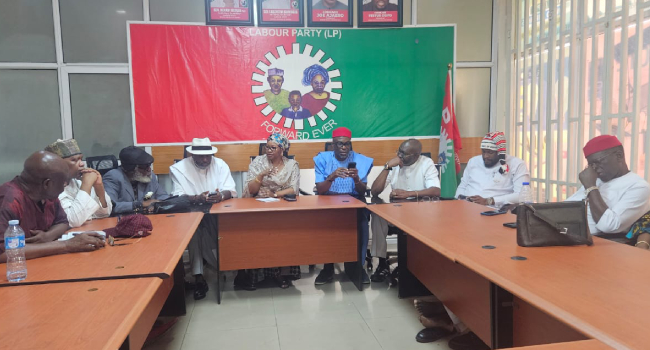
The Nenadi Usman-led Labour Party has announced the postponement of its scheduled congresses and national convention, earlier billed to commence on Thursday, March 26, 2026.
According to the party’s previously released timetable, ward congresses were slated for March 26, 2026, followed by local government congresses on March 28, state congresses on March 31, while the national convention was scheduled to hold on April 11, 2026.
READ ALSO: 2027 Polls: Labour Party Zones Presidential Ticket To South
However, arising from a combined stakeholders’ meeting involving members of the Interim National Working Committee (NWC) and representatives of the labour unions, the party resolved to shift the exercise.
The decision is aimed at providing ample opportunity for members and prospective Nigerians to participate fully in the ongoing membership re-registration exercise, according to a statement signed by the Senior Special Adviser (Media), Ken Asogwa.
As part of efforts to ensure a seamless and credible process, the party has also inaugurated a 45-member congresses and convention committee.
The committee is chaired by Ginger Onwusibe, a member representing Isiala Ngwa South/Isiala Ngwa North Federal Constituency in the House of Representatives.
Other members of the committee include Salisu N. Mohammed, Obinna Aguocha, Amaobi Ogah, Ibe Okwara, Alex Mascot Ikwechegh, Alozie Munachim Ikechi, Benedict Etanabene, Emmanuel Emeruwa, Lawson Osagie, and Mrs. Imaobong Ufot, among others.
While inaugurating the committee, Usman charged members to discharge their responsibilities with utmost diligence, impartiality, and commitment.
“She urged them to take full advantage of the postponement to ensure that all necessary preparations are thoroughly completed, guaranteeing hitch-free congresses and convention,” the statement added.
The party appealed to its members, the Independent National Electoral Commission (INEC), and its teeming supporters nationwide for their understanding regarding this adjustment.
It also assured that a new timetable would be communicated in due course.
The opposition party had on Tuesday zoned its presidential ticket to the South.
Disclosing this on the sidelines of the meeting with the INEC, Usman said, “We have one certain decision that we have taken, and that is that we will certainly not field any aspirant from Northern Nigeria. We have zoned the position to southern Nigeria.
“So if any northerner comes now to want to contest elections, we certainly will not accept that.”
Justice Ayo Salami says former Anambra State governor Peter Obi shouldn’t have been allowed to contest the 2023 presidential elections under the Labour Party (LP) platform.
The former appeal court president stated this on Tuesday while briefing journalists at his residence in Ilorin, the Kwara State capital.
Justice Salami argued that by the time Obi left the Peoples Democratic Party (PDP) primary, the LP had submitted its list of members to the Independent National Electoral Commission (INEC).
“Peter Obi of the Labour Party ought not to have been allowed to contest in the presidential election in the sense that by the time he left the PDP primary, the Labour Party had submitted its list of members to INEC. The constitution says there can’t be independent candidates. How did he become a candidate if he doesn’t belong to the Labour Party?” Salami said.
“The same thing happened to the governor of Kano State, who has now defected to the APC. His name is not in the NNPP register, but they issued him a membership card, and the register is supposed to be the mother of the card. That is the source of the register for his membership. Even though the Tribunal and Court of Appeal frowned at it, and that’s the problem of competence.”
READ ALSO: ‘Political Persecution,’ Peter Obi Condemns Detention Of El-Rufai
The retired jurist also faulted the actions of some judges for delivering wrong verdicts, attributing it to incompetence.
[embedded content]
“Some of them have problems with learning; they are not sufficiently trained. They don’t have a good background to be such. And imagine appointing a higher registrar, a judge.
“All this may be responsible, not because they are dishonest or they take bribes or they are influenced. But maybe personally, they are inadequate. And that may be responsible for their wrong judgment.
Senator Seriake Dickson is unhappy over the crisis in the Peoples Democratic Party (PDP) and believes that ex-President Goodluck Jonathan “must be sad” that the party, which produced three presidents since the return of democracy in 1999, has been “killed and buried”.
Dickson spoke on Tuesday as a guest on Channels Television’s Politics Today, weeks after he left the PDP for the Nigeria Democratic Congress (NDC).
When asked if he consulted Jonathan before the move, Dickson, who is from the same state as the ex-president, said, “What I can say is that President Jonathan, while I’m not his spokesman, must be very sad.
“I know that if I’m sad, having been this attached to the PDP, you can imagine how sad he will be, having been governor, deputy governor, vice president, and president of Nigeria on that platform, and right before your eyes, that platform is evaporating.”
READ ALSO: Senator Seriake Dickson Dumps PDP, Declares For Newly Registered NDC
Dickson ruled Bayelsa from 2012 to 2020 under the PDP and joined the newly registered NDC on March 5. During his official defection, the lawmaker described the party as “our symbol of victory”.
“So, my dear Nigerians, you now have a credible alternative opposition party known as the Nigeria Democratic Congress,” the ex-governor said at the ceremony in Abuja.
“Yes, it is coming at this time. We would have wished it had started some years or months back; we don’t control INEC and their processes. They delayed. We also don’t control the judiciary, but thank God it has finally arrived.”
PDP Left us
The PDP has been embroiled in crisis in the past year, with two groups laying claims to its leadership. Its ranks have also been depleted. Currently, it has two governors after several of them left for the ruling All Progressives Congress (APC).
Despite accusations that the major players in the PDP, like Dickson, are leaving the party, the lawmaker said, “It wouldn’t be correct to say that we are leaving the PDP or that I have left the PDP.