El-Rufai Files ₦2bn Suit Against DSS Over Alleged Abuse Of Power

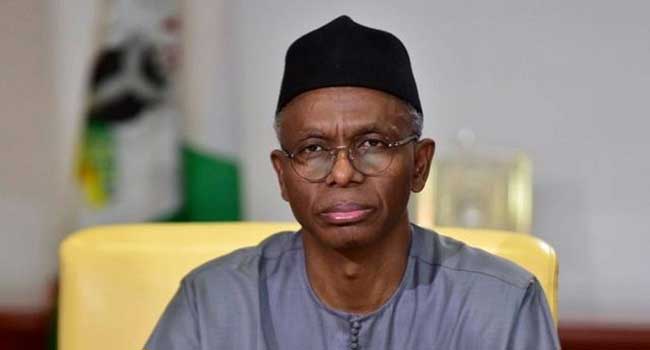
Former Kaduna State Governor, Nasir El-Rufai, has asked the Federal High Court to quash charges filed against him by the Department of State Services (DSS).

El-Rufai is challenging the competence and legality of the charges, describing them as an abuse of court process.

According to statement by his media adviser, Muyiwa Adekeye, El-Rufai filed an application before the Federal High Court seeking to quash Charge Number FHC/ABJ/CR/99/2026 instituted against him by the secret service.

The matter is scheduled to be heard on February 25, 2026, before Justice Joyce Abdulmalik.

In his motion on notice, El-Rufai is asking the court to strike out the charge on grounds that it is incompetent, discloses no offence known to law, and constitutes what he describes as a gross abuse of court process.

Among the reliefs sought, the former governor is requesting: an order quashing the charge in its entirety, an order discharging him on the ground that no prima facie case has been established and an order awarding ₦2 billion in costs against the DSS for what he terms misuse of the criminal justice system.

READ ALSO: El-Rufai Sues ICPC For ₦1bn Over Alleged Abuja Home Invasion

According to court documents, the motion cites 17 grounds for dismissal of the charges, including constitutional invalidity, lack of prosecutorial competence, alleged absence of evidence, and claims of political persecution.

The filing also argued that the prosecution violates several constitutional provisions, including the presumption of innocence, the right against self-incrimination, the requirement that offences be defined in written law, as well as freedoms of expression and association.

El-Rufai’s legal team has formally notified the Director General of the DSS of the application and provided details of his counsel.

NAPTIP Facilitates Safe Rescue, Return Of 23 Nigerians From Southeast Asia

The National Agency for the Prohibition of Trafficking in Persons (NAPTIP), in partnership with the British High Commission Abuja, has rescued and returned 23 Nigerians trafficked to scam centres in Southeast Asia as part of efforts to combat cyber-enabled human trafficking and support survivor recovery.

The agency disclosed this at a survivor-centred event in Abuja titled “Confronting the Global Scam Centre Crisis: Perspectives of Nigerian Survivors.”

The event brought together victims recently repatriated after being trafficked to Myanmar, Laos, Cambodia, and Thailand under false job promises.

The rescue followed coordinated interventions by NAPTIP, the Ministry of Foreign Affairs, the Nigerian Embassy in Bangkok, and British NGO EDEN. On-ground triangulation at the Thai–Myanmar border and welfare visits to detained Nigerians in Bangkok facilitated their release and safe return.

According to the United Nations Office of the High Commissioner for Human Rights 2026 report titled “A Wicked Problem,” at least 120,000 people are trapped in forced scam operations in Myanmar, with over 300,000 victims across Southeast Asia. The report stated that between 2020 and 2025, about 74 per cent of identified victims globally were trafficked into scam centres in the region after being lured with fake employment opportunities.

Speaking at the event, UK Deputy High Commissioner to Abuja Gill Lever said: “We are here today to listen to survivors who have shown remarkable bravery in sharing their experiences. The UK is working closely with NAPTIP, the Nigerian Ministry of Foreign Affairs, EDEN and IOM to ensure survivors receive trauma-informed care and safe repatriation. Their courage will help prevent others from being harmed, and we stand firmly with Nigeria and all African Commonwealth partners in confronting this rapidly evolving threat.”

NAPTIP’s Director of Public Enlightenment, representing the Director-General, added: “The courage these survivors have shown in sharing their stories is remarkable. Their experiences expose the brutal reality of trafficking into scam centres, a crime that strips people of their dignity and freedom.”

One of the survivors stated: “I was promised opportunity, a good job and a chance for a better life. Instead, I was trapped and forced to do things that went against everything I believe in.”

FULL LIST: Beef Export Block, Visa Bans And Other Recommendations By US Congress On Nigeria

The House Committees on Appropriations and Foreign Affairs of the United States Congress have recommended a series of measures aimed at addressing what they described as the “persecution of Christians” in Nigeria.

The recommendations follow the formal submission of a report to the White House outlining the committees’ findings and proposals. The submission comes after President Donald Trump redesignated Nigeria as a Country of Particular Concern.

In the report released by committee chairman Riley Moore, lawmakers proposed several steps to address the alleged crisis and improve security and religious freedom.

READ ALSO: US Congress Submits Report On Nigeria, Recommends Sanctions Over ‘Christian Persecution’

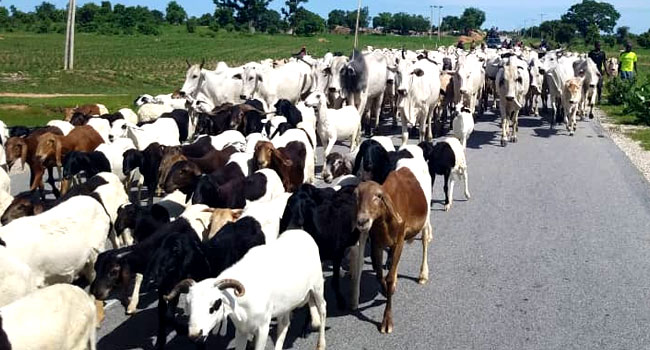
One key recommendation is the blocking of beef exports from Nigeria, a measure intended to encourage Fulani herdsmen to disarm amid reports of increasing attacks on Christian communities.

The committees also recommended continuing visa restrictions on individuals involved in violence against Christians and violations of religious freedom.

The full recommendations include:

Recommendations

➤ A bilateral agreement between the United States and the Government of Nigeria to protect vulnerable Christian communities, eliminate jihadist activity, enhance economic cooperation, and counter regional adversaries such as the Chinese Communist Party and the Russian Federation. The agreement should include:

Commitments by the Government of Nigeria to co-fund humanitarian assistance, including through faith-based organisations, and prioritise Internally Displaced Persons and host communities in the predominantly Christian Middle Belt region;

Support for early-warning systems to prevent attacks and kidnappings, including the deployment of capable security forces to respond rapidly and hold those who ignore warnings accountable;

Removal of Fulani militias from confiscated farmland and facilitation of the voluntary return of displaced communities, with security and infrastructure support to encourage agricultural productivity;

Expansion of security cooperation with the United States, including divestment of Russian military equipment in favour of American systems through sales and financing.

➤ Technical support for the Nigerian government to reduce and eliminate violence from armed Fulani militias through:

A demobilisation, disarmament, and reintegration programme to address illicit weapons while enabling lawful self-defence;

Support for the Ministry of Livestock and ranching initiatives alongside land reform efforts;

Strengthening the recruitment and operational capabilities of security forces to respond to violent attacks.

➤ Enhanced counter-terrorism cooperation to eliminate foreign terrorist organisations posing security threats, including the provision of defence equipment and relevant drawdown authorities.

➤ Measures to counter the influence of Chinese illegal mining operations and their alleged practice of funding Fulani militias through protection payments.

➤ Implementation of the National Security, Department of State, and Related Programs Appropriations Act, 2026, including:

Accountability mechanisms requiring demonstrable progress before additional funds are released;

Programmes to strengthen religious freedom, legal reforms, policing, and anti-money laundering capabilities;

Efforts to disrupt terrorist financing and recover illicit funds linked to militias;

Oversight of U.S. aid through a Government Accountability Office audit;

Investments via the U.S. Development Finance Corporation, particularly in the Middle Belt.

➤ Public enforcement of directives under the Country of Particular Concern designation to identify and hold perpetrators accountable.

➤ Sanctions on individuals and groups involved in violence against Christians or religious persecution.

➤ Continued visa restrictions for those implicated in religious violence.

➤ Calls for the repeal of Sharia-based codes and anti-blasphemy laws.

➤ Use of leverage, including restrictions on beef and cattle product exports to countries such as Ivory Coast, Ghana, South Africa, and Senegal, to encourage disarmament by Fulani herdsmen.

➤ Strengthening of diplomatic staffing in Nigeria.

➤ Improvements to the Foreign Military Sales process to expedite procurement of defence equipment.

➤ A National Intelligence Estimate on sectarian and communal violence in Nigeria and consideration of classifying Fulani militia groups linked to terror activities as Foreign Terrorist Organisations.

JUST IN: Bayelsa Assembly Confirms Peter Akpe As Deputy Governor

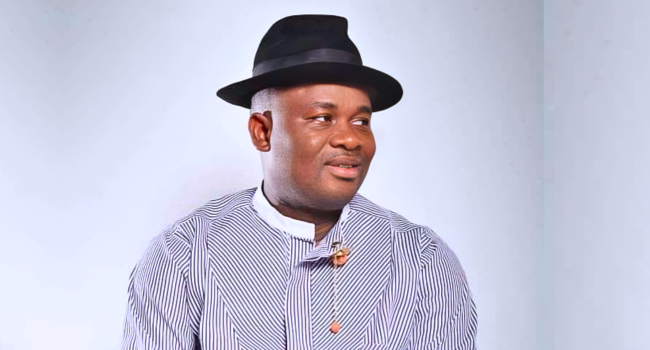
The Bayelsa State House of Assembly has confirmed the appointment of Peter Akpe as Deputy Governor of Bayelsa State.

Akpe, who until his confirmation served as Chief of Staff at Government House, Yenagoa, was nominated by Governor Douye Diri following the vacancy created by the death of the former deputy governor, Lawrence Ewhrudjakpo.

A seasoned public administrator and politician, Akpe is a former two-term member of the Bayelsa State House of Assembly.

He rose through the civil service to the rank of Director before moving into senior political roles, including Deputy Chief of Staff and Acting Chief of Staff.

He holds a PhD and is also known as a Christian minister, often addressed as Hon. (Dr) or Pastor Peter Akpe.

READ ALSO: Diri Orders Autopsy To Reveal Cause Of Deputy Governor’s Death

Lawrence Ewhrudjakpo. Credit: Sen. Lawrence Ewhrudjakpo/ Facebook.

Akpe’s confirmation follows the death of Ewhrudjakpo in December 2025.

In a statement issued by the state government, the Commissioner for Information, Orientation and Strategy, Ebiuwou Koku-Obiyai, announced the passing with “deep regret and profound shock”.

“The Deputy Governor was active and carrying out official duties earlier in the day. He collapsed while proceeding to a scheduled meeting within his office and was rushed to the Federal Medical Centre, Yenagoa, where he was later confirmed dead,” the statement read.

Governor Diri subsequently declared three days of mourning, directing that flags be flown at half-mast and describing the loss as “a great loss to the Government and people of Bayelsa State and the nation”.

Former President Goodluck Jonathan signs a condolence register in honour of the late Bayelsa State Deputy Governor, Senator Lawrence Ewhrudjakpo, at the Government House in Yenagoa on December 11, 2025. Credit: X/@govdouyediri

He also directed that an autopsy be carried out to reveal the cause of the death of the state’s deputy governor.

Diri extended condolences to the late deputy governor’s wife, Beatrice, his children, the Ewhrudjakpo family, the Ofoni Federated Community, former governor Henry Seriake Dickson, and the people of the state, praying for comfort and strength for them.

Lawrence Ewhrudjakpo. Credit: Sen. Lawrence Ewhrudjakpo/ Facebook.

The Peoples Democratic Party (PDP) also described Ewhrudjakpo as “a principled and consistent politician… a person of conviction, not convenience; a leader whose life was anchored on belief, integrity and strength of character”.

Russia Recruiting Nigerians, Other Africans For Ukraine War, EU Envoy Alleges

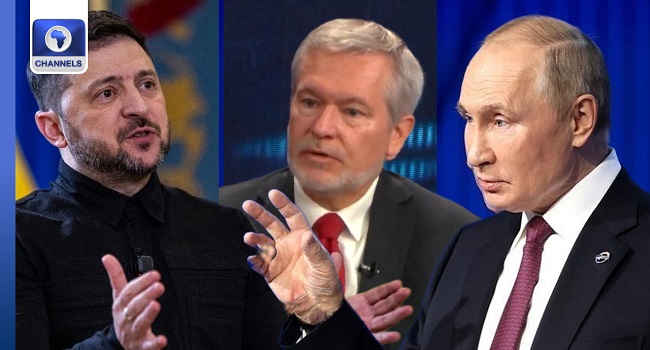
On the fourth anniversary of the Russia-Ukraine war, the EU ambassador to Nigeria, Gautier Mignot, voiced concern over what he described as a disturbing development — Russia’s recruitment of Nigerians and other Africans to fight in the war.

Mignot, speaking as a guest on Channels Television’s The Morning Brief programme on Tuesday, said reports from civil society organisations indicate that the recruitment is becoming a growing phenomenon.

“There is another important phenomenon which is impacting Africa, which is recruitment of African men and women by Russia. Women to be sent and work in military plants in Russia and men to be sent as cannon fodder on the front. Of course they are being lured with job promises,” Mignot said.

READ ALSO: Five Key Moments Four Years Into The Russia-Ukraine War

The EU ambassador stated that Russia is recruiting from Africa because it is running out of soldiers, describing the practice as crude and harmful to individuals with no connection to the conflict.

“Russia is running out of soldiers, so they have been growingly doing that including with Nigerians, and it’s extremely crude sending these people who have absolutely nothing to do with this war to die on the front.

“Some of them have been captured by the Ukrainian army, and this is something I think African countries have started to react to. We have seen even the Nigerian government publish a communique on this phenomenon of recruitment into war — they did not mention Russia,” he added.

On perceptions that Russia is winning the war, Mignot dismissed the claim, calling it a false impression.

“There are other false perceptions about this war, the impression that Russia is winning the war little by little — no, it is not. There is a stalemate at the front. Actually in the last few weeks it is Ukraine which has reclaimed a few hundred square kilometres of territory,” he said.

He noted, however, that the war is unlikely to be resolved by military means soon and argued that lasting peace requires international pressure on Russia to engage in dialogue.

Russia has denied reports of recruiting Africans for the war in Ukraine, describing the allegations as unfounded.

Mignot maintained that testimonies from Africans recruited for the war support the reports and dismissed Russia’s denial as untrue, saying it reflects an unwillingness to stop the practice.

On February 21, 2022, Russian President Vladimir Putin recognises the independence of Ukraine’s eastern Donetsk and Lugansk regions, where pro-Russian separatists have been fighting the Ukrainian army since 2014.

Three days later at dawn, Putin announces a major military offensive in Ukraine, which he calls a “special military operation” to “de-Nazify” and “demilitarise” its neighbour.

LASTMA Officer, Two Others Die In Road Accident

The Lagos State Traffic Management Authority (LASTMA) has confirmed the death of one of its officers and two other citizens in a fatal road accident at the Badagry Roundabout inward Seme on Monday.

In a statement issued by the agency’s Director of Public Affairs and Enlightenment, Adebayo Taofiq, the authority described the incident as tragic and deeply saddening.

According to LASTMA, the crash involved a truck which reportedly suffered brake failure while travelling at high speed.

“The driver lost control of the vehicle, which then struck the LASTMA officer who was diligently performing his traffic regulation duties and a pedestrian at the roundabout.

“The truck continued on its path, tragically taking the life of another individual before coming to a stop approximately 200 meters from the initial point of impact. The driver fled the accident scene but, was later apprehended by other LASTMA personnel and handed over to the Police.

“Emergency response teams, including LASTMA officers, the Badagry Police Division, the Federal Road Safety Corps (FRSC), Nigeria Security and Defence Corps and concerned citizens were immediately mobilised to the scene. The victims were rushed to the General Hospital Badagry, where they were sadly pronounced dead,” the statement read.

READ ALSO: Troops Kill 25 ISWAP Fighters, Recover 13 AK-47s

Reacting to the incident, LASTMA General Manager Olalekan Bakare-Oki expressed grief over the loss, saying, “This is a heartbreaking incident, and our thoughts and prayers are with the families of the victims during this incredibly difficult time.”

He described the fallen officer as “a dedicated public servant who made the ultimate sacrifice while serving the people of Lagos,” adding that the agency honours his courage and professionalism.

Bakare-Oki also stressed the need for stricter vehicle maintenance across the transport sector, noting that the tragedy underscores the consequences of mechanical failure. He urged haulage and logistics companies to conduct regular and rigorous checks, particularly on braking systems.

The accident vehicle has been impounded and transferred to the Badagry Police Division for investigation.