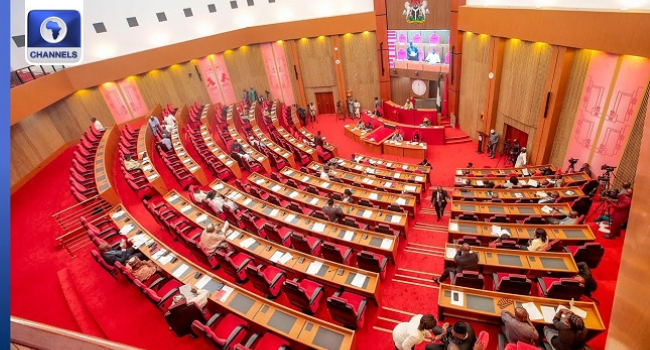
President Bola Tinubu has urged the leadership of the 10th Senate to initiate constitutional amendments that would create a legal framework for the establishment of state police as part of efforts to address growing insecurity across the country.
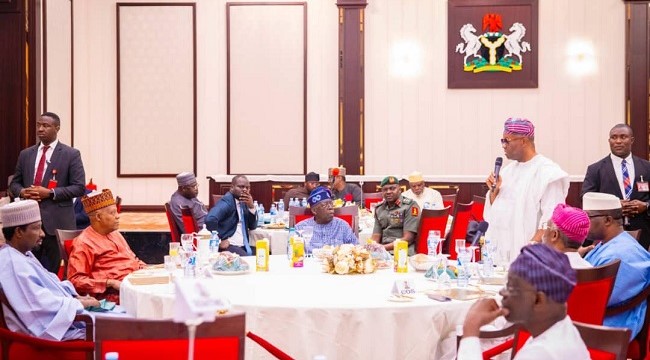
The President made the appeal on Wednesday during an interfaith breakfast with senators at the Presidential Villa in Abuja, according to a statement issued by his Special Adviser on Information and Strategy, Bayo Onanuga.
Tinubu said the creation of state police had become imperative in view of Nigeria’s evolving security threats, stressing that decentralised policing would strengthen grassroots security and enable states to respond more swiftly to local challenges.
“We are facing terrorism, banditry and insurgency. But we will never fail to make the right response to these challenges,” the President said. “What I will ask for tonight is for you (Senators) to start thinking about how best to amend the Constitution to incorporate state police for us to secure our country, take over our forests from marauders and free our children from fear.”
READ ALSO: Tinubu Charges Acting IGP Disu To Tackle Banditry, Terrorism, Other Crimes
He noted that a decentralised policing structure would complement the existing federal security architecture while promoting intelligence-driven and community-focused law enforcement.
The President also commended the harmonious relationship between the executive and the National Assembly, describing unity as critical to defeating terrorism and banditry.
“It is a good thing that we are working in harmony. We are looking forward to a country that evolves, a country that takes care of its citizens and protects all,” he said.
Tinubu further thanked the Senate for supporting key reforms of his administration, particularly the removal of fuel subsidy and tax reforms, which he described as bold but necessary decisions.
“I have a lot of credit for bold reforms. Without your collaboration and inspiration, those reforms would not have been possible. We are reformists together,” he said, adding that ending the subsidy regime curtailed what he termed “monumental corruption.”
President of the Senate, Godswill Akpabio, in his remarks, thanked Tinubu for hosting the interfaith breakfast and praised his leadership at what he described as a critical period for the country.
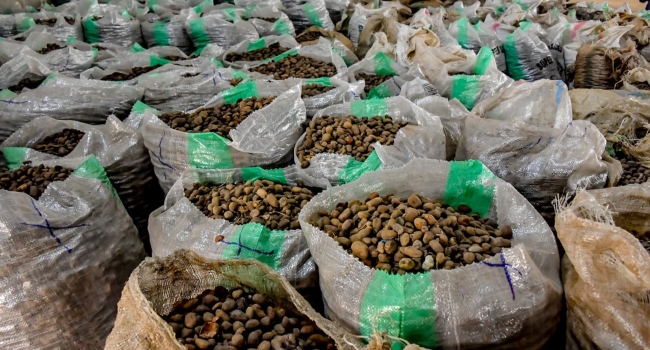
President Bola Tinubu has approved a one-year extension of the ban on the export of raw shea nuts, effective from February 26, 2026, to February 25, 2027.
The development was disclosed on Wednesday in a statement by the President’s Special Adviser on Information and Strategy, Bayo Onanuga.
According to the statement, the extension reflects the administration’s commitment to industrial development, domestic value addition, and the broader objectives of the Renewed Hope Agenda.
The ban is aimed at boosting local processing capacity, improving livelihoods in shea-producing communities, and expanding Nigeria’s export base through value-added products rather than raw commodities.
READ ALSO: President Tinubu Orders Immediate Ban Of Raw Shea Nut Export
To strengthen implementation, the President authorised the Ministers of the Federal Ministry of Industry, Trade and Investment and the Presidential Food Security Coordination Unit (PFSCU) to coordinate a unified, evidence-based national framework aligning industrialisation, trade, and investment priorities across the shea value chain.
Tinubu also approved the adoption of an export framework developed by the Nigerian Commodity Exchange (NCX) and directed the withdrawal of all waivers previously granted for the direct export of raw shea nuts.
Under the new directive, any surplus raw shea nuts must be exported strictly through the NCX framework in line with approved guidelines.
Additionally, the President instructed the Federal Ministry of Finance to open a dedicated NESS Support Window to enable the Ministry of Industry, Trade and Investment pilot a Livelihood Finance Mechanism designed to strengthen production and processing capacity.
Tinubu had earlier imposed a six-month ban on raw shea nut exports last year to stimulate domestic processing and protect Nigeria’s shea industry.
Shea nuts — harvested from shea trees predominantly found in Nigeria’s Savanna belt — are processed into shea butter, widely used in cosmetics, pharmaceuticals, and food production. Processed shea butter can fetch between 10 and 20 times the price of raw nuts in international markets.
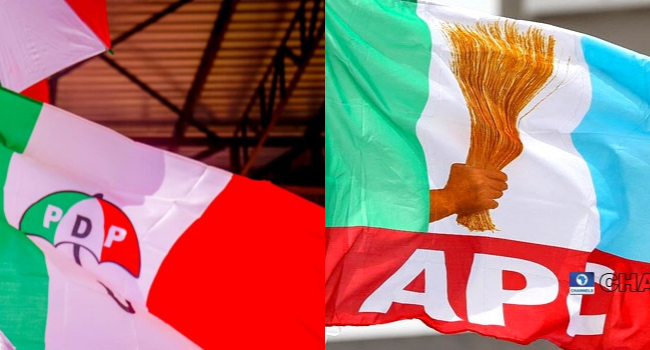
The Speaker of the Adamawa State House of Assembly, Wesley Bathiya, has resigned his membership of the Peoples Democratic Party (PDP) alongside 14 other lawmakers.
The Speaker made the announcement during plenary on Wednesday, presenting letters of resignation from the affected members.
After concluding legislative business, he called for order and read the letters of withdrawal one after another, confirming their exit from the ruling party.
The development comes amid growing political speculation over a possible move by Governor Umaru Fintiri away from the PDP to the All Progressives Congress (APC), although no official confirmation has been made.
READ ALSO: Attack On Communities In Adamawa Leaves Several Dead, Houses Burnt
One of the defecting lawmakers, Mahmud Kallamu, chairman of the House Committee on Information, described the move as strategic. An APC lawmaker, speaking on the sidelines, said the party would welcome the defectors if they choose to join.
The Nigeria Police Force (NPF) has a new sheriff in town: Tunji Disu, who on Wednesday assumed office as the acting Inspector-General of Police (IGP).
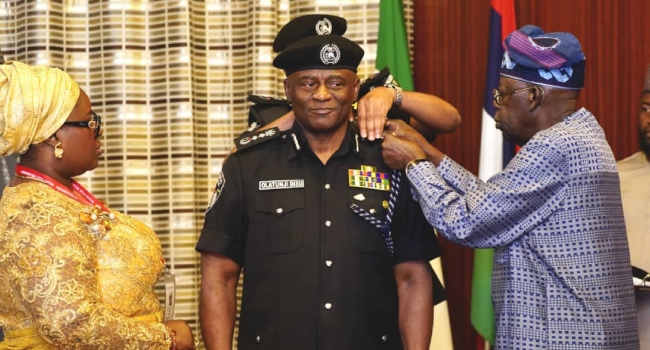
Disu, 59, took over the reins as Nigeria’s new police chief at a brief ceremony at the Louis Edet House in Abuja, shortly after President Bola Tinubu decorated him as the acting IGP.
The event came a day after Tinubu appointed him as the nation’s top cop.
Speaking at the handover, the former head of the Lagos Rapid Response Squad (RRS) promised to provide an accountable, modern, and professional policing.
‘Give Your Best’
“My tenure will be built on three clear commitments: professionalism, modernism, and accountability,” Disu told the gathering comprising top officers and family members, among others.
[embedded content]
The acting IGP wants one thing from officers across the country: the best and nothing less.
“To all officers, I will demand the best from you because the people we serve deserve nothing less.
“Integrity, compassion, courage—these are not optional qualities; they are the job. But I make this promise in return: I will fight for your welfare, your dignity, and the conditions you need to serve effectively. You will not be asked to perform miracles with nothing,” the Lagos-born officer said.
“Leadership in this service from this day forward must be visible, accountable, and worthy of being followed.”
Though his appointment came as a surprise to many, the new police boss has little to no time for the flood of congratulatory messages and has set his sights on work.
“Ladies and gentlemen, this is not the end of a ceremony. This is the beginning of the work,” he said, thanking President Tinubu for the opportunity.
His appointment followed the resignation of Kayode Egbetokun as the IGP, citing pressing family reasons.
[embedded content]
Consolidate on Gains
At the event, Egbetokun asked Disu to consolidate on the gains recorded during his tenure.
“As I hand over to my successor—one chosen among the best—I do so with confidence in his competence, experience, and strategic capacity. The foundation has been reinforced; the system recapitulated; the reform trajectory clearly defined,” the immediate IGP said.
“I charge him to consolidate these gains, deepen intelligence integration, and entrench community-centered policing as an enduring doctrine. In progress must not pause; it must accelerate.”
Egbetokun recounted some of the policing milestones recorded during his stint as IGP, including better inter-agency collaboration and enhanced accountability, among others.
“We also prioritized officer welfare, ensuring promotion as at when due, strengthening insurance frameworks, expanding housing initiatives, and investing in capacity development,” the immediate past IGP said.
“Public trust cannot be commanded by authority; it must be earned through integrity, transparency, and measurable results.”
He said, “Targeted operations during this period disrupted organized criminal kidnapping networks and contained violent criminal syndicates” were among the feats achieved by the police during his time in office.
‘I know your Record’
President Bola Tinubu decorates Tunji Disu as the acting Inspector General of Police.
Earlier at the decoration event, Tinubu expressed confidence in Disu’s ability, citing his work in Lagos State.
“I made this decision for you to assume this responsibility. I know your record. I saw the dedication you exhibited while you were in Lagos when I was governor.
“Lead firmly but fairly, demand professionalism at every level, and ensure that the safety of lives and property remains our highest priority. It’s a daunting challenge. I know you can do it. You have my word, you have my full support,” Tinubu told him at the Presidential Villa.
The president asked him to be innovative in addressing the security challenges affecting Nigeria.
[embedded content]
“Nigeria is challenged with banditry, terrorism, and other criminal activities. You will be part of the thinking and innovation to overcome them,” the President was quoted as saying in a statement by his spokesman, Bayo Onanuga.
Until his appointment, Disu served as Assistant Inspector-General in charge of the Force Criminal Investigation Department (FCID) Annex, Alagbon, Lagos.
He was promoted to the rank of Assistant Inspector-General of Police last year.
Before then, he served as Commissioner of Police in Rivers State and was later deployed by Egbetokun to the FCT as commissioner.
The former AIG is a member of the International Association of Chiefs of Police and a former head of the Intelligence Response Team of the Nigeria Police Force, a position previously held by Abba Kyari.
Tunji Disu was born on April 13, 1966, in Lagos Island and enlisted in the Nigeria Police Force on May 18, 1992.
Barely a day after the attack of some chieftains of the African Democratic Congress (ADC) in Edo State, including Peter Obi, a former President of the Nigerian Bar Association, Olumide Akpata, has narrated how the incident happened.
Akpata, former Edo State governorship candidate of the Labour Party (LP), said he and Obi separately received intelligence reports on Tuesday warning that the venue of their political event in Benin City would soon come under attack.
“I was in harm’s way, there’s no doubt. I was alongside other people. We were in harm’s way yesterday in Benin,” he said on Channels Television’s Politics Today on Wednesday.
“Thankfully, due to the efforts of some of the security personnel who were there, I think what could have been a very dastardly event was averted yesterday.”
READ ALSO: Obi, ADC, Akpata Criticise APC Govt After Attack In Edo
“Peter Obi and I received information separately from reliable sources that the venue we were at would soon come under attack by unknown persons,” Olumide Akpata recounts the attack on Obi, John Oyegun, and other ADC chieftains in Edo State.#PoliticsToday pic.twitter.com/NDAbyTXFcj
According to the lawyer-turned politician, LP members in Edo State had gathered to formally move into ADC at the party Secretariat on Ogbelaka Street in Benin City for a ceremony scheduled for 11 a.m.
He explained that as the programme progressed, intelligence from reliable sources suggested the venue could soon be attacked.
“We got information as the event proceeded from sources that are usually reliable that the venue would very soon come under attack from some unknown persons.
“I received that information separately. Mr. Obi received that information… and we were advised to speed up the event… to avert what those persons thought would be a crisis,” he said.
Akpata described the venue as “a very tight building, narrow building, and even a stampede would be dangerous,” adding that the street “is densely populated.”
He stated that the event was hurriedly concluded, and leaders were ushered out.
“We told them that, listen, because of this development, come to Chief Oyegun’s house. We would address the press there.
“This was a decision taken on the fly because… things had changed. We didn’t have time to do any press [briefing]. Anything could have happened,” he said.
Shortly after they left, he said, armed men attacked the secretariat. He disclosed that his cousin narrowly escaped being hit by a bullet.
“We started getting calls that as soon as we left the secretariat on Ogbelaka Street, some guys actually showed up and attacked the venue, attacked people,” he said.
Since the incident, the Edo State Government has asked the police to investigate the matter.
The Senate Committee on Tertiary Institutions and TETFund on Wednesday met with officials of the Joint Admissions and Matriculations Board (JAMB), raising concerns over examination charges, system failures, and access to tertiary education, particularly for students in rural communities.
During the session, Senator Amos Yohanna (PDP/Adamawa North) faulted what he described as mounting financial burdens on students amid prevailing economic hardship.
Yohanna questioned the justification for the fees the board is charging candidates, noting that many families are struggling with poverty.
Lawmakers also highlighted recent technical challenges experienced by candidates while attempting to log into JAMB’s portal, asking the board to outline measures being taken to make the system more seamless and user-friendly for prospective students.
The Committee Chairman, Mohammed Dandutse (APC/Katsina South), urged JAMB to improve coordination within the tertiary admission process, underpinning that each year, students encounter difficulties securing admission into universities and other higher institutions due to a lack of synergy among stakeholders.
According to the committee chair, ensuring that revenue generated by the board is fully remitted to the Federation Account in line with government financial regulations to guarantee sustainability is paramount.
Other lawmakers drew attention to the plight of students in rural communities, noting that many lack adequate access to registration and examination facilities.
READ ALSO: JAMB Announces Sale Of 2026 UTME, Direct Entry Forms
Lawmakers also queried the board over its increased budget allocation, reportedly rising to over a billion naira. They sought clarification on whether the increase was intended for staff recruitment and requested details of the proposed expenditure framework.
In response, JAMB officials disclosed that additional Computer-Based Test (CBT) centres would be established nationwide to ease access challenges, particularly for candidates in underserved areas.
The board also revealed that about one million candidates are expected to participate in the 2025 admission cycle, representing a significant increase in enrollment figures.