Electoral Act 2026: Nigerians Identify Hopes, Gaps At Citizens’ Townhall

The national debate over the Electoral Act 2026, recently signed into law, continued on Sunday, with Nigerians expressing divergent views over the new legislation that will serve as a legal guide for the conduct of the 2027 general elections.

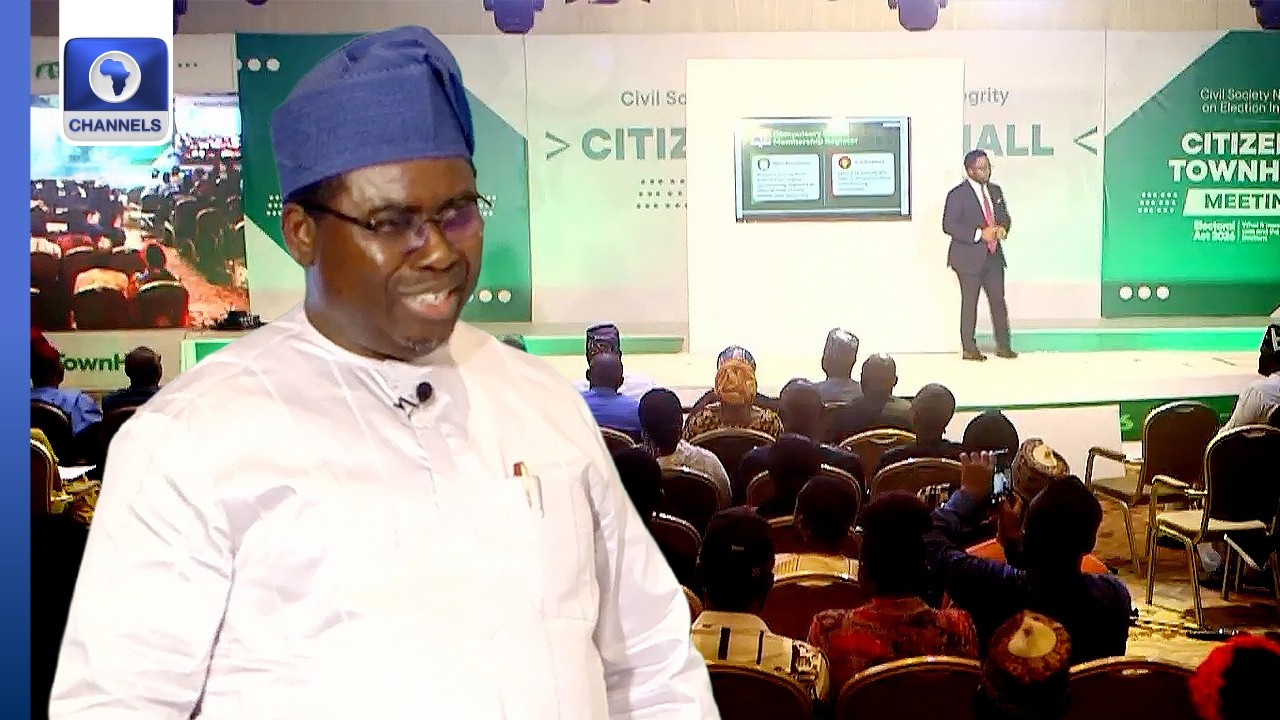
The issues identified in the new law took centre stage during a Citizens’ Townhall, an event broadcast live on Channels Television.

READ ALSO: If Tinubu Could Revert National Anthem In 24 Hours, Electoral Act 2026 Can Be Amended – Sam Amadi

The programme, themed “Electoral Act 2026: What it means for your vote and the 2027 elections?”, provided a platform for Nigerians to ask critical questions about the thorny issues in the new Act, including the contentious debate over electronic result transmission.

The Chairman of the Independent National Electoral Commission (INEC), Joash Amupitan, used the forum to address the technical concerns facing the Commission.

Identifying network inadequacy as a primary challenge, he emphasised that the quality of an election is inherently linked to logistical capacity.

“I don’t see the issue of transmission as a problem; the problem is not the network but the adequacy of the networks we have,” he said.

While acknowledging that Nigeria might not achieve “100 per cent perfect elections for now,” Amupitan assured the public that the Commission is striving to deliver the best possible outcome.

He further declared that technical glitches would not derail the 2027 polls.

“The glitch is eliminated; by God’s grace, it will not surface in Nigeria,” he added.

To bolster this confidence, he disclosed that INEC would conduct a mock presidential election to stress-test the transmission architecture.

“One of the things we are trying to do before the election is to have a mock presidential election so that we are sure that this transmission across the states must not fail,” Amupitan added.

Yiage Faults NASS

However, the Executive Director of Yiaga Africa, Samson Itodo, remained critical of the National Assembly’s decision to make manual transmission an option.

He argued that electronic transmission must be the sole, real-time method for results to ensure credibility.

Samson Itodo

Itodo further warned that the recently announced compressed election timetable places immense pressure on the Commission.

“And as we approach 2027, the credibility of that election will not just be determined on election day. It will be determined by a few things: the quality of preparations, the transparency of resource management, the professionalism of election officials, how political actors restrain themselves, but more importantly, the independence and the integrity of our security agencies and the judiciary.

“And lastly, the vigilance of citizens is what will determine the credibility of the next elections, because democracy is not self-executing. It requires guardians, and the citizens of this great country are the guardians that we need.”

‘Gaps, Loopholes’

Former INEC National Commissioner, Okechukwu Ibeanu, reinforced the need for systemic commitment over legislative tinkering.

“I think there are still gaps and loopholes in the law, and it’s unfortunate that it took us debating about a proviso for the country to come to a consensus that electronic transmission was actually in the 2022 act.

“But what we have done is actually to take us far back to 2018… We consistently tinker with the electoral legal framework as if that holds all the answers to our electoral problems,” Ibeanu cautioned.

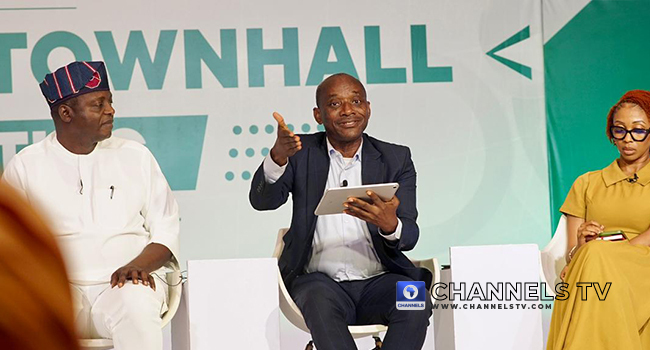
Citizens’ Townhall over the 2026 Electoral Act held in Abuja on Sunday, March 1, 2026. Photo: Taiwo Adesina/Channels TV

He urged citizens to remain the ultimate watchdogs.

“Citizens, this is about you. It is not about politicians; it is not about INEC. Except citizens are in a position to protect their votes and control those who ostensibly represent them, our dream of a truly democratic country will remain an illusion,” he added.

Chidi Nwafor, who is a former director of information and communication technology at INEC, said security agencies and the judiciary play a crucial role in maintaining the sanctity of elections in Nigeria.

He also urged INEC to assess sections 50 and 70 of the Electoral Act.

Lawmakers Disagree

The chairman of the bipartisan conference committee on the Electoral Act (Amendment) Bill to harmonise differences between versions passed by both chambers of the National Assembly, Adebayo Balogun, stated that Form EC8A remains the primary source of collation of results.

But the member representing Anambra Central at the National Assembly, Senator Victor Umeh, described the INEC Result Viewing portal, IREV, as the game-changer.

He noted that the inclusion of a proviso that allows the presiding officer to use the Form EC8A remains a challenge, adding that the electronic transmission of the Form EC8A to the IREV was to forestall manipulation.

Citizens’ Townhall over the 2026 Electoral Act held in Abuja on Sunday, March 1, 2026. Photo: Taiwo Adesina/Channels TV

Similarly, a former Director of Voter Education at INEC, Oluwole Osaze-Uzzi, said the Electoral Act has taken Nigeria back with the proviso on manual collation when the network fails.

“Who is the judge when there is a network failure? Is it the electoral officer?” he queried.

For the Head of ICT at the Nigerian Society of Engineers, Oluwadara Oluwalana, Nigeria has the capacity to try out technology in the 2027 polls, with the collaboration of operators.

“Yes, I believe telecom operators can come together and make it work. I think we have the capacity now,” he submitted during the panel discussion.

‘Defections To APC Fair’

Meanwhile, the National Chairman of the All Progressives Congress (APC), Nentawe Yilwatda, said the Electoral Act did not confer any advantage to the ruling party.

Citizens’ Townhall over the 2026 Electoral Act held in Abuja on Sunday, March 1, 2026. Photo: Taiwo Adesina/Channels TV

Asked whether it was fair that the APC allowed politicians who won elections on the platform of opposition parties to defect to the ruling party, Yilwatda said, “Very fair, very fair because you will discover that many of those political parties are already dying.

“They saw a reason to join us because of how we operate as a party—from party management to organization and mobilization,” Yilwatda said at the event.

“APC seems to be the best party in terms of mobilization, organization, and governance. That provides a leeway for competition. When I go to the market, I have a choice to make: a choice between good governance, good party management, and a transparent system,” he added.

However, a chieftain of the African Democratic Party, Sam Amadi, said the submission of the INEC chairman it the commission’s preparedness for the general elections does not inspire confidence.

Among those who attended the event are serving and former members of the National Assembly, representatives of security agencies, civil society organisations, and other stakeholders in the electoral process.

A former Country Director of ActionAid, Ene Obi, faulted the campaign spending guideline set out in the Act, expressing worry over how this can prevent Nigerians with less financial capacity to vie for public offices.

“Another thing to look out for is the source of whatever money they are talking about,” she added.

New Law

Nigeria recently updated its electoral system after President Bola Tinubu signed the Electoral Act 2026 into law on February 18, 2026, after weeks of heated debate, replacing the 2022 legislation ahead of the 2027 general elections.

Key provisions of the new law include the mandatory electronic transmission of results to the INEC Result Viewing (IReV) portal, recognition of the Bimodal Voter Accreditation System (BVAS), new timelines for election notices and candidate nominations, revised methods for party primaries, and earlier release of funding for the electoral commission.

While Tinubu explained that the amendment aims to strengthen transparency, opposition parties and civil society organisations slammed aspects of the law, arguing that certain discretionary powers granted to electoral officials during technical failures could affect the credibility of the election.

The Commission had earlier fixed Saturday, February 20, 2027, for the presidential and National Assembly elections and Saturday, March 6, 2027, for the governorship and state Houses of Assembly elections.
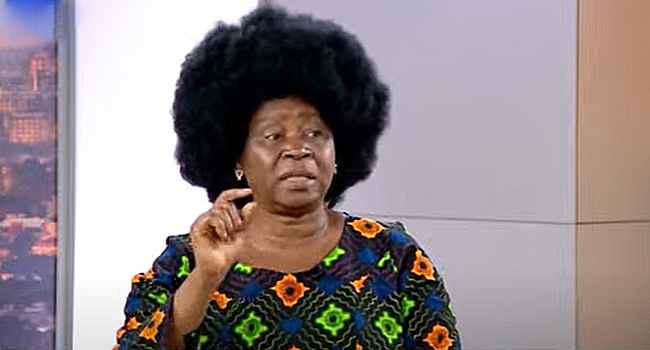
Ene Obi Questions ₦10bn Presidential Campaign Spending Limit

A former Country Director of ActionAid Nigeria, Ene Obi, has raised concerns over the increase in campaign spending limits introduced in Nigeria’s newly amended electoral law, questioning both the practicality of the figures and the sources of campaign financing.

Obi spoke on Sunday at the Citizens’ Townhall on the Electoral Act 2026 held in Abuja, where she examined key provisions of the new legislation and their implications for Nigeria’s electoral process.

Reacting to the revised spending thresholds, Obi noted that while the limits were adjusted from those contained in the 2022 law, the new figures raise critical questions about equity and transparency in political participation.

“For the campaign limits now, the presidential campaigns used to be five billion in 2022, and now it has been taken to ten billion, and the governorship, from one billion has been taken to three billion.

“Many people look at who wants to go in for elections, where are they going to get one billion? Another thing we need to look at is the source of whatever money they are talking about,” she said.

READ ALSO: Amended Electoral Act Has Given Us Hope — Ex-INEC ICT Director

She warned that without stronger oversight of funding sources, the higher ceilings could deepen concerns about undue influence in the political process.

Nigeria’s electoral framework was revised after President Bola Tinubu signed the Electoral Act 2026 into law on February 18, following its passage by the National Assembly.

The new law significantly increases campaign spending limits, raising the presidential cap from ₦5 billion to ₦10 billion and the governorship limit from ₦1 billion to ₦3 billion.

Senate candidates can now spend up to ₦500 million, House of Representatives candidates ₦250 million, and State Assembly candidates ₦100 million, while the donation limit jumps from ₦50 million to ₦500 million.

The Act also mandates electronic transmission of results, formally recognises BVAS, imposes stricter penalties for electoral offences, and shortens timelines for resolving election disputes.

‘Timely Electoral Preparations’

Obi also highlighted the importance of the amendment in addressing logistical delays that affected previous elections, particularly in relation to procurement and planning timelines for the electoral body.

“For the 2022 Electoral Act, the issue was that it was getting too late so that INEC could roll out their work, and now you are saying six months before, with procurement and all the bottlenecks, that is why a new amendment is important.”

She added that financial independence and early planning remain crucial to improving election administration.

Weighing in on electronic transmission of results, Obi emphasised that the 2022 law had already recognised technology such as the Bimodal Voter Accreditation System (BVAS) and permitted transmission, but implementation challenges stemmed largely from human factors rather than legal gaps.

“When you are looking at the Electoral Act of 2022, it acknowledges the BVAS and also allows transmission. The issues of transmission, we are talking about it as if it never happened, or it wasn’t there; it was there. The human element brought in the issue of glitches because they had the capacity.”

She explained that the focus should be on whether results are transmitted at the point of accreditation, rather than on connectivity delays.

“What we are saying is that you can transmit, whether you are talking about real-time or not, where you are accredited, the machine is able to do transmission at that time. Whether it connects at that time is secondary; did you transmit at that very moment? That is what we are talking about,” she said.

If Tinubu Could Revert National Anthem In 24 Hours, Electoral Act 2026 Can Be Amended – Sam Amadi

A member of the African Democratic Congress (ADC), Sam Amadi, has called for the amendment of the Electoral Act 2026 to remove the proviso that allows manual transmission of election results where there is no network for electronic transmission.

He made the call on Sunday during the Citizens’ Townhall on the 2026 Electoral Act, describing the amendment as urgent and important.

Amadi argued that if President Bola Tinubu could revert the national anthem in one day, the Electoral Act 2026, which was signed into law last month, could still be amended.

“By default, electronic transmission is now optional. My position is that we can still amend this law; by the way, President Tinubu amended the national anthem in one day. Let there be consensus to amend this section to allow INEC to do their regulation, INEC captures the event of failure,” Amadi said.

Amadi warned that the proviso could create confusion in the electoral process, as officers might decide not to upload results on the basis of poor or unavailable network.

“Communication is not just electronic, this is a bad law, it could go for anything, including poor communication from the headquarters to the polling officer. Even if you have the internet, the polling officer may refuse to transmit on the basis that there was no communication. We should amend this section of the law quickly; it is very important.”

READ ALSO: Why NASS Should Scrap Manual Transmission Clause In Electoral Act 2026 – Itodo

Also speaking at the programme, the Executive Director of YIAGA Africa, Samson Itodo, called on lawmakers to recommence the amendment of the Electoral Act 2026 to expunge the proviso that allows manual transmission of results.

According to him, the proviso negates the core objective behind the push to amend the Electoral Act 2022, which he said was intended to make the electoral process more transparent by reducing human interference.

“I just wish that the lawmakers would eliminate that particular proviso. This is why we made a call to them to commence the process of amending that Act and just delete that particular proviso.

Amended Electoral Act Has Given Us Hope — Ex-INEC ICT Director

A former Director of Information and Communication Technology at the Independent National Electoral Commission (INEC), Chidi Nwafor, says recent amendments to Nigeria’s electoral framework provide renewed confidence in the country’s capacity to deliver more transparent elections.

Nwafor spoke on Sunday at the Citizens’ Townhall on the Electoral Act 2026 held in Abuja, where electoral stakeholders assessed the readiness of institutions ahead of the 2027 polls.

“Technologically speaking, for me, the new Electoral Act has given us hope. In the new Electoral Act, you now have IReV in there. Whether we like it or not, we don’t have a 100 per cent network, we know that,” he said.

Providing context on infrastructure realities, Nwafor added, “At the time we did that design, we had about 93 to 94 per cent 2G coverage.

“As of today, we are talking about roughly 86 to 89 per cent in terms of 3G. You can compress your data and use 2G to send your information, that is not the issue.”

READ ALSO: Manual Results Transmission Option In Electoral Act Not An Issue, Says NSE ICT Head

‘Real-time Reporting’

He stressed that the central goal of the reforms is the real-time transmission of results from polling units.

“There is this word,  real time. You finish the election, count it, and when you finish counting, you send two pieces of information: the accredited voters and the results,” he said.

According to him, the process already allows officials to transmit both the accreditation figures and images of result sheets, though connectivity gaps may still occur in remote areas.

“There are two possibilities, one is that you must snap and send. The second is that it may not go because of network challenges,” he noted.

Nwafor explained that delayed uploads do not necessarily compromise the integrity of the process, as data can still be transmitted once connectivity improves.

“The moment you move from the polling unit to the ward, you get more network. If you send a message through your phone and it didn’t go, once you get a network, it sends, and the results have their own transfer mechanism,” he said.

Digital Infrastructure, Security Coordination

Highlighting the legal backing for electronic records, he said, “People should be able to go to court and see that this law says we must have digital electronic results in a database. INEC needs to have it and needs to develop it further.”

He added that the commission retains the authority to refine operational procedures.

“The commission can develop its regulations and guidelines to make the system work better,” he said.

Beyond technology, the former ICT chief urged authorities to reassess election security arrangements.

He said security agencies supporting election operations “need to be reviewed” to ensure they align with the new technological framework and do not hinder efficient result management.

Nigeria’s electoral framework was updated after President Bola Tinubu signed the Electoral Act 2026 into law on February 18, 2026, replacing the 2022 version ahead of the next general elections.

The law introduces mandatory electronic transmission of results to the results viewing portal, formal recognition of the Bimodal Voter Accreditation System, revised timelines for party primaries, and earlier release of election funding.

‘Other Parties Are Dying,’ Yilwatda Defends Mass Defections Into APC

The All Progressives Congress (APC) has defended the mass defections into the ruling party, citing better management. 

APC National Chairman, Nentawe Yilwatda, said this on Sunday at the Citizens’ Townhall on the 2026 Electoral Act.

“It is very fair. It is very fair because they discovered that those political parties are already dying. They saw a reason to join us because of how we operate as a party—from party management to organization and mobilization,” Yilwatda said at the event.

“APC seems to be the best party in terms of mobilization, organization, and governance. That provides a leeway for competition. When I go to the market, I have a choice to make: a choice between good governance, good party management, and a transparent system.

“I will give you an example. We have a primary solution where, through consensus, all nine candidates in Osun agreed on a single candidate. No other political party in Nigeria has achieved a consensus like that without ending up in court. Only APC has successfully done that in two states.”

READ ALSO: Adamawa Speaker, 14 Other Lawmakers Dump PDP

In recent months, the APC ranks have swelled, leaving opposition parties like the Peoples Democratic Party (PDP), Labour Party (LP), and others depleted.

The APC has about 31 governors and an overwhelming majority of the National Assembly members on its register, a move critics claim is turning Nigeria into a one-party state.

[VIDEO] 2027: IReV Will Checkmate Rigging, Says Umeh

Senator Victor Umeh believes the INEC Results Viewing Portal (IReV) will help Nigeria address electoral malpractices

Umeh spoke on Sunday during the Citizens’ Townhall on the Electoral Act 2026.

“The IREV Portal will be a checkmate to election rigging,” the Anambra Central lawmaker said at the event in Abuja.