₦2.4bn Fraud: Court Sentences Ex-NEXIM MD Orya To 10 Years Imprisonment

Justice Frances Messiri of the High Court of the Federal Capital Territory, Abuja, has convicted and sentenced a former Managing Director of the Nigerian Export-Import Bank (NEXIM), Robert Orya, to ten years in prison for fraud involving approximately ₦2.4 billion.

The Economic and Financial Crimes Commission (EFCC) secured the conviction after prosecuting Orya on 49 counts, including criminal breach of trust, fraud, misappropriation, impersonation, official corruption, and abuse of office.

Delivering judgment, Justice Messiri sentenced Orya to ten years’ imprisonment on each of the 49 counts, with the terms running concurrently.

The case arose from allegations that Orya, who served as NEXIM Managing Director from 2011 to 2016, abused his position to fraudulently divert funds through entities such as Luxurium Leisure Services Limited, which was incorporated using fictitious names.

READ ALSO: [Emefiele] EFCC Witness Alleges $6.23m Withdrawn From CBN With Forged Papers

He was also accused of inducing loans, including N488 million to Treasure Mix Construction Limited, under false pretenses.

Orya was arraigned by the anti-graft agency in November 2021 on the 49-count charge bordering on fraud.

EFCC alleged that he used his position to obtain over N1.4 billion from the bank and incorporated a company using the names of non-existent individuals and others without their consent to secure loans, which remained unpaid for years.

Reps Constitute Conference Committee On Electoral Act Amendment Bill

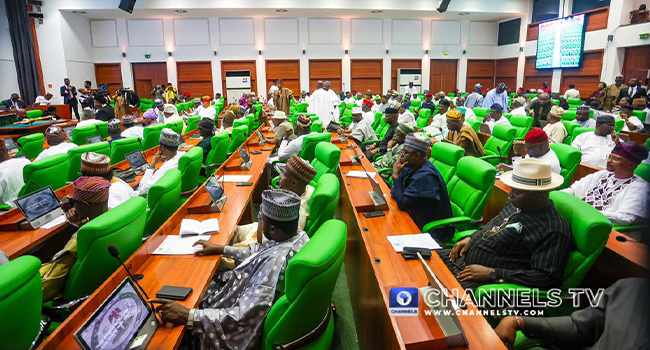
The House of Representatives has constituted a bipartisan conference committee on the Electoral Act (Amendment) Bill to harmonise differences between versions passed by both chambers of the National Assembly.

The development was disclosed in a statement signed by Akin Rotimi Jr., spokesman of the House of Representatives, on Thursday.

According to the statement, the decision followed an internal correspondence dated Wednesday, February 4, 2026, from the Clerk to the House of Representatives, Yahaya Danzaria, conveying the House leadership’s directive in line with established legislative procedures.

Hon. Adebayo Balogun chairs the Conference Committee and includes Reps Fred Agbedi, Sada Soli, Ahmadu Jaha, Iduma Enwo, Saidu Abdullahi, and Dr Zainab Gimba.

READ ALSO: Electoral Act Amendment Bill Passes Third Reading, Senate Retains Existing Provision On Result Transmission

The statement noted that the committee is mandated to engage with its Senate counterpart to harmonise the differing provisions of the Electoral Act (Amendment) Bill as passed by both chambers, ahead of final passage by the National Assembly.

The move comes a day after the Nigerian Senate passed the Electoral Act (Repeal and Re-enactment) Amendment Bill 2026 on February 4, following a third reading.

The proposed legislation seeks to strengthen the legal framework ahead of the 2027 general elections, including the introduction of stiffer penalties for electoral offences and adjustments to key administrative timelines.

PDP Condemns Kwara Killings, Calls For Independent Investigation

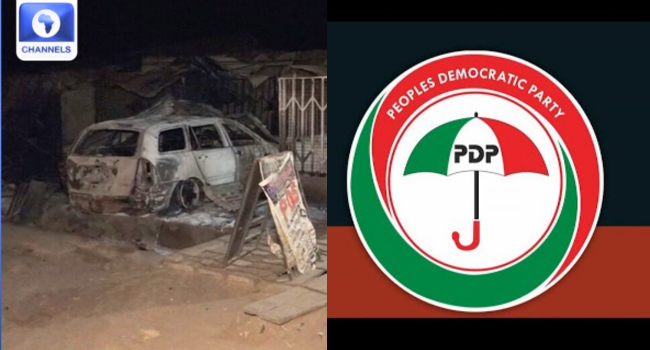
The Peoples Democratic Party (PDP) faction led by Kabiru Tanimu has condemned the killing of scores of residents in Woro community, Kaiama Local Government Area of Kwara State, describing the attack as a grim reminder of Nigeria’s worsening security situation.

In a statement issued on Thursday and signed by its National Publicity Secretary, Ini Ememobong, the opposition party said the reported killing of about 170 people by terrorists was shocking.

“The sad and shocking news of the killing of about 170 people (as reported) by terrorists in Woro Community of Kwara State is another painful reminder of the new reality of heightened insecurity that Nigerians have been faced with under the Bola Tinubu APC Presidency,” the party stated.

Tinubu Orders Deployment Of Troops To Kwara After Deadly Attack

The PDP expressed sympathy with affected families and criticised the government’s handling of security warnings preceding the attack.

Attack Notice

According to the party, community leaders had raised concerns months before the incident, but no proactive measures were taken.

“The most painful part of this sad story is the fact that several community leaders have stated that the notice of this impending attack was available for months, without any meaningful proactive action from the Government,” the statement read.

It added that the post-attack military deployment was “weak, reactive, and irresponsible.”

While acknowledging the presidential deployment of troops after the killings, the party argued that such action could not reverse the damage already done.

“The Presidential deployment of the military cannot bring back the killed people or erase the concomitant trauma imposed upon the community,” it said.

The PDP demanded the establishment of an independent panel to investigate the security lapses that led to the massacre, particularly the failure to act on early warnings.

It also called for the immediate provision of humanitarian relief, medical care and temporary shelter for displaced and traumatised residents of Woro community.

Other demands include the convening of an emergency National Security Summit involving all stakeholders, as well as investment in community-based early warning systems to ensure credible threats are acted upon promptly.

The party further urged the Federal Government to adopt a “whole-of-society approach” to tackling insecurity.

“Their current ad hoc and reactionary tactics have proven woefully inadequate, with attendant loss of lives,” the PDP said, warning that “being reactionary has never been an effective strategy and cannot be relied on to solve complex problems.”

Killing, Troops Deployment 

Meanwhile, gunmen were reported to have killed over 160 people during a late Tuesday attack on Woro and neighbouring Nuku communities, burning shops and a traditional ruler’s residence, while many residents fled into surrounding bushes.

In response, President Bola Tinubu ordered the deployment of an army battalion to Kwara State to reinforce security. Presidential spokesman, Bayo Onanuga, said the move was aimed at “checkmating the barbaric terrorists and protecting defenceless communities.”

According to Onanuga, the new military command will lead Operation Savannah Shield. Condemning the attack, Tinubu described the assailants as “heartless for choosing soft targets in their doomed campaign of terror.”

The president also expressed anger that community members were targeted for rejecting the attackers’ ideology.  Tinubu also condoled with the families of the victims.

Similarly, Kwara State Governor, Abdulrahman AbdulRazaq, described the attack as a “pure massacre” during a visit to the area and the palace of the Emir of Kaiama, Muazu Omar, on Wednesday night.
Northern Govs Condemn Kwara, Katsina, Benue Killings, Demand Decisive Security Action

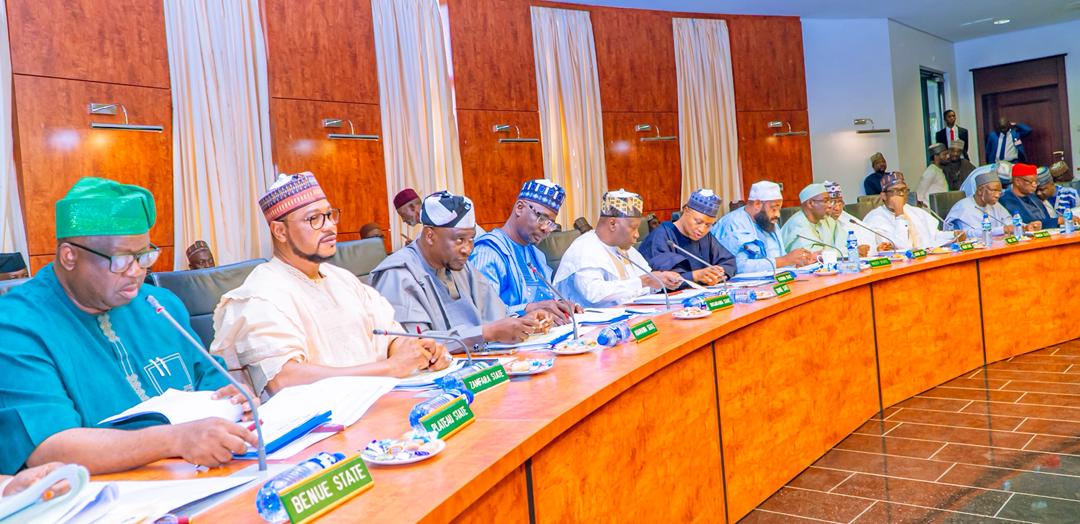
The Northern States Governors’ Forum (NSGF) has condemned the gruesome killings in parts of Kwara, Katsina, and Benue states, describing them as barbaric, senseless, and a direct assault on the collective conscience of the nation.

The forum, under the chairmanship of Gombe State Governor, Inuwa Yahaya, and comprising 19 governors from the northern region, called for decisive security solutions to end the relentless targeting of defenceless citizens, including women, children, and the elderly.

While commending the governors of Kwara, Benue, and Katsina states for their resilience in the face of severe security challenges, Governor Yahaya reassured Nigerians of the forum’s commitment to working with all security agencies and local stakeholders to promote intelligence-led community policing and sustainable socio-economic solutions.

The forum also expressed condolences to families who lost scores of loved ones, praying for the repose of the souls of innocent individuals killed in cold blood.

READ ALSO: Kwara Gov Says Attack ‘Pure Massacre’, 75 Victims Buried

In the past few days, vicious attacks in some communities across the three states have resulted in the deaths of several people, the abduction of others, and the destruction of property worth millions of naira.

In Kwara State, gunmen attacked the Woro and Nuku communities in the Kaiama Local Government Area, reportedly killing over 50 people. Many families lost their loved ones, while several houses were burnt by the attackers.

Sources said the bandits had initially come to preach to residents, urging them to ignore the Nigerian Constitution. During the sermon, dissenting voices angered the attackers, who then opened fire on the villagers.

In Katsina State, bandits also attacked a community in Faskari Local Government Area, leaving several people dead, houses, shops, and vehicles destroyed, and many rendered homeless. The incident occurred in the Doma Community, Tafoki area of the LGA, at about 4:30 pm on Tuesday.

The armed attackers, wielding weapons including AK-47 rifles, invaded the community just five months after a peace agreement. According to the Chairman of Faskari Local Government Area, Sirajo Daudawa, the incident is suspected to have been a reprisal attack.

In Benue State, a police officer and four others were killed in an assault by non-state actors in Abande Community, Kwande Local Government Area. The spokesman of the Benue State Police Command, Udeme Edet, said the attack took place on Tuesday.

While some reports claimed that about 16 people were killed, Udeme clarified: “An Assistant Superintendent of Police (ASP) attached to the 13 Police Mobile Force (PMF), Makurdi, who was on special duty at Abande Community, was fatally injured during the attack.

“The Divisional Police Officer, Jato-Aka, received a distress call that suspected armed herder bandits, in large numbers, had attacked police personnel stationed at Abande Community as well as members of the community.

Electoral Act: Future Elections Should Be Better Than Previous Ones — PDP Spokesman

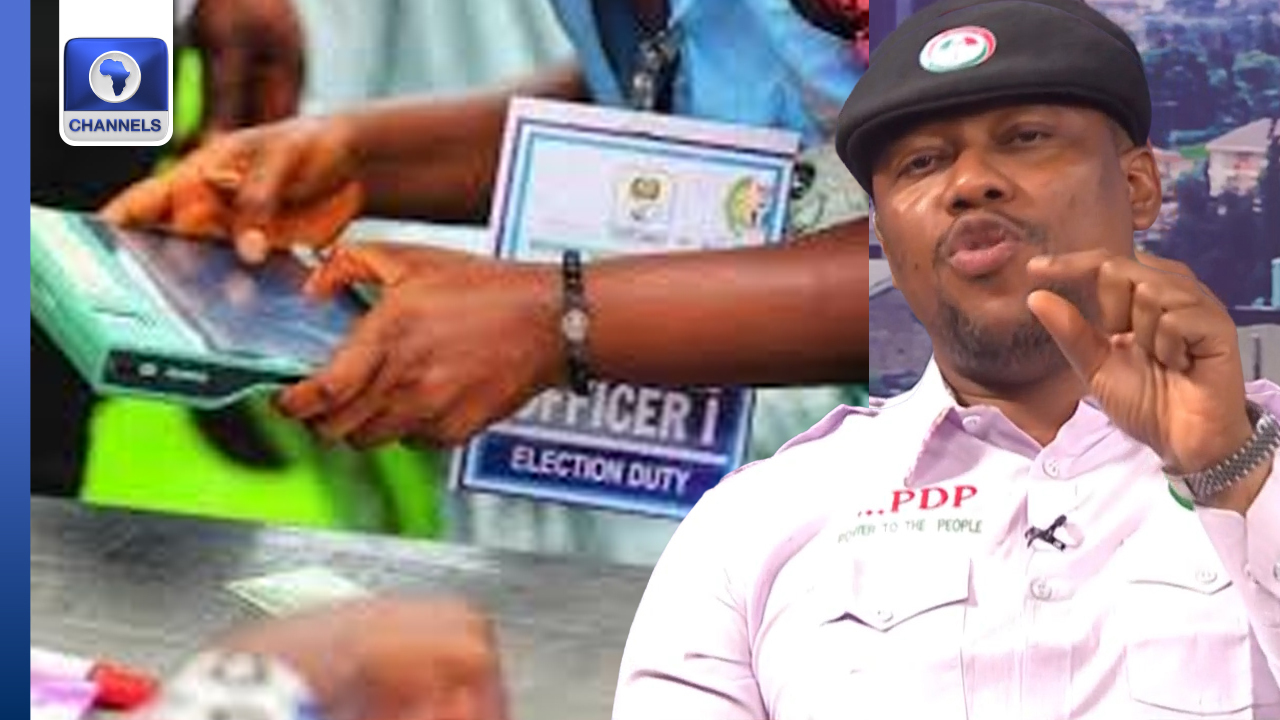
The National Publicity Secretary of the Peoples Democratic Party (PDP), Ini Ememobong, has said that future elections in Nigeria should be better than previous ones.

Ememobong made the remark on Thursday during an interview on Channels Television’s The Morning Brief.

He said only 26 per cent of registered voters participated in the last election, a development he described as evidence of significant voter apathy.

According to him, “The idea of democratic consolidation means that every election, every future election, should be better than the previous one in every material respect.”

He noted that the Supreme Court, in its judgment, had identified lacuna in the electoral process and returned the matter to the National Assembly, stressing that it was now the primary duty of lawmakers to legislate appropriately for the administration of the country.

“If the Supreme Court in its judgment has identified the lacuna and passed the ball back to the National Assembly, the most primary duty is to legislate for the administration of this country,” he said.

His comments followed a proposed bill by the Independent National Electoral Commission (INEC) seeking to mandate the electronic transmission of election results.

Ememobong warned against taking Nigerians for granted, describing them as patient people whose tolerance should not be abused.

“Nigerians are very patient people. You push them to the wall, they begin to make a hole in the wall, but somehow their minds change and you find them coming out straight for you. It happened during the End SARS,” he said.

He appealed to legislators and the political class to take the issue seriously, describing the proposed amendment as one Nigerians have been waiting for.

READ ALSO: [Electoral Act] Why Senate Rejected Proposal For Real-Time Upload Of Results — Itodo

“My appeal is that the legislators, and in fact the entire political class, should not take Nigerians for granted. This is the one bill, law and Act Nigerians have been waiting for in this period,” he said.

Speaking further, Ememobong warned that sustained disregard for electoral integrity could have grave consequences.

“If Nigerians are pushed to the point where there is a mass protest, I’m not sure when a mass protest over lack of electoral sanctity aligns with insecurity and hunger, there will be a conflagration that will be beyond the capacity of any government and security agencies to contain,” he said.

Proposed Bill

The proposed bill was supposed to allow the electronic transmission of election results from each polling unit to the IREV portal in real time, after the prescribed Form EC8A has been signed and stamped by the presiding officer and countersigned by candidates.

But in passing the Electoral Act 2022 (Repeal and Re-enactment) Amendment Bill 2026 on Wednesday, the Senate did not approve the proposed amendment to Clause 60, Subsection 3, which sought to make the electronic transmission of election results mandatory.

Abaribe Insists Senate Approved Electronic Transmission Of Election Results

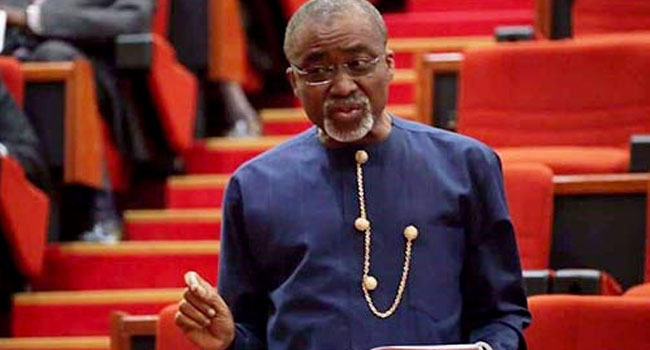
Senator Enyinnaya Abaribe has insisted that the Senate approved the electronic transmission of election results in real time, dismissing media reports suggesting otherwise and saying his integrity is at stake over the issue.

Speaking at a media briefing at the National Assembly on Thursday, accompanied by 13 serving senators, Abaribe asserted that the Senate did not pass the “transfer” of results as contained in the 2022 Electoral Act, but rather approved the electronic transmission of results, stressing that the distinction is deliberate and important.

“I am concerned about reports in the media, and that is why we decided to make this clarification. What we passed is electronic transmission of results. I need to make this very clear,” he said.

Abaribe explained that the Senate’s decision followed an extensive legislative process involving consultations with the Independent National Electoral Commission (INEC) and civil society organisations (CSOs).

According to him, a joint committee of the National Assembly held several retreats with the stakeholders, after which there was a consensus that electronic transmission of results should be adopted by both the House of Representatives and the Senate.

He added that the Senate subsequently set up an ad hoc committee to review the electoral reform report.

“That report was considered during a closed-door session. I can assure you, on my honour, that during the executive session we all agreed on electronic transmission of results in real time. At plenary yesterday, we also passed it,” he said.

Abaribe said the controversy arose during the plenary session, despite confirmation by the Senate President on the floor that electronic transmission of results had been approved.

READ ALSO: Electoral Act Amendment Bill Passes Third Reading, Senate Retains Existing Provision On Result Transmission

He noted that although the Senate adjourned after plenary, it has not yet adopted the Votes and Proceedings, which he described as a necessary procedural step before the conference committee can meet to harmonise the Senate and House versions of the bill.

“There is still one more step left for the Senate to take. Until the Votes and Proceedings are adopted, the conference committee cannot take place. Either the House or the Senate version has to be adopted. A huge number of senators across party lines are with us,” he said.

Also speaking at the briefing, Senator Aliyu Ningi said the process began as far back as 2024 and involved extensive deliberations.

“We had about 27 different sessions as a committee. Some of us find this very painful, that public opinion is being pushed in a negative direction despite the work that has been done,” Ningi said.

Both senators emphasised that the legislative process has not ended and that harmonisation cannot occur until the outstanding procedural steps are completed.

Clarifying the terminology, Abaribe said the Senate deliberately chose the word “transmission” rather than “transfer” to avoid ambiguity.

“What is in the 2022 Act is ‘transfer’. We do not want a law that is vague or ambiguous. What we passed is electronic ‘transmission’ of results,” he said.

However, during the clause-by-clause consideration, the Senate expunged the word “transmission” from the amendment and replaced it with the word “transfer,” as contained in the existing Act.

The proposal by the Senate Chief Whip was swiftly seconded by the Deputy Senate President and immediately adopted.

In what appeared contradictory during the debate the Senate Chief Whip, Senator Tahir Mongunu, pointed to the exact wording of the law and urged the chamber to retain the term “transfer” as provided in the 2022 Electoral Act.